On Rue de Sèvres in the 6th arrondissement, Le Petit Lutetia occupies a position that speaks directly to the character of Saint-Germain-des-Prés: unhurried, considered, and oriented toward the local rather than the spectacular. The address alone places it within one of Paris's most historically layered dining neighbourhoods, where brasserie tradition and contemporary French cooking exist in close proximity.
Pearl is the En Primeur Club membership app — saves, bookings, and concierge access live there. Same editors, same standards.
- Address
- 107 Rue de Sèvres, 75006 Paris, France
- Phone
- +33 1 45 48 33 53
- Website
- le-petit-lutetia.paris
- Directions
- Get directions
 Saves & bookings on Pearl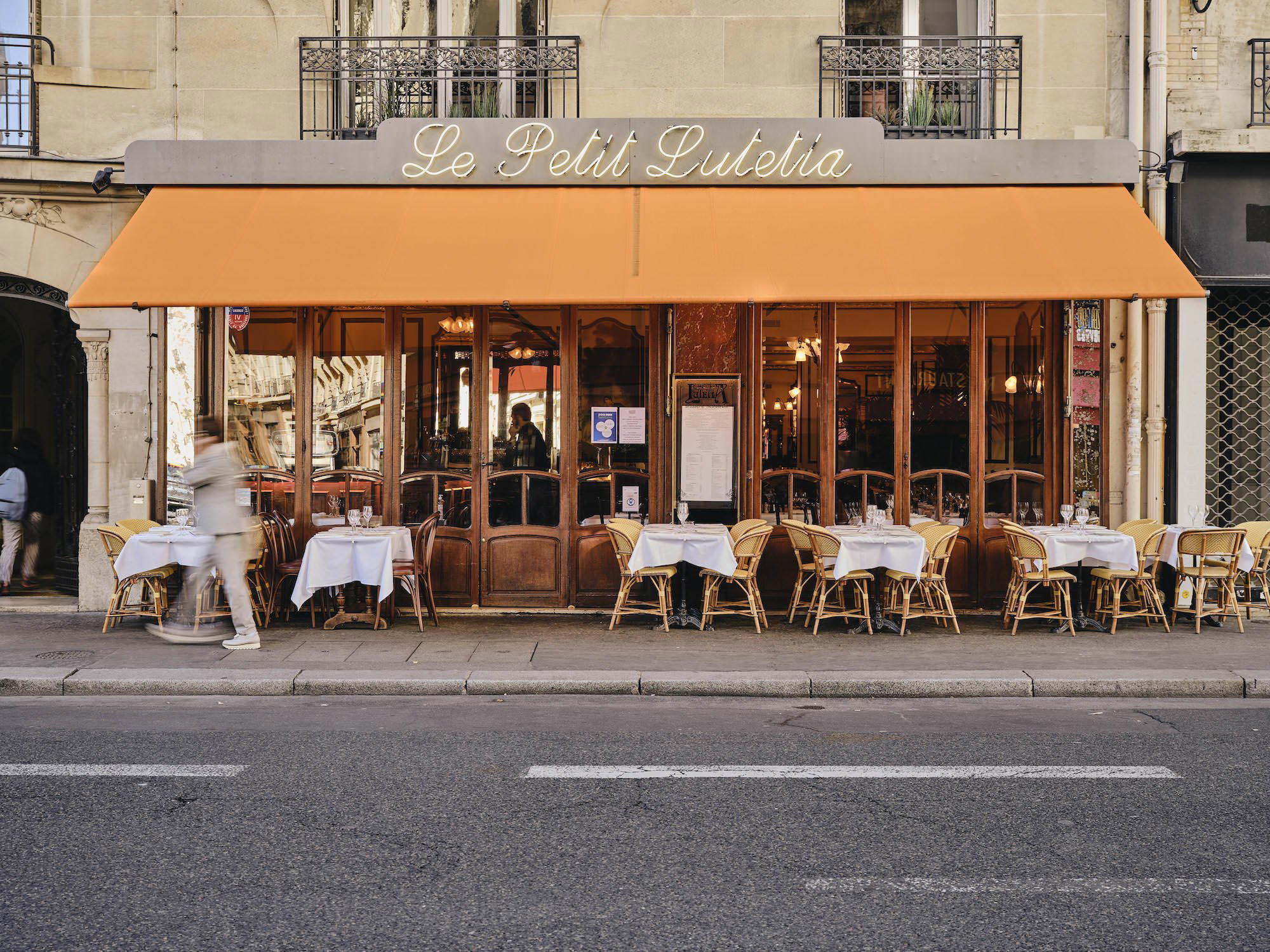
Saint-Germain's Dining Identity, One Block at a Time
Rue de Sèvres is not the Paris of tourist itineraries. The street runs along the southern edge of Saint-Germain-des-Prés into the 7th arrondissement, past the Hôtel Lutetia, one of the Left Bank's defining addresses since 1910, and toward a neighbourhood that has always balanced residential calm with genuine culinary ambition. Le Petit Lutetia is a classic French brasserie at 107 Rue de Sèvres in Paris, with a smart casual dress code and reservations recommended. Le Petit Lutetia sits at 107 Rue de Sèvres, directly in the gravitational field of that hotel and the particular expectations it carries. In a city where location functions as a credibility signal, this address carries weight.
The 6th arrondissement's dining scene operates on different terms from the grands boulevards or the more architecturally theatrical rooms of the 8th, where Alléno Paris au Pavillon Ledoyen and Le Cinq at the Four Seasons George V anchor the formal end of the market. Saint-Germain rewards the visitor who is already oriented toward the neighbourhood rather than arriving for a destination occasion. Restaurants here tend to calibrate their tone accordingly: the room matters, but it doesn't try to announce itself from across the street.
The Address and What It Implies
The proximity to the Lutetia is not incidental. The hotel, reopened after an extensive renovation, draws a clientele already comfortable with Left Bank register, unhurried, with a preference for quality that doesn't require theatrical reinforcement. Le Petit Lutetia operates within that same social and geographic orbit, which shapes both who walks through the door and what kind of experience they expect to find.
This part of the 6th sits between the busier stretches of Boulevard Saint-Germain and the quieter residential blocks approaching the 7th. The density of good eating in the immediate area is high. Classic French bistros, destination wine bars, and the occasional contemporary room all compete within walking distance. In that context, a restaurant's ability to hold its ground depends less on novelty and more on consistency and a clear sense of what it is. The name itself, the restaurant, signals a deliberate relationship with the neighbourhood's history rather than a break from it.
Left Bank Bistro Tradition and Where This Fits
Paris's brasserie and bistro tradition is not a monolith. The city's Left Bank, particularly the 6th and 7th, has historically supported a version of French dining that differs in texture from the grand palatial rooms of the Right Bank. The emphasis tends toward the convivial over the ceremonial, toward cooking that references classical technique without necessarily requiring it to be the point of conversation. That tradition runs through institutions like L'Ambroisie on the Place des Vosges at its most classical, and through the more technically ambitious work at Arpège on nearby Rue de Varenne, where the Left Bank's quieter streets have long supported serious cooking away from the spectacle of the grander arrondissements.
The restaurant occupies the neighbourhood end of that spectrum. It is not positioning itself against three-Michelin-star ambition; it is doing something more specific to its location: offering a version of Parisian dining that belongs to the street it sits on. France's broader culinary geography, from Troisgros in Ouches to Mirazur in Menton, tends to anchor itself in place as a primary credential. Urban bistros work the same logic at smaller scale: the neighbourhood is the context, and the restaurant either earns its place in it or doesn't.
How the Neighbourhood Shapes the Experience
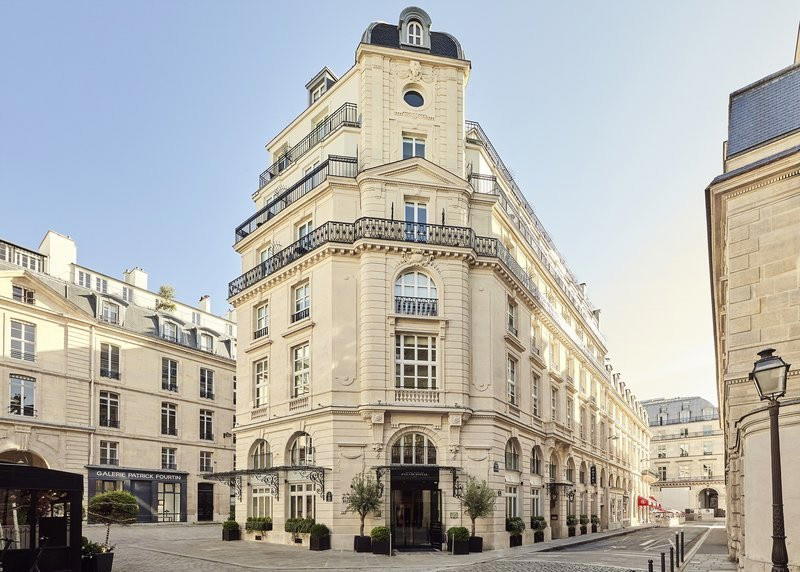
Arriving on Rue de Sèvres, particularly in the early evening when the light off the Seine still reaches the upper floors of the surrounding Haussmann blocks, the environment does a certain amount of work before you've opened the door. The 6th has a particular quality of urban calm that the busier tourist corridors of the Marais or Montmartre don't share. Tables fill with people who live within a few stops on the Métro rather than across a continent. That shifts the register of a meal in ways that matter: the pace is different, the noise level more conversational, the sense of occasion calibrated to a Tuesday rather than a Saturday.
This is not the context in which you seek the kind of maximalist tasting-menu experience associated with Kei or the creative ambition of Paul Bocuse's Auberge du Pont de Collonges outside Lyon. It is the context in which you want the cooking to be attentive and the room to feel like somewhere rather than nowhere. The address makes that promise; the question, as always with neighbourhood dining, is whether the execution holds.
For visitors building an itinerary around the broader French table, the contrast between a room like this and the destination restaurants of the French regions, Bras in Laguiole, Auberge de l'Ill in Illhaeusern, Les Prés d'Eugénie in Eugénie-les-Bains, is instructive. Paris's neighbourhood restaurants carry a different argument: they are not about pilgrimage, but about the texture of daily life in a city that takes eating seriously at every level. Georges Blanc in Vonnas, Flocons de Sel in Megève, and Auberge du Vieux Puits in Fontjoncouse each anchor their identity in a specific geography far from Paris. The restaurant anchors its identity in a specific street in the 6th, which is its own kind of claim.
Internationally, the model of a hotel-adjacent neighbourhood restaurant that earns its own identity, distinct from the parent address, is common enough in cities like New York, where Le Bernardin has long maintained a separation between its midtown location and its own culinary authority, or in San Francisco, where Lazy Bear has built a different kind of neighbourhood credibility on its own terms. The principle holds across geographies: the leading neighbourhood restaurants justify their address as a choice, not a coincidence.
How It Stacks Up
Comparable venues nearby, for context on price, style, and recognition.
| Venue | Cuisine | Price | Notes |
|---|---|---|---|
| Le Petit LutetiaThis venue — the venue you are viewing | Classic French Brasserie | $$$ | Not listed |
| Café Pierre Hermé | French Patisserie Café | $$$ | 7th arrondissement |
| Truffes Folies | Truffle-Focused French Bistro | $$$ | 75008 |
| Café Sud | Modern French Bistro | $$$ | 8th arrondissement (Madeleine) |
| Les Poulettes Batignolles | French-Catalan Bistro | $$$ | Batignolles-Monceau |
| Les Éléphants | French Bistro with Market-Driven Cuisine | $$$ | Batignolles-Monceau |
Continue exploring
More in Paris
Restaurants in Paris
Browse all →
Bars in Paris
Browse all →
Hotels in Paris
Browse all →



At a Glance
- Classic
- Elegant
- Cozy
- Date Night
- Group Dining
- Late Night
- Terrace
- Hotel Restaurant
- Extensive Wine List
- Street Scene
Current opening hours
- Monday
- 12–3 PM, 7–11 PM
- Tuesday
- 12–3 PM, 7–11:30 PM
- Wednesday
- 12–3 PM, 7–11:30 PM
- Thursday
- 12–3 PM, 7–11:30 PM
- Friday
- 12–3 PM, 7–11:30 PM
- Saturday
- 12–4 PM, 7–11:30 PM
- Sunday
- 12–4 PM, 7–11 PM
Hours can change for holidays and private events. Last verified .
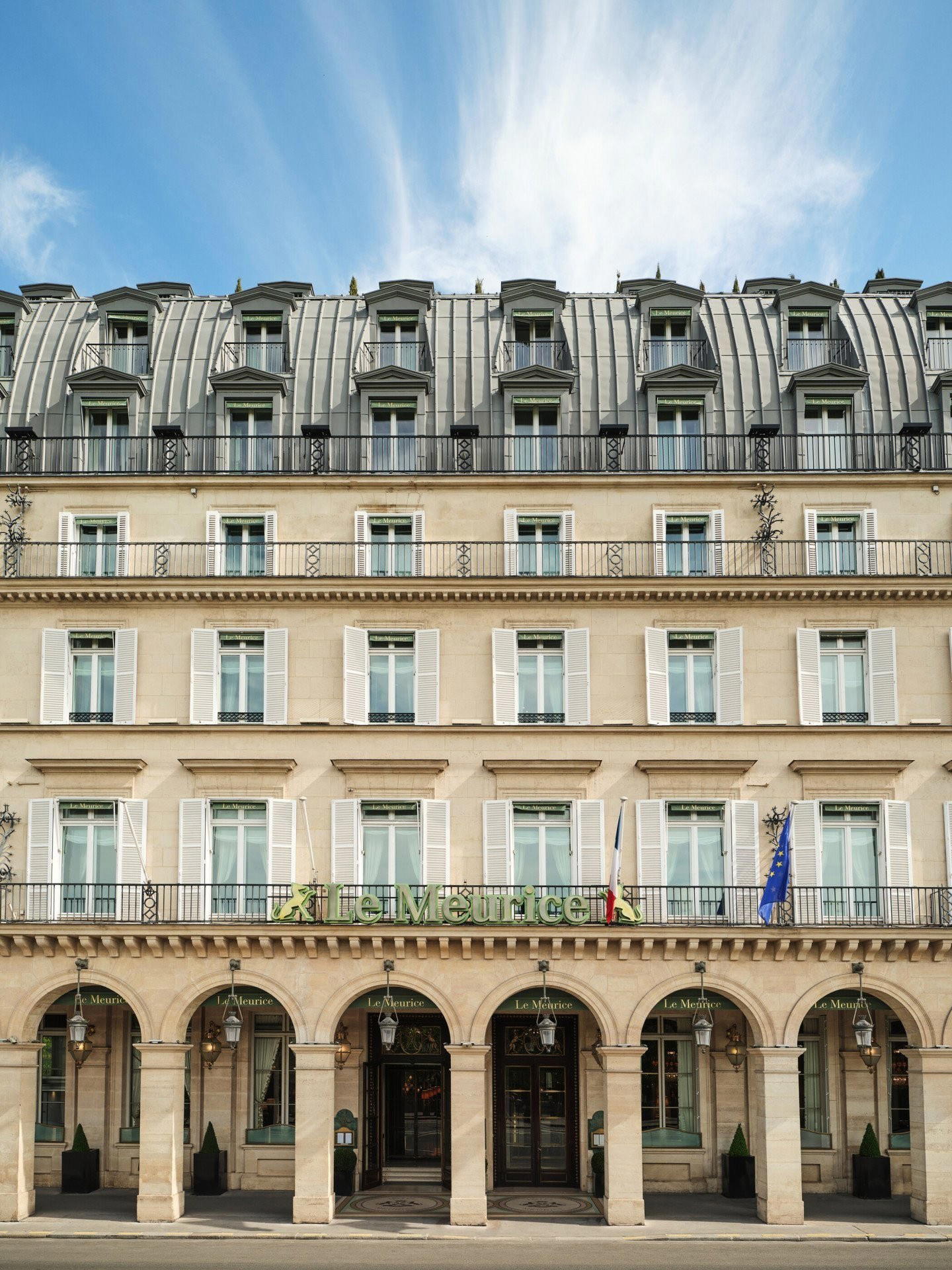
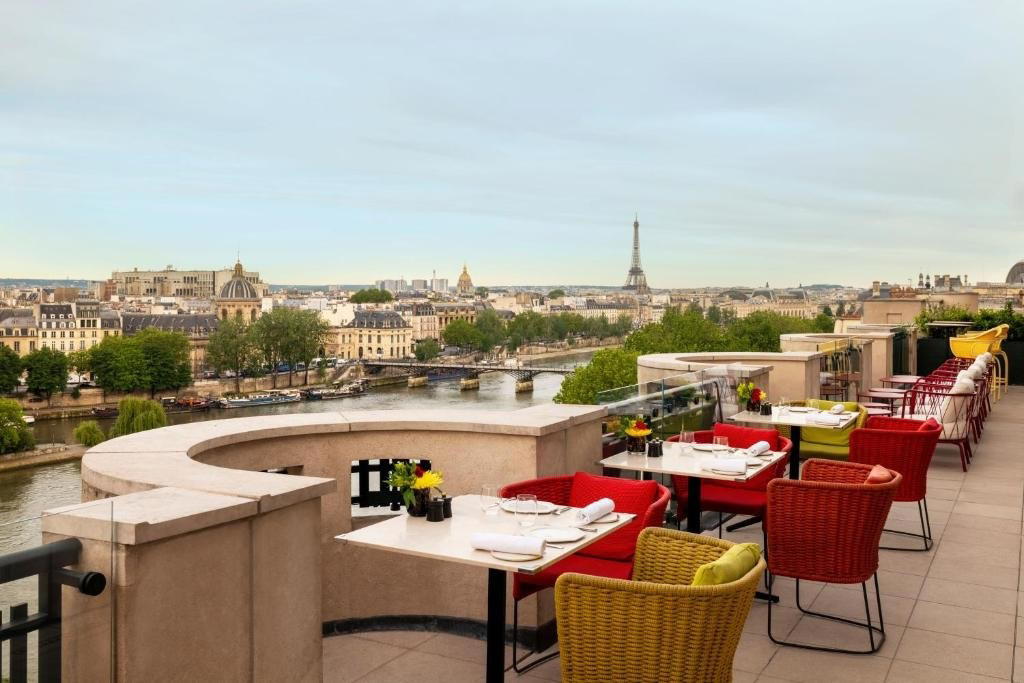
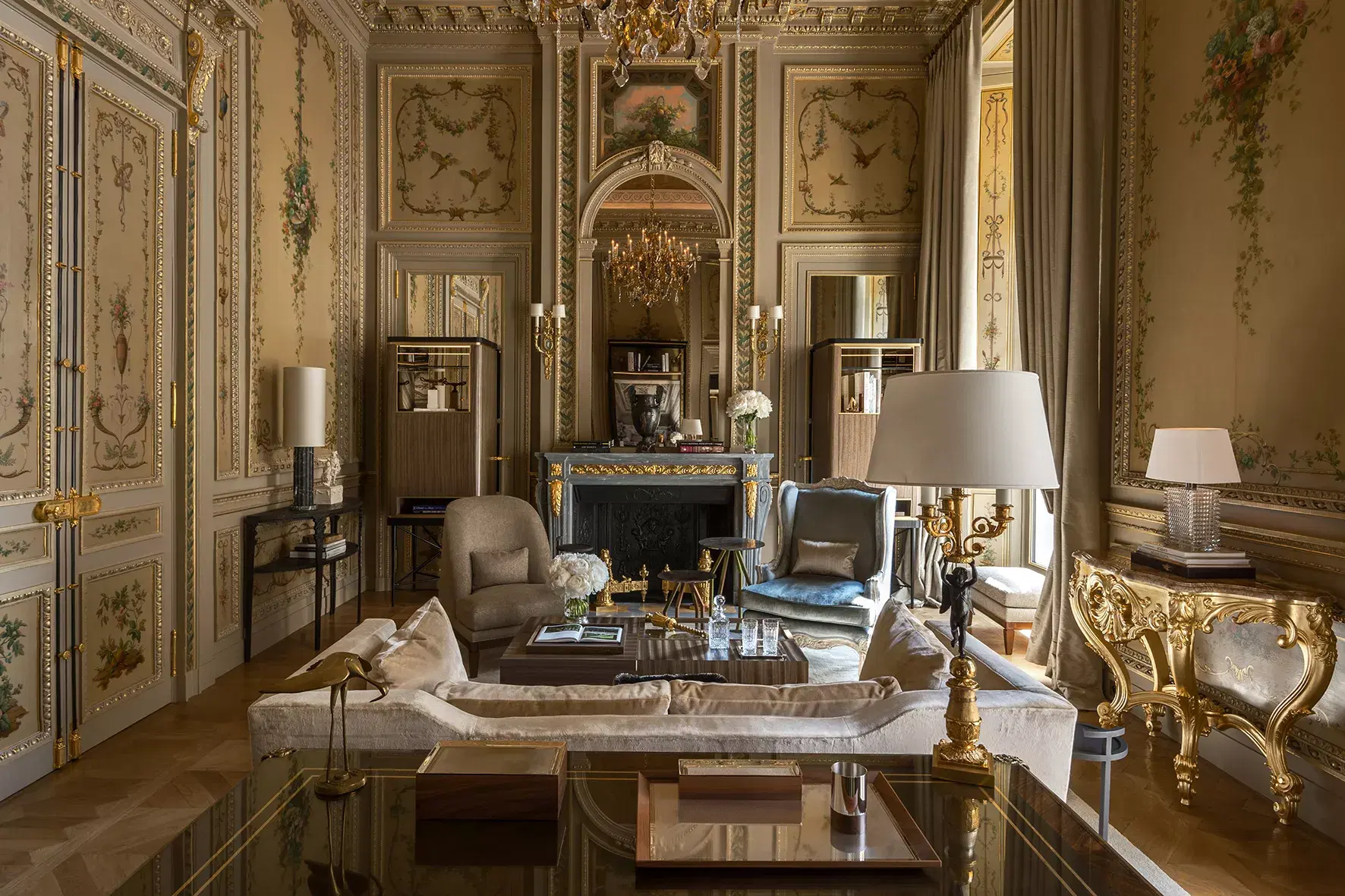
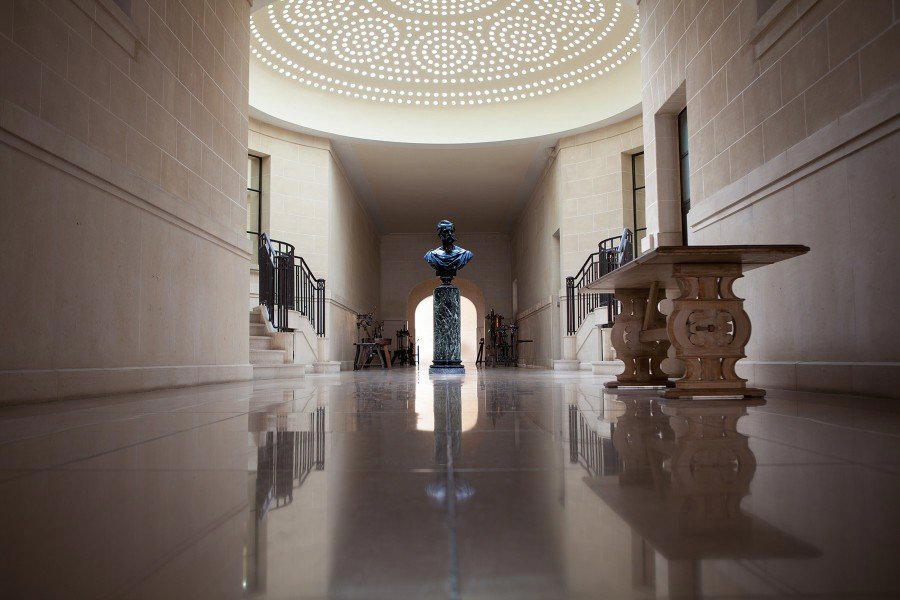
Timeless art nouveau with terrace, scrolls, and elegant Parisian atmosphere.