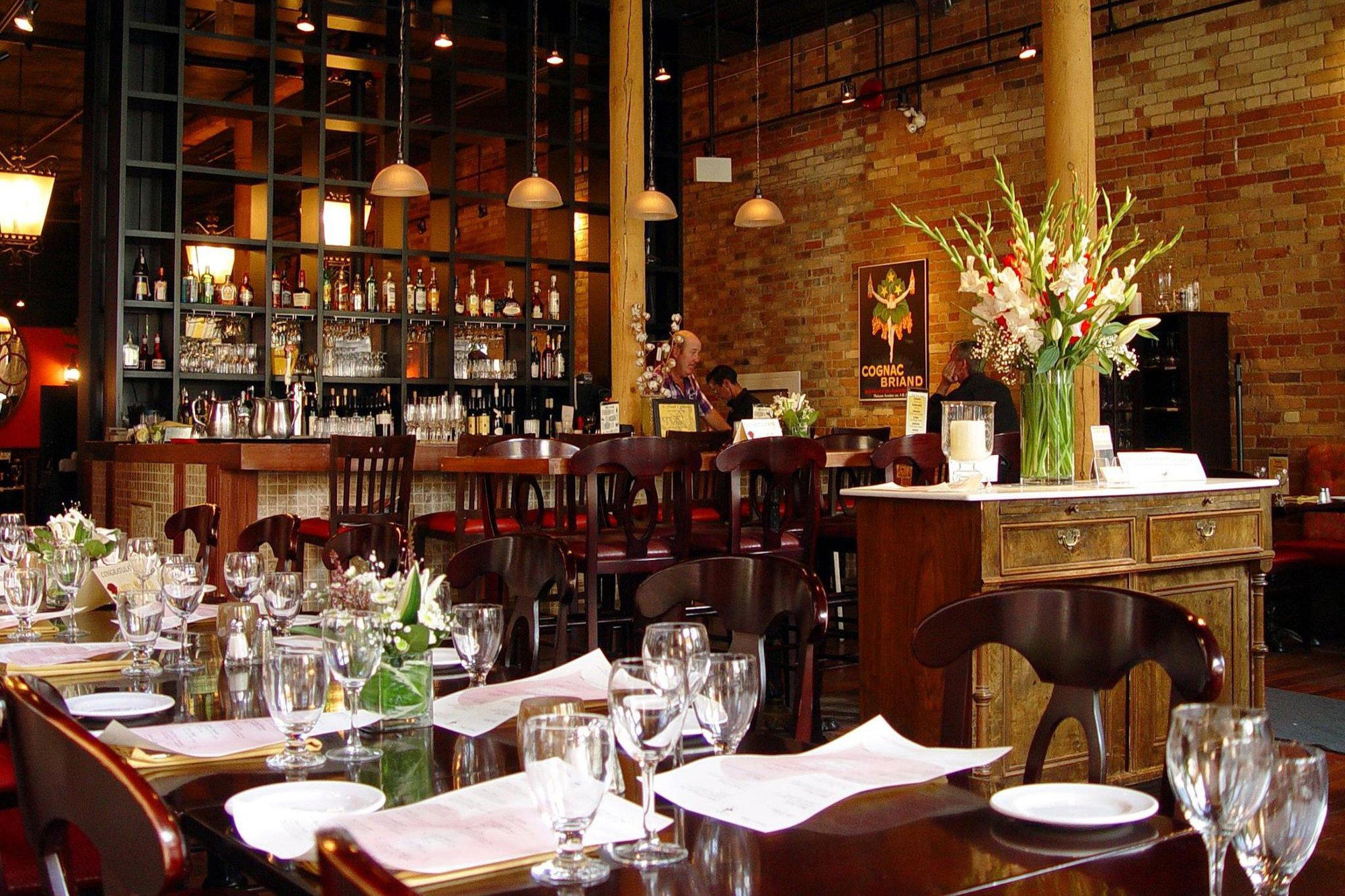
"French Flair Bistro at Le Papillon Wether your feet are tired from touring the town, you are craving comfort food, need a glass of rosé in the sun or a Grand Marnier to escape the rain, you'll want to find any available reason to duck inside Le Papillon. Their patio faces the hustle of the Financial district but is surrounded by historic buildings, with the CN Tower fading into the background. As for the food, it's French Canadian, which means hearty meat tortieres, grandiose stogie-like crepes, and classic desserts. Whatever your reason ends up being, the staff are happy to serve you and the prices won't leave your wallet much lighter."
- Address
- 69 Front St E, Toronto, ON M5E 1B5, Canada
- Phone
- +1 416 367 0303
- Website
- papillononfront.com
- Directions
- Get directions
Front Street and the French Question
Front Street East occupies a particular position in Toronto's dining geography. Sandwiched between the financial district's expense-account steakhouses and the increasingly design-forward restaurants of the east end, it has historically hosted a certain category of restaurant: reliable, occasion-ready, and European in orientation. Le Papillon On Front, at 69 Front St E, belongs to that tradition. It is a French-inflected address in Toronto.
Toronto's French dining scene has always operated in the shadow of Quebec. Where Jérôme Ferrer - Europea in Montreal and Tanière³ in Quebec City can anchor themselves to a French-speaking culinary lineage, Toronto's French restaurants must justify their existence differently, typically through technique, atmosphere, or a specific neighbourhood role. Le Papillon On Front has staked a claim on the latter two.
The Atmosphere as Argument
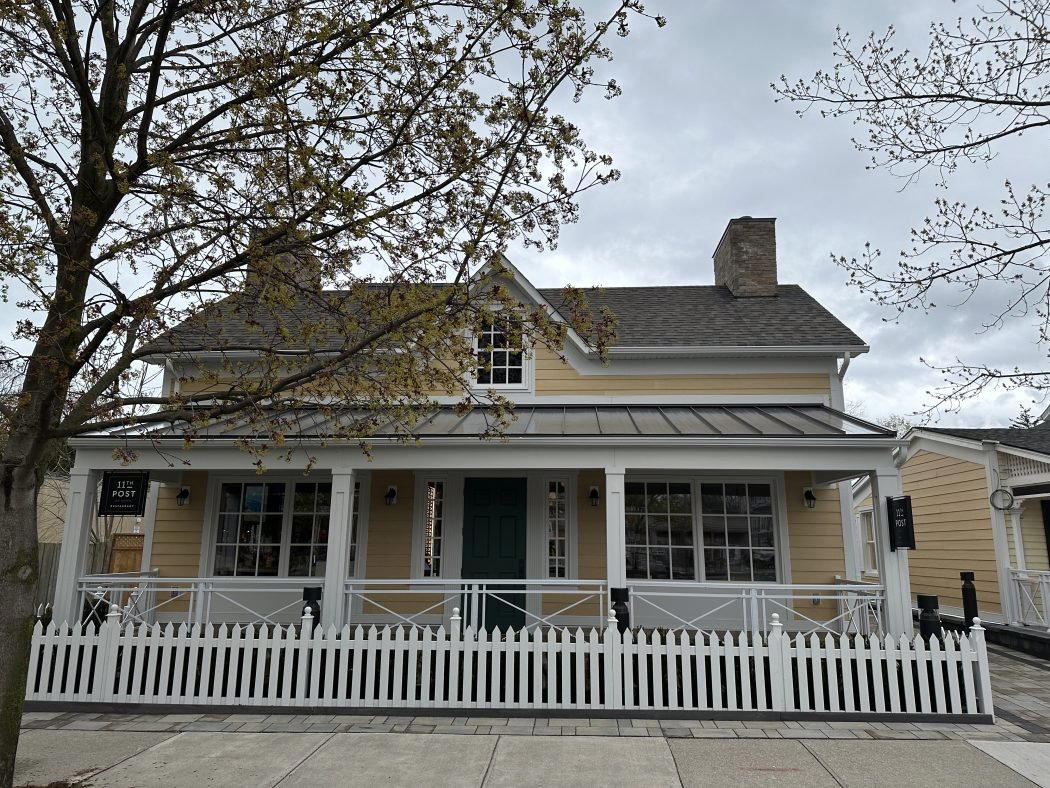
Approaching from Front Street, the room presents as a classic bistro proposition: street-level access, a facade that signals intimacy rather than spectacle. Inside, the scale is human rather than theatrical. This is not the kind of dining room designed to produce a social-media moment; it is calibrated instead for conversation across a table, for the kind of evening that extends past the last course without anyone noticing. That is a specific skill in restaurant design, and it is rarer than it sounds.
The Front Street corridor contains a mix of formats, from the corporate-casual to the destination-oriented. Le Papillon sits at the neighbourhood end of that spectrum, positioned as a place locals return to rather than a venue they visit once for the occasion. That positioning distinguishes it from the upper tier of Toronto's dining hierarchy, where Alo (Contemporary) operates at the city's most formal contemporary register, and where Aburi Hana (Kaiseki, Japanese) and Sushi Masaki Saito (Sushi, Japanese) set the benchmark for precision and ritual in a different tradition entirely.
Where Team Dynamics Define the Experience
In mid-range French dining, the front-of-house tends to carry more weight than the kitchen in determining whether a room functions. This is a structural truth of the format: French bistro cuisine at the accessible tier is not technically complex, so the variables that separate a mediocre evening from a good one are largely about service pacing, wine guidance, and whether the staff read the table correctly. At Le Papillon On Front, this dynamic is central to what the room is.
The relationship between how food arrives and how it is explained, between wine suggestions and what is actually on the plate, constitutes the real product in a restaurant operating outside the tasting-menu tier. A capable sommelier working in coordination with a kitchen that understands timing can make a bistro feel like considerably more than the sum of its parts. The inverse is also true: technically proficient food served by a floor that is indifferent or poorly coordinated will flatten even a well-executed menu.
For comparison, the Italian dining category in Toronto has developed its own version of this team-dynamic question. DaNico (Italian) and Don Alfonso 1890 (Contemporary Italian, Italian) operate at the premium end of that spectrum, where kitchen credentials and front-of-house depth are both visible and legible. French restaurants in the city face a similar expectations gap, and the ones that survive at a neighbourhood level tend to do so because the room functions as a coherent whole rather than because any single element is notable.
Canadian Context: Where Le Papillon Sits
Canada's restaurant geography rewards specificity. A restaurant at Eigensinn Farm in Singhampton or Restaurant Pearl Morissette in Lincoln operates with a locational premise that is inseparable from what it serves. Fogo Island Inn Dining Room in Joe Batt's Arm makes geography the entire point. Urban French restaurants have a different task: they must construct a rationale for themselves that is about format and execution rather than provenance.
The restaurant operates in that urban-French mode, competing within a city that has moved substantially toward contemporary Asian formats, as the prominence of kaiseki and omakase in Toronto's upper tier makes clear. The AnnaLena in Vancouver model of progressive Canadian cooking has its Toronto counterparts, but Le Papillon's orientation is classical rather than progressive, European rather than regionally sourced. That is a deliberate positioning, and in a city that sometimes overcorrects toward novelty, there is a case to be made for it.
Beyond Ontario, the contrast is sharper still. Narval in Rimouski anchors itself to Gulf of St. Lawrence produce in a way that no Toronto restaurant can replicate. Cafe Brio in Victoria draws on Pacific Northwest ingredients as a structural element. Le Papillon's French orientation, by contrast, is about technique and atmosphere rather than local sourcing as identity, which places it in a different competitive conversation entirely.
At the international level, the bistro format that restaurant represents exists on a spectrum that runs up to Le Bernardin in New York City and across to the community-anchored model of Lazy Bear in San Francisco. Le Papillon operates at neither extreme; it occupies a middle register that is about consistency and hospitality rather than boundary-pushing ambition, and in that register, the front-of-house team's ability to create a coherent evening is the principal product.
Know Before You Go
Address: 69 Front St E, Toronto, ON M5E 1B5
Neighbourhood: Front Street East, Old Town Toronto
Format: French bistro, sit-down dining
Reservations: Recommended, particularly for weekends and evening service
Getting There: Union Station is the closest major transit hub; the restaurant is a short walk east along Front Street
Leading For: Occasion dinners, neighbourhood regulars, visitors wanting a European-format evening in the financial district corridor
Note: Current pricing is about $35 per person; specific hours should be confirmed directly with the venue.
Standing Among Peers
Comparable venues nearby, for context on price, style, and recognition.
| Venue | Cuisine | Price | Notes |
|---|---|---|---|
| Le Papillon On FrontThis venue — the venue you are viewing | Classic French & Québécois Brasserie | $$ | Not listed |
| Laissez Faire | French-Inspired Gastropub | $$ | Fashion District |
| EPOS Cafe Couture | French-Inspired Fusion with Mediterranean and Asian Influences | $$$ | Yorkville |
| Bonjour Brioche | French Bakery & Brunch | $$ | South Riverdale |
| La Bettola Di Terroni | Traditional Southern Italian Osteria | $$ | Garden District |
| Union Chicken | Southern Fried Chicken | $$ | Entertainment District |
Continue exploring
More in Toronto
Restaurants in Toronto
Browse all →
Bars in Toronto
Browse all →
Hotels in Toronto
Browse all →

At a Glance
- Classic
- Cozy
- Romantic
- Brunch
- Casual Hangout
- Group Dining
- Date Night
- Historic Building
- Standalone
Casual French dining experience in a heritage building with warm, welcoming atmosphere reflecting traditional French brasserie charm.