
We're Smart World 2 Radishes
Our verdict
Occupying the kitchen of Etterbeek's former military Arsenal, Le Mess has built a following among Brussels residents who return for its market-driven seasonal menu and serious commitment to sustainability. The produce-first approach, with an emphasis on vegetable variety, local sourcing, and waste reduction, places it among the city's most considered addresses for low-impact dining without compromise on flavour.

Pearl is the En Primeur Club membership app, where members save venues, book tables and use the concierge.
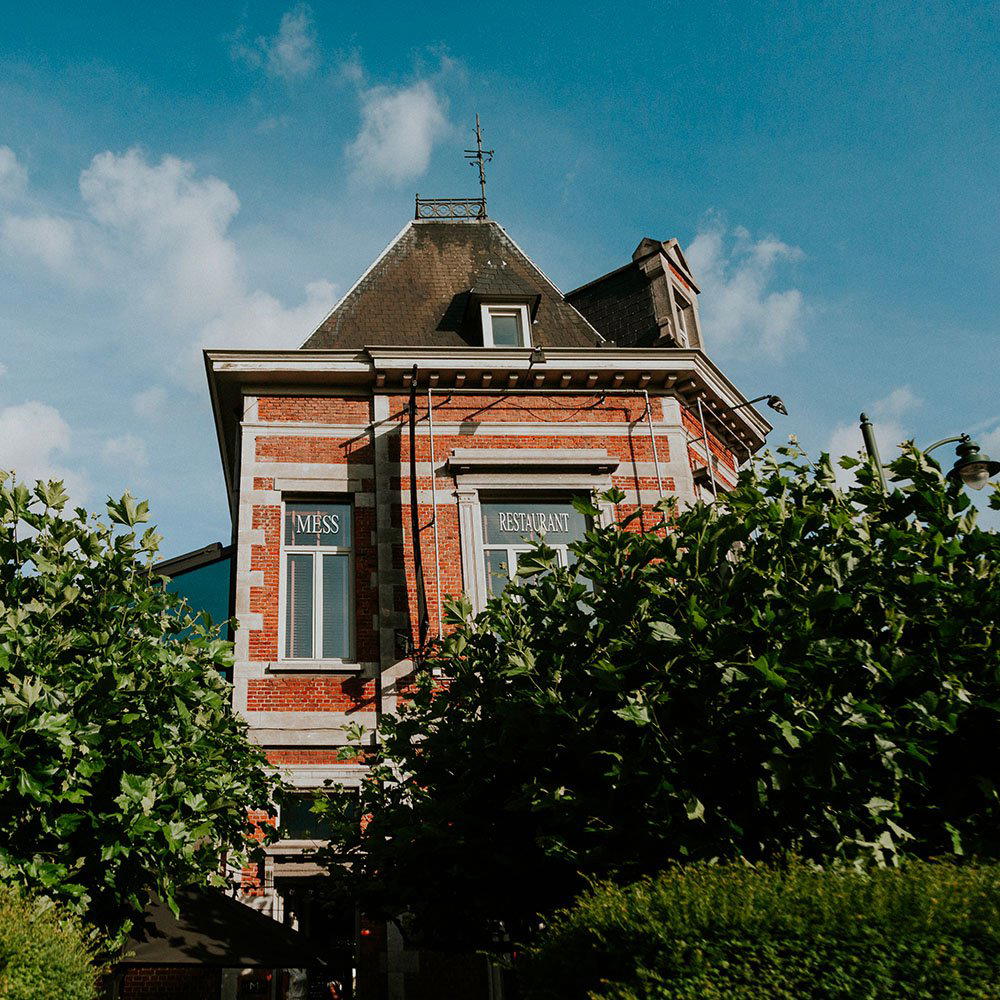
A Former Officers' Mess, and What It Still Gets Right
Boulevard Louis Schmidt runs through Etterbeek at the unhurried pace of a residential commune that has no particular interest in being discovered. The Arsenal building that sits along it carries the kind of institutional solidity you find in nineteenth-century military architecture across Belgium: thick walls, high ceilings, proportions designed for function rather than beauty. It is not the most obvious address for a restaurant with a serious sustainability agenda, but the contradiction is part of the point. Le Mess operates in the former officers' mess of that Arsenal, and the physical setting does something that many purpose-built 'sustainable' restaurant spaces fail to achieve: it feels earned rather than curated. Regulars at this address are not drawn by spectacle. They come because the kitchen has worked out, methodically, what it believes in and executes it with consistency.
What the Sustainability Label Actually Means Here
Brussels has no shortage of restaurants that attach environmental language to their menus without it reaching the kitchen in any meaningful way. Le Mess sits at a different point on that spectrum. The venue has been described by informed observers as one of the most sustainable restaurants in the city, a claim that rests on verifiable operational choices: local sourcing, active waste management, and a menu architecture that reflects what the market offers rather than what a fixed menu requires. That last point matters more than it might initially seem. Cooking around seasonal availability rather than locking in a year-round dish list demands constant adjustment and a kitchen confident enough to let produce lead rather than follow.
Brussels restaurants in the middle price tier tend to fall into two patterns. The first treats sustainability as a marketing frame around an otherwise conventional menu. The second makes it a structural constraint that shapes how the kitchen plans, purchases, and plates. Le Mess belongs to the second category, which places it in a peer group with addresses like Barge and Eliane rather than with the French-Belgian classical tradition represented by Comme chez Soi or the modern luxury register of La Villa Lorraine by Yves Mattagne.
Vegetables as the Throughline
The produce emphasis at Le Mess is not about dietary restriction. It is about range. The kitchen's documented interest in vegetable variety, including the colours and flavours of what arrives from local growers, reflects a cooking philosophy that treats the vegetable course not as accompaniment but as compositional argument. In a city where the culinary reflex still leans heavily toward protein-anchored plates, that represents a meaningful departure from convention. Belgium's broader restaurant scene, from Hof van Cleve in Kruishoutem to Boury in Roeselare, has increasingly engaged with vegetable-forward cooking at its upper end. Le Mess arrives at a similar position from a different direction, through market access and daily sourcing rather than through fine-dining ambition.
The practical implication for regulars is that the menu shifts with what is available. Visitors who return across seasons will encounter different compositions, and the vegetable palette changes accordingly: roots and brassicas in winter, alliums and legumes in spring, the compressed growing season of the Belgian summer pulling forward whatever the regional suppliers can offer. That rhythm is part of what keeps the core audience returning. The menu does not repeat itself in any meaningful way across the calendar, which is a different proposition from the chef's tasting menu model, where repetition is managed through the visitor's own booking frequency.
Etterbeek and the Logic of the Address
Etterbeek is not a dining destination in the way that Ixelles or Saint-Gilles attracts culinary tourism. It is a working commune with a high proportion of EU institutional workers, a reasonable transit infrastructure via the Merode and Schuman metro stations, and a neighbourhood character that has resisted the more visible gentrification pressures affecting adjacent parts of Brussels. That makes Le Mess's audience genuinely local in a way that more central addresses rarely manage: the clientele here is drawn from the surrounding streets and offices rather than from restaurant recommendation lists. The Arsenal building's location on Boulevard Louis Schmidt is direct to reach by public transport, with Etterbeek station on the Brussels-Luxembourg rail line providing another access point for visitors coming from the centre or from further afield across the region.
For those planning a broader Brussels itinerary, the full Brussels restaurants guide covers the city's dining across all formats and price points. The Brussels bars guide and hotels guide provide supporting coverage for a longer stay. Belgium's wider restaurant offer, from Zilte in Antwerp to Willem Hiele in Oudenburg and Bartholomeus in Heist, is documented in EP Club's regional coverage alongside Castor in Beveren and the wider Bozar Restaurant for those working through Brussels's more formal dining tier.
What the Regulars Know
The audience that returns to Le Mess repeatedly tends to arrive with adjusted expectations: this is a kitchen that does not perform for first-time visitors in the way that a tasting-menu restaurant calibrates each course for maximum impact. The experience is more cumulative. Over multiple visits, the produce logic becomes legible, the seasonal rotation makes sense as a system, and the kitchen's choices read as part of an ongoing argument about how to cook in this particular city and climate. That is a different kind of loyalty from the one sustained by novelty or spectacle, and it tends to be more durable. Regulars at Le Mess are not chasing a new experience each time. They are checking in on a restaurant that has made a set of commitments and continues to honour them.
For the Brussels dining market, that kind of consistency around a clearly defined position is relatively unusual. The city's most-discussed restaurants either anchor themselves in classical French-Belgian tradition or reach toward international fine-dining formats. Le Mess operates in neither register. Its reference points are local suppliers, seasonal availability, and the environmental balance of what it puts on the plate, a framing that aligns it more closely with the produce-led independent restaurants emerging across northern European cities than with the Brussels fine-dining canon. Whether the format is replicated elsewhere in the city or remains an outlier will depend on whether the market's appetite for this kind of rigorously grounded cooking continues to develop. The evidence from comparable cities suggests it will.
Planning Your Visit
Le Mess is located at Boulevard Louis Schmidt 1, 1040 Etterbeek. The address is accessible via public transit using the Etterbeek rail station and the broader Brussels metro network. Given the kitchen's market-driven approach, visiting across different seasons will yield different menus, making multiple visits across the year a reasonable proposition for those based in or regularly visiting Brussels. The Brussels experiences guide and wineries guide provide further context for building a broader itinerary around the city.
Frequently asked questions
Is Le Mess okay with children?
The converted Arsenal building in Etterbeek carries a functional, unfussy tone rather than the hushed formality of Brussels's fine-dining rooms. That setting tends to suit families better than a white-tablecloth environment would. Nothing in the venue's documented profile suggests restrictions on younger diners.
What is the atmosphere like at Le Mess?
Le Mess occupies the former officers' mess of the Etterbeek Arsenal, a building with a utilitarian military history that shapes the room's character more than any decorative intent. The address sits on Boulevard Louis Schmidt in a residential commune, so the pace is unhurried and neighbourhood-facing rather than geared toward culinary tourism.
What kind of recognition has Le Mess received?
Le Mess has received recognition including: In the kitchen of the old officers ‘mess of the Arsenal of Etterbeek, the chef shows a special interest for the environment, for the quality as well as the variety of market fresh seasonal products, but also for the waste management and the….
What's the must-try dish at Le Mess?
The kitchen operates on a market-led seasonal rotation, so no fixed dish defines the menu across visits. The consistent thread is vegetable variety: local produce, seasonal colour, and range are documented as central to how the kitchen is built, making the vegetable courses the clearest expression of what Le Mess is doing.
Where do I go for Le Mess?
Le Mess is located at Bd Louis Schmidt 1, 1040 Etterbeek, Belgium, Brussels.
Do they take walk-ins at Le Mess?
Le Mess sits in a residential Etterbeek address rather than a high-traffic dining corridor, which historically favours neighbourhood regulars over spontaneous visitors. Contacting the venue directly before arriving is the practical approach.
What's the standout thing about Le Mess?
The sustainability commitment at Le Mess is operational rather than decorative: local sourcing, waste management, and a menu built around seasonal vegetable variety are all documented as active kitchen practice. That places it among the most consistently sustainable restaurants in Brussels, not as a marketing position but as a structural approach to how the kitchen runs.
Compact Comparison
Comparable venues nearby, for context on price, style, and recognition.
| Venue | Cuisine | Price | Awards | Notes |
|---|---|---|---|---|
| Le MessThis venue (the venue you are viewing) | Seasonal French-Belgian Gastropub | $50–100 | We're Smart World 2 Radishes | Not listed |
| Crush | Belgian-French Bistro | Not listed | Not listed | Pl. de Brouckere, Belgian-French Bistro |
| Chaga | French Contemporary Fine Dining | $300–500 | Michelin Plate · We're Smart World 4 Radishes | Porte de Namur, French Contemporary Fine Dining |
| De l'Ogenblik | Classic French-Belgian Brasserie | $100–150 | Michelin Plate | Pl. de Brouckere, Classic French-Belgian Brasserie |
| Era | Modern Fusion Fine Dining | $50–100 | Not listed | Pl. de Brouckere, Modern Fusion Fine Dining |
| Brut Food | Modern Organic Belgian Bistro | $50–100 | We're Smart World 3 Radishes | Ixelles, Modern Organic Belgian Bistro |
Recognition history
Dated appearances from independent guides and award organizations, with the underlying list record or original source where available.
We're Smart World 2 Radishes
We're Smart World
Continue exploring
More in Brussels
Restaurants in Brussels
All restaurants in Brussels →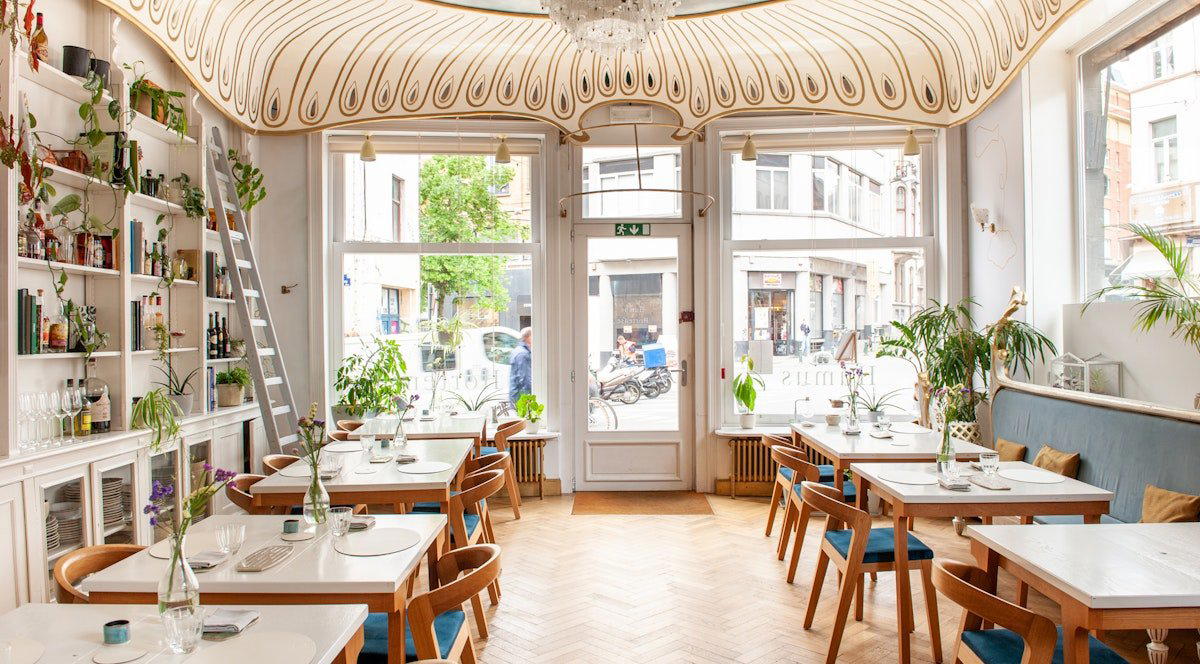
Bars in Brussels
All bars in Brussels →
Hotels in Brussels
All hotels in Brussels →
Wineries in Brussels
Browse all →
Details
- Elegant
- Cozy
- Modern
- Business Dinner
- Group Dining
- Date Night
- Historic Building
- Local Sourcing
- Zero Waste
- A La Carte
- Vegetarian Friendly
- Vegan Options
- Gluten Free Options
Current opening hours
- Monday
- 12–2:30 PM, 6:30–10:30 PM
- Tuesday
- 12–2:30 PM, 6:30–10:30 PM
- Wednesday
- 12–2:30 PM, 6:30–10:30 PM
- Thursday
- 12–2:30 PM, 6:30–10:30 PM
- Friday
- 12–2:30 PM, 6:30–10:30 PM
- Saturday
- 6:30–10:30 PM
- Sunday
- Closed
Hours can change for holidays and private events. Hours as of .
Stylish and cozy with nicely spaced tables, warm welcome, and low noise level conducive to good conversations.