Le KG
Le KG sits in the village of Bainville-aux-Saules in the Vosges, a rural corner of northeastern France where the question of what arrives on the plate is inseparable from what grows, grazes, and ferments nearby. The address alone signals intent: this is not a restaurant that exists despite its geography, but because of it. Visitors planning a table should account for the village's limited transport links and plan accordingly.
Pearl is the En Primeur Club membership app — saves, bookings, and concierge access live there. Same editors, same standards.
- Address
- 10 Pl. Marcel Gérard, 88270 Bainville-aux-Saules, France
- Phone
- +33372739590
- Website
- restaurant-lekg.eatbu.com
- Directions
- Get directions
 Saves & bookings on Pearl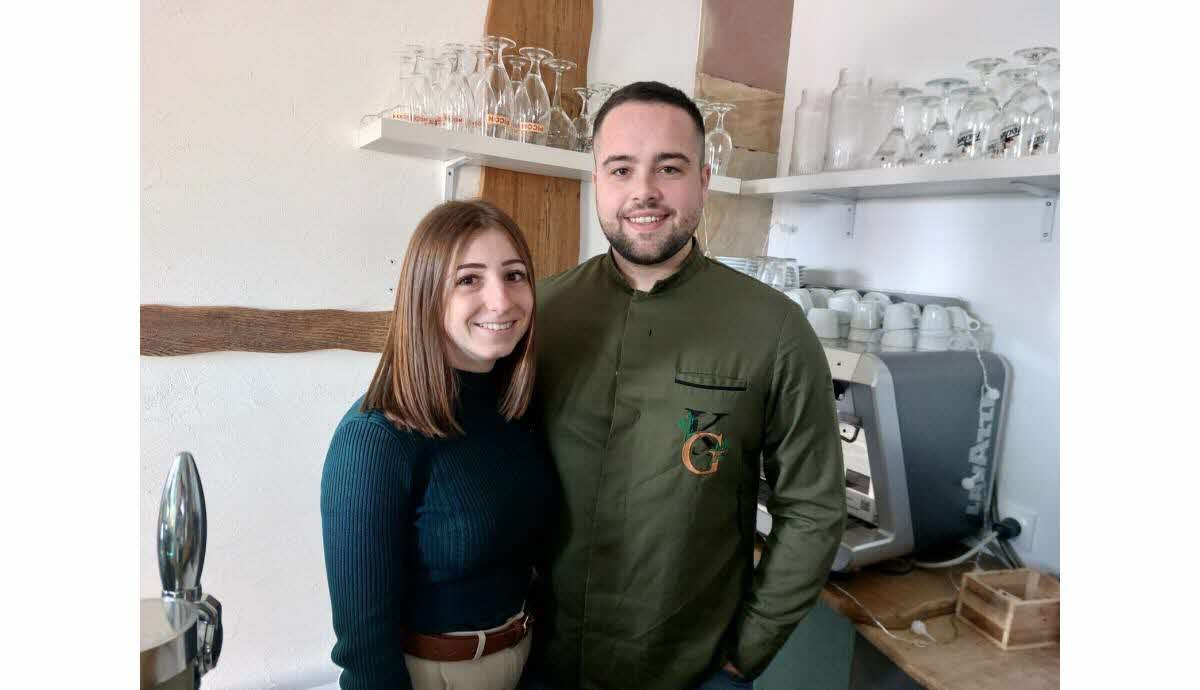
Where the Vosges Sets the Menu
Bainville-aux-Saules is the kind of address that asks something of the traveller before the first course arrives. The village sits in the Vosges department of northeastern France, a territory of forested hillsides, small dairy farms, and river valleys that have fed the local table for centuries. Getting here requires a car; the nearest major rail hub is Épinal, roughly twenty kilometres to the south, and the roads in from there run through a series of agricultural hamlets that make the destination feel deliberate rather than accidental. That sense of purposeful arrival is part of what defines dining in this part of France: the remoteness is not a drawback but a condition that shapes what kitchens here can and must work with.
Rural Vosges restaurants operate within a tradition that the grand Alsatian and Lorrain tables have always understood. The logic runs like this: when the supply chain is short by necessity, the sourcing conversation becomes the menu conversation. What the farm at the edge of the village produces, what the forest offers in a given week, what the river yields, these are not talking points for a marketing sheet but actual constraints that determine what a cook can put on the table. It is a discipline that some of France's most considered kitchens have built their reputations around, from Bras in Laguiole, where Michel Bras spent decades codifying the relationship between the Aubrac plateau and the plate, to Flocons de Sel in Megève, where mountain-altitude sourcing informs every seasonal shift.
The Ingredient Logic of the Vosges
Northeastern France carries a specific agricultural identity that distinguishes it from the Loire, Provence, or the Atlantic coast. The Vosges forests yield mirabelle plums, wild mushrooms, and game. The valleys produce milk and cheese with a character tied directly to grass and altitude. The rivers, including the Moselle and its tributaries that run through this part of the department, have historically supported freshwater fishing traditions now largely absorbed into regional cuisine as a nostalgic reference point rather than a daily supply. This is the sourcing context within which a restaurant at 10 Place Marcel Gérard operates.
In France's broader restaurant ecosystem, the sourcing conversation has bifurcated sharply. At the multi-Michelin level, places like Mirazur in Menton or Alléno Paris au Pavillon Ledoyen in Paris have built ingredient provenance into the structural grammar of the menu, making sourcing legible to the diner through technique and presentation. Further down the recognition ladder, in villages like Bainville-aux-Saules, the relationship with local supply is often less declarative but no less real: it is simply how a kitchen of this scale functions. The grocer, the neighbouring farm, the market at Épinal on a Thursday, these are the supply chain.
Placing Le KG in the Regional Picture
Lorraine and the Vosges sit in a quieter register of French fine dining than Alsace to the east, where Auberge de l'Ill in Illhaeusern has maintained three Michelin stars across decades and set an expectation for what a serious regional table in northeastern France can achieve. The Vosges, by contrast, has fewer restaurants with national recognition, which means that discovery here tends to happen through local reputation rather than award circuits. For the traveller cross-referencing against Assiette Champenoise in Reims to the west or Au Crocodile in Strasbourg to the east, Le KG occupies a different tier: a village address with a local dining function rather than a destination table drawing international guests.
That distinction matters for how you approach the booking. Village restaurants in this part of France typically operate on reduced hours, close one or two days per week, and are not always reachable by the usual digital reservation platforms. Calling ahead or arriving with flexibility built into the itinerary is standard practice, not an exception. The address at Place Marcel Gérard, the village square, is typical of embedded rural bistros that have served the community for generations, where the clientele on a Tuesday lunch looks different from a Saturday evening, and the kitchen calibrates accordingly.
Reading the Broader French Country Table
The French provincial restaurant, particularly in territories outside the obvious gastronomic corridors, occupies a space that international visitors often underestimate. These are not reduced versions of Paris or Lyon. They are a different category: places where the measure of quality is consistency within a local register rather than ambition toward a national one. The same logic applies at Georges Blanc in Vonnas, where deep regional roots coexist with serious Michelin recognition, or at Auberge du Vieux Puits in Fontjoncouse, another village address that made itself a destination through sourcing discipline and time.
For reference across the French regional picture, the gap between a village bistro and a destination table is instructive. Troisgros - Le Bois sans Feuilles in Ouches shows what decades of sourcing discipline and generational commitment produce at the summit of the regional French format. L'Oustau de Baumanière in Les Baux and La Marine in Noirmoutier-en-l'île illustrate how geography and hyper-local ingredients become the organising principle of a kitchen's identity. Le KG operates at a different scale, but the underlying logic, that place determines plate, runs through all of them.
Planning Your Visit
Bainville-aux-Saules is a working village, not a tourist hub, and the infrastructure around it reflects that. A car from Épinal covers the distance in under thirty minutes. Accommodation options in the immediate area are sparse, and most visitors use Épinal or the spa town of Vittel, around twenty-five kilometres to the southwest, as a base. Current hours are Mon: 12-1:30 PM, 7-8:30 PM; Tue: 12-1:30 PM; Wed: Closed; Thu: 12-1:30 PM, 7-8:30 PM; Fri: 12-1:30 PM, 7-8:30 PM; Sat: 12-1:30 PM, 7-8:30 PM; Sun: 12-1:30 PM, and reservations are recommended. Given the rural setting, arriving with a reservation rather than on spec is the sensible approach.
At-a-Glance Comparison
Comparable venues nearby, for context on price, style, and recognition.
| Venue | Cuisine | Price | Notes |
|---|---|---|---|
| Le KGThis venue — the venue you are viewing | French Bistronomic | $$$ | Not listed |
| La Fontaine des Saveurs | Classic French Gastronomy | $$$ | Old Town (Vieille Ville) |
| À l'Étoile | Traditional French Alsatian | $$$ | Klingenthal |
| L'Assiette du Coq à l'Âne | Traditional Vosges Regional French | $$$ | Place du Tilleul |
| L'Angélus | French Brasserie | $$$ | Rue de la République |
| La Table du 12 | Seasonal Alsatian-French Bistro | $$$ | Turckheim |
Continue exploring
More in Bainville Aux Saules
Restaurants in Bainville Aux Saules
Browse all →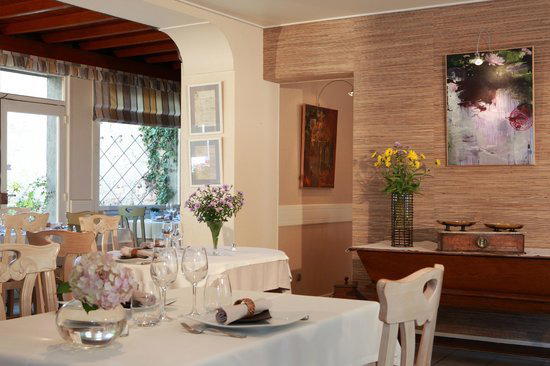
Hotels in Bainville Aux Saules
Browse all →
At a Glance
- Cozy
- Modern
- Elegant
- Date Night
- Casual Hangout
- Open Kitchen
- Extensive Wine List
- Local Sourcing
Current opening hours
- Monday
- 12–1:30 PM, 7–8:30 PM
- Tuesday
- 12–1:30 PM
- Wednesday
- Closed
- Thursday
- 12–1:30 PM, 7–8:30 PM
- Friday
- 12–1:30 PM, 7–8:30 PM
- Saturday
- 12–1:30 PM, 7–8:30 PM
- Sunday
- 12–1:30 PM
Hours can change for holidays and private events. Last verified .
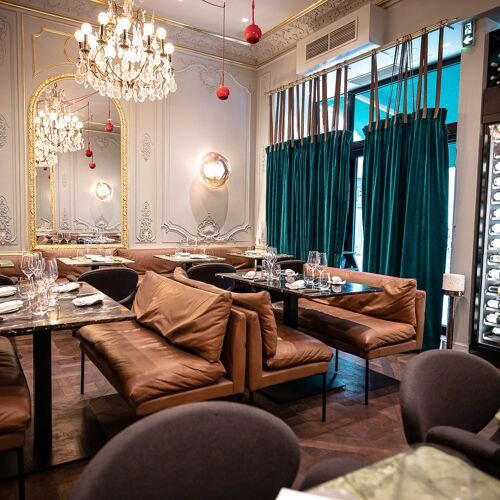
Modern and warm atmosphere with elegant yet simple decoration, offering a convivial and welcoming dining experience.