
1 Michelin Star
Our verdict
A Michelin-starred address in Épinal's capital, Les Ducs de Lorraine operates from a neo-Tudor manor where stained-glass windows and carved panelling set a formal architectural tone. The kitchen, led by Stéphane Ringer and Rémi Gornet, works with premium ingredients — lobster, turbot, caviar, sweetbreads — cooked with precision. A serious Bordeaux cellar and tableside cheese and dessert trolleys anchor this firmly in the tradition of grand French gastronomy in eastern France.

Pearl is the En Primeur Club membership app — saves, bookings, and concierge access live there. Same editors, same standards.
- Address
- 5 Av. de Provence, 88000 Épinal, France
- Phone
- +33 3 29 29 56 00
- Hours
- Mon ClosedTue–Wed 12–1:15 PMThu–Sat 12–1:15 PM, 7:30–9 PMSun Closed
- Directions
- Get directions
The menu
What to order
- Déclinaison de foie gras
- Grande assiette autour du homard
- Dos de turbot poêlé
- Soufflé mirabelle
A Manor Dining Room in the Vosges Capital
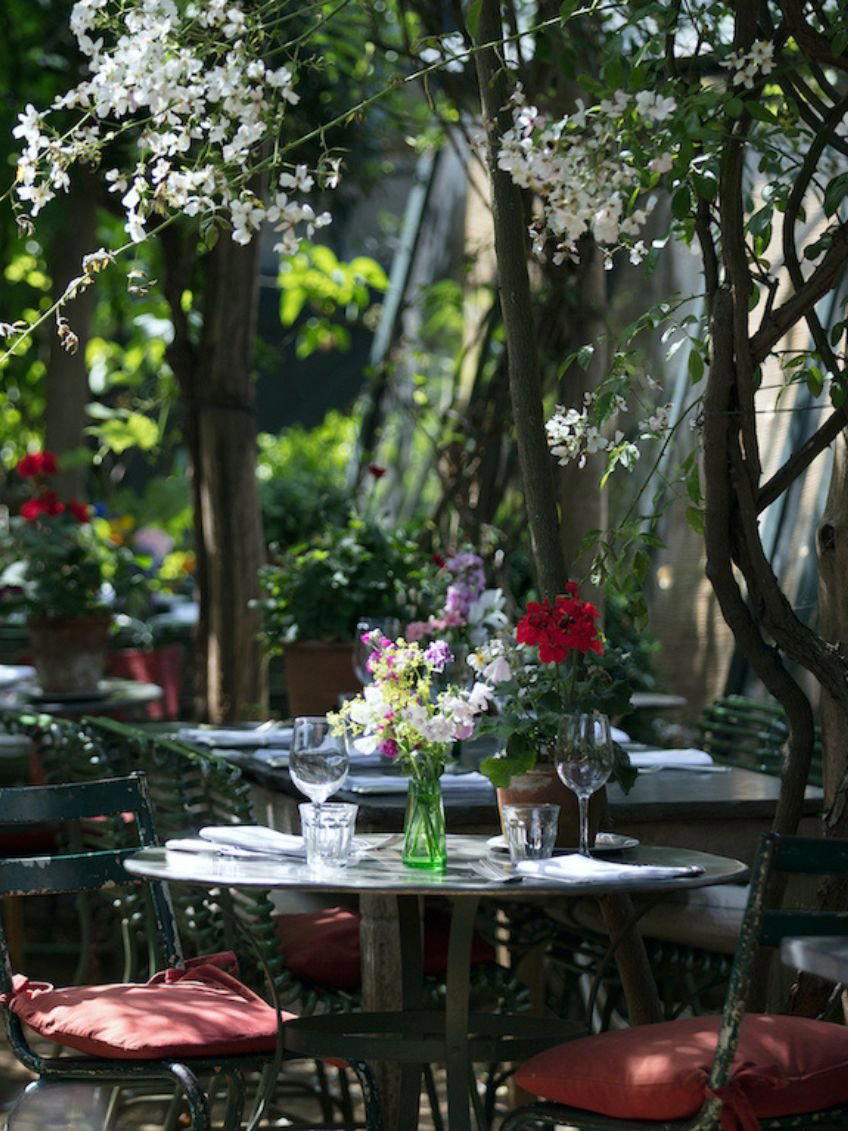
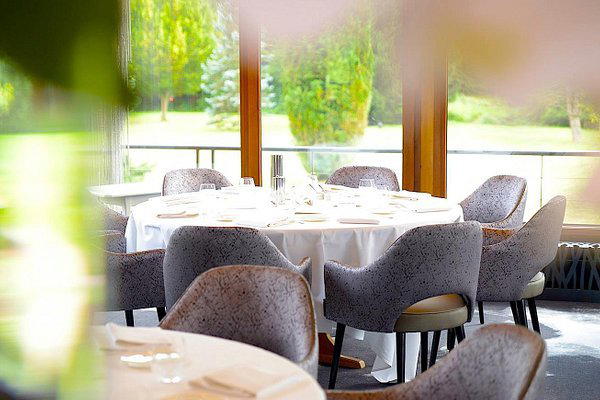
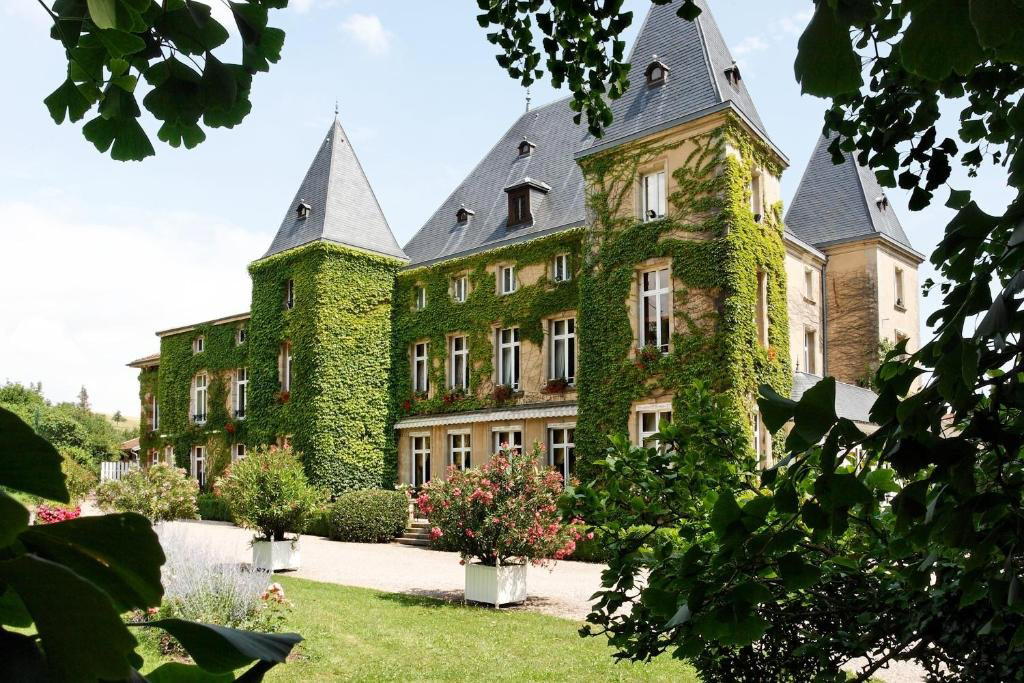
Épinal is not a city that announces itself loudly on France's gastronomic map. The Vosges prefecture, roughly equidistant between Nancy and Colmar, sits in a corridor of eastern France where serious cooking has historically been driven by regional product — mountain herbs, river fish, forest mushrooms — rather than metropolitan ambition. That context matters when placing Les Ducs de Lorraine, because the restaurant operates as something of a counterpoint to the region's more rustically inclined tradition. Housed in a neo-Tudor manor on the Avenue de Provence, it commits to a formal register that would not look out of place in Strasbourg or Reims: high ceilings, stained-glass windows, and carved panelling that function less as decoration than as architecture shaping how you experience the meal itself. The conservatory extension, fitted with a sliding roof, allows a seasonal outdoor dimension without abandoning the room's fundamental seriousness.
Among the restaurants in Épinal, this is the address that carries the most formal weight, and the kitchen's Michelin star, maintained through 2024, provides a verifiable anchor for that positioning. The dining room carries the authority of a provincial grande maison rather than the energy of a destination-driven tasting counter.
Ingredient Logic: What the Kitchen Prioritises
The most telling signal about a kitchen's ambitions is where it sources its ingredients, and the produce list at Les Ducs de Lorraine reads like a deliberate statement of intent. Lobster, langoustines, turbot, caviar, sweetbreads: these are not regional pantry items in any strict sense. The Vosges does not produce Atlantic shellfish or Gironde caviar. What the choice of these ingredients signals instead is an alignment with the French haute cuisine tradition that treats the leading available national produce as a shared resource, the same logic that allows a kitchen in Laguiole, as at Bras, to work with ingredients far beyond its immediate geography while remaining deeply rooted in its place.
This approach distinguishes kitchens operating at the premium end of the price spectrum, the €€€€ bracket, from more terroir-obsessive concepts. The logic is not provincial celebration but rather precision cookery applied to the finest available materials, wherever those materials originate. Turbot caught in the English Channel, langoustines from Scottish waters, sweetbreads from carefully raised French veal: these are ingredients that demand technical command and supply-chain discipline in equal measure. The kitchen's use of them, described as cooked with precision, positions the cooking within a lineage that connects to three-star French kitchens like Troisgros in Ouches or Paul Bocuse's Auberge du Pont de Collonges, even if the register here is single-star.
In the eastern French corridor, Auberge de l'Ill in Illhaeusern represents the most sustained example of this ingredient philosophy applied across generations. Les Ducs de Lorraine operates on a smaller and less historically documented scale, but the produce priorities share a common framework: French classical technique applied to premium materials, with the dining room environment reinforcing the weight of what arrives on the plate.
The Trolley Tradition and the Cellar
Two details in the service format carry particular editorial weight. The cheese trolley and the dessert trolley are not mere gestures toward classical dining ritual; they represent a format that has largely disappeared from mid-tier restaurants across France and survives primarily in houses that are committed to both the theatre and the labour costs of tableside service. A well-maintained cheese trolley requires a trained maître fromager or equivalent expertise, and a dessert trolley demands both skill in preparation and timing in execution. Their presence at Les Ducs de Lorraine signals a kitchen and front-of-house team that has not trimmed costs at the expense of format.
The wine cellar's emphasis on Bordeaux is similarly informative. In eastern France, the natural gravitational pull is toward Alsace and Burgundy, both geographically proximate and stylistically aligned with the region's produce. A cellar described as heavily stocked with Bordeaux reads as a deliberate curatorial choice rather than a default regional selection. It suggests a house with particular Bordeaux expertise and a clientele willing to engage with serious aging-appropriate wines at €€€€ price points. For diners who treat Bordeaux as their primary reference for fine French wine, this is a cellar worth exploring in depth. Those seeking Alsatian producers or Burgundy depth should factor the cellar's apparent emphasis into their expectations.
The Two-Chef Structure
The co-chef format, Stéphane Ringer and Rémi Gornet together presiding over the kitchen, is worth noting as a structural choice. In French fine dining, the single chef-patron model has historically been dominant, partly for reasons of creative consistency and partly because Michelin's star system has traditionally attached to named individuals. Two-chef kitchens at single-star level are less common than at multi-star operations, where the division of responsibility becomes more operationally necessary. At this level, the arrangement suggests either a long-term creative partnership or a deliberate division of responsibility that the house has chosen to acknowledge publicly. The practical outcome for the diner is a kitchen with two sets of senior experience applied to the menu, which in most cases strengthens execution rather than diluting it.
For context on what two-chef or collaborative structures can achieve at the highest levels of modern cuisine, Mirazur in Menton and Alléno Paris au Pavillon Ledoyen represent different points on the spectrum of how kitchen leadership is organised in France's top tier. At the other end of the formal European fine dining register, Frantzén in Stockholm demonstrates how a single-operator vision scales differently, while FZN by Björn Frantzén in Dubai shows what happens when the model extends internationally. These comparisons are not to suggest equivalence in scale or recognition, but rather to locate the co-chef model within a broader set of structural choices that French and European fine dining houses make.
Planning a Visit
Les Ducs de Lorraine operates a compressed weekly schedule that is worth planning around carefully. The restaurant is closed on Mondays and Sundays, and lunch service runs from noon to 1:15 PM on Tuesday through Saturday, a 75-minute window that allows very little margin if you arrive without a reservation. Evening service on Thursday, Friday, and Saturday runs from 7:30 PM to 9 PM. The restricted hours are consistent with a kitchen operating at full stretch across a small number of covers rather than turning tables across an extended service. At the €€€€ price point, the meal represents a significant investment, and the format rewards guests who arrive having made deliberate choices about the wine and who engage with the trolley service rather than declining it.
Épinal itself offers a manageable visit structure for those combining the meal with a broader Vosges itinerary. The hotels in Épinal cover a range of categories suitable for a one-night stay, and the city's position makes it a plausible stop between Strasbourg and Nancy or as a base for the Vosges forests and spa towns. For those building a longer stay, the bar scene in Épinal, the wine options around Épinal, and the cultural and experiential programming in the city can fill the margins around a serious lunch. Auberge du Vieux Puits in Fontjoncouse and AM par Alexandre Mazzia in Marseille represent alternative regional anchors for those building a broader French itinerary. The address is 5 Avenue de Provence, 88000 Épinal.
Frequently asked questions
What's the vibe at Les Ducs de Lorraine?
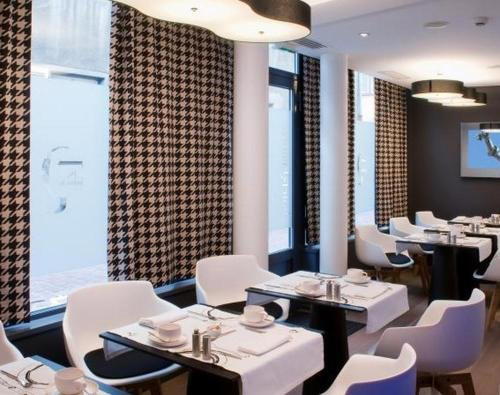
The atmosphere is formal and architectural. The neo-Tudor manor, with its stained-glass windows, high ceilings, and carved panelling, sets a tone that aligns with Épinal's position as the Vosges regional capital. This is not a relaxed bistro or a contemporary open-kitchen concept; it is a traditional grand dining room operating at the €€€€ level with Michelin star recognition. The conservatory and sliding-roof terrace offer a slightly less enclosed option, particularly in warmer months, but the overall register remains composed and serious.
What's the signature dish at Les Ducs de Lorraine?
The kitchen's stated ingredient priorities, lobster, langoustines, turbot, caviar, sweetbreads, suggest a menu anchored in premium proteins handled with classical French technique. The cheese and dessert trolleys are the clearest expression of the kitchen's format commitment, and in Michelin-starred French houses at this tier, the trolley service often represents the most memorable moment of the meal. For specific current menu details, contacting the restaurant directly before your visit is the only reliable approach.
Is Les Ducs de Lorraine child-friendly?
The formal dining room environment, €€€€ price range, and compressed service windows suggest this is primarily an adult dining destination. The 75-minute lunch service window and the tableside trolley format require a level of engagement that tends to suit adult diners more comfortably. Families visiting Épinal with children would likely find more appropriate options among the broader range of Épinal restaurants, reserving Les Ducs de Lorraine for an occasion-driven adult meal.
Fast Comparison
| Venue | Cuisine | Price | Awards |
|---|---|---|---|
| Les Ducs de LorraineThis venue — the venue you are viewing | Modern French Gastronomic | $150–200 | 1 Michelin Star |
| Alléno Paris au Pavillon Ledoyen | Creative | Not listed | Michelin 3 Star |
| Kei | Contemporary French, Modern Cuisine | Not listed | Michelin 3 Star |
| L'Ambroisie | French, Classic Cuisine | Not listed | Michelin 3 Star |
| Le Cinq - Four Seasons Hôtel George V | French, Modern Cuisine | Not listed | Michelin 3 Star |
| Plénitude | Contemporary French | Not listed | Michelin 3 Star |
Recognition history
Dated appearances from independent guides and award organizations, with the underlying list record or original source where available.
Michelin 1 Star
Michelin
Full recognition history (3 entries)
Michelin 1 Star
Michelin
Michelin 1 Star
Michelin
Les Ducs de Lorraine
The wine
- Wine program
- Curated wine list
- Extensive wine list
Details
- Elegant
- Intimate
- Cozy
- Sophisticated
- Classic
- Special Occasion
- Date Night
- Business Dinner
- Celebration
- Terrace
- Historic Building
- Extensive Wine List
- Local Sourcing
- Garden
- A La Carte
Current opening hours
- Monday
- Closed
- Tuesday
- 12–1:15 PM
- Wednesday
- 12–1:15 PM
- Thursday
- 12–1:15 PM, 7:30–9 PM
- Friday
- 12–1:15 PM, 7:30–9 PM
- Saturday
- 12–1:15 PM, 7:30–9 PM
- Sunday
- Closed
Hours can change for holidays and private events. Last verified .
Cosy, intimiste ambiance in a charming house with high ceilings, stained-glass windows, and precious panelling; terrace surrounded by greenery in season.