Our verdict
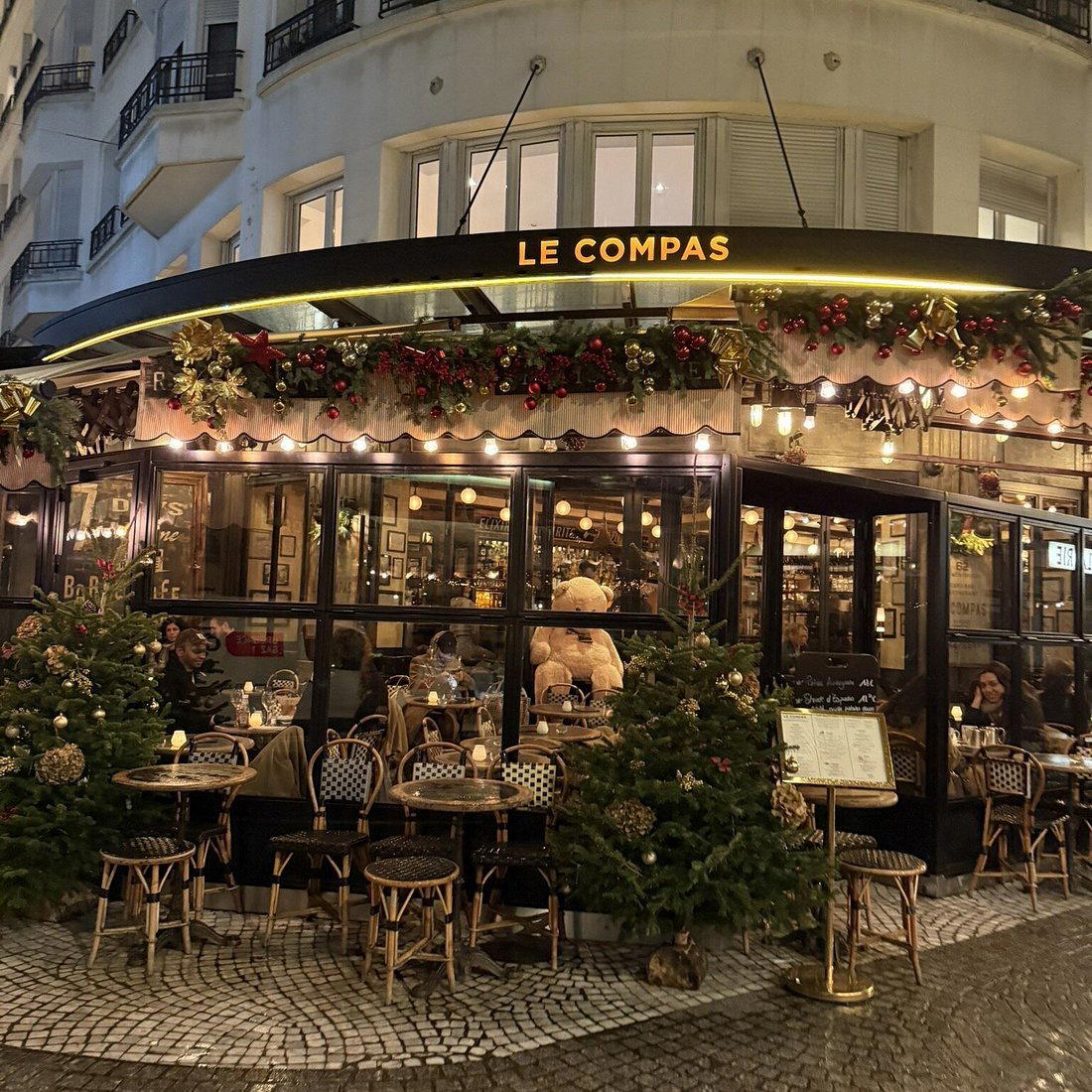
Le Compas sits on Rue Montorgueil, one of Paris's most historically embedded market streets, where the rhythm of daily French food culture has been set for centuries. The address places it inside a neighbourhood that functions as both a working market corridor and a destination for those who take serious Parisian eating seriously. For context on the broader Paris dining scene, see our full Paris restaurants guide.

Pearl is the En Primeur Club membership app — saves, bookings, and concierge access live there. Same editors, same standards.
- Address
- 62 Rue Montorgueil, 75002 Paris, France
- Phone
- +33 1 42 33 94 73
- Hours
- Daily 7 AM–2 AM
- Website
- lecompas-restaurant.com
- Directions
- Get directions
The menu
What to order
- Mussels with Parsley Butter
- Duck Confit
- Escargots
Rue Montorgueil and the Weight of a Market Street Address
Paris has no shortage of streets that trade on culinary reputation, but Rue Montorgueil in the 2nd arrondissement operates differently from most. It is not a restaurant row in the conventional sense. The street's character comes from its continuity as a working food market — fromageries, boulangeries, poissoneries, and produce stands that have served the neighbourhood since the city's central market at Les Halles anchored this quarter of Paris. Le Compas, at number 62, sits within that corridor, which means its immediate context is not a curated dining district but a street that Parisians have used for daily provisioning for generations.
That distinction matters when reading a Paris address. A table on Rue Montorgueil is positioned inside an active, functional food culture rather than adjacent to it. Visitors who walk the street before or after eating will pass the same suppliers that professional kitchens use, which provides a particular kind of grounding that purpose-built restaurant districts rarely offer. For those mapping the broader Paris dining scene, our full Paris restaurants guide sets the neighbourhood context across all arrondissements.
The Cultural Logic of Classic French Dining in the 2nd
French cuisine carries an unusually codified institutional history. The traditions that define what a serious French meal looks and feels like — the sequence of courses, the relationship between producer and kitchen, the expectation of service as a formal choreography, were largely established in the Paris of the 18th and 19th centuries. The 2nd arrondissement, and Rue Montorgueil specifically, was at the geographic centre of that formation. The proximity to Les Halles meant that the cooks, restaurateurs, and suppliers who shaped French bourgeois cuisine worked within walking distance of this street.
That lineage is worth understanding when placing any address in this quarter. Equally, the creative end of the Paris spectrum, where Alléno Paris au Pavillon Ledoyen and Arpège sit, reflects decades of deliberate departure from classical form. A market-street address in the 2nd suggests a different register entirely: the kind of French table that serves as a reference point for what everyday serious eating in Paris has always meant, rather than a statement about where the cuisine is going next.
That same impulse is present in French cooking well beyond Paris. Houses like Troisgros in Ouches, Auberge de l'Ill in Illhaeusern, and Bras in Laguiole each represent distinct regional interpretations of what French cuisine means when it is rooted in place rather than in international ambition. Even at the level of Paul Bocuse's Auberge du Pont de Collonges, the argument has always been that great French cooking is inseparable from its geography and its traditions. A Rue Montorgueil address draws from the same argument, even at a more accessible register.
Where Le Compas Sits in the Paris Dining Spectrum
Paris dining in the 2020s has fragmented into a wide band of registers, from the technically ambitious modernism of Kei, which brings Japanese precision to the French format, through to neighbourhood tables that prioritise consistency and seasonal procurement over any particular statement. The market-street context of Rue Montorgueil positions Le Compas closer to the latter end of that spectrum, in a part of Paris where the walk to the table is itself part of the experience.
For comparison, restaurants at the French regional level that carry serious critical weight, Flocons de Sel in Megève, Mirazur in Menton, Assiette Champenoise in Reims, Au Crocodile in Strasbourg, Auberge du Vieux Puits in Fontjoncouse, and AM par Alexandre Mazzia in Marseille, each operate with a defined critical identity and documented award history. That level of institutional recognition places them in a different competitive conversation. Within Paris itself, even mid-tier addresses now operate in a market where the city's reputation for French fine dining draws visitors who might otherwise consider Le Bernardin in New York or Atomix as comparable reference points for serious eating abroad.
Le Compas sits outside that institutional frame. Its argument is geographic and contextual rather than credentials-based, which is itself a coherent position on a street where the food culture predates the award system.
Planning Your Visit
Le Compas is at 62 Rue Montorgueil, 75002 Paris. The street is leading reached via the Sentier or Les Halles Metro stations, both within a short walk. Rue Montorgueil is pedestrianised along its central stretch, which means the approach on foot is practical and, on most days, busy with the ordinary commerce of a Paris market street. Reservations: Dress: The 2nd arrondissement market-street register does not demand formal dress, though the general Paris expectation of considered presentation applies. Budget:
Frequently asked questions
Where exactly is Le Compas?
Le Compas is located at 62 Rue Montorgueil, 75002 Paris, France, Paris.
Does Le Compas suit a working lunch in the Paris 2nd arrondissement?
Le Compas sits at 62 Rue Montorgueil in the 2nd arrondissement, a district built around commerce and its associated midday meal culture. The Sentier and Les Halles Metro stations are both within a short walk, making the address practical for a sit-down lunch between appointments in central Paris. Market-street restaurants in this quarter have historically kept lunch service central to their rhythm, though confirming current hours directly with the venue is advisable.
What's the best thing to order at Le Compas?
Confirmed menu details are not available for Le Compas, but French restaurants at this tier on Rue Montorgueil typically build their offer around what the market street supplies that week. Ask the server what came in that morning — on a working market street in Paris's 2nd arrondissement, that question consistently produces the kitchen's most considered answer.
How hard is it to get a table at Le Compas?
Rue Montorgueil addresses in the 2nd arrondissement tend to be more accessible than destination restaurants in Saint-Germain or the 8th, particularly at lunch. Calling ahead is advisable for weekend evenings on any market street this active.
What's the signature at Le Compas?
The address at 62 Rue Montorgueil places Le Compas within a tradition of market-led French cooking where the daily supply, not a fixed showpiece, drives what the kitchen does well on any given service.
What if I have allergies at Le Compas?
No allergen policy is confirmed for Le Compas specifically. Standard practice in Paris restaurants is to raise dietary requirements at the time of booking and again with your server before ordering — this applies at every price point across the city.
Is Le Compas worth it?
The case for Le Compas is largely the address: 62 Rue Montorgueil is one of the few functioning market streets left in central Paris, which gives any kitchen there a supply advantage that purpose-built dining districts in the 1st or 8th cannot replicate. If you want a Paris meal grounded in neighbourhood rhythm rather than destination spectacle, that context alone makes the visit coherent.
Recognition Snapshot
Comparable venues nearby, for context on price, style, and recognition.
| Venue | Cuisine | Price | Notes |
|---|---|---|---|
| Le CompasThis venue — the venue you are viewing | Traditional French Brasserie | $30–50 | Not listed |
| Le Cirque | Classic French Brasserie | $20–30 | Marais |
| Chez Gladines Saint Germain | Basque Bistro | $20–30 | Quartier Latin |
| Cagnard | Mediterranean French Bistro | $30–50 | 10th arrondissement |
| Inavoué | French-International Fusion Small Plates | $30–50 | Louvre/Palais-Royal |
| Chez Janou | Provençal Bistro | $30–50 | Le Marais |
Continue exploring
More in Paris
Restaurants in Paris
Browse all →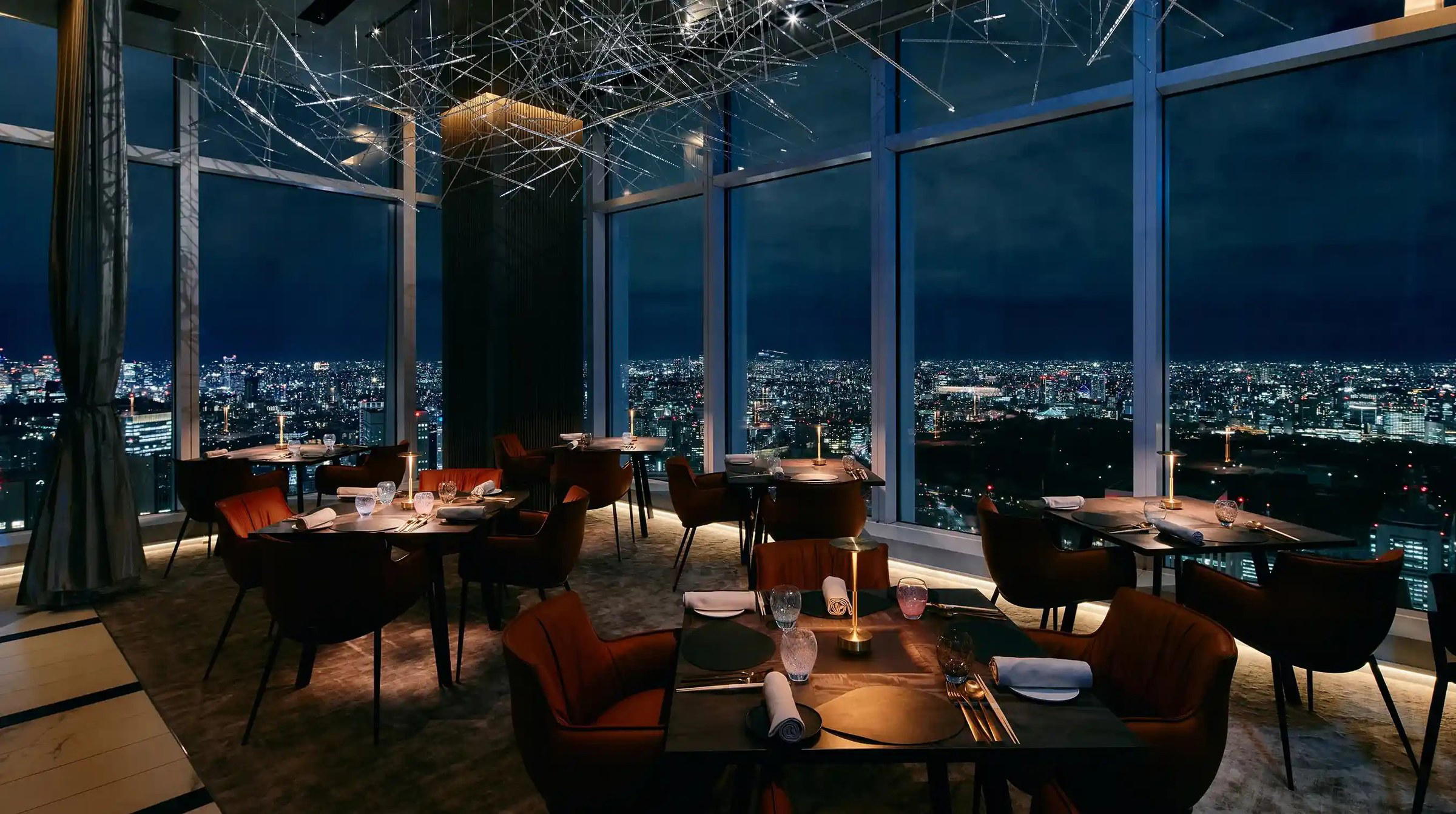
Bars in Paris
Browse all →
Hotels in Paris
Browse all →




Details
- Classic
- Cozy
- Casual Hangout
- Brunch
- Late Night
- Terrace
- Extensive Wine List
- Street Scene
- A La Carte
- Vegetarian Friendly
- Vegan Options
Current opening hours
- Monday
- 7 AM–2 AM
- Tuesday
- 7 AM–2 AM
- Wednesday
- 7 AM–2 AM
- Thursday
- 7 AM–2 AM
- Friday
- 7 AM–2 AM
- Saturday
- 7 AM–2 AM
- Sunday
- 7 AM–2 AM
Hours can change for holidays and private events. Last verified .
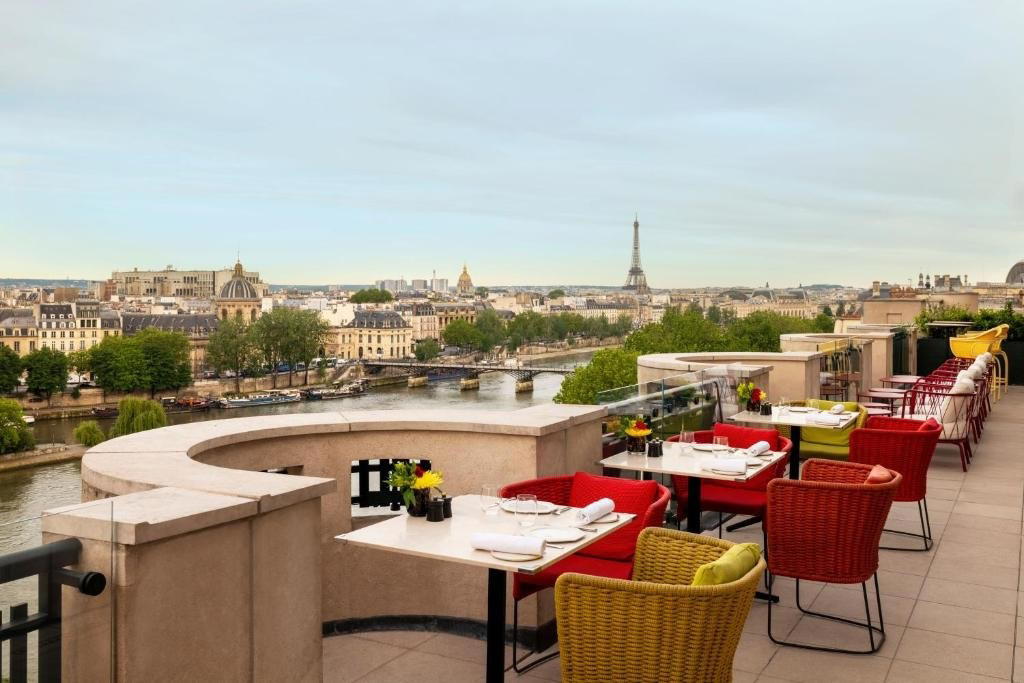
Warm inviting atmosphere with terrace seating on a lively street, classic bistro charm.