Our verdict
Le Colibri sits on Rue Maréchal Leclerc in Plabennec, a small commune in Finistère that anchors the agricultural and coastal supply chains feeding Brittany's restaurant scene. Finistère's proximity to some of France's most productive fishing grounds and market gardens gives any serious kitchen here a sourcing advantage that urban addresses pay significantly more to replicate. For our full context on dining in the area, see our Plabennec restaurants guide.

Pearl is the En Primeur Club membership app — saves, bookings, and concierge access live there. Same editors, same standards.
- Address
- 6 Rue Maréchal Leclerc, 29860 Plabennec, France
- Phone
- +33298404116
- Hours
- Mon–Sat 11 AM–2 PMSun Closed
- Website
- facebook.com
- Directions
- Get directions
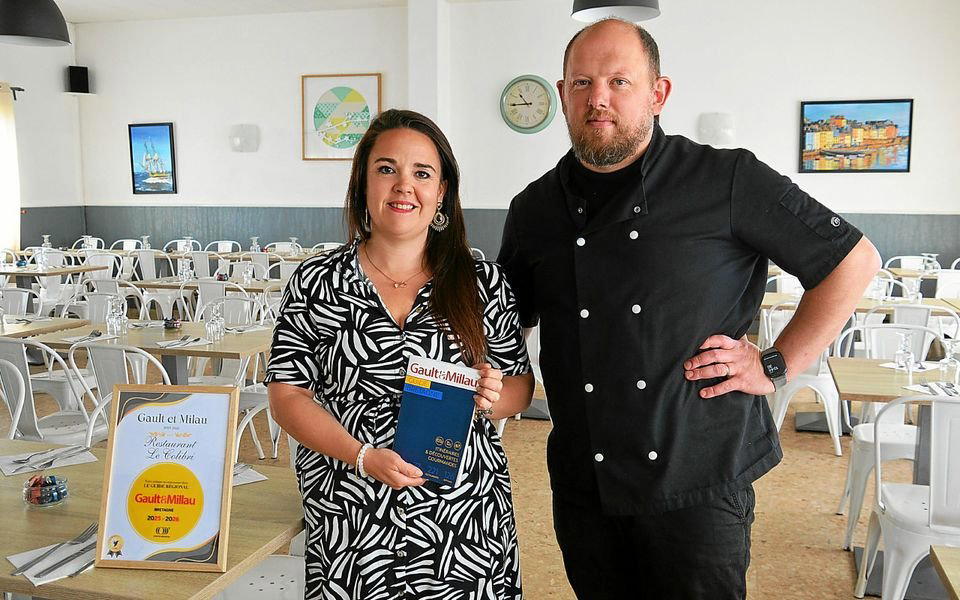
Plabennec and the Finistère Sourcing Advantage
Brittany's dining reputation has always been built on proximity rather than prestige. The department of Finistère sits at France's westernmost tip, where the Atlantic delivers shellfish, flatfish, and deep-water species to quayside markets within hours of landing. Inland, the bocage farmland around Plabennec supports dairy cattle, heritage poultry, and market-garden producers operating at a scale that makes direct-to-kitchen supply chains practical rather than aspirational. In this part of France, the ingredient argument that ambitious urban restaurants spend considerable money constructing is simply the baseline condition of any kitchen that pays attention. Le Colibri, at 6 Rue Maréchal Leclerc in Plabennec, operates inside that supply-chain geography.
Across France, the conversation about ingredient provenance has sharpened considerably over the past decade. What Bras in Laguiole demonstrated through its plateau sourcing — that a restaurant's identity could be wholly determined by what grows or grazes within reach — has since become a framework applied unevenly across French fine dining. In coastal Brittany, the argument is less philosophical and more logistical: the fish is simply better when the port is nearby. Christopher Coutanceau in La Rochelle has made exactly this case for the Atlantic coast further south, building a two-Michelin-star program around the argument that proximity to the sea is itself a culinary credential. Finistère kitchens operate from the same premise, with the added advantage of one of Europe's most productive fishing zones directly offshore.
What the Finistère Table Looks Like
Breton cuisine sits in an interesting position within France's regional dining hierarchy. It is neither as codified as Alsatian cooking, where restaurants like Au Crocodile in Strasbourg carry centuries of choucroute and foie gras tradition, nor as internationally scrutinised as the three-star destinations of the Rhône Valley or Côte d'Azur. That relative obscurity has, historically, kept prices lower and sourcing relationships closer. The region's galettes, seafood platters, and butter-forward preparations reflect a kitchen culture that remained stubbornly local while other French regions were being shaped by Parisian fine-dining influence.
The contemporary Breton table increasingly layers this traditional base with the kind of technique now expected at any serious French address. The trajectory visible at destination restaurants like Mirazur in Menton or Flocons de Sel in Megève, where landscape-led sourcing meets rigorous kitchen discipline, has filtered through to regional French dining more broadly. What distinguishes a Finistère kitchen from those references is that the raw material quality is not manufactured through effort; it is geographic inheritance. The question for any Plabennec restaurant operating seriously is what it does with that inheritance.
Le Colibri: Inside the Room
Plabennec is a commune of around ten thousand residents, roughly twenty kilometres northeast of Brest. The town centre has the character of a working Breton market town rather than a tourist stop: functional, rooted, unpretentious in its architecture. Rue Maréchal Leclerc, where Le Colibri is addressed, runs through that centre with the rhythm of a main commercial street in a Finistère commune, bakeries, small commerce, and the kind of restaurant that exists because local residents eat out regularly, not because visitors have discovered it.
This positioning matters for how a restaurant like Le Colibri competes. It is not drawing against the grand-table references of Paris, Alléno Paris au Pavillon Ledoyen or Assiette Champenoise in Reims, nor positioning itself in the destination-dining tier that makes Auberge de l'Ill in Illhaeusern or L'Oustau de Baumanière in Les Baux worth a multi-hour journey. Its competitive frame is the serious provincial French restaurant: a category that, at its finest, delivers more honest cooking per euro than anything in a capital city, because the overheads are lower and the sourcing relationships are shorter.
The provincial French restaurant format in a town of Plabennec's scale typically runs lunch and dinner services across a compressed weekly schedule, with a fixed-price menu structure that reflects market availability rather than a static kitchen identity. This is not a constraint; it is a discipline. Restaurants like La Marine in Noirmoutier-en-l'île have shown how tightly seasonal coastal menus, driven by what the tide and the season make possible, can compete with the predictability of urban tasting menus. The same logic applies here: the Finistère market calendar is the menu.
Sourcing Geography as the Kitchen's Foundation
The brackish waters of the Rade de Brest, the oyster beds of the Aber Benoît and Aber Wrac'h estuaries, and the offshore fishing grounds of the Iroise Sea collectively make Finistère one of the most productive marine sourcing zones in France. Turbot, bar (sea bass), langoustines, and coquilles Saint-Jacques are regional staples that, at their point of origin, carry a quality ceiling that import-dependent kitchens cannot match on cost. For a Plabennec kitchen sourcing from markets in Brest or directly from Roscoff, one of Brittany's principal landing ports, these are not luxury line items but standard supply.
Inland, the Léon agricultural area surrounding Plabennec is historically France's most productive market-garden zone, supplying artichokes, cauliflower, and early-season vegetables to markets across the country. A kitchen operating in this territory has access to produce that, in Paris, is sold at a premium and labelled with its Breton provenance as a selling point. Here, it is simply local. The table at a considered Plabennec restaurant reflects this without requiring the diner to be told: the vegetables are more direct, the fish more immediate, the dairy richer from Breton cattle with year-round access to pasture. The case made by AM par Alexandre Mazzia in Marseille, that a kitchen's identity emerges from its geographic and cultural raw materials, applies in Finistère with particular clarity.
Planning a Visit
Plabennec is accessible from Brest, approximately twenty kilometres to the southwest, making it a realistic lunch or dinner destination for travellers based in the city. Brest has a TGV connection from Paris Montparnasse, and the commune is reachable by car in under half an hour from the city centre. For anyone spending time in northern Finistère, visiting the Crozon Peninsula, the Abers coastline, or the enclos paroissiaux of the Léon interior, Plabennec sits naturally within a day's routing. As with most serious provincial French restaurants, advance contact is advisable; demand at well-regarded local addresses tends to concentrate around weekend services and market-day lunch. Our full Plabennec restaurants guide covers the broader dining context for the commune.
For further reference across France's destination dining tier, EP Club profiles include Alléno Paris au Pavillon Ledoyen in Paris, Flocons de Sel in Megève, Mirazur in Menton, Troisgros - Le Bois sans Feuilles in Ouches, Auberge de l'Ill in Illhaeusern, Bras in Laguiole, Paul Bocuse - L'Auberge du Pont de Collonges, AM par Alexandre Mazzia in Marseille, Assiette Champenoise in Reims, Au Crocodile in Strasbourg, Auberge du Vieux Puits in Fontjoncouse, Christopher Coutanceau in La Rochelle, Georges Blanc in Vonnas, L'Oustau de Baumanière in Les Baux, La Marine in Noirmoutier-en-l'île, and beyond France, Le Bernardin in New York City and Atomix in New York City.
Frequently asked questions
Is Le Colibri suitable for children?
Plabennec is a working commune of around ten thousand residents rather than a tourist draw, and its restaurants serve a broad local mix. Le Colibri at 6 Rue Maréchal Leclerc sits squarely in that town-centre register, which tends to be informal and tolerant of families. There is no recorded dress code or adults-only policy.
Is Le Colibri better for a quiet night or a lively one?
Plabennec operates at a town-centre pace rather than an urban one. Without a destination-restaurant profile that pulls in weekend crowds from Brest or beyond, the room at Le Colibri will typically run quieter than a city-centre address. Expect a neighbourhood atmosphere, particularly on weekday evenings.
Is Le Colibri a good restaurant choice when visiting Brest?
Plabennec lies approximately twenty kilometres northeast of Brest, making Le Colibri a realistic lunch or dinner detour rather than a day trip. Travellers based in Brest gain access to a working-town Breton table that operates outside the city's more tourist-facing dining circuit. The drive through Finistère's interior adds context to the region's food culture that the port city alone does not provide.
What should I order at Le Colibri?
Confirmed menu data is not available, but the geography points clearly enough: Plabennec sits within reach of the Aber Benoît and Aber Wrac'h estuary oyster beds, the brackish Rade de Brest, and the Iroise Sea fishing grounds. Any kitchen here with sourcing discipline will have shellfish and Breton fish at the centre of what it does best. Follow that thread.
At-a-Glance Comparison
Comparable venues nearby, for context on price, style, and recognition.
| Venue | Cuisine | Price | Notes |
|---|---|---|---|
| Le ColibriThis venue — the venue you are viewing | French Brasserie | $10–20 | Not listed |
| La Marine | French Breton Crêperie-Bistro | $20–30 | Camaret-sur-Mer |
| Le Local | French Fusion Bistro | $20–30 | Roscoff |
| KANAILLES | French Bistro | $20–30 | Locquirec |
| Dans la Grand'Rue | Regional French Bistro | $10–20 | centre ville |
| La Cassonade | Breton Crêperie | $10–20 | Ile de Batz |
Continue exploring
More in Plabennec
Restaurants in Plabennec
Browse all →
Details
- Lively
- Cozy
- Family
- Casual Hangout
- Local Sourcing
- A La Carte
Current opening hours
- Monday
- 11 AM–2 PM
- Tuesday
- 11 AM–2 PM
- Wednesday
- 11 AM–2 PM
- Thursday
- 11 AM–2 PM
- Friday
- 11 AM–2 PM
- Saturday
- 11 AM–2 PM
- Sunday
- Closed
Hours can change for holidays and private events. Last verified .