
1 Michelin Star
Our verdict
L'Embrun holds a Michelin star (2024) and sits at the more considered end of Brest's modern restaurant scene, where chef Guillaume Pape translates Breton terroir through an open kitchen on Rue de Lyon. The seasonal menu draws on high-quality regional ingredients, with dishes such as flambéed pollack in Champagne sauce and the signature "Douceur de Lait" rice pudding mousse. Lunch and dinner service run Tuesday through Saturday.

Pearl is the En Primeur Club membership app — saves, bookings, and concierge access live there. Same editors, same standards.
- Address
- 48 Rue de Lyon, 29200 Brest, France
- Phone
- +33 2 98 43 08 52
- Hours
- Mon ClosedTue 7:30–10 PMWed–Sat 12–2 PM, 7:30–10 PMSun Closed
- Website
- lembrunrestaurant.fr
- Directions
- Get directions
The menu
What to order
- Le Lait
- Volaille de Kergo
- Araignée de Mer
Brest and the Question of Serious Dining in Provincial France
France's provincial dining scene has long operated in the shadow of Paris, but the Michelin guide has spent the past two decades redistributing its attention. Brittany, in particular, has accumulated a credible cluster of starred addresses, from the tasting-menu destination Flocons de Sel in Megève at altitude to the coastal precision of Mirazur in Menton in the south. Within Brittany itself, the tradition of marrying land and sea produce runs deep: the peninsula's identity as a food region is inseparable from its coastline, its dairy farming interior, and the short supply chains that connect both. Brest, a port city rebuilt almost entirely after the Second World War, has never carried the culinary reputation of Rennes or Quimper, but that positioning is shifting. L'Embrun, which received its first Michelin star in 2024, is part of that shift.
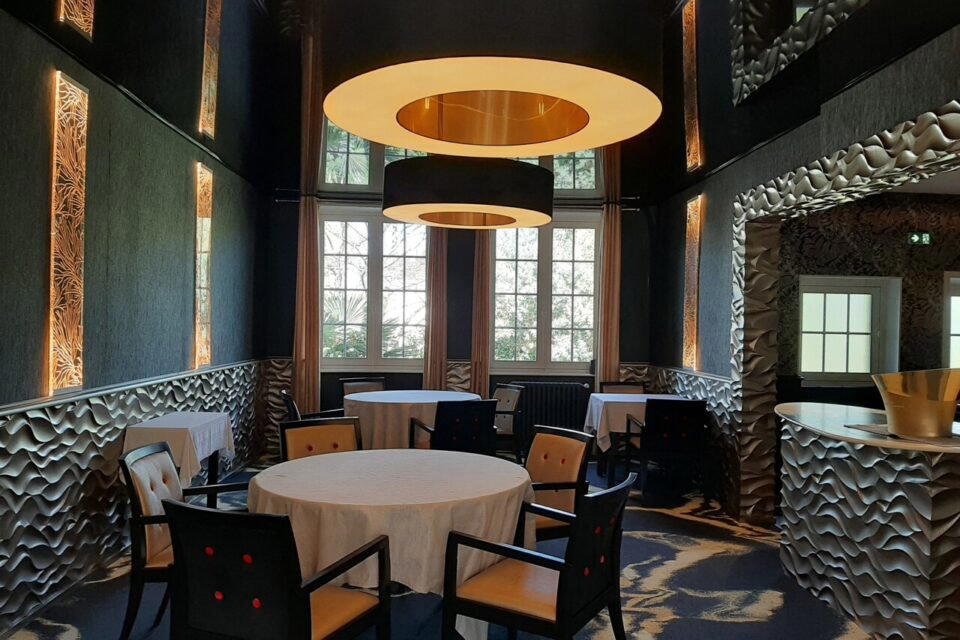
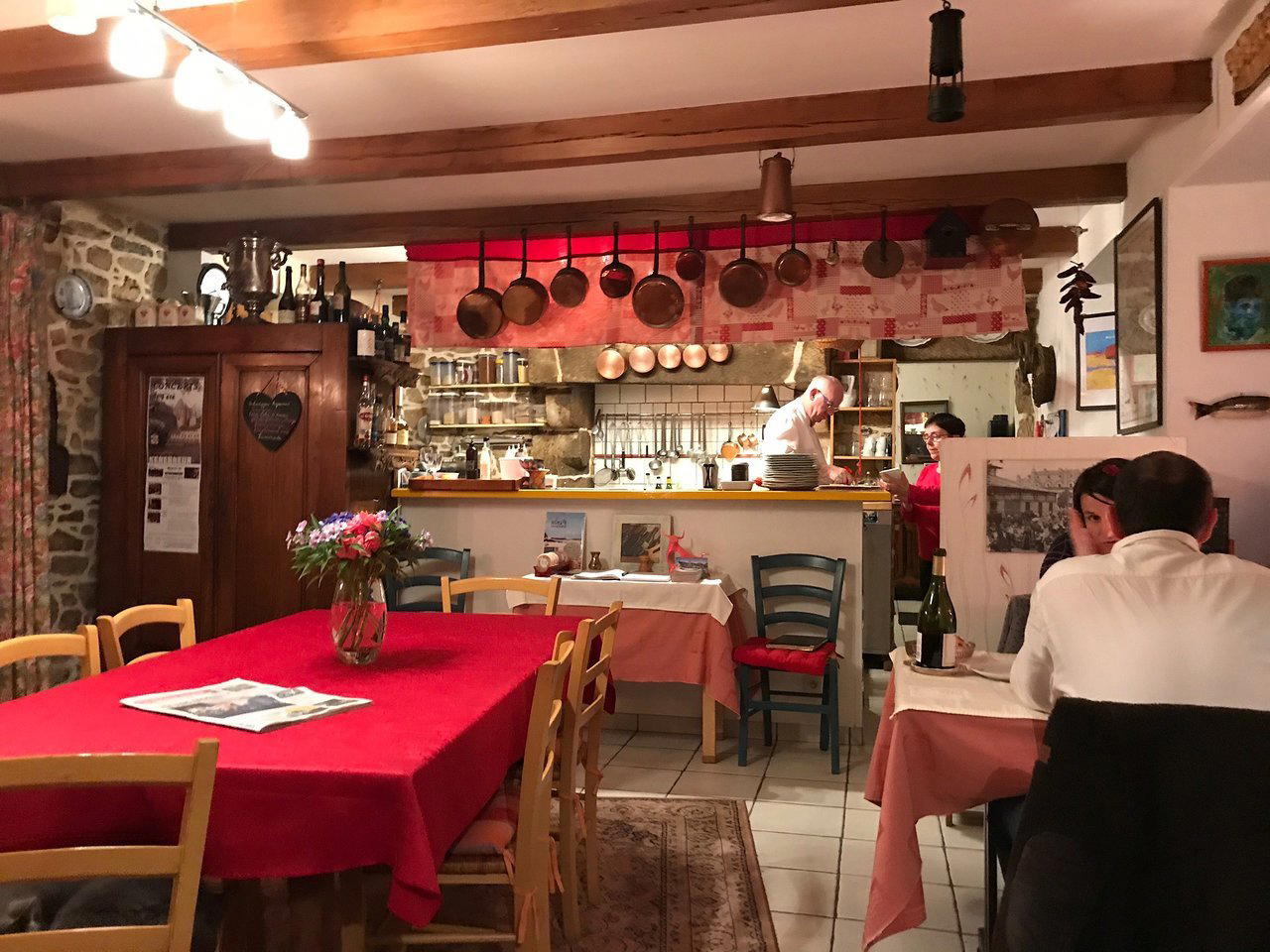
On Rue de Lyon, the restaurant occupies modern premises without the accumulated patina of older provincial addresses. That absence of heritage décor is a deliberate signal: this is a kitchen-forward room, built around an open format that puts the work on display. In French fine dining, the open kitchen moved from novelty to standard over the past decade, but L'Embrun uses the format seriously, placing the cooking at the centre of the experience rather than treating it as a theatrical backdrop. Walking in, the sightlines carry directly to the pass.
Cuisine de Terroir Through a Modern Lens
The phrase cuisine de terroir carries particular weight in Brittany. At its weakest, it means rustic plating dressed with regional nostalgia. At its strongest, it means a rigorous commitment to provenance that forces seasonal discipline: you cook what the region produces, when it produces it, and the menu becomes a form of geographic argument. L'Embrun operates in the latter register. The kitchen's approach to seasonal cuisine treats high-quality ingredients as the constraint that generates creativity rather than as a marketing footnote.
This is partly a function of training. Guillaume Pape spent time in the kitchens of Olivier Bellin at Auberge des Glazicks, a two-Michelin-starred address in Plomodiern that represents one of Brittany's most rigorous arguments for regional produce. That lineage places L'Embrun in a specific culinary tradition: not the Paris-trained brigade working outward toward the provinces, but a Breton-rooted perspective shaped by the region itself. The broader pattern across France's starred restaurants is that the most coherent regional voices tend to come from chefs who trained within the region, and the Auberge des Glazicks school of cooking belongs to that category.
Pape also competed on Leading Chef, France's high-profile culinary competition series. Television exposure functions differently in French dining culture than it might elsewhere: it builds a public profile without necessarily conferring critical credibility, and many chefs who appear on the programme spend subsequent years proving their seriousness in the kitchen. A Michelin star, awarded after the television profile rather than before, is a more weighted signal.
What to Order, and Why the Choices Matter
The documented dishes at L'Embrun illustrate the broader logic of the kitchen's approach. Flambéed pollack with Champagne sauce, butternut ravioli, and shellfish combines a fish that rarely appears at the starred level (pollack is a working-class Atlantic catch, often dismissed in favour of sea bass or turbot) with preparations that treat it as a serious centrepiece. Pairing it with Champagne sauce and shellfish situates the dish firmly in the Breton coastal tradition, while the butternut ravioli introduces a land element that prevents the plate from reading as a pure seafood exercise. The decision to use pollack rather than a more prestigious fish is itself an editorial statement about provenance over prestige.
For dessert, the "Douceur de Lait" rice pudding mousse with dulce de leche, vanilla ice cream, and milk opaline draws on Brittany's dairy tradition. Rice pudding has deep roots in French regional cooking, and the treatment here, lightened to a mousse and paired with caramel and a brittle milk element, shows how a kitchen can honour a regional reference without reproducing it literally. The dish has acquired enough recognition to be described as the restaurant's signature dessert, which at a recently starred address is a meaningful signal of consistency. For visitors uncertain where to anchor a meal, these two dishes represent the clearest expression of what L'Embrun is arguing about Breton cooking. The full list of what to eat at L'Embrun starts here: the pollack course for the savoury register and the "Douceur de Lait" for dessert.
Where L'Embrun Sits in Brest's Dining Picture
Brest's restaurant scene spans a considerable range. At the farm-to-table, accessible end, Peck & Co operates at a single-euro price point and a produce-led format without fine-dining pretension. At the high end of the price range, Hinoki brings Japanese cuisine to the city at the four-euro tier. Le M shares the modern cuisine category and €€€ price bracket with L'Embrun, making it the most direct local comparison point. What separates L'Embrun from that peer in measurable terms is the Michelin star, which signals not only critical approval but a standard of consistency that the guide specifically rewards over one-off performances.
Across France more broadly, the starred restaurants that most closely parallel L'Embrun's regional-produce argument include Bras in Laguiole, which built an entire culinary philosophy around the flora of the Aubrac plateau, and Auberge de l'Ill in Illhaeusern, where Alsatian terroir has driven the kitchen for generations. At the historic pole of French fine dining, Paul Bocuse - L'Auberge du Pont de Collonges in Collonges-au-Mont-d'Or and Troisgros - Le Bois sans Feuilles in Ouches represent the multi-generational version of the same argument about French regional identity. For a different register of modern French cuisine in Paris, Alléno Paris au Pavillon Ledoyen and AM par Alexandre Mazzia in Marseille illustrate how the starred scene operates at the three-star and conceptually driven end of the spectrum. Internationally, Frantzén in Stockholm and FZN by Björn Frantzén in Dubai show how the modern cuisine format translates across different cultural contexts.
Planning a Visit
L'Embrun closes on Mondays and Sundays. Lunch runs Wednesday through Saturday from noon to 2 PM; dinner service operates Tuesday through Saturday from 7:30 PM to 10 PM, giving the kitchen a structured weekly rhythm that concentrates the workload and, by implication, the freshness of ordering. The €€€ price bracket places this at the upper end of Brest's dining range, consistent with a starred address in a provincial French city where costs track below Paris equivalents. The restaurant is at 48 Rue de Lyon, 29200 Brest. Booking in advance is advisable for dinner, particularly on weekends, given the Michelin star awarded in 2024 is likely to have tightened availability relative to the previous year.
For a fuller picture of dining options across the city, the full Brest restaurants guide covers the range from casual to starred. For overnight stays, the Brest hotels guide organises accommodation options by area and category. The Brest bars guide, wineries guide, and experiences guide cover the rest of the city's hospitality picture.
Frequently asked questions
Is L'Embrun expensive?
Pricing at L'Embrun is listed as €€€.
A Pricing-First Comparison
| Venue | Cuisine | Price | Awards |
|---|---|---|---|
| L'EmbrunThis venue — the venue you are viewing | Modern French Fine Dining | $50–100 | 1 Michelin Star |
| Le M | Modern French Gastronomique | $50–100 | Michelin Plate · Gault & Millau Remarkable Restaurant |
| Peck & Co | Modern French Farm-to-Table | $30–50 | Michelin Bib Gourmand |
| Hinoki | Japanese-Breton Fusion Omakase | $100–150 | Michelin Plate · Wine Spectator Best of Award of Excellence |
Recognition history
Dated appearances from independent guides and award organizations, with the underlying list record or original source where available.
Michelin 1 Star
Michelin
Full recognition history (3 entries)
Michelin 1 Star
Michelin
Michelin 1 Star
Michelin
Continue exploring
More in Brest
Restaurants in Brest
Browse all →
Details
- Elegant
- Sophisticated
- Intimate
- Special Occasion
- Date Night
- Open Kitchen
- Local Sourcing
- Tasting Menu
- A La Carte
Current opening hours
- Monday
- Closed
- Tuesday
- 7:30–10 PM
- Wednesday
- 12–2 PM, 7:30–10 PM
- Thursday
- 12–2 PM, 7:30–10 PM
- Friday
- 12–2 PM, 7:30–10 PM
- Saturday
- 12–2 PM, 7:30–10 PM
- Sunday
- Closed
Hours can change for holidays and private events. Last verified .
Refined and welcoming atmosphere with polished, attentive service in an elegant setting.