On a quiet street in the 7th arrondissement, Le Café de Mars occupies a corner of Paris where the neighbourhood still belongs to residents rather than tourists. The address on Rue Augereau places it within easy reach of the Champ de Mars and Eiffel Tower, but the draw is the kind of relaxed, unfussy French café dining that the 7th does particularly well when it isn't performing for cameras.
Pearl is the En Primeur Club membership app — saves, bookings, and concierge access live there. Same editors, same standards.
- Address
- 11 Rue Augereau, 75007 Paris, France
- Phone
- +33145501090
- Website
- cafedemars.fr
- Directions
- Get directions
 Saves & bookings on Pearl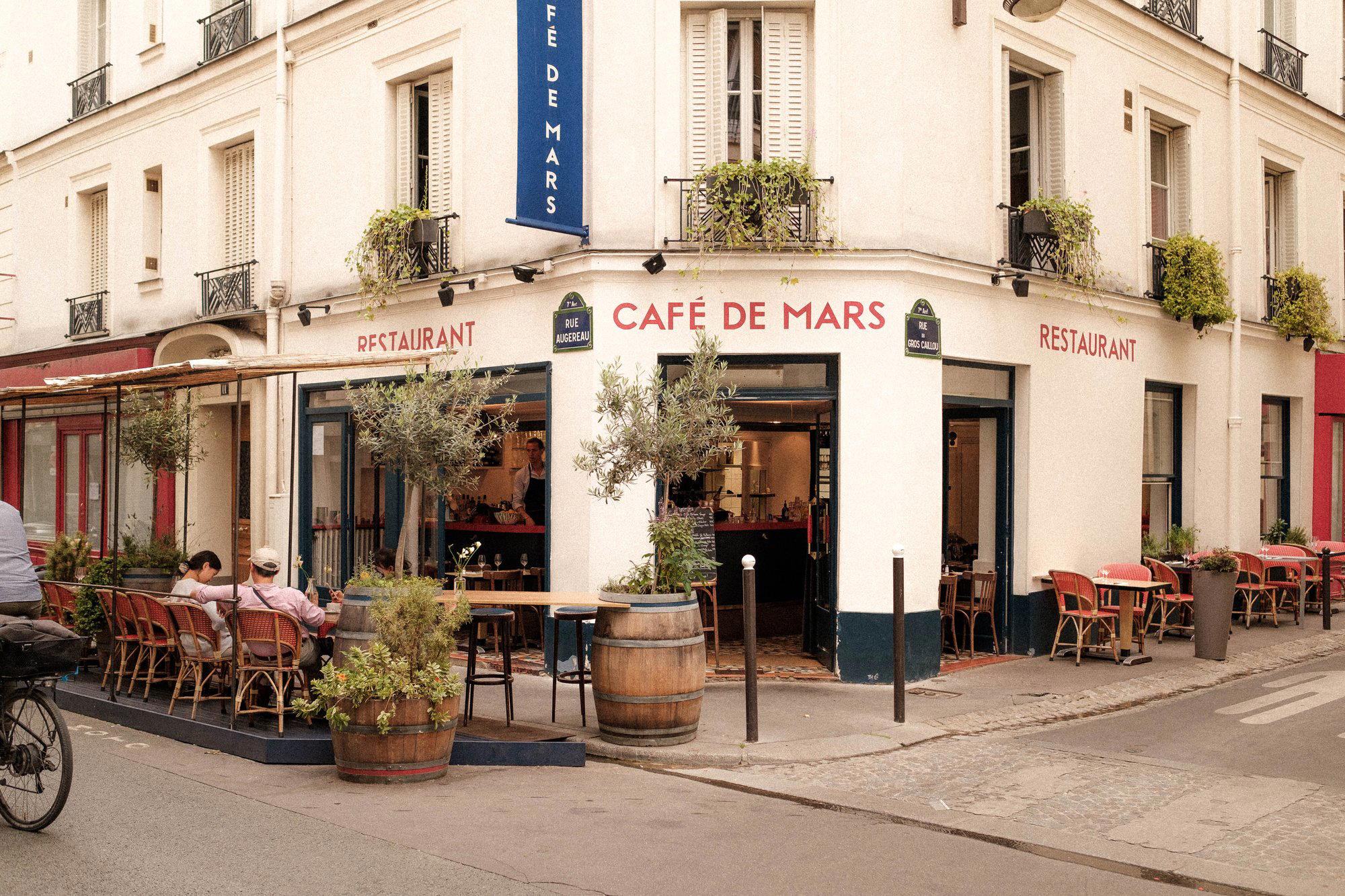
The 7th Arrondissement and the French Café That Refuses to Perform
There is a version of Paris café dining that exists almost entirely for the photograph: tables arranged for maximum monument sightline, menus translated into four languages before the French, prices calibrated to the tourist's willingness to pay for the view. Rue Augereau, in the residential quarter of the 7th, is not that Paris. Le Café de Mars sits on a street where the foot traffic is largely local, where the rhythm of service follows the neighbourhood rather than the tour bus schedule, and where the proposition is the kind of direct French café meal that Parisians themselves still seek out when they want to eat without ceremony.
The 7th arrondissement carries a dual identity that shapes everything about dining here. On one axis, it is the address of some of the city's most serious cooking: Arpège, Alain Passard's vegetable-focused institution on Rue de Varenne, has defined one pole of ambitious French dining for three decades. On the other axis, the neighbourhood is dense with the kind of café-restaurants that anchor everyday Parisian life: zinc counters, chalked specials, the midday plat du jour eaten quickly by locals with half a carafe of Côtes du Rhône. Le Café de Mars positions itself in that second tradition rather than reaching toward the first, which is a deliberate choice in a city where the pressure to signal ambition is constant.
French Café Culture and What It Actually Means
The café-restaurant occupies a specific and historically grounded place in French food culture. It is neither the brasserie, with its grand belle époque room and printed menu of Alsatian classics, nor the bistro, which carries its own freight of bourgeois conviviality. The café operates at a lower register of formality and a higher register of frequency: it is where you return on a Tuesday, not just where you go for a birthday. For the 7th, where a significant portion of the population consists of civil servants, embassy staff, and the kind of long-tenured Parisian families who still own their apartments rather than rent them, the neighbourhood café serves a social function that the grander addresses cannot.
That context matters when assessing what Le Café de Mars is trying to do. Placed against the €€€€ tier that defines the upper end of Paris dining, represented by addresses like L'Ambroisie on the Place des Vosges, Le Cinq at the Four Seasons George V, or the creative laboratories of Alléno Paris au Pavillon Ledoyen, the café format is deliberately counter-programmed. Where those rooms are built for occasion and occasion-adjacent spending, the café is built for repetition and reliability. The test is not whether the kitchen can produce something technically extraordinary, but whether it can produce something consistently worth returning to.
France's broader dining tradition is sustained by exactly this kind of establishment. The Michelin-starred properties that draw international attention, from Mirazur in Menton to Bras in Laguiole or the generational institution of Paul Bocuse outside Lyon, represent the apex of a pyramid whose base is the everyday café and bistro. The health of French food culture depends on the base at least as much as the summit. A city where only the three-star rooms survive is not a city with a living food culture; it is a museum with admission prices to match.
Location, Access, and When to Go
Rue Augereau runs parallel to the Champ de Mars, placing the café within a short walk of the Eiffel Tower without being absorbed into the tourist zone that immediately surrounds it. The nearest RER stop is Champ de Mars-Tour Eiffel, and the area is also served by the Ecole Militaire metro station on line 8. For visitors staying in the 7th or crossing through it between Saint-Germain and the tower, the address is a practical proposition for a midday meal or an early dinner.
Seasonally, the café format reads differently depending on time of year. Spring and early autumn are when Paris neighbourhood cafés operate at their most characteristic pitch: the light is right for pavement tables, the market produce that supplies kitchens like this is at peak quality, and the city's population has not yet thinned to its August skeleton. Summer brings tourists; January brings the city back to itself. Either end of the shoulder season, March through May or September through October, tends to represent the moment when this type of address is most worth visiting.
For a broader picture of where Le Café de Mars sits within Paris dining at every price point, the EP Club Paris restaurants guide covers the full range from neighbourhood cafés through to the city's most formally ambitious rooms, including Kei's Franco-Japanese modern cuisine and the technically demanding work coming out of Alléno's kitchen. The contrast is useful: understanding where a neighbourhood café sits in relation to addresses like Assiette Champenoise in Reims or Auberge de l'Ill in Alsace clarifies what each format is actually for.
Planning Your Visit
For a café at this address, walk-in capacity during quieter service periods is typical of the format, but the Champ de Mars proximity means weekend lunchtimes draw more foot traffic than the street's residential character might suggest. If you are planning around a specific date or time, contacting the venue in advance is the more reliable approach.
Paris visitors oriented toward the 7th who want to understand the full range of French regional cooking available across the country might find it useful to cross-reference addresses outside the capital: Flocons de Sel in Megève, Troisgros in Ouches, Auberge du Vieux Puits in Fontjoncouse, and AM par Alexandre Mazzia in Marseille each represent a different register of French ambition. For international comparison, Le Bernardin and Atomix in New York illustrate how French technique and dining culture travel and transform elsewhere. Le Café de Mars belongs to a different conversation entirely: it is the local address that makes the city function on an ordinary Wednesday, which is not a lesser achievement.
How Le Café de Mars Paris compares with similar nearby venues.
| Venue | Cuisine | Price |
|---|---|---|
| Le Violon d'Ingres | Traditional Cuisine | €€€€ |
| Les Cocottes | French Bistro | Not listed |
| Mojju | Korean | €€ |
| Pottoka | Basque | Not listed |
Continue exploring
More in Paris
Restaurants in Paris
Browse all →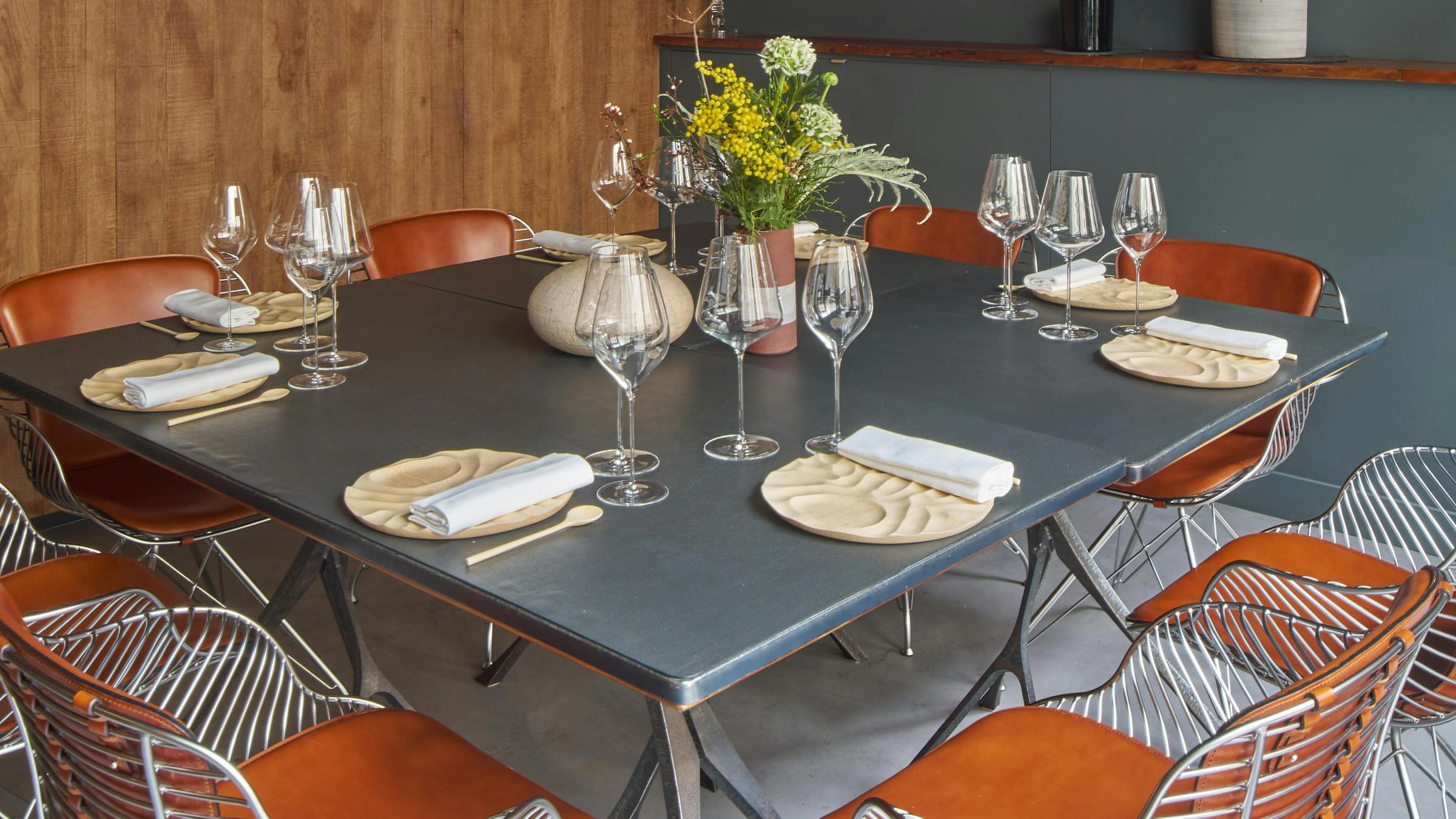
Bars in Paris
Browse all →
Hotels in Paris
Browse all →
At a Glance
- Cozy
- Classic
- Intimate
- Casual Hangout
- Date Night
- Terrace
- Open Kitchen
- Natural Wine
- Street Scene
Current opening hours
- Monday
- 11 AM–4 PM
- Tuesday
- 11 AM–11 PM
- Wednesday
- 11 AM–11 PM
- Thursday
- 11 AM–11 PM
- Friday
- 11 AM–11 PM
- Saturday
- 11 AM–11 PM
- Sunday
- 11 AM–11 PM
Hours can change for holidays and private events. Last verified .
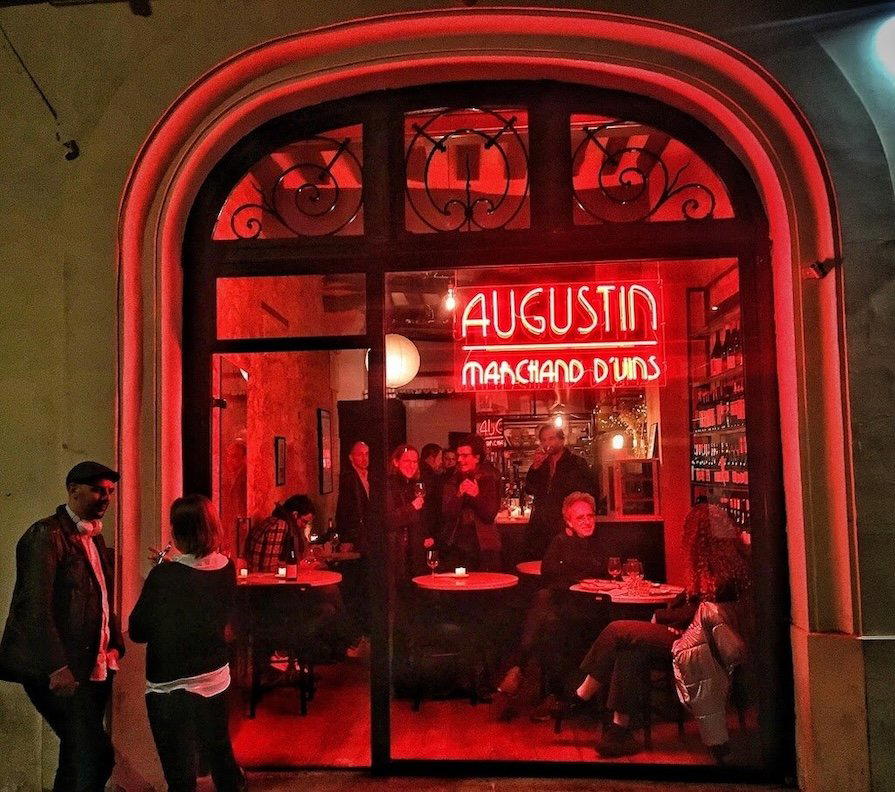
Retro bistro with whitewashed walls, red formica counter, red moleskin banquettes, wooden tables, and a simple, welcoming neighborhood atmosphere.
Know Before You Go
- Getting there
- 11 Rue Augereau, 75007 Paris, France