Our verdict
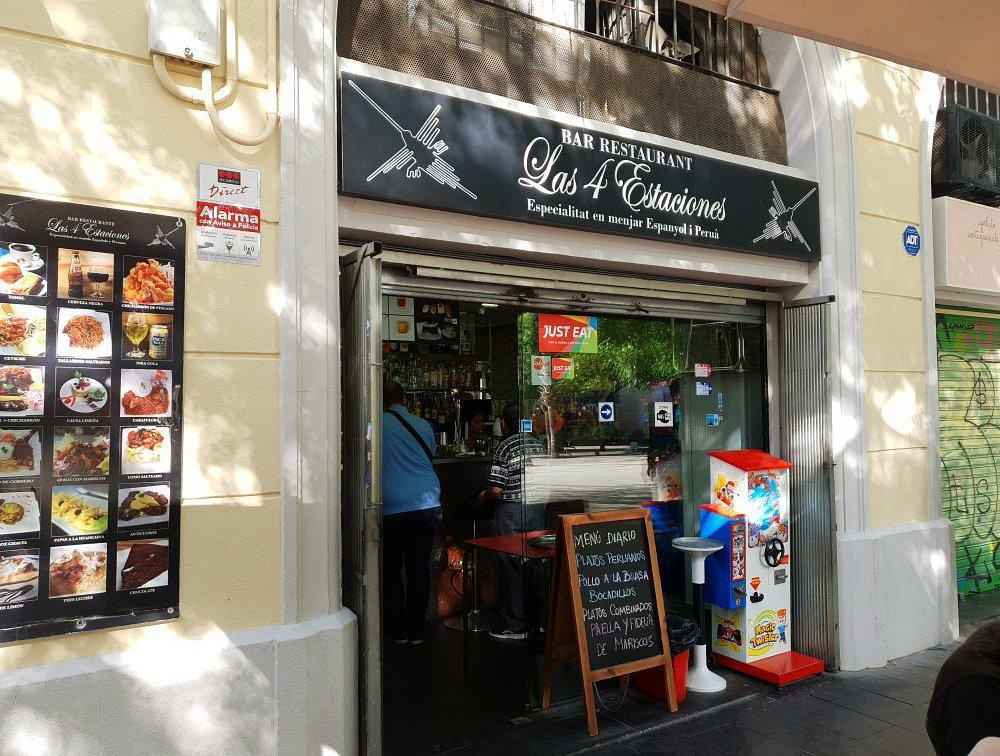
On a quiet stretch of C. de Ribes in L'Eixample, Las 4 Estaciones occupies a position in Barcelona's mid-register dining scene where neighbourhood familiarity and seasonal intent intersect. The name signals a kitchen organised around seasonal rotation, placing it in a category of Barcelona restaurants that treat the calendar as their primary menu architecture. Practical details remain sparse online, making a direct visit or local inquiry the most reliable first step.

Pearl is the En Primeur Club membership app, where members save venues, book tables and use the concierge.
The menu
What to order
- Ceviche
- Lomo saltado
- Ají de gallina
L'Eixample's Quieter Register: Where Seasonal Kitchens Operate Below the Radar
Barcelona's restaurant conversation runs loud at the leading end. Disfrutar, Cocina Hermanos Torres, and Lasarte dominate international coverage, and for good reason: Spain's fine-dining tier, from El Celler de Can Roca in Girona to Aponiente in El Puerto de Santa María, has spent two decades establishing the country as a genuine rival to France on any serious global ranking. But Barcelona also sustains a quieter tier of neighbourhood restaurants, most of them in L'Eixample's residential pockets, where the measure of quality is consistency across seasons rather than spectacle at any single sitting. Las 4 Estaciones, on C. de Ribes 37, operates in that register.
The address places it in the eastern stretch of L'Eixample, away from the tourist-heavy corridors closer to Passeig de Gràcia. This part of the neighbourhood is primarily residential, and restaurants here tend to serve a local clientele with predictable weekly rhythms rather than one-time visitors working through a list. That context shapes what to expect before you arrive.
The Lunch and Dinner Divide in Barcelona's Neighbourhood Restaurants
In Barcelona, the gap between lunch and dinner service is not just operational, it reflects two distinct cultures of eating. The midday meal retains the structure it has held for generations: longer, more deliberate, often anchored by a fixed-price menu del día that gives kitchens a framework for rotating through seasonal product without committing to an à la carte that demands the same ingredients be sourced in volume across weeks. Dinner, by contrast, tends toward a more informal rhythm in neighbourhood settings, smaller orders, wine by the glass, a pace dictated by the table rather than the kitchen.
For a restaurant whose name translates directly as "The Four Seasons," seasonal rotation is the stated organising principle. Kitchens that commit to this approach, at whatever price level, typically use the lunch format as the engine room: the fixed menu allows them to buy what markets and suppliers offer that week rather than holding to a rigid card. This is the tradition that produced Spain's most technically ambitious restaurants, where chefs trained on market discipline before reaching for technique. Arzak in San Sebastián and Azurmendi in Larrabetzu both trace their identity to this same insistence on seasonal sourcing as a non-negotiable constraint rather than a marketing claim.
At the neighbourhood level, the lunch service at a place like Las 4 Estaciones is where value and intent are most legible. Barcelona's menú del día culture means that even kitchens with serious ambitions offer structured midday menus at prices that bear no relation to what comparable quality would cost in the evening. Dinner at neighbourhood restaurants in L'Eixample tends to be lighter in scope, fewer tables, shorter orders, a more social atmosphere that suits the city's late-eating habits. Arriving at 9:30pm for dinner in this part of the city is not unusual; the kitchen is still mid-service.
Placing Las 4 Estaciones in the Barcelona Context
Barcelona's dining spectrum is unusually wide. At one end, the city's creative restaurant scene produces work that competes directly with the most technically advanced kitchens in Europe, Enigma and ABaC sit in that bracket, as does Disfrutar, whose tasting format draws on decades of avant-garde lineage. At the other end, the city's neighbourhood fabric, particularly through L'Eixample and Gràcia, supports a dense network of mid-register restaurants that have no interest in that conversation and don't need to be part of it.
Las 4 Estaciones belongs to this second category. Its position on C. de Ribes, a street without major foot traffic, and the near-absence of a digital presence both signal a restaurant whose reputation is built and sustained locally. This is not unusual in Barcelona: some of the most consistent neighbourhood kitchens in the city maintain minimal online visibility because they don't need the volume that visibility generates. They have their regulars, their Tuesday lunch crowd, their Friday dinner table that books the same spot every week.
For visitors operating from a list of awards and Michelin stars, this category of restaurant requires a different navigation strategy. There are no tier markers here of the kind that make DiverXO in Madrid or Martin Berasategui immediately legible. The credentialing system is local and oral. Word-of-mouth from residents in the immediate neighbourhood, or from Barcelona-based food writers who cover the mid-market with the same rigour applied to the top tier, is the more reliable signal. Our full Barcelona restaurants guide maps this range in more detail, including how to approach the city's neighbourhood tier alongside its headline destinations.
Practical Notes for Planning a Visit
C. de Ribes 37 sits in L'Eixample, close to the border with Sant Pere and within walking distance of several metro lines serving the central city. The address is direct to reach on foot from the Passeig de Gràcia axis, and the neighbourhood is navigable without taxis or rideshare at most hours.
The most reliable approach is to visit in person, during daytime hours on a weekday, when neighbourhood restaurants in this part of Barcelona are most likely to have staff present and can confirm current service patterns and reservation availability. Booking in advance, even for neighbourhood-tier restaurants in L'Eixample, is advisable during high-season months: Barcelona's restaurant density in this bracket means that good rooms fill from local regulars before visitor demand is factored in. Spring and autumn are the periods when seasonal-kitchen restaurants of this type are at their most consistent, as the market offer at those times of year tends to be wider and more varied than in the heat of July or the reduced supply of January.
For context on what Spain's seasonal kitchen tradition produces at its most ambitious, from Quique Dacosta in Dénia to Ricard Camarena in València and Mugaritz in Errenteria, the lineage running through Barcelona's neighbourhood restaurants connects to the same source: an insistence on produce as the starting point rather than an afterthought. Atrio in Cáceres takes a different regional approach to the same philosophy. Internationally, the discipline that makes seasonal rotation a genuine kitchen commitment rather than a seasonal menu rebrand is visible at places like Le Bernardin in New York City and Atomix, both of which operate with a comparable rigour around product sourcing at their respective price points.
Frequently asked questions
What is the atmosphere like at Las 4 Estaciones?
Las 4 Estaciones sits on C. de Ribes 37 in L'Eixample, close to the Sant Pere border, which puts it in a quieter residential register than Barcelona's more trafficked dining corridors. The name, Four Seasons, signals a kitchen oriented around the calendar rather than a fixed showpiece menu. Expect a neighbourhood tempo: unhurried, largely local, without the performative edge of the city's internationally covered restaurants.
Where is Las 4 Estaciones in Barcelona?
Las 4 Estaciones is located at C. de Ribes, 37, L'Eixample, 08013 Barcelona, Spain, Barcelona.
Is Las 4 Estaciones a good option for a weekday lunch in Barcelona's Eixample?
The C. de Ribes 37 address places Las 4 Estaciones within walking distance of several central metro lines, making it accessible for a midday meal without crossing into the tourist-heavy areas around La Rambla or the Gràcia border. In Barcelona, the lunch service at neighbourhood restaurants like this one typically runs within the Spanish midday window of 2pm to 4pm, following a format closer to the menú del día tradition than the evening à la carte. It suits a slower, locally paced lunch rather than a quick working meal.
What do people recommend at Las 4 Estaciones?
The reliable approach is to follow the server's read on what arrived that week, in Barcelona neighbourhood restaurants of this type, the day's market run typically shapes the most straightforward choices. Asking what's fresh is standard practice and usually produces the better meal.
How hard is it to get a table at Las 4 Estaciones?
No booking data is publicly documented for Las 4 Estaciones, but its location on a residential L'Eixample street rather than a high-footfall strip suggests it operates outside the reservation pressure faced by Barcelona's Michelin-listed addresses. Calling ahead or arriving at the start of service is the standard approach for neighbourhood restaurants in this part of the city.
What makes Las 4 Estaciones worth seeking out?
Barcelona's dining conversation concentrates on a small cluster of internationally recognised restaurants, Disfrutar, Cocina Hermanos Torres, Lasarte, leaving a layer of competent seasonal neighbourhood kitchens largely uncovered by foreign press. Las 4 Estaciones operates in that register: a C. de Ribes address in L'Eixample, cooking to the season rather than to a tasting menu format. For visitors who want to eat the way the city's residents actually eat at lunch, that positioning is its clearest argument.
Do they accommodate allergies at Las 4 Estaciones?
Spanish law requires restaurants to provide allergen information on request, so staff should be able to address specific concerns directly. Given the seasonal and likely daily-changing format, communicating requirements at the point of booking or arrival is the safest approach.
Budget and Context
Comparable venues nearby, for context on price, style, and recognition.
| Venue | Cuisine | Price | Notes |
|---|---|---|---|
| Las 4 EstacionesThis venue (the venue you are viewing) | Authentic Peruvian | $20–30 | Not listed |
| bohl | Healthy European Cafe Bowls | $30–50 | la Dreta de l'Eixample, Healthy European Cafe Bowls |
| Murivecchi | Authentic Neapolitan Italian | Not listed | Sant Pere, Santa Caterina i la Ribera, Authentic Neapolitan Italian |
| Meson Jesus | Traditional Spanish & Mediterranean | $20–30 | Barri Gotic, Traditional Spanish & Mediterranean |
| Loren Restobar | Paraguayan & Latin American | $20–30 | el Camp de l'Arpa del Clot, Paraguayan & Latin American |
| Madame | Asian-Andalusian Ramen | $30–50 | el Raval, Modern Japanese Ramen |