
Lao Fu Zi Fried Kway Teow at Old Airport Road Food Centre has held a Michelin Plate in both 2024 and 2025, placing it among Singapore's most recognised char kway teow stalls. At single-dollar pricing, it represents the sharpest value proposition in the city's hawker circuit. Expect queues, minimal frills, and a plate that earns its recognition on technical grounds alone.
Pearl is the En Primeur Club membership app — saves, bookings, and concierge access live there. Same editors, same standards.
- Address
- 51 Old Airport Rd, #01-12 Food Centre, Singapore 390051
- Directions
- Get directions
 Saves & bookings on Pearl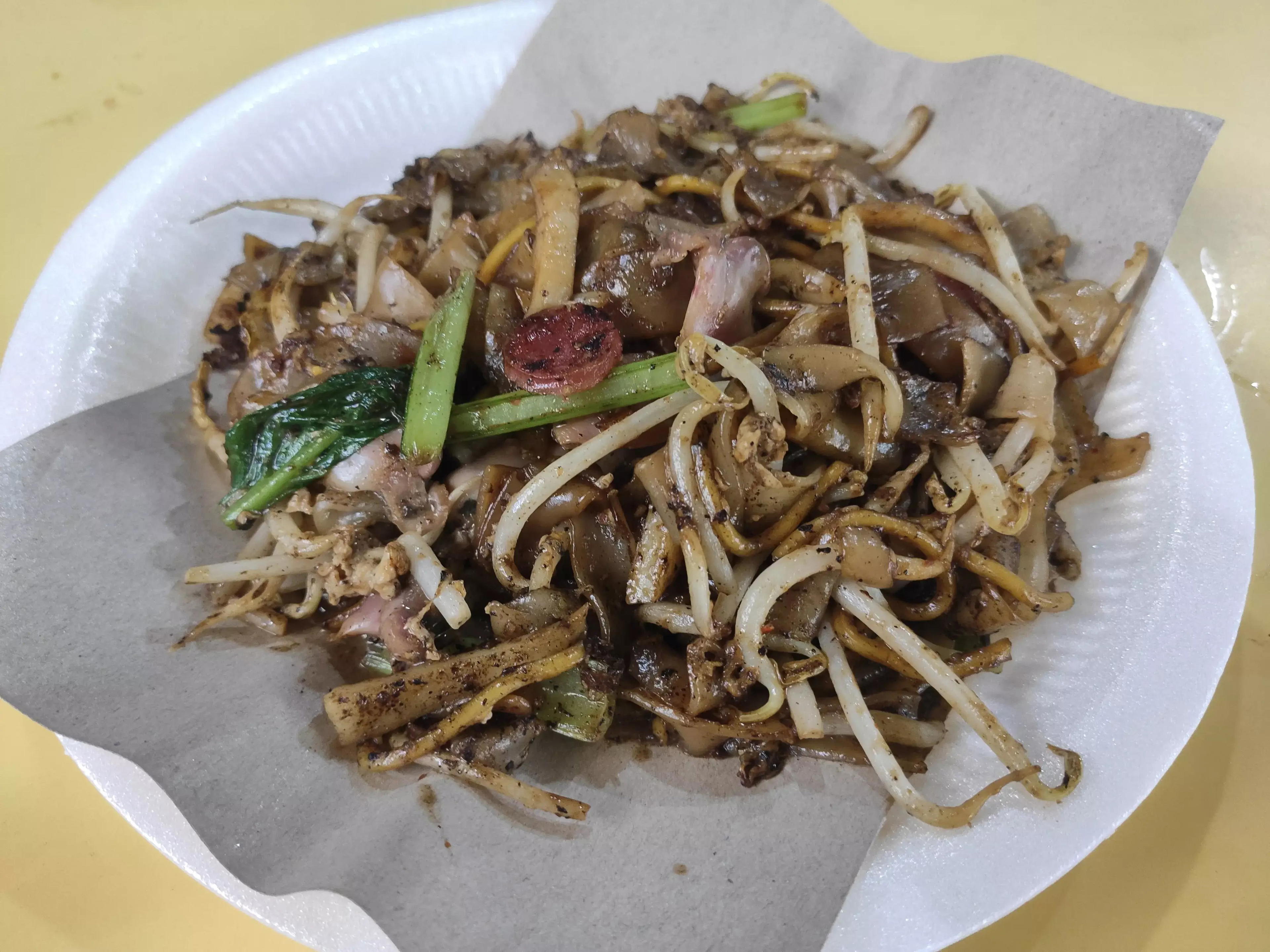
Old Airport Road and the Char Kway Teow Hierarchy
Old Airport Road Food Centre occupies a particular position in Singapore's hawker geography. It is large, older, and less tourist-polished than the more photographed Maxwell Road or Lau Pa Sat, which means the crowd skews local and the stalls compete on output rather than atmosphere. Within that environment, the char kway teow counter at #01-12 has accumulated two consecutive Michelin Plate awards, 2024 and 2025. That distinction matters less as a trophy than as a calibration: it tells you something about where this stall sits relative to the dozens of char kway teow operators across the island.
Char kway teow itself is a dish with a specific technical brief. Flat rice noodles, dark soy, lard (or its substitute), egg, beansprouts, Chinese chives, and blood cockles, cooked over high heat in a well-seasoned wok. The craft is in wok hei, the smoky, slightly charred breath of a properly fired wok, and in timing. Too long on the heat and the noodles clump; too short and they taste steamed rather than fried. The stalls that hold Michelin recognition year-on-year typically do so because they maintain consistent wok temperature, use quality fat, and don't compromise portion honesty at peak hours. These are discipline markers, not theatrical ones.
What Michelin Recognition Means at This Price Point
The value argument here is almost arithmetically clean. At the $ price tier, hawker pricing in Singapore means a plate lands well under S$10, and a Michelin Plate represents one of the sharpest cost-to-recognition ratios available in the city. For context, Michelin-starred restaurants in Singapore span a wide range: Born and Zén operate at the $$$$ bracket, where tasting menus reach well into three figures per head. Summer Pavilion sits at $$, Jaan by Kirk Westaway and Burnt Ends at $$$. Lao Fu Zi operates below all of them, and the Michelin Plate signals that the inspectors found technical merit regardless.
This is the logic that makes Singapore's hawker Michelin tier genuinely interesting rather than just a novelty: it tests whether the award has meaning when stripped of tablecloths and sommelier rounds. The answer, at least in the case of stalls with sustained recognition across multiple years, is that it tends to. Two consecutive Plates suggest the quality is repeatable, not a one-year anomaly driven by a single inspector visit.
Peer comparison reinforces the point. Among Singapore's char kway teow specialists reviewed across the hawker circuit, Michelin attention at this price point is not common. 91 Fried Kway Teow Mee is another recognised operator in the category. The competitive set is small, and the distinguishing factors between them tend to be wok technique, ingredient sourcing, and queue management rather than anything conceptual.
The Google Reviews Signal
A rating in that range across a meaningful sample often reflects the gap between the expectations of a first-time visitor and the reality of a hawker stall: queues that can stretch past an hour, no table service, variable seating comfort, and a product that requires some familiarity with the dish to fully appreciate. It does not indicate that the food is poor.
The practical implication is that visitors should arrive with calibrated expectations. This is a hawker stall that has earned professional culinary recognition twice, and it operates within the constraints of a food centre environment. Those two facts coexist without contradiction.
Old Airport Road Food Centre as Context
Old Airport Road Food Centre sits in the Kallang area, one of Singapore's older residential and light-industrial belts. It does not sit on a tourist map in the way that Chinatown or Tiong Bahru do, which means reaching it requires some intention. That self-selection tends to shape the crowd: the visitors who find their way here typically know what they're looking for, which creates a different energy than the food centres that run tours through their front doors.
Centre itself houses a broad range of hawker categories, making it a reasonable destination for a longer meal rather than a single-dish stop. The char kway teow counter is the anchor for most visitors coming specifically on the basis of the Michelin recognition, but it sits within a broader hawker ecosystem worth exploring. Singapore's noodle circuit, for reference, extends well beyond this postcode: Hill Street Tai Hwa Pork Noodle holds a Michelin star in the bak chor mee category, and 545 Whampoa Prawn Noodles and Adam Rd Noo Cheng Big Prawn Noodle anchor the prawn noodle tier. A Noodle Story occupies a different position, applying a more contemporary approach to the noodle format.
For those mapping Southeast Asia's wider street food circuit, the comparison points extend across the region. The Penang hawker tradition, represented by stalls like 888 Hokkien Mee in George Town, Ah Boy Koay Teow Th'ng, and Air Itam Duck Rice, shares the same structural logic: simple formats, decades of repetition, and a product defined by technique rather than concept. Thai street food operators like A Pong Mae Sunee in Phuket and Anuwat in Phang Nga sit in the same regional conversation, as does Banana Boy in Hong Kong. Across all of them, the value-to-craft equation tends to be more favourable than anything available in the fine dining tier.
Price Lens
Comparable venues nearby, for context on price, style, and recognition.
| Venue | Cuisine | Price | Awards | Notes |
|---|---|---|---|---|
| Lao Fu Zi Fried Kway TeowThis venue — the venue you are viewing | ALJUNIED, Singaporean Char Kway Teow | $ | Michelin Plate | Not listed |
| 545 Whampoa Prawn Noodles | FARRER PARK, Singaporean Prawn Noodles | $ | Michelin Plate | Not listed |
| Boon Tong Kee Kway Chap‧Braised Duck | Not listed | $ | Michelin Plate | CHATSWORTH, Teochew Kway Chap & Braised Duck |
| Ah Ter Authentic Teochew Fish Ball Noodles | CHENG SAN, Teochew Fish Ball Noodles | $ | Michelin Plate | Not listed |
| Come Daily Fried Hokkien Prawn Mee | Not listed | $ | Michelin Plate | TOA PAYOH WEST, Singapore Fried Hokkien Prawn Mee |
| Tiong Bahru Lien Fa Shui Jing Pau | Not listed | $ | Michelin Plate | ALEXANDRA HILL, Teochew Crystal Dumplings |
Recognition history
Dated appearances from independent guides and award organizations, with the underlying list record or original source where available.
Michelin Guide Bib Gourmand
Michelin Guide
Michelin Plate
Michelin
Michelin Plate
Michelin
Continue exploring
More in Singapore
Restaurants in Singapore
Browse all →
Bars in Singapore
Browse all →
At a Glance
- Lively
- Casual Hangout
- Open Kitchen
Current opening hours
- Monday
- 11:45 AM–10 PM
- Tuesday
- 11:45 AM–10 PM
- Wednesday
- 11:45 AM–10 PM
- Thursday
- 11:45 AM–10 PM
- Friday
- 11:45 AM–10 PM
- Saturday
- Closed
- Sunday
- 11:45 AM–10 PM
Hours can change for holidays and private events. Last verified .
Busy hawker centre atmosphere with queues and the sizzle of individual wok-fried orders.