L'Albatros
Our verdict
L'Albatros sits at the edge of Bréville-sur-Mer, a small Normandy coastal commune where the Atlantic sets the rhythm of what ends up on the plate. The address places it squarely in the tradition of France's seafront dining rooms, where proximity to the source is the primary credential. For those travelling the Norman coast with an appetite for locally anchored cooking, it belongs on the itinerary.

Pearl is the En Primeur Club membership app — saves, bookings, and concierge access live there. Same editors, same standards.
- Address
- 1 Imp. des Dunes, 50290 Bréville-sur-Mer, France
- Phone
- +33233593558
- Hours
- Daily 9 AM–7 PM
- Directions
- Get directions
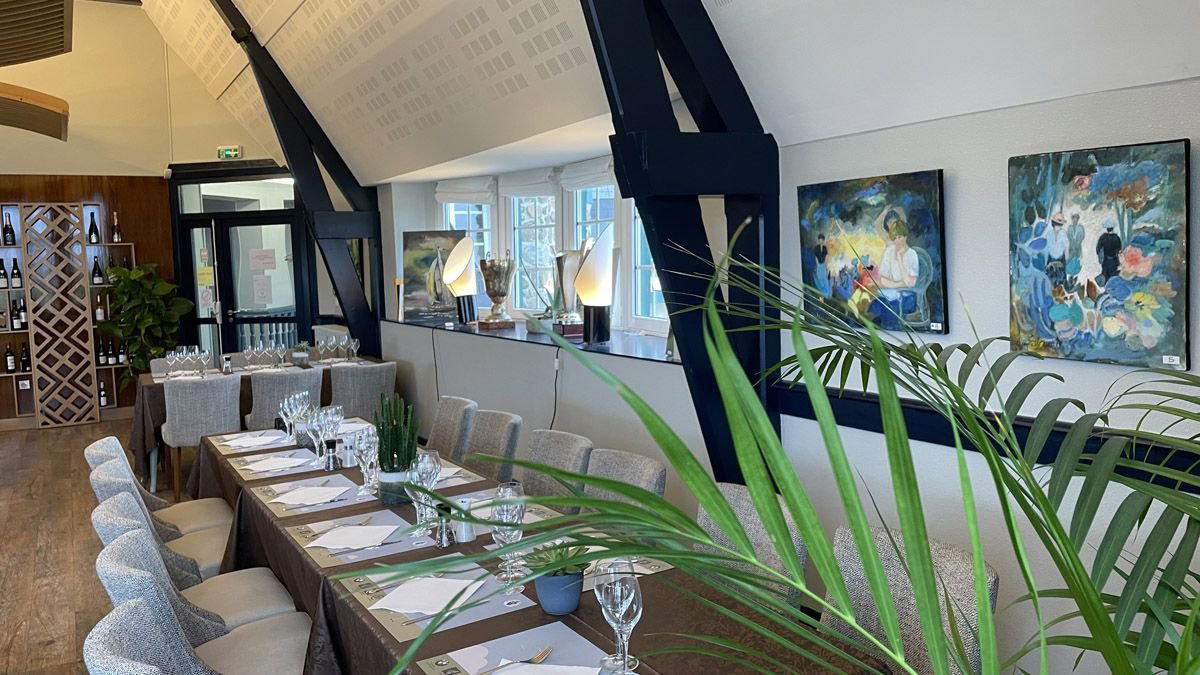
Where the Coastline Dictates the Kitchen
Bréville-sur-Mer sits on the western edge of Normandy's Cotentin peninsula, a stretch of coast where the tidal range is among the most dramatic in Europe and the fishing grounds have fed the region's tables for centuries. This is not a dining destination that draws visitors for urban spectacle or the kind of density that makes a city's restaurant scene self-sustaining. What brings people to this part of the Norman coast is precisely the opposite: a landscape stripped of distraction, where the quality of what arrives on the plate is inseparable from what lies offshore and in the surrounding agricultural land. L'Albatros, addressed at 1 Impasse des Dunes, occupies that context directly. The name itself signals the geography before you have even considered the menu.
Coastal Normandy operates within a particular culinary tradition that separates it from the high-production formality of Paris's grand restaurants. Where Alléno Paris au Pavillon Ledoyen in Paris or Mirazur in Menton command international attention through awards infrastructure and destination-dining economics, a restaurant in a small Norman commune answers to a different set of priorities.
Ingredient Geography: Norman Sourcing as Editorial Argument
The case for eating along this coastline rests on ingredients that the rest of France imports from here. Normandy's dairy — its butter, its cream, its aged cheeses — supplies restaurants far beyond the region's borders, including some of France's most decorated tables. The seafood picture is equally clear: the waters off the Cotentin yield sole, turbot, scallops from the Bay of Saint-Brieuc and Saint-Jacques from closer grounds, oysters from beds that have operated for generations, and crustaceans whose quality is indexed to water temperature and tidal movement rather than aquaculture intervention. For a kitchen at Bréville-sur-Mer, these are not sourcing choices made for marketing purposes. They are the default condition of cooking in this location.
This is what separates Norman coastal cooking from the ingredient-sourcing rhetoric that has become standard across French fine dining. At destinations like Bras in Laguiole or Christopher Coutanceau in La Rochelle, sourcing philosophy is a conscious editorial position, deliberately constructed and communicated. At a small restaurant on the Normandy coast, the philosophy is geographic fact: you cook what the land and sea deliver, because the alternatives are further away and demonstrably inferior. That enforced proximity is, for the attentive diner, an asset rather than a constraint.
The wider French tradition of place-rooted cooking, seen at Auberge de l'Ill in Illhaeusern, at Georges Blanc in Vonnas, and at L'Oustau de Baumanière in Les Baux, holds that the most honest cooking happens when a kitchen is in direct dialogue with its immediate terroir. Normandy qualifies without argument. The apple orchards that produce the region's cider and calvados, the salt marshes that graze the pre-salé lamb, the dairy farms that generate cream with a fat content measurably higher than most European equivalents: these are the ingredients that define what a kitchen here can do.
The Setting at Bréville-sur-Mer
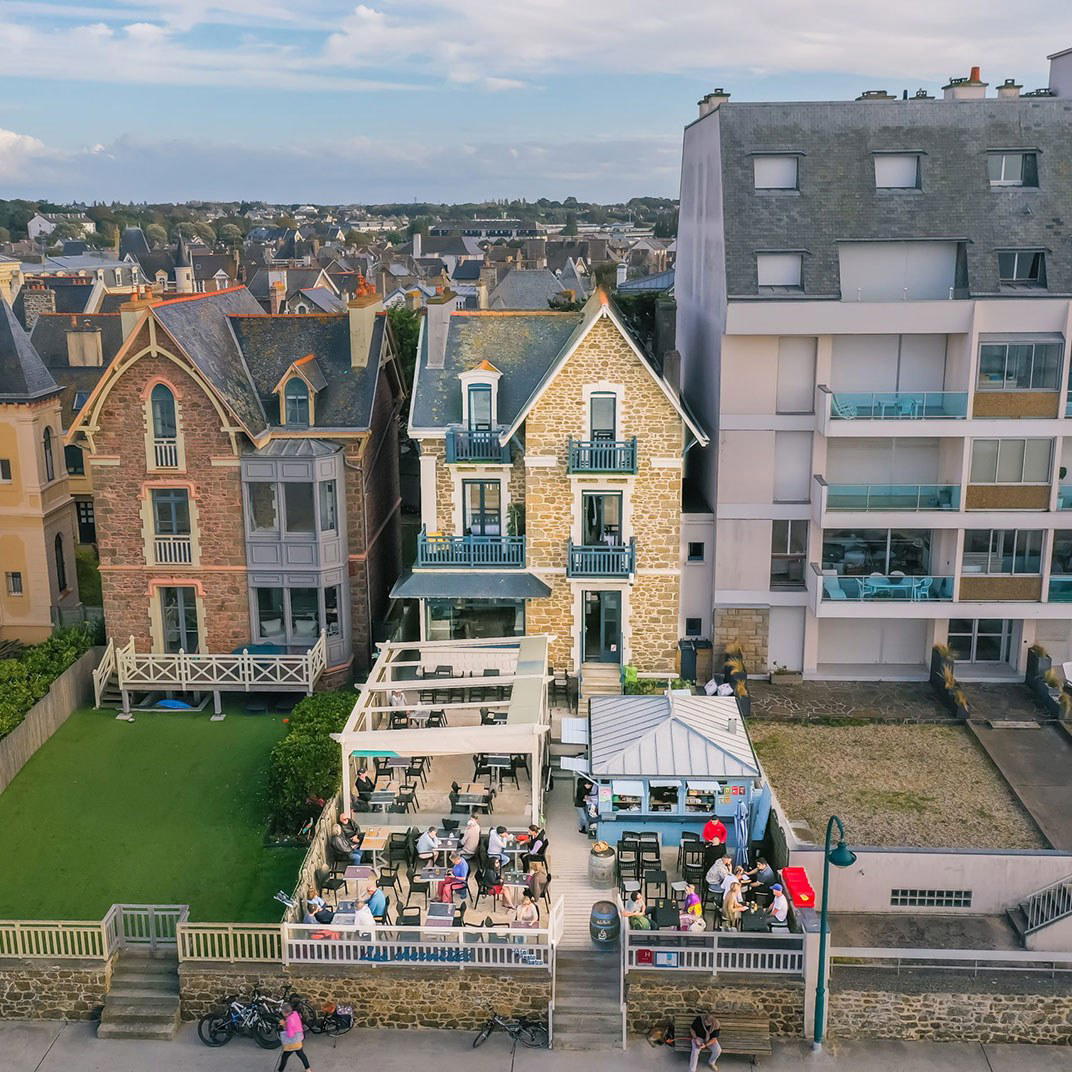
Approaching from the coastal road, Bréville-sur-Mer reads as a quiet commune rather than a restaurant destination. That is part of the point. The address on Impasse des Dunes places L'Albatros close to the dune line, in the kind of position where the sound and light of the coast are ambient rather than staged. This is not the constructed drama of a clifftop glass-and-steel dining room. It is a working coastal setting, and the dining experience belongs to that register.
For visitors arriving from further afield, the nearest reference city is Granville, approximately five kilometres to the south, which connects to the regional rail network and provides a practical base for exploring this section of the Cotentin coast. The drive along the D911 coastal road is the appropriate approach: slow, sequential, and calibrated to the pace the region asks of you. Those who arrive expecting the infrastructure of a Paris arrondissement or the polished resort formality of destinations like Assiette Champenoise in Reims will need to recalibrate their expectations. What Bréville-sur-Mer offers instead is the credibility of genuine remoteness.
For planning purposes, visitors to this part of Normandy should allow time beyond a single meal. The coastal path network, the nearby tidal island of Mont Saint-Michel an hour to the south, and the broader Cotentin peninsula reward a multi-day itinerary. Restaurant options in this immediate area are limited, which makes advance planning sensible for anyone building a trip around dining. Our full Bréville-sur-Mer restaurants guide maps the area's dining options in broader context.
Placing L'Albatros in the French Coastal Dining Tradition
France's coastline has produced a distinct tier of seafood-focused restaurants that operate outside the Michelin-heavy gravity of Paris and Lyon. La Marine in Noirmoutier-en-l'île exemplifies one model: a small Atlantic island address that earned international recognition through rigorous sourcing and technical precision. Paul Bocuse in Collonges-au-Mont-d'Or represents the institutionalised end of French regional cooking. Au Crocodile in Strasbourg and Auberge du Vieux Puits in Fontjoncouse each demonstrate how deeply rooted French regional cooking can be without requiring urban scale to sustain it.
That absence is not necessarily a disqualifier. Many of France's most satisfying coastal meals happen in rooms that have never been formally assessed, where the kitchen's relationship with its suppliers is the only credential that matters. Whether L'Albatros meets that standard is a question leading answered by visiting during peak season, when Norman ingredients are at their most expressive. Compare the Atlantic coastal tradition here against what Le Bernardin in New York City or Atomix in New York City do with French-influenced seafood cooking at the other end of the formality spectrum, and the contrast clarifies what makes the source-adjacent model worth seeking out. Troisgros in Ouches is another reference point for understanding how French culinary institutions ground themselves in a specific geography without sacrificing ambition.
Frequently asked questions
Is L'Albatros okay with children?
L'Albatros is set in Bréville-sur-Mer, a quiet coastal commune rather than a high-volume city restaurant, which tends to suit a more relaxed pace. The address — 1 Impasse des Dunes — suggests a removed, residential-edge setting where a measured family visit is unlikely to feel out of place. That said, the kitchen's orientation toward serious Norman sourcing means the menu is seafood-forward, so younger guests with limited palates may find the options narrow.
What kind of setting is L'Albatros?
The address on Impasse des Dunes places L'Albatros at the edge of a small Normandy commune, where the Cotentin coast's tidal flats and dune geography shape the immediate surroundings. Bréville-sur-Mer reads as a quiet village rather than a restaurant strip, so the setting is deliberately low-key. Arriving from the coastal road, there is no dense dining quarter — the restaurant operates as a destination in its own right rather than one stop among many.
Is L'Albatros worth travelling to from further along the Normandy coast?
Bréville-sur-Mer is positioned on the western Cotentin, placing it within driving range of Granville and the upper reaches of the Mont-Saint-Michel bay corridor. France's coastal dining tradition includes a tier of seafood-focused restaurants operating well outside the Michelin circuit of major cities, and L'Albatros occupies that category by geography alone. For visitors already touring the Cotentin peninsula, the address at 1 Impasse des Dunes represents a deliberate detour rather than an accidental discovery.
What's the best thing to order at L'Albatros?
What the location does confirm is that Bréville-sur-Mer sits within Normandy's primary seafood-producing corridor — the Cotentin coast supplies oysters, mussels, and line-caught fish to the wider French market. Any restaurant operating here with a local sourcing posture is working with ingredients that don't need much distance from water to plate.
What part of town is L'Albatros in?
L'Albatros is located at 1 Imp. des Dunes, 50290 Bréville-sur-Mer, France, Breville Sur Mer.
Fast Comparison
Comparable venues nearby, for context on price, style, and recognition.
| Venue | Cuisine | Price | Notes |
|---|---|---|---|
| L'AlbatrosThis venue — the venue you are viewing | French Seafood Bistro | Not listed | Not listed |
| Le Petit Canard | Traditional French Duck Bistro | Not listed | 9th arrondissement |
| L'Absinthe | Modern French Bistro | $50–100 | Intramuros |
| Comptoir De Vie | Modern French Tasting Counter-Bar | $100–150 | 2nd Arrondissement |
| Autour du Beurre | French Bistro with Bordier Butter Focus | $30–50 | Intra-Muros |
| Le Moulin de Jean | French Gastronomic Bistro | $20–30 | Bocage Normand |
Continue exploring
More in Breville Sur Mer
Restaurants in Breville Sur Mer
Browse all →
Bars in Breville Sur Mer
Browse all →
Details
- Elegant
- Scenic
- Sophisticated
- Special Occasion
- Date Night
- Waterfront
- Terrace
- Open Kitchen
- Extensive Wine List
- Local Sourcing
- Waterfront
- A La Carte
Current opening hours
- Monday
- 9 AM–7 PM
- Tuesday
- 9 AM–7 PM
- Wednesday
- 9 AM–7 PM
- Thursday
- 9 AM–7 PM
- Friday
- 9 AM–7 PM
- Saturday
- 9 AM–7 PM
- Sunday
- 9 AM–7 PM
Hours can change for holidays and private events. Last verified .
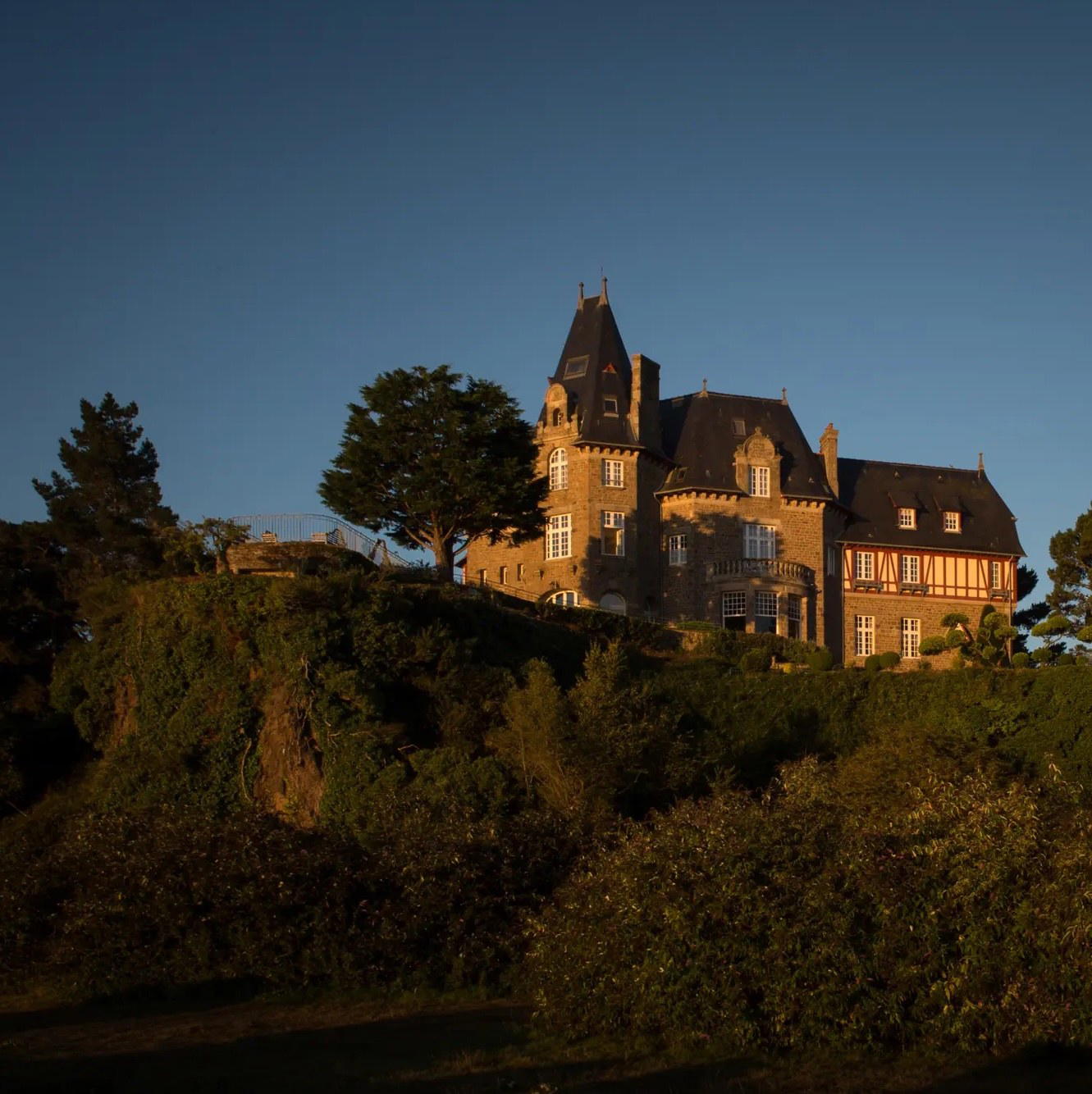
Chaleureux et attentif service in an authentically charming Norman stone and half-timbered clubhouse with notable panoramic views.