L'Absinthe
Our verdict
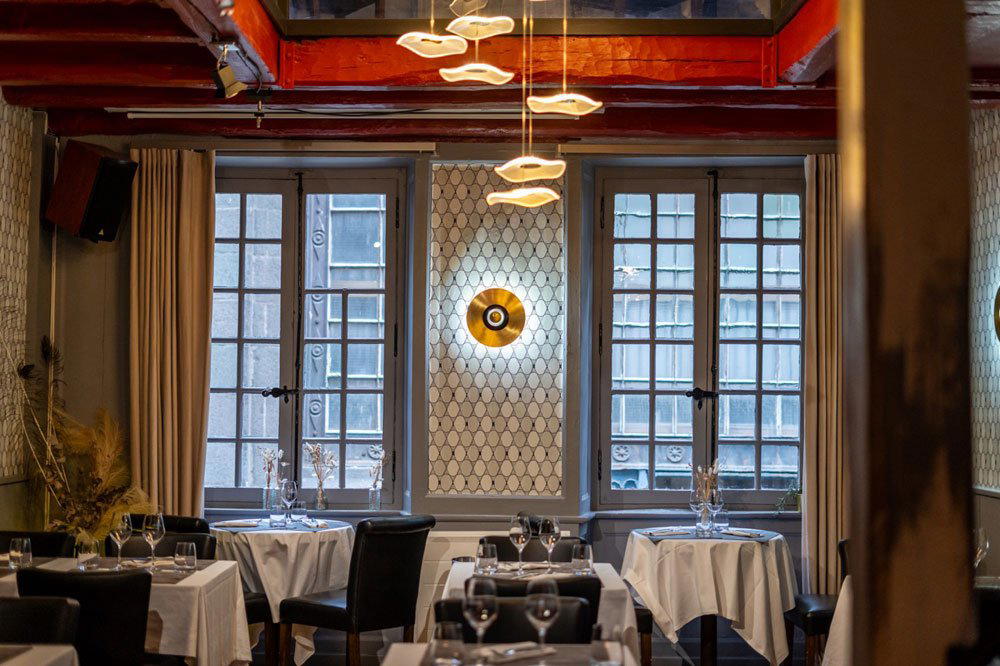
L'Absinthe occupies a historic address at 1 Rue de l'Orme in Saint-Malo's walled intra-muros, where the texture of the city—salt air, granite walls, the rhythmic pull of Atlantic tides—shapes the dining context as much as what arrives on the plate. The address places it inside a tight cluster of serious Saint-Malo tables that have made the walled city a credible stop on France's regional dining circuit.

Pearl is the En Primeur Club membership app — saves, bookings, and concierge access live there. Same editors, same standards.
- Address
- 1 Rue de l'Orme, 35400 Saint-Malo, France
- Phone
- +33299402615
- Hours
- Daily 12–2 PM, 7–10 PM
- Website
- restaurant-absinthe.fr
- Directions
- Get directions
- Booking
- Book on TheFork
The menu
What to order
- Lasagne de la mer
- Tartare de poisson
Stone, Salt, and the Weight of Place
Saint-Malo's intra-muros is a city that communicates through its materials. The granite ramparts absorb and hold the cold of the sea; the narrow streets channel wind from the Rance estuary in winter and funnel afternoon light in summer. Restaurants here do not merely occupy their settings — they are shaped by them. The leading addresses in the walled city understand that the physical environment is part of the meal, and the street-level dining rooms along those old lanes carry an atmosphere that purpose-built restaurant interiors rarely achieve. L'Absinthe, at 1 Rue de l'Orme, sits inside that tradition.
The address alone carries weight. Rue de l'Orme is within the fortified old town, a few minutes on foot from the sea gate, and the approach — past salt-scoured stone, past the residual smell of low tide that drifts in from the bay, does the work of transitioning a diner from the tourist circuit into something more considered. That transition matters in Saint-Malo, where the concentration of visitors during the summer months means that the better tables earn their reputations by resisting the pull toward accessibility and volume. The dining rooms that endure here are the ones that commit to a specific register and hold it.
Saint-Malo's Dining Tier: Where L'Absinthe Sits
The walled city's restaurant scene has matured considerably over the past decade. What was once dominated by crêperies and moules-frites counters serving the seasonal tourist trade now includes a coherent upper tier of tables serious enough to draw diners from Rennes, Nantes, and Paris on their own merits. Le Saint Placide, the most decorated address in town at the creative end of the spectrum, set a standard that other intra-muros tables have had to orient around. Ar Iniz and Betton Fils represent the modern cuisine strand of that same ambition, while Annadata and Autour du Beurre approach the city's produce from different conceptual angles. L'Absinthe occupies its own position within this cluster, a table whose name and location have accumulated local weight over time.
Understanding where any Saint-Malo table sits relative to its peers requires an understanding of what Breton coastal cooking actually demands. The raw materials here are among the strongest in France: oysters from Cancale less than twenty kilometres east, line-caught bar and turbot from the bay, butter from Isigny or Bordier, the salt itself from Guérande marshes. The question that separates the serious tables from the competent ones is not access to those ingredients, every restaurant in the region can get them, but what discipline is applied once they arrive in the kitchen. Restraint and precision, rather than elaboration, tend to be the markers of the more credible addresses.
The Sensory Register of the Room
Intra-muros dining rooms share a set of architectural constants: thick stone walls that hold cool air even in July, low ceilings in the older buildings, the ambient sound of the street filtered through heavy timber frames. The effect is one of enclosure, of compression, a quality that concentrates attention on the table in a way that open, modern dining rooms do not. L'Absinthe's position on Rue de l'Orme places it within that architectural inheritance, and the name itself carries its own register: absinthe is a drink with a specific French literary and cultural history, a marker of a certain kind of considered, slightly austere French hospitality that the leading regional tables in Brittany tend to inhabit.
The seasonal rhythm of Saint-Malo amplifies this. In summer, the walled city runs at pressure, hotel rooms fill weeks ahead, the streets after dinner are crowded, and tables at the better addresses require forward planning. In autumn and early winter, the pace changes sharply. The tourist volume drops, the light off the sea moves toward pewter, and the restaurants that survive into the shoulder season tend to be the ones with a genuine local clientele. That seasonal shift is one of the better tests of a Saint-Malo restaurant's actual standing.
France's Regional Dining Context
Saint-Malo's emergence as a credible dining destination maps onto a broader pattern in French regional cooking. The concentration of serious tables outside Paris has grown substantially since the late 2000s, driven partly by chefs choosing regional anchoring over the capital's competitive density, and partly by a travel culture that has started to treat regional France as a destination in its own right rather than a stopover. The addresses that have defined that shift nationally, Mirazur in Menton, Bras in Laguiole, Flocons de Sel in Megève, share a structural logic: territory is not backdrop, it is argument. The cooking makes the case for the place.
In Brittany, that argument runs through the sea. The region's Atlantic identity, wind, tide, salt, the specific grey-green of the water off Saint-Malo's ramparts, is not decorative local colour but a substantive culinary reality. The tables that have earned the most sustained attention in the area, including those with deep regional commitments elsewhere in France, tend to be ones where the menu reads as a direct consequence of geography. That standard is the benchmark against which Saint-Malo's upper-tier tables are measured.
For broader context on the French fine dining circuit, addresses like Alléno Paris au Pavillon Ledoyen, Assiette Champenoise in Reims, Au Crocodile in Strasbourg, and Paul Bocuse in Collonges-au-Mont-d'Or represent the institutional tier of French regional cooking. Saint-Malo's scene operates a level below that institutional weight but with a regional specificity, the Atlantic Breton identity, that gives it a distinct character. Internationally, Le Bernardin in New York represents the point where French coastal cooking traditions travel furthest from their source, and Atomix illustrates how precision-led tasting formats have evolved globally, both useful reference points for understanding where European coastal fine dining sits in a wider conversation. AM par Alexandre Mazzia in Marseille and Auberge de l'Ill in Illhaeusern further anchor the range of what serious French regional cooking looks like when it commits to a specific coastal or terroir-driven identity.
Planning a Visit
L'Absinthe is located at 1 Rue de l'Orme, 35400 Saint-Malo, within the walled intra-muros that is leading reached on foot from the Saint-Vincent gate. The walled city is compact, most addresses are within a ten-minute walk of each other, but parking outside the walls and entering on foot gives the approach its proper character. For those building a broader Saint-Malo itinerary, the EP Club Saint-Malo restaurants guide maps the full dining tier across the city and its immediate surrounds. Shoulder-season visits, October through early December, or late February through March, offer the leading combination of atmosphere and availability, when the city settles back to its working self and the restaurants serving a genuine local clientele come into sharper focus.
Frequently asked questions
Where is L'Absinthe located?
L'Absinthe is located at 1 Rue de l'Orme, 35400 Saint-Malo, France, Saint Malo.
Is L'Absinthe a good choice for dining in Saint-Malo's walled city on a first visit to Brittany?
For a first visit to the Breton coast, the intra-muros location at 1 Rue de l'Orme puts L'Absinthe directly within the historic centre that most visitors come to Saint-Malo to see — no transfer required between sightseeing and dinner. Saint-Malo's dining tier has expanded beyond its traditional profile of crêperies and seafood counters, and L'Absinthe sits in the part of that scene that takes the kitchen seriously. It covers both geographic convenience and culinary substance in one address.
What's the must-try dish at L'Absinthe?
What the intra-muros setting at 1 Rue de l'Orme does suggest is a kitchen working with the coastal Breton larder — shellfish, butter, and local produce that define serious tables in this part of Saint-Malo. Ask the room when you arrive; the current menu is the only reliable source.
Can I walk in to L'Absinthe?
Walk-in availability at L'Absinthe is not confirmed, and restaurants within Saint-Malo's walled intra-muros that have matured into the serious dining tier routinely require advance booking, particularly through summer when the city draws heavy visitor traffic. The address at 1 Rue de l'Orme places it in a densely visited quarter where tables fill early. Contacting the venue directly before arriving is the reliable approach.
What makes L'Absinthe worth seeking out?
L'Absinthe sits inside Saint-Malo's intra-muros at 1 Rue de l'Orme, a walled city where the architectural fabric — granite walls, low ceilings, streets compressed by centuries of rebuilding — shapes the dining experience as much as anything on the plate. The walled city's restaurant scene has moved well past its crêperie-and-moules baseline over the past decade, and L'Absinthe represents part of that shift toward tables with genuine culinary intent. In a city this geographically constrained, that positioning carries weight.
Comparable Venues
Comparable venues nearby, for context on price, style, and recognition.
| Venue | Cuisine | Price | Notes |
|---|---|---|---|
| L'AbsintheThis venue — the venue you are viewing | Modern French Bistro | $50–100 | Not listed |
| Autour du Beurre | French Bistro with Bordier Butter Focus | $30–50 | Intra-Muros |
| Caraque | Breton Crêperie | $10–20 | Saint-Malo |
| Le P'Tit Crabe | Breton Creperie | $10–20 | Intra-Muros |
| La Brigantine | Breton Crêperie | $20–30 | Intra-Muros |
| Les Embruns | Traditional French Seafood | $30–50 | Sillon |
Continue exploring
More in Saint Malo
Restaurants in Saint Malo
Browse all →
Bars in Saint Malo
Browse all →
Details
- Classic
- Cozy
- Elegant
- Intimate
- Date Night
- Special Occasion
- Historic Building
- Extensive Wine List
- Local Sourcing
- A La Carte
- Wine
- Vegetarian Friendly
Current opening hours
- Monday
- 12–2 PM, 7–10 PM
- Tuesday
- 12–2 PM, 7–10 PM
- Wednesday
- 12–2 PM, 7–10 PM
- Thursday
- 12–2 PM, 7–10 PM
- Friday
- 12–2 PM, 7–10 PM
- Saturday
- 12–2 PM, 7–10 PM
- Sunday
- 12–2 PM, 7–10 PM
Hours can change for holidays and private events. Last verified .
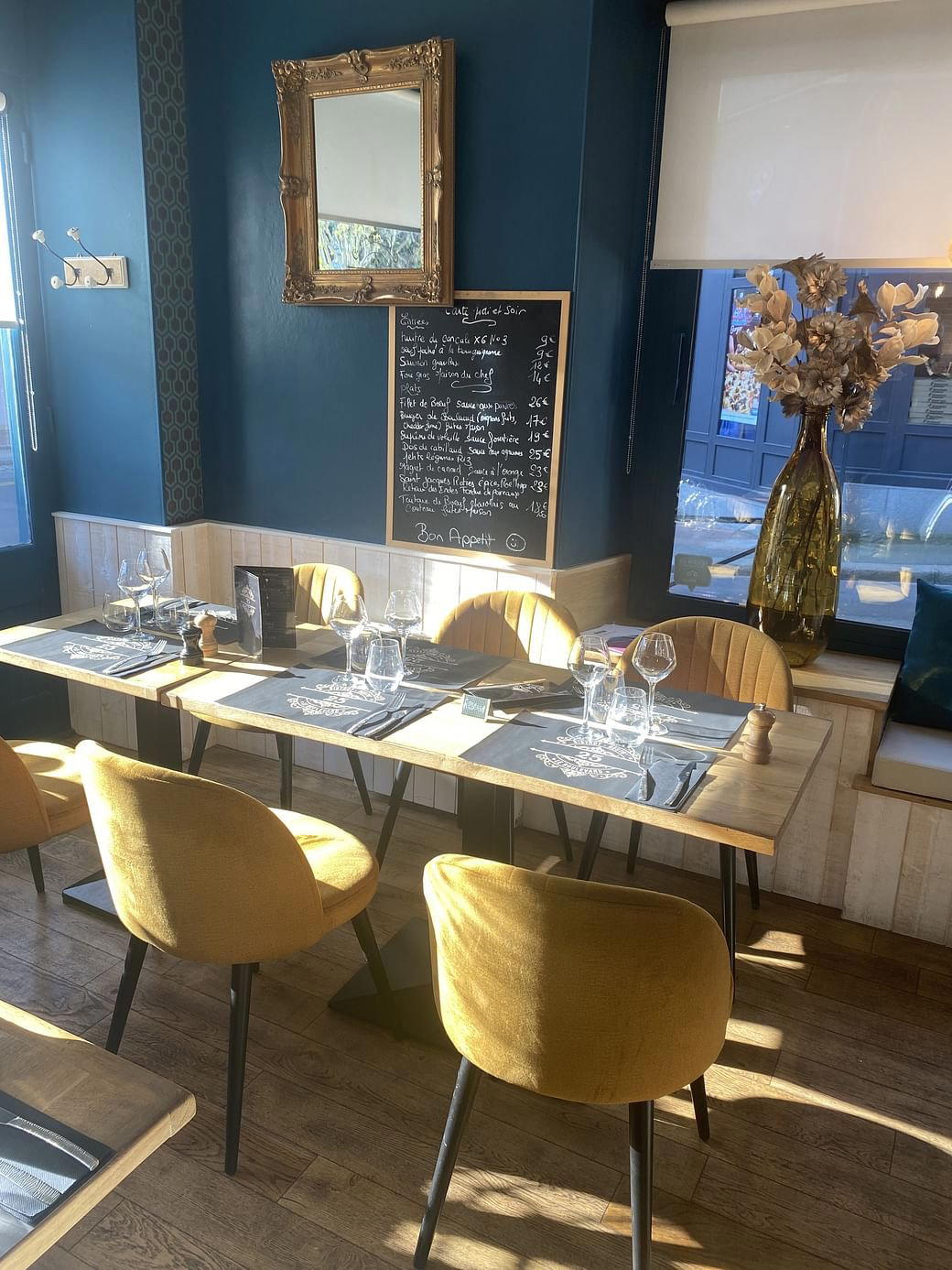
Cozy and tranquil atmosphere in a well-kept 17th-century setting, praised for its quiet dining experience.