Our verdict
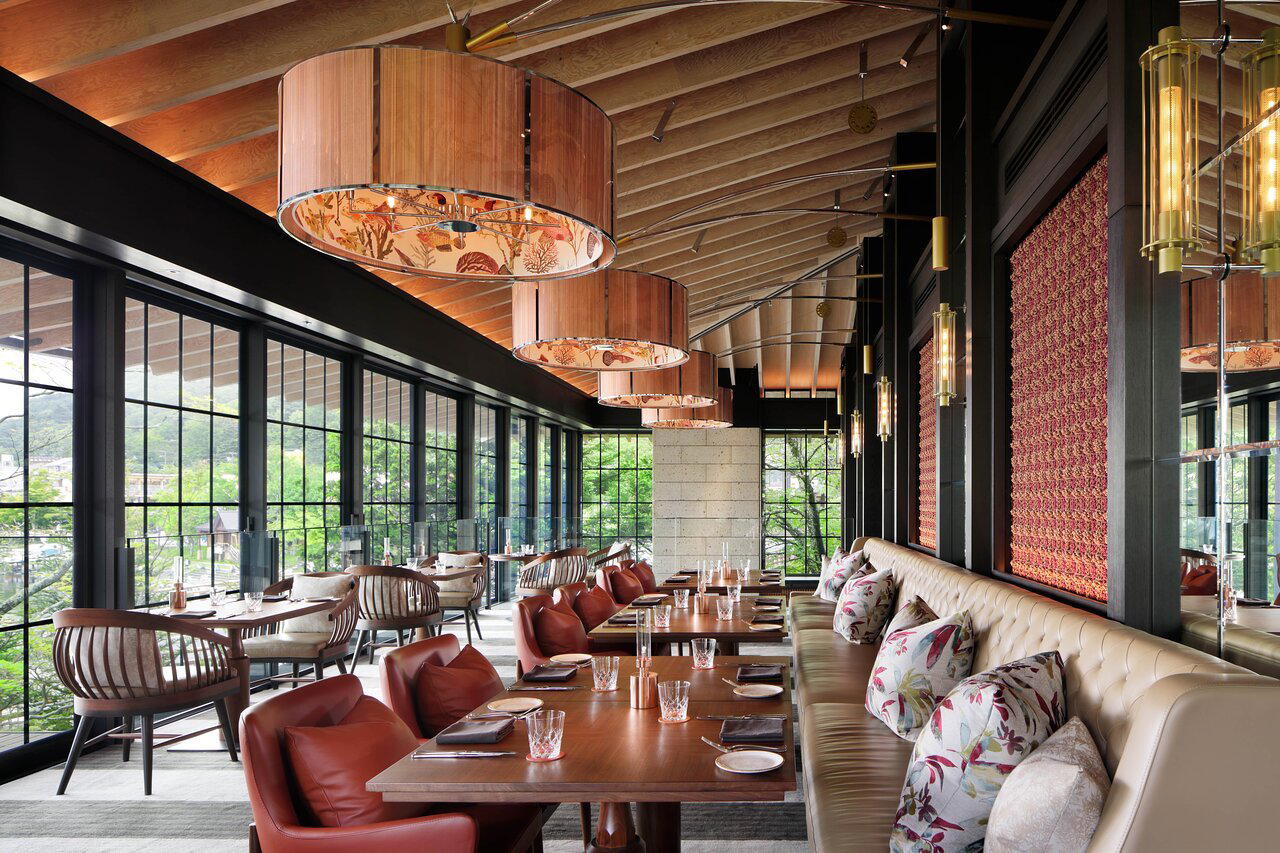
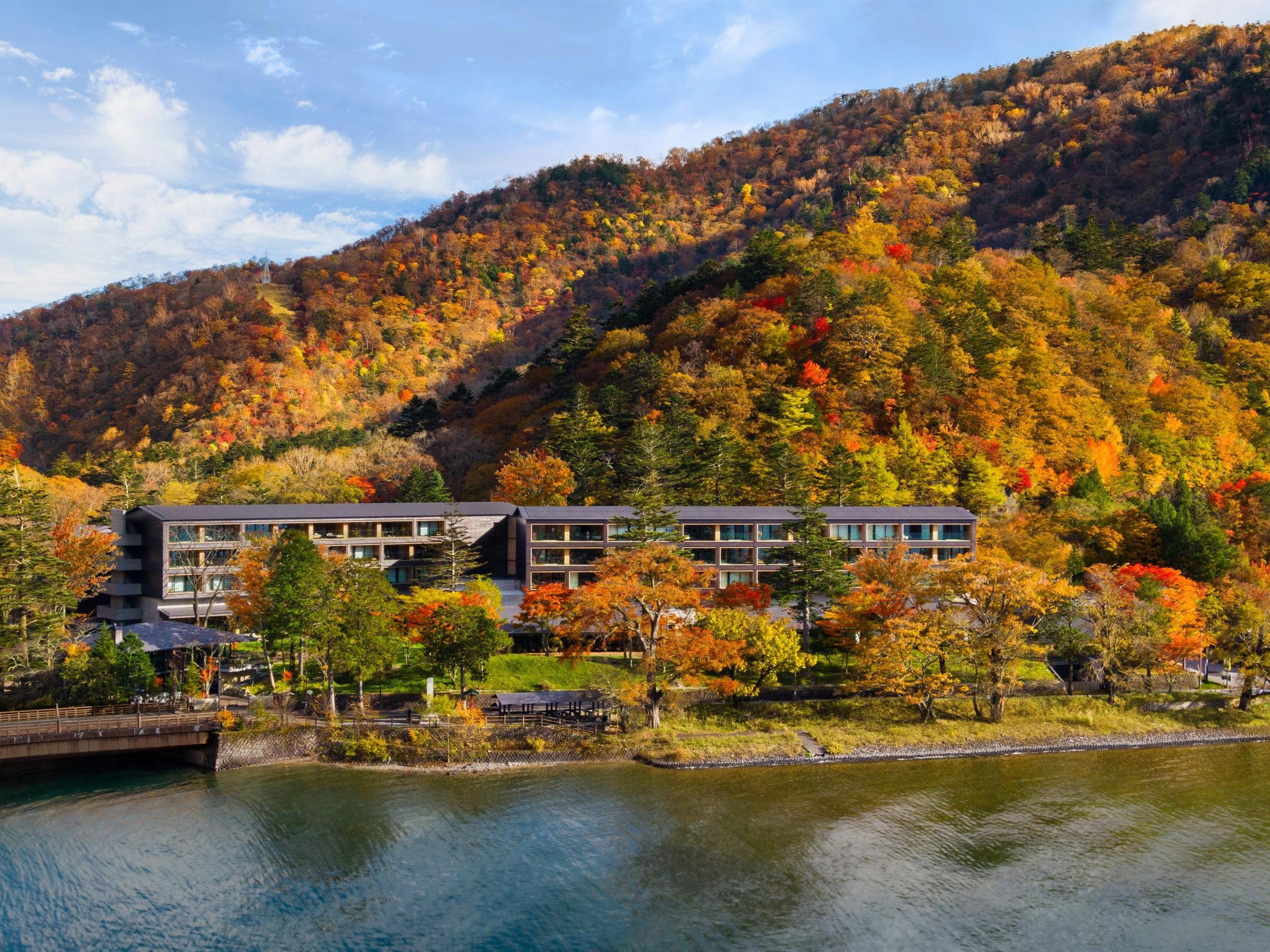
Set within The Ritz-Carlton Nikko on the shores of Lake Chuzenjiko, Lake House draws on the alpine forests and highland waters of Oku-Nikko to shape its kitchen. The setting positions it at the intersection of resort dining and regional ingredient culture, where elevation, season, and proximity to one of Japan's most protected natural areas define what arrives on the plate.

Pearl is the En Primeur Club membership app, where members save venues, book tables and use the concierge.
Where Altitude Shapes the Plate
At roughly 1,270 metres above sea level, Chuzenjiko sits in a climatic pocket that behaves differently from the lowland cities most Japanese fine dining is built around. The lake freezes at its edges in winter, the forests above it are designated as part of Nikko National Park, and the seasonal swing between deep cold and brief, intense summer is severe enough to compress the harvest window for local producers into something close to urgency. Restaurants operating in this environment cannot simply import a menu template from Tokyo or Osaka and apply it here. The terrain imposes its own logic.
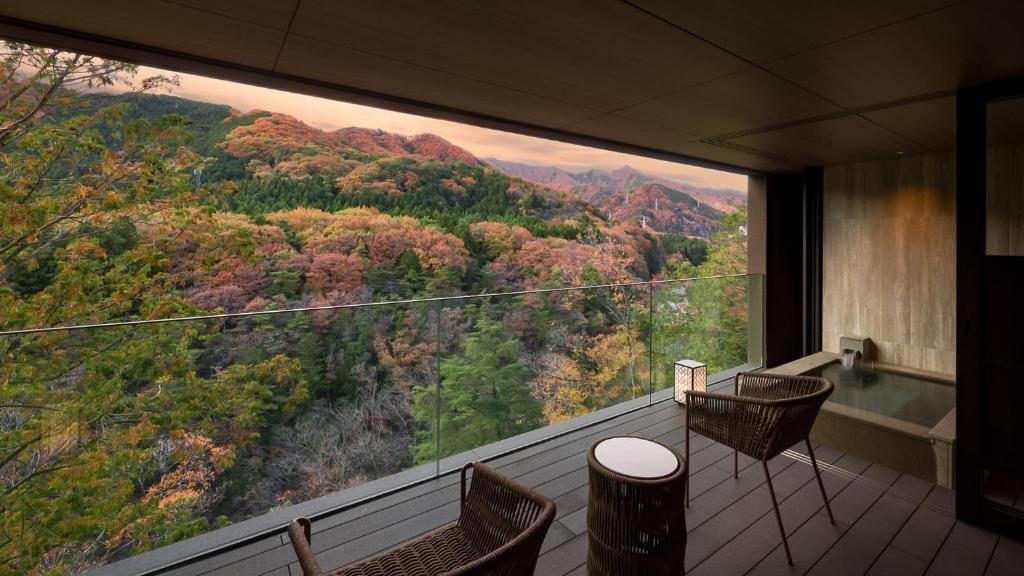
Lake House, the western-style dining room at The Ritz-Carlton Nikko in Chuzenji, sits directly inside that logic. The address, 中宮祠2482, places it on the lake's northern edge, close enough to the water that the view across to the forested ridgeline is a constant presence during service. That proximity is not incidental. Dining rooms positioned at a working remove from major urban supply chains tend to develop a more direct relationship with local sourcing simply because the economics of logistics make it necessary, and the culinary culture of Tochigi Prefecture, which surrounds Nikko, gives that sourcing genuine substance.
Tochigi's Larder and What It Means for the Kitchen
Tochigi Prefecture carries a reputation in Japanese food culture that extends well beyond its geography. The region produces some of Japan's most considered Wagyu, with Tochigi beef holding a recognised prefectural brand. Dairy farming in the highland areas around Nasu and Nikko benefits from the same cool temperatures that define Oku-Nikko's character, and freshwater fish from the mountain rivers and Chuzenjiko itself have been part of the local diet for centuries. The lake's hime masu, a landlocked variety of cherry salmon, is among the more documented local ingredients, caught seasonally and historically important enough to have appeared on the menus of the area's older Western-style restaurants.
This is the ingredient context that a kitchen at Lake House's address operates within. Western-style resort dining in Japan, when it is working at the register this setting implies, typically functions as a frame for regional produce rather than a vehicle for imported technique imposed on neutral ingredients. The question worth asking of any kitchen at this elevation is not whether the produce is local in a marketing sense, but whether the cooking actually responds to the seasonal rhythm those ingredients impose. At Oku-Nikko, that rhythm is compressed and clear: the window for highland vegetables is short, the fish run is seasonal, and winter service requires a different set of commitments entirely.
For comparative reference, other venues in the 日光市 dining scene approach this regional ingredient question from different angles. Meiji no Yakata (西洋料理 明治の館) represents the older Western-style dining tradition in Nikko proper, operating from a Meiji-era building and carrying the weight of that historical positioning. The Japanese Restaurant (日本料理 By ザ・リッツ・カールトン日光), within the same hotel property, approaches Tochigi's produce through a Japanese culinary framework. 三たてそば 長畑庵 operates in an entirely different register, focused on soba made from locally sourced buckwheat. These are distinct responses to the same regional larder, and understanding Lake House requires placing it in that local context rather than treating it as a standalone proposition.
The Resort Dining Format in a Mountain Setting
Resort dining at the level The Ritz-Carlton brand implies operates under a specific set of expectations that distinguish it from urban fine dining. The guest profile is predominantly staying on property, which means the kitchen serves across multiple service formats and must perform consistently for guests with extended exposure rather than the single-visit dynamics of a destination restaurant. At the same time, the remote setting justifies a degree of ingredient commitment and kitchen investment that urban mid-tier operations cannot always sustain, because the property's positioning depends on delivering an experience the surrounding environment makes plausible.
Internationally, the category of high-altitude or wilderness-adjacent resort dining has produced some serious kitchens. The logic that connects a property like this to serious ingredient sourcing is also present at properties across Japan's alpine regions. What Oku-Nikko adds to that pattern is the specific character of Tochigi's produce culture and the fact that the lake itself is a recognised natural landmark, designated as part of a national park system that limits development and, by extension, keeps the surrounding environment in a condition that actually supports the provenance claims a kitchen in this location can make.
Japan's Broader Fine Dining Context
For visitors using Lake House as part of a broader Japan itinerary, the regional reference point matters. Nikko sits roughly two hours from Tokyo by limited express from Asakusa, which places Oku-Nikko within range of a day trip but more naturally suited to an overnight or multi-night stay that allows the elevation and the pace of the area to register properly. The dining culture of the Kanto region's mountain margins differs from what Tokyo's density produces, and from the kaiseki tradition that defines destinations like Kyoto, where restaurants such as Gion Sasaki operate from a deep-rooted seasonal vocabulary. It also differs from the creative precision of HAJIME in Osaka or the technical rigour of Harutaka in Tokyo.
What Oku-Nikko offers is something less competitive in the Michelin or award-circuit sense and more specific to geography: a set of ingredients and an environment that cannot be replicated at lower elevation or in a city context. Venues like akordu in Nara and Goh in Fukuoka demonstrate how regionally grounded kitchens can build distinct identities outside Tokyo's gravitational pull. The same principle applies here, though the format and price tier differ from those examples considerably. Internationally, the ingredient-first approach that defines serious resort dining at altitude has analogues at venues like Le Bernardin in New York City, where the sourcing of a primary ingredient becomes the organising principle of the kitchen's identity.
Further reading on Japan's regional dining scene is available across EP Club's coverage, including Nanao, Sapporo, Takashima, and Nishikawa Machi. Our full 日光市 restaurants guide covers the wider local dining picture.
Planning a Visit
Lake House operates within The Ritz-Carlton Nikko at Chuzenji (中宮祠2482), accessible via the Irohazaka switchback road from Nikko city, a route that closes periodically during severe weather in winter and early spring. The refined setting means temperatures run significantly cooler than lowland Nikko year-round, and the winter months bring conditions that affect both access and the seasonal composition of the menu. Spring and autumn are the periods when the surrounding landscape and the local ingredient calendar tend to align most productively, though summer at the lake has its own distinct character given Chuzenjiko's historical role as a retreat from lowland heat.
Frequently asked questions
What's Lake House (レイクハウス)'s location?
Lake House (レイクハウス) is located at 中宮祠2482 (ザ・リッツ・カールトン日光), 日光市, 栃木県, 321-1661, 日光市.
Is Lake House (レイクハウス) accessible as a day trip from Tokyo for lunch or dinner?
Nikko sits roughly two hours from Tokyo by limited express train, and Lake House is a further drive up the Irohazaka switchback road to Chuzenji, adding meaningful travel time to any visit. Non-hotel guests should confirm current service hours and table availability with The Ritz-Carlton Nikko (中宮祠2482, 日光市) before making the journey, as resort restaurants at this altitude often prioritise in-house guests during quieter periods. An evening visit warrants consideration of the return road conditions, particularly in winter.
What's the best thing to order at Lake House (レイクハウス)?
The kitchen draws on Tochigi Prefecture's considerable larder, a region known for producing some of Japan's most consistently sourced ingredients. Given the restaurant's position within The Ritz-Carlton Nikko at 1,270 metres altitude beside Lake Chuzenji, the menu follows seasonal logic shaped by the mountain climate rather than urban supply chains. Specific dish recommendations require checking directly with the hotel, as the menu changes to reflect what the region offers at any given time.
Do I need a reservation for Lake House (レイクハウス)?
Lake House operates within The Ritz-Carlton Nikko (中宮祠2482, 日光市), a property where dining demand from hotel guests runs alongside outside bookings. Reservations are strongly advisable, particularly during Nikko's peak autumn foliage season when the Irohazaka road and surrounding area draw significant visitor numbers. check the venue's official channels to secure a table.
What is Lake House (レイクハウス) known for?
Lake House is the restaurant within The Ritz-Carlton Nikko, positioned at roughly 1,270 metres above sea level on the shores of Lake Chuzenji in 日光市. Its identity is shaped by the mountain setting and access to Tochigi Prefecture's agricultural produce, placing it in a different register from Tokyo's urban fine dining circuit. The Irohazaka switchback road leading to the restaurant is itself part of the visit's geography.
Can Lake House (レイクハウス) accommodate dietary restrictions?
As a restaurant operating under The Ritz-Carlton brand at 中宮祠2482, 日光市, Lake House follows the group's standard practice of accommodating dietary requirements when notified in advance.
Continue exploring
More in Nikko
Details
- Scenic
- Elegant
- Quiet
- Sophisticated
- Special Occasion
- Date Night
- Celebration
- Hotel Restaurant
- Waterfront
- Terrace
- Panoramic View
- Farm To Table
- Local Sourcing
- Waterfront
- Set Menu
- Wine
- Coffee
- Smoothies
Current opening hours
- Monday
- 11 AM–10 PM
- Tuesday
- 11 AM–10 PM
- Wednesday
- 11 AM–10 PM
- Thursday
- 11 AM–10 PM
- Friday
- 11 AM–10 PM
- Saturday
- 11 AM–10 PM
- Sunday
- 11 AM–10 PM
Hours can change for holidays and private events. Last verified .
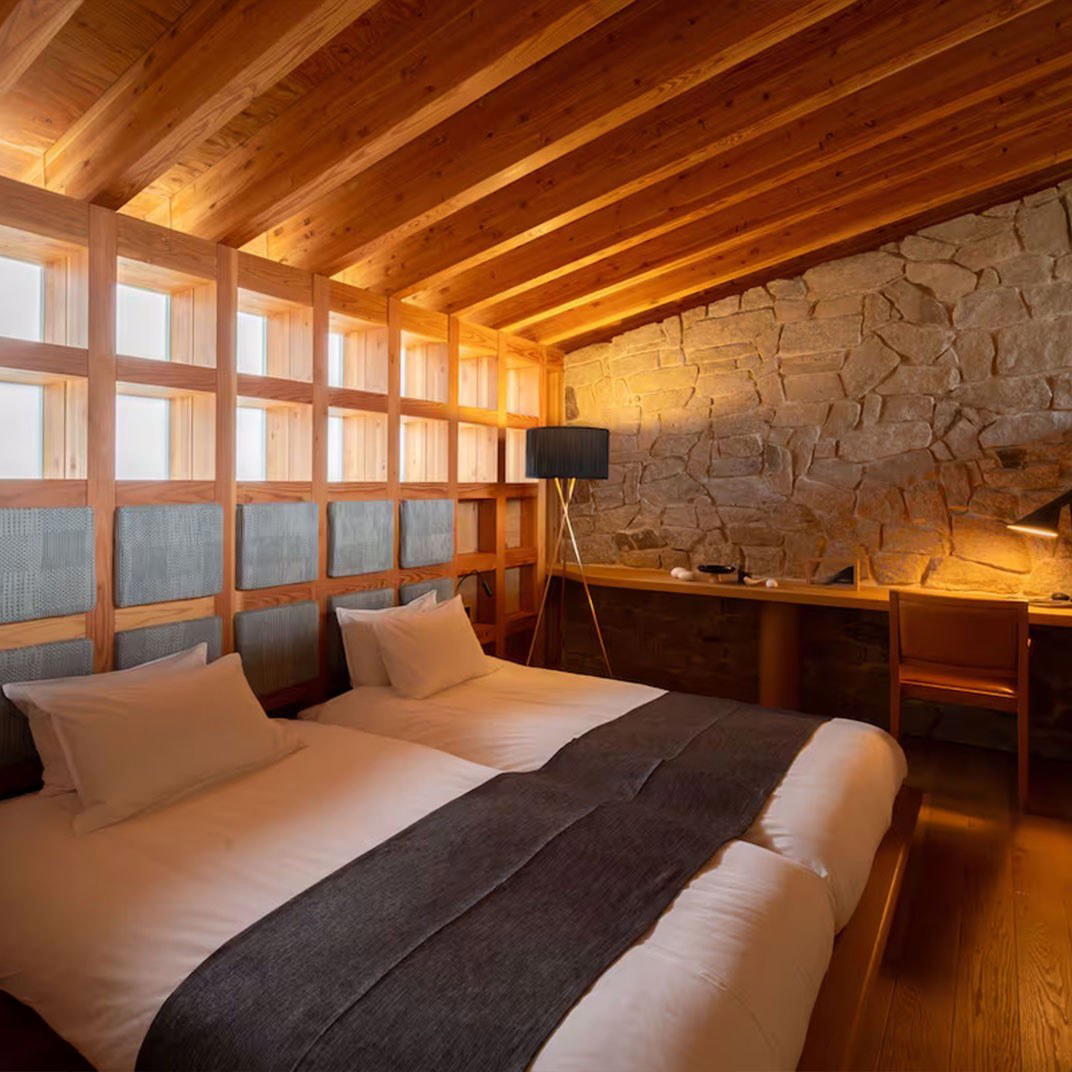
Calm and elegant, with a boathouse-inspired interior, art referencing Lake Chuzenji flora and fauna, and serene lake views.