

A Michelin-starred restaurant in the alpine hamlet of Sappada, Laite occupies two wood-paneled stube dating to the 17th and 18th centuries. Chef Fabrizia Meroi structures her menus around the local Sappada dialect and seasonal mountain produce, with wine selection handled by her daughter Elena. The format is intimate, the cooking rooted in Carnic-Dolomite tradition, and the setting alone warrants the journey.
Pearl is the En Primeur Club membership app — saves, bookings, and concierge access live there. Same editors, same standards.
- Address
- Borgata Hoffe, 10, 33012 Sappada UD, Italy
- Phone
- +39 0435 469070
- Website
- ristorantelaite.com
- Directions
- Get directions
 Saves & bookings on Pearl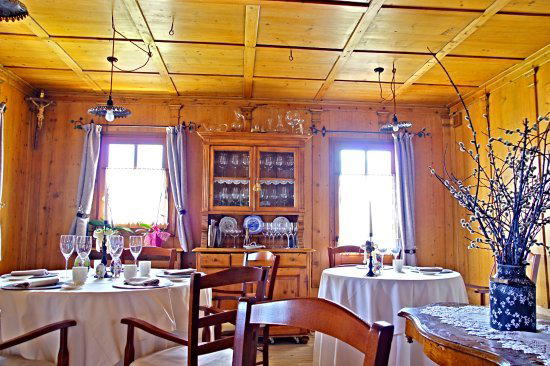
A Mountain Hamlet, a Stube, and the Cooking That Belongs to It
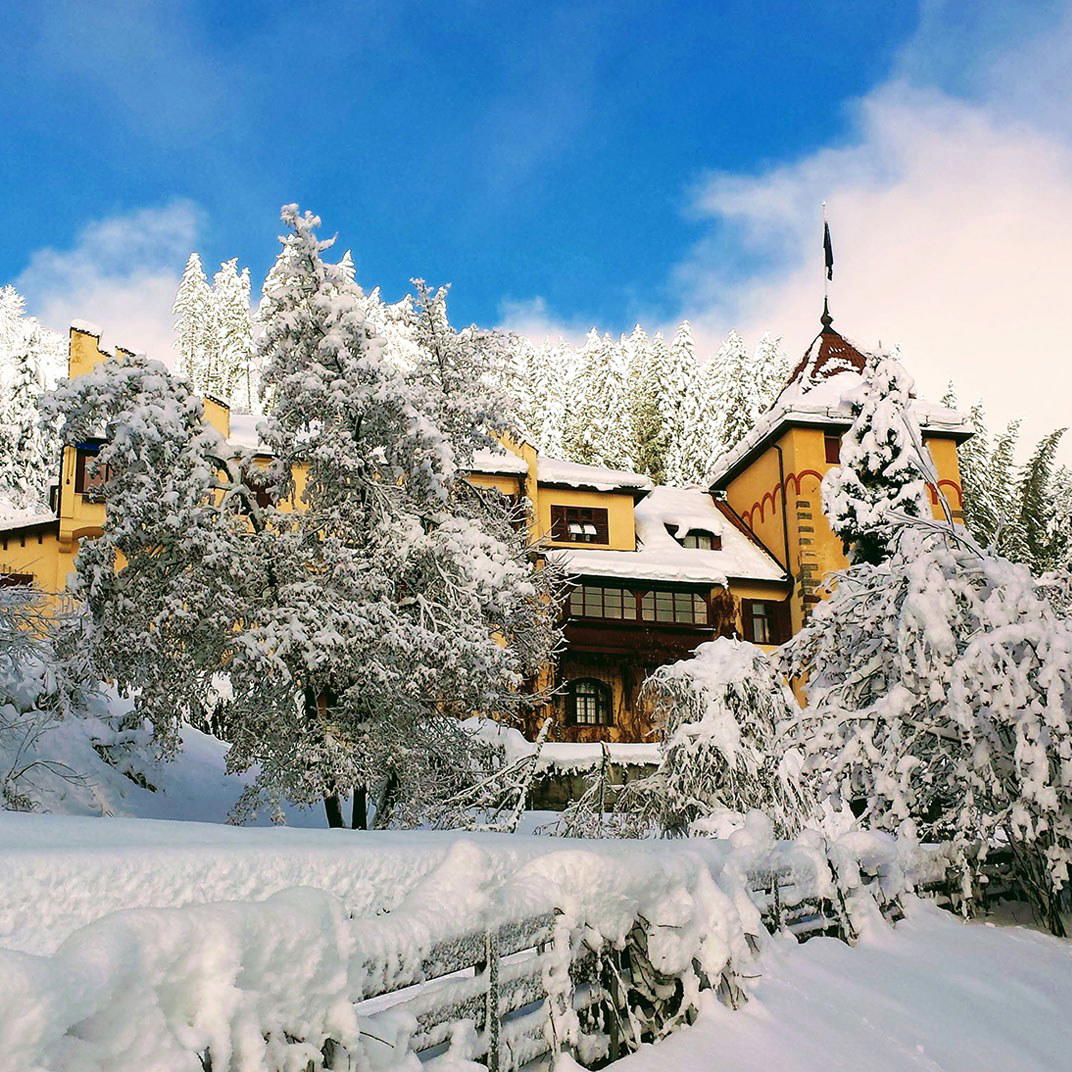
The approach to Sappada already signals that something different is happening. This is not the Dolomites of polished resort towns or the South Tyrol's well-worn luxury circuit. Borgata Hoffe, where Laite occupies a typical mountain house, is one of Sappada's historic borgate, the cluster settlements whose German-Ladin linguistic heritage sets the area apart from the surrounding Friulian and Veneto lowlands. The dining room sits inside two wood-paneled stube dating to the 17th and 18th centuries, low-ceilinged and warm in the way only centuries-old timber construction manages to be. Before a dish arrives, the room is already making an argument about regional identity.
That argument is worth taking seriously. The Carnic Alps and the upper Piave valley have long been caught between administrative borders and cultural affiliations, and Sappada's food culture reflects that layering. The Germanic-inflected dialect spoken here, Sappadino, is not merely a local curiosity but a marker of how isolated and self-contained these communities remained for centuries. When Laite names its menus in that dialect, it is not deploying folklore for atmosphere. It is a precise statement about culinary geography: this is food that belongs to a specific altitude, a specific ecology, and a specific human story.
Three Menus, One Clear Position
Italy's Michelin-starred mountain restaurants tend to divide into two camps. One pursues the Bocuse-lineage formality that arrived in the postwar decades and never fully left the alpine dining room; the other uses locality as raw material for progressive technique, producing cooking that could notionally sit in any number of contemporary European cities. Laite holds a third position that is less common and more demanding: it stays close to tradition without becoming archival, and it follows the season without turning seasonal sourcing into a concept.
The menu structure makes this explicit. Verpai, meaning something that flows quickly in Sappadino, is the shorter format, suited to guests who want a focused rather than extended experience. Asou, translating roughly as "like this," traces the restaurant's own history, functioning as a kind of institutional memory rendered edible. Plissn, meaning fir needles, begins with tradition and then opens outward according to the season and Chef Meroi's direction, sometimes incorporating what the menu description calls refined exotic touches. That phrase is notable. In a kitchen so grounded in place, the moment when outside influence enters is a deliberate editorial decision rather than a default modernist gesture. The three menus are not simply size variants; they are three different entry points to the same underlying sensibility.
Wine at Laite is the responsibility of Elena Meroi, Fabrizia's daughter, whose selections include a meaningful proportion of by-the-glass options. In a category where wine lists frequently function more as prestige architecture than as service tools, that by-the-glass emphasis is a practical and philosophical choice: it allows guests to track the menu's seasonal movement through the glass rather than committing to a single bottle. The Friuli-Venezia Giulia region surrounding Sappada produces some of Italy's most discussed white wines, and a list that can draw on that local depth while remaining accessible by the glass reflects intelligent curation.
Where Laite Sits in the Broader Italian Fine Dining Map
Italy's one-Michelin-star tier, confirmed for Laite in 2024, covers an enormous range of formats and ambitions, from neighbourhood trattorie with technically precise kitchens to destination addresses that operate on allocations and waiting lists. To understand where Laite sits in that range, it helps to think geographically and conceptually at once.
The closest relevant comparison in the alpine fine dining corridor is Atelier Moessmer Norbert Niederkofler in Brunico, which pursues a rigorous "Cook the Mountain" philosophy at the three-star level. Niederkofler's project is maximalist in its stated commitments and operates with the institutional infrastructure that three stars demand. Laite functions at smaller scale and with less programmatic framing, but the underlying question the two kitchens are asking is related: what does this specific geography taste like when a kitchen takes it seriously?
Further afield, the comparison set broadens into the Italian fine dining restaurants that have earned sustained international attention, including Osteria Francescana in Modena, Le Calandre in Rubano, Piazza Duomo in Alba, and Reale in Castel di Sangro. These are restaurants where regional identity has been pushed into a more experimental register. Laite is not pursuing that project. It operates at a scale and in a format where the cooking's relationship to its immediate context is the point, not the starting material for transformation. That is a legitimate and more difficult choice in an era when technical ambition is the default signal of seriousness.
Coastal and lowland Italian fine dining presents a different comparison entirely. Dal Pescatore in Runate and Uliassi in Senigallia work with product profiles that are structurally different from a mountain kitchen's seasonal range. Quattro Passi in Marina del Cantone operates within the Campanian coastal tradition. Enoteca Pinchiorri in Florence and Enrico Bartolini in Milan are urban institutions with wine collections and dining room registers that have no counterpart in a Sappada hamlet. These comparisons matter not to rank but to clarify: Laite is doing something that the urban and coastal Italian fine dining world, however excellent, cannot replicate. The stube, the dialect, the altitude, the isolation are not backdrop. They are the substance.
Getting to Sappada, and Planning Around It
Sappada sits in the Carnic Alps at roughly 1,250 metres, accessible from both Udine to the southeast and Belluno to the southwest, with driving times in the range of 90 minutes from each. The village is not on a through-route, which means arriving at Laite requires a specific decision to be there. That self-selectivity shapes the guest profile: this is not a restaurant that picks up casual visitors moving between better-connected destinations. It draws guests who have researched it, often planned a stay around it, and who arrive knowing what they have come for.
Laite operates for lunch and dinner on Monday, Tuesday, Friday, Saturday, and Sunday, with service running noon to 2 PM and 7 PM to 9 PM. The €€€ price positioning suits a Michelin-starred format in a mountain destination. Booking in advance is essential, particularly in the winter ski season and during summer's hiking months.
8 from 423 reviews is a meaningful signal at this level. A small, expensive, remote restaurant accumulates that kind of rating only when the gap between expectation and delivery runs consistently in the right direction. That gap, in Laite's case, is built on the clarity of its position: the kitchen knows exactly what it is doing, in what tradition, and for whom.
What to Order at Laite
The menu names in Sappadino dialect give the clearest orientation. Verpai suits a focused visit or a lunch when you want to understand the kitchen's current direction without committing to an extended sitting. Plissn, especially seasonally fluid among the three formats, is the better choice if you are visiting at a moment of clear seasonal transition, when the kitchen's sourcing is at its most active and the "refined exotic touches" the menu description references are most likely to appear. Asou, tracing the restaurant's own history, functions as the deepest cut for guests who want to understand how this kitchen has developed over time rather than simply where it stands today. Elena Meroi's by-the-glass wine selections are worth trusting throughout: the Friuli-Venezia Giulia region offers a depth of indigenous white varieties, and a list that makes them accessible by the glass rather than by the bottle is doing the serious hospitality work that the room's centuries-old timber already promises.
Comparable Venues
Comparable venues nearby, for context on price, style, and recognition.
| Venue | Cuisine | Price | Awards | Notes |
|---|---|---|---|---|
| LaiteThis venue — the venue you are viewing | Michelin-Starred Friulian Mountain Cuisine | $$$ | Michelin 1 Star | Not listed |
| Mondschein | Modern Alpine Italian | $$$$ | Michelin Plate | Sappada |
| Zaine | Traditional Italian Mountain Cuisine | $$ | Not listed | Borgata Soravia |
| Lazzaro 1915 | Contemporary Italian Fine Dining | $$$ | Michelin 1 Star | Pontelongo |
| Dolada | Modern Italian Country Cooking | $$$$ | Michelin 1 Star | Plois |
| Trattoria al Cacciatore - La Subida | Traditional Friulian Trattoria | $$$ | Michelin 1 Star | Cormons |
Recognition history
Dated appearances from independent guides and award organizations, with the underlying list record or original source where available.
Falstaff Restaurant - 93 Falstaff Points
Falstaff
Michelin 1 Star
Michelin
Michelin 1 Star
Michelin
Michelin 1 Star
Michelin
Continue exploring
More in Sappada
Restaurants in Sappada
Browse all →
Bars in Sappada
Browse all →
Hotels in Sappada
Browse all →

At a Glance
- Cozy
- Rustic
- Elegant
- Intimate
- Scenic
- Date Night
- Special Occasion
- Historic Building
- Extensive Wine List
- Sommelier Led
- Local Sourcing
- Mountain
Current opening hours
- Monday
- 12–2 PM, 7–9 PM
- Tuesday
- 12–2 PM, 7–9 PM
- Wednesday
- Closed
- Thursday
- Closed
- Friday
- 12–2 PM, 7–9 PM
- Saturday
- 12–2 PM, 7–9 PM
- Sunday
- 12–2 PM, 7–9 PM
Hours can change for holidays and private events. Last verified .
Cozy timber interior with warm wood-paneled 17th-18th century Stube rooms evoking mountain charm and sober elegance.