Lai Foong Lala Noodles

Michelin Bib Gourmand
Our verdict
A corner stall turned two-floor shophouse on Jalan Sultan, Lai Foong Lala Noodles has earned back-to-back Michelin Bib Gourmand recognition in 2024 and 2025 for its clam and prawn bihun, built on a broth fragrant with Chinese yellow wine and ginger. The price point stays firmly at street-food level despite the recognition, making it one of Kuala Lumpur's most accessible Michelin-endorsed addresses.

Pearl is the En Primeur Club membership app, where members save venues, book tables and use the concierge.
A Corner on Jalan Sultan That Earned Its Own Gravity
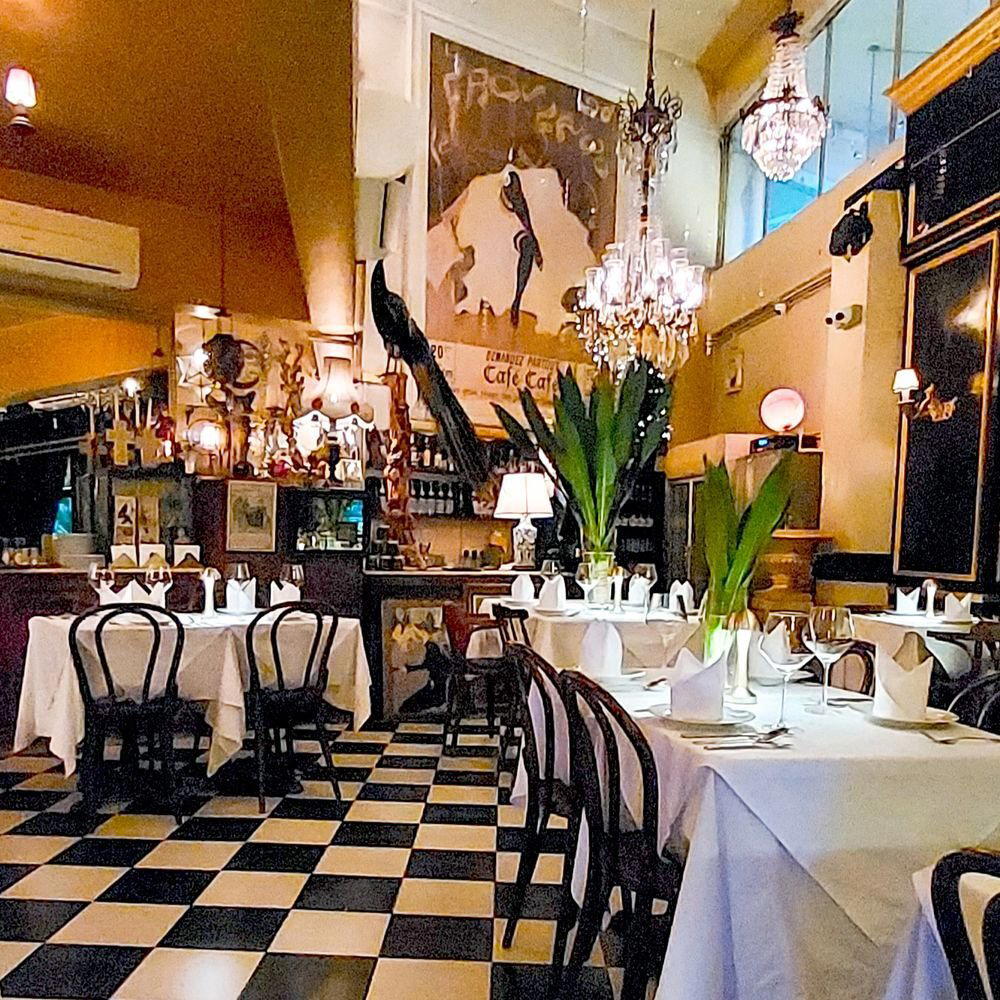
Red lanterns hang from the ceiling in rows, and the walls are covered floor-to-ceiling with enlarged photographs, not framed art, but images pressed together like wallpaper. An abacus and other Chinese vintage objects occupy the shelves. The room has the density of a place that grew into itself rather than was designed from scratch, which is precisely the point: Lai Foong Lala Noodles began as a street stall and, after shooting to local recognition, expanded across two shop floors on the corner of Jalan Sultan in Kuala Lumpur's city centre. The visual atmosphere still carries traces of that origin, and that continuity is part of what the Michelin Guide appears to have recognised when it awarded the venue a Bib Gourmand in both 2024 and 2025.
The Economics of Clams and Chinese Yellow Wine
Kuala Lumpur's hawker and kopitiam scene operates on a structural logic that frequently rewards longevity over novelty. A dish that has been refined over a decade at a single corner, served to the same neighbourhood crowd, accumulates a kind of institutional knowledge that is difficult to replicate at scale. The lala bihun here, rice vermicelli cooked with clams and prawns in a broth seasoned with Chinese yellow wine and ginger, belongs to that tradition. The broth's aromatic profile draws on a southern Chinese cooking framework that appears throughout Malaysia's Chinese-heritage food culture, where wine, ginger, and shellfish are combined not for complexity for its own sake but because the combination maximises the natural sweetness of the seafood while tempering any brininess. Portions are generous, and the price range sits at the lowest tier in Kuala Lumpur's dining spectrum, which is how the Bib Gourmand system is designed to work: recognising quality at accessible price points rather than rewarding spend.
That price accessibility matters in context. The same city holds fine-dining addresses like Dewakan, Beta, Molina, and DC. by Darren Chin, all operating at the top of the city's price range. Lai Foong occupies the opposite end without any loss of critical standing. For a reader planning a Kuala Lumpur trip around eating, that spread, from street-level broth to tasting-menu ambition, is one of the city's defining characteristics.
The Sustainability Argument Built Into the Format
The editorial angle most often applied to sustainability in food coverage focuses on sourcing provenance, organic certification, or waste-reduction programmes. Hawker-format restaurants like Lai Foong operate on a sustainability logic that is structural rather than declared: a small menu, high turnover, minimal waste from over-ordering, and ingredients purchased in quantities calibrated to daily demand rather than speculative forecasting. The lala bihun as a dish is also inherently low-waste by design. Clams and rice vermicelli are both ingredient categories with low processing overhead, and the broth is built on aromatics that are used whole rather than reduced into elaborate preparations that generate trim waste.
The shophouse setting itself carries a sustainability argument. Rather than new construction, the expansion from street stall to two-floor operation used existing urban infrastructure on Jalan Sultan, a street that has housed Chinese-Malaysian commercial activity for generations. The continuation of that built environment, lanterns, vintage objects, layered photographs, reflects an approach to place that treats the existing as worth preserving rather than replacing. This is not a declared programme, but it is a pattern visible in how the space was built and how it functions.
Broader hawker tradition in Malaysia has been recognised by UNESCO as intangible cultural heritage, and part of that recognition rests on exactly this kind of embedded sustainability: knowledge passed through practice, minimal material inputs, and food systems that operate at neighbourhood rather than industrial scale. In that context, Lai Foong is less an exception than a clear example of what the tradition looks like when it achieves consistent quality. For further examples of how this tradition translates elsewhere in the region, Auntie Gaik Lean's Old School Eatery in George Town and Bee See Heong in Seberang Perai represent analogous positions in their respective cities, while The Planters at The Danna in Langkawi shows how the same regional ingredients appear in a higher-end resort setting.
Noodle Traditions Across the Region
Lala bihun sits within a broader regional noodle tradition that stretches across Chinese diaspora communities in Southeast and East Asia. Rice vermicelli in shellfish broth is a format with clear relatives in Hokkien and Teochew cooking traditions, both of which contributed substantially to Malaysian Chinese food culture. The yellow wine and ginger combination in the broth connects directly to a wider southern Chinese medicinal and culinary practice in which these two aromatics are used together to add warmth and depth to seafood-based soups. For readers interested in how that tradition translates into other contexts, A Bing Bao Shan Mian in Hangzhou, A Kun Mian in Taichung, A Niang Mian Guan in Shanghai, A Xin Xian Lao in Fuzhou, and Ajisai in Taichung offer points of reference across the Chinese-influenced noodle spectrum. Closer to Kuala Lumpur, Sin Kiew Yee Shin Kee Beef Noodles represents another strand of the city's Chinese-heritage noodle culture, with a different protein base and a distinct regional lineage.
Planning a Visit
Lai Foong Lala Noodles is located at 99, Jalan Sultan, in Kuala Lumpur's city centre, a street that is walkable from the Masjid Jamek LRT station and sits within the older commercial district south of the river confluence. The price point, the lowest tier in the city's pricing structure, means a bowl costs a fraction of what nearby fine-dining venues charge per course. No website or phone number is listed in public records; visiting without a booking is the standard approach. For the broader Kuala Lumpur context, see our guides to restaurants, hotels, bars, wineries, and experiences across the city.
What to Order
Q: at Lai Foong Lala Noodles?
The lala bihun, rice vermicelli with clams and prawns, is the dish the venue is built around and the one that earned its Michelin Bib Gourmand recognition in 2024 and 2025. The broth is seasoned with Chinese yellow wine and ginger, giving it an aromatic character distinct from chilli-forward or coconut-based noodle broths elsewhere in the city. Portions are generous for the price. Order that first; everything else is secondary.
Frequently asked questions
How would you describe the cuisine at Lai Foong Lala Noodles?
Where do I go for Lai Foong Lala Noodles?
Lai Foong Lala Noodles is located at 99, Jalan Sultan, City Centre, 50000 Kuala Lumpur, Wilayah Persekutuan Kuala Lumpur, Malaysia, Kuala Lumpur.
What distinctions does Lai Foong Lala Noodles have?
Lai Foong Lala Noodles has received recognition including: What began as a street stall 10 years ago that shot to local fame now occupies two shop floors on the street corner. Red lanterns adorn the ceilings, and large photos cover the walls like wallpaper. Chinese vintage gadgets, like an abacus, ….
What's the best thing to order at Lai Foong Lala Noodles?
The lala bihun is the dish the restaurant built its reputation on: rice vermicelli served with clams and prawns in a broth scented with Chinese yellow wine and ginger. Portions run generous by Jalan Sultan standards, which partly explains the Michelin Bib Gourmand recognition the stall-turned-shophouse has held consecutively in 2024 and 2025. Order that bowl and little else on a first visit.
How much does it cost to eat at Lai Foong Lala Noodles?
Pricing at Lai Foong Lala Noodles is listed as $.
A Quick Peer Check
| Venue | Cuisine | Price | Awards | Notes |
|---|---|---|---|---|
| Lai Foong Lala NoodlesThis venue (the venue you are viewing) | Malaysian Chinese Lala Noodle Soup | $10–20 | Michelin Bib Gourmand | Not listed |
| Dewakan | Modern Malaysian Fine Dining | $150–200 | 2 Michelin Stars · World's 50 Best #62 | Malaysian |
| Beta | Modern Malaysian Fine Dining | $100–150 | 1 Michelin Star · La Liste Top Restaurants | Malaysian |
| Molina | Avant-Garde European Fine Dining | $150–200 | 1 Michelin Star | Innovative |
| DC. by Darren Chin | French Contemporary Fine Dining | Not listed | 1 Michelin Star · La Liste Top Restaurants | French Contemporary |
| Ah Hei Bak Kut Teh | Traditional Herbal Bak Kut Teh | $10–20 | Michelin Bib Gourmand | Malaysian |
Recognition history
Dated appearances from independent guides and award organizations, with the underlying list record or original source where available.
Michelin Bib Gourmand
Michelin
Full recognition history (3 entries)
Michelin Bib Gourmand
Michelin
Michelin Bib Gourmand
Michelin