.png)
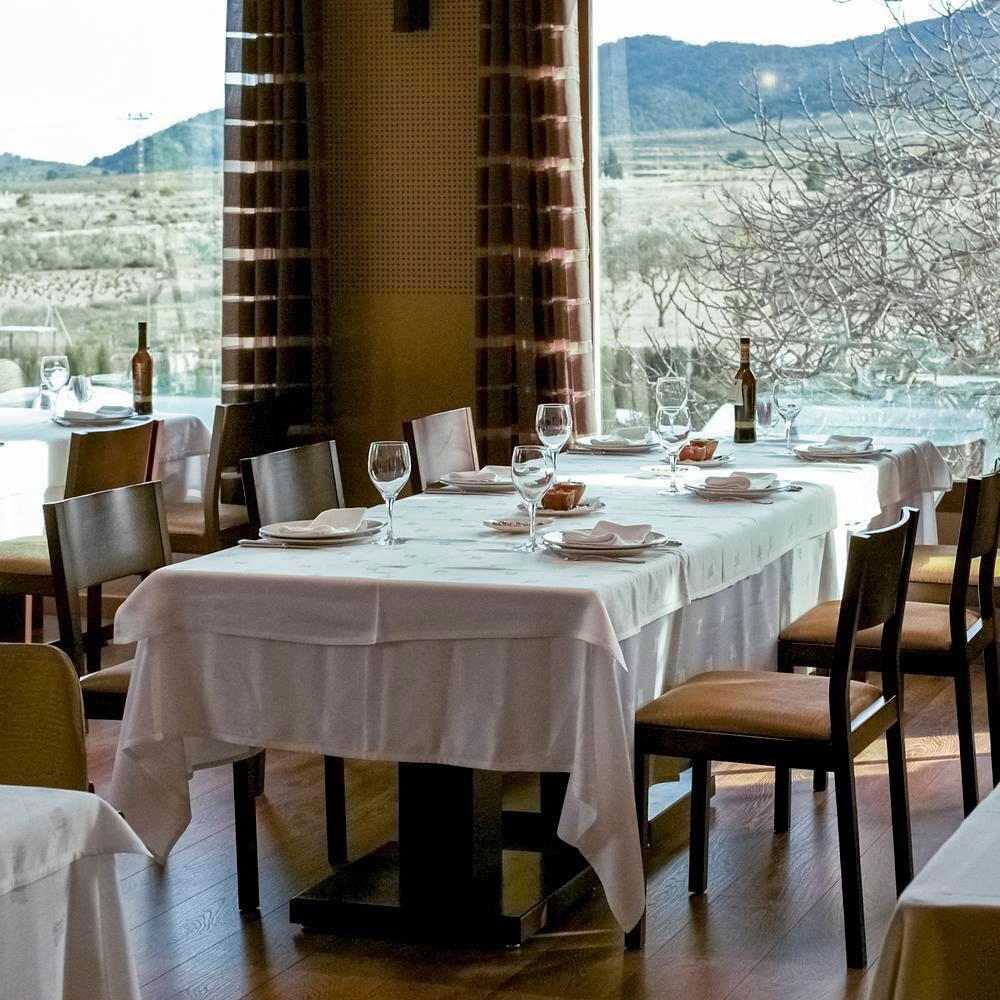
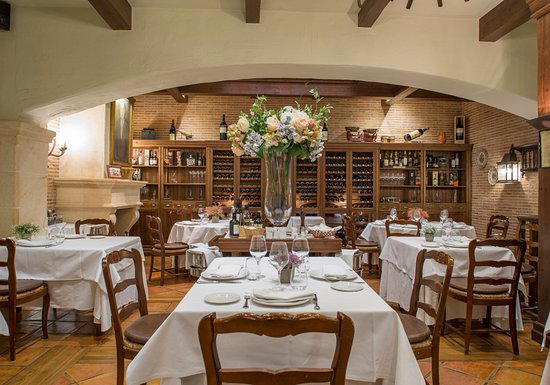
La Teja Azul holds consecutive Michelin Bib Gourmand awards for 2024 and 2025, placing it among the Valencian Community's most consistent value-driven kitchens. In Villena, a market town better known for its castle and wine heritage than its restaurant scene, the kitchen under chef Antonio works traditional Spanish recipes with the kind of discipline that earns repeated recognition without chasing tasting-menu theatre.
Pearl is the En Primeur Club membership app — saves, bookings, and concierge access live there. Same editors, same standards.

Villena at the Table
Villena sits in the interior of the Valencian Community, roughly equidistant between Alicante and Albacete, in a corridor of agricultural land and medieval fortifications that most travellers cross rather than stop in. The town has a documented wine culture, a hilltop castle, and a weekly market character that shapes what local restaurants cook and who they cook for. Dining here is not framed around destination pilgrimage or avant-garde tasting menus. It is framed around the table as a daily institution, which is a different kind of seriousness entirely.
That context matters when reading La Teja Azul's Michelin Bib Gourmand recognition, awarded in both 2024 and 2025. The Bib Gourmand category signals that Michelin's inspectors found cooking of genuine quality at a price point that sits below the full-star tier. In Spain, where the Bib Gourmand list competes against a dense field of regional kitchens with deep traditional foundations, consecutive recognition carries weight. It places La Teja Azul inside a peer group defined less by theatrics and more by the consistency and honesty of the cooking itself.
Traditional Cuisine in Context
Spanish traditional cuisine, as a category, covers enormous ground. What distinguishes the better practitioners from competent ones is a refusal to flatten regional specificity into generic comfort food. The Valencian interior has its own culinary register, distinct from the coastal rice culture most international visitors associate with the region. Inland, the emphasis shifts toward game, mountain herbs, cured meats, pulse-based stews, and grilled preparations that reflect the agricultural and pastoral economy of the meseta edge. A kitchen working this tradition well does not need molecular technique or imported luxury ingredients to make a strong case for itself.
La Teja Azul operates at the €€ price range, which in a town like Villena means the kitchen is cooking for the local professional class and for visitors who seek out places with genuine roots rather than tourist-facing menus. That price point also implies a cooking philosophy: the margin structure at €€ demands efficient, ingredient-focused preparation. There is less room for elaborate mise en place, which tends to push chefs toward direct, technique-confident cooking. Michelin's repeated recognition at this level suggests the kitchen has found a confident register and is not drifting from it.
Chef Antonio and the Kitchen's Approach
The editorial angle here is not the personal biography of chef Antonio, but what his role signals about how the restaurant operates. In Spain's smaller cities and market towns, the named chef at a Bib Gourmand-level kitchen typically functions as both creative lead and daily presence. There is no executive chef hierarchy insulating the cooking from its source. The consistency that earns consecutive Michelin recognition in this tier comes from proximity, from a chef who is in the kitchen during service rather than overseeing a brigade from a distance.
Spain's broader fine dining conversation is dominated by the Basque Country and Catalonia, with kitchens like Arzak in San Sebastián, Azurmendi in Larrabetzu, Martin Berasategui in Lasarte-Oria, and Mugaritz in Errenteria anchoring the highest tier. Further south, Quique Dacosta in Dénia and Ricard Camarena in València represent the Valencian Community's own contribution to that starred-restaurant conversation. La Teja Azul sits several tiers below that register by format and price, which is not a criticism. It is a description of a different kind of restaurant doing a different job: cooking regional food with care for an audience that eats here regularly, not occasionally.
For context on how the Bib Gourmand tier operates across European traditional kitchens, kitchens like Auberge Grand'Maison in Mûr-de-Bretagne and Auga in Gijón occupy comparable positions in their own regional food cultures: places where the Michelin signal functions less as a luxury endorsement and more as a quality threshold marker within an accessible price framework.
Placing La Teja Azul in the Spanish Value Tier
Spain's restaurant market has a well-developed infrastructure for serious eating at moderate prices. The combination of deep regional traditions, a culture of daily restaurant use, and producers who supply at scale keeps quality accessible in ways that are harder to replicate in markets where eating out is a more occasional event. Villena participates in this ecosystem: the local wine denominación, the proximity to Alicante's agricultural supply chains, and the town's own market culture all feed into what kitchens here can do at €€ pricing.
The Bib Gourmand award, applied here for two consecutive years, functions as a signal within that context. It tells a visitor that this is not simply an affordable local restaurant but one that has been assessed and reassessed against a national and European standard for quality-to-value ratio. Consecutive recognition is a stronger signal than a single year, as it rules out a one-time performance and suggests the kitchen's quality level is structural rather than occasional. For the broader Spanish scene, compare this positioning to how Atrio in Cáceres operates at the opposite end of the price and ambition spectrum, or how El Celler de Can Roca in Girona and Cocina Hermanos Torres in Barcelona define the three-star ceiling. The Bib tier is not a consolation bracket. It is a separate category with its own internal hierarchy, and La Teja Azul sits near its leading end within Spain.
Planning Your Visit
Villena is accessible by rail and road from both Alicante and Murcia, making it a plausible stop on a wider Valencian interior itinerary. At the €€ price range, a meal here does not require significant pre-trip financial planning, but given the 4.4 Google rating across 450 reviews, this is a kitchen with a local following that fills seats. Booking ahead, particularly for weekend lunch, is advisable. The town's own character is worth building time around: the Castillo de la Atalaya, the local wine culture, and the surrounding comarca offer context for the kind of food that appears on the plate.
For a fuller picture of what to do before or after dinner, our full Villena restaurants guide maps the wider eating scene. Our full Villena hotels guide covers accommodation options in town. If wine is part of your itinerary, our Villena wineries guide covers the denominación, and our Villena bars guide handles the post-dinner picture. Our Villena experiences guide fills in the broader cultural programme.
A Quick Peer Check
These are the closest comparables we have in our database for quick context.
| Venue | Cuisine | Price | Awards | Notes |
|---|---|---|---|---|
| La Teja Azul | Traditional Cuisine | €€ | Bib Gourmand | This venue |
| Aponiente | Progressive - Seafood, Creative | €€€€ | Michelin 3 Star | Progressive - Seafood, Creative, €€€€ |
| Arzak | Modern Basque, Creative | €€€€ | Michelin 3 Star | Modern Basque, Creative, €€€€ |
| DiverXO | Progressive - Asian, Creative | €€€€ | Michelin 3 Star | Progressive - Asian, Creative, €€€€ |
| El Celler de Can Roca | Progressive Spanish, Creative | €€€€ | Michelin 3 Star | Progressive Spanish, Creative, €€€€ |
| Quique Dacosta | Creative | €€€€ | Michelin 3 Star | Creative, €€€€ |
Continue exploring