Our verdict
La Table D'Olivier occupies a quiet address on Place de la Fontaine in Samatan, a market town in the Gers department where southwest France's larder tradition runs deep. The restaurant draws on a region known for duck confit, foie gras, and armagnac to anchor its cooking in genuine provenance. For travellers moving through Gascony, it offers a grounded alternative to the region's more performative dining options.

Pearl is the En Primeur Club membership app, where members save venues, book tables and use the concierge.
Eating in the Gers: What the Gascon Larder Actually Means
The Gers department sits at the centre of a food culture that France's more celebrated restaurant corridors often overlook. This is the heartland of southwest French cooking: duck raised for foie gras, black pigs fattened in the oak forests, armagnac distilled in farmhouse cellars, and vegetables grown in soil that has been worked for centuries without much need for reinvention. Samatan, a small market town roughly 40 kilometres southwest of Toulouse, is a useful point of entry into that tradition. Its weekly market is one of the region's most serious, drawing producers from across the Gers with goods that rarely travel far from where they were grown or raised.
La Table D'Olivier holds its address at 1 Bis Place de la Fontaine, the kind of square that anchors a French town rather than decorates it. The fountain, the plane trees, the rhythm of market day, these are the environmental facts that shape what a restaurant in this position can reasonably be. Cooking rooted in place, priced for the community it serves, and calibrated to the seasonal availability of what surrounds it: that is the model the Gers rewards, and the model that makes a stop like this legible to a traveller who already understands the region.
What Ingredient Sourcing Looks Like in Gascony
Southwest France operates on a different sourcing logic from, say, the Loire Valley or Provence. The key commodities here are animal-derived, geographically specific, and deeply seasonal. Duck confit and magret de canard, foie gras in both its preserved and fresh forms, and cassoulet-adjacent preparations using Tarbais beans and Toulouse sausage represent the backbone of the tradition. These are not merely ingredients but denominations of origin: a Gers foie gras and a factory-farmed alternative are categorically different products.
For a restaurant positioned on a town square in Samatan, proximity to producers is not a marketing stance but a logistical reality. The Gers has among the highest concentrations of small-scale duck and goose farms in France, and its weekly markets function as a genuine wholesale and retail channel for ingredients that would be considered speciality items in any other regional context. Restaurants that take sourcing seriously in this environment are working within a supply chain that operates at walking distance, not freight distance. That compression of origin to plate is precisely what distinguishes Gascon cooking from metropolitan French cuisine that imports the same product names at a remove.
Travellers who have eaten through the higher tiers of French dining, at Mirazur in Menton, Bras in Laguiole, or Auberge du Vieux Puits in Fontjoncouse, will recognise the same underlying logic applied at different scales. The three-star kitchens of France, whether Flocons de Sel in Megève or Troisgros - Le Bois sans Feuilles in Ouches, built their identity on regional specificity long before terroir became a global hospitality talking point. A market-town restaurant in the Gers is, in that sense, closer to the original model than its metropolitan counterparts.
Samatan in the Wider Southwest France Dining Picture
Samatan does not anchor a restaurant scene in the way that Toulouse or Bordeaux does, but it sits inside a region with genuine depth. The Gers lacks the media attention that flows to the Basque Country or the Dordogne, which means its restaurants, including Au Canard Gourmand nearby, operate below the radar of most international food itineraries. That relative obscurity cuts both ways: it keeps the cooking honest and the prices grounded, but it also means that travellers need to arrive with some prior knowledge rather than relying on the usual signposting.
The broader French dining context is worth holding in mind. Institutions like Paul Bocuse - L'Auberge du Pont de Collonges in Collonges-au-Mont-d'Or, Auberge de l'Ill in Illhaeusern, or Alléno Paris au Pavillon Ledoyen in Paris define the upper register of French cooking's formal tradition. Further afield, French-influenced precision cooking appears in rooms as different as AM par Alexandre Mazzia in Marseille and Christopher Coutanceau in La Rochelle. La Table D'Olivier is not in dialogue with that tier. It sits in the much larger, less documented stratum of serious regional cooking where the sourcing is strong, the technique is competent, and the point is not innovation but fidelity.
For our full Samatan restaurants guide, the town's dining offer is read through that lens: honest Gascon cooking rooted in what the Gers produces, rather than cooking that aspires to a different register entirely.
Planning Your Visit
Samatan sits approximately 40 kilometres southwest of Toulouse, making it accessible by car as a half-day or full-day excursion. The town's market, held on Mondays and with a dedicated foie gras and volailles market particularly active in autumn and winter, gives a visit natural structure. La Table D'Olivier holds its position on Place de la Fontaine, the central square, making it direct to locate on foot from any town-centre parking. The region's dining culture tends toward lunch as the main meal, with extended midday service and shorter or absent evening sittings in some establishments.
Frequently asked questions
Is La Table D'Olivier a family-friendly restaurant?
Samatan is a market town rather than a fine-dining destination, and restaurants in the Gers generally operate in an unhurried, inclusive style suited to mixed-age groups. La Table D'Olivier sits on Place de la Fontaine, a central square setting that tends toward the relaxed end of the French dining register.
Is La Table D'Olivier formal or casual?
The restaurant is at 1 Bis Place de la Fontaine in Samatan, a provincial Gascon town where dress codes and formal service conventions are rarely part of the picture. Dining culture in the Gers leans toward long, grounded meals rather than ceremony.
Is La Table D'Olivier a good lunch stop when visiting Samatan's market?
Samatan's covered market is one of the Gers' more serious weekly trading points, drawing producers of foie gras, duck, and regional charcuterie, and the town's dining options are calibrated around that rhythm. La Table D'Olivier is located directly on Place de la Fontaine, placing it within the market quarter. For anyone making the 40-kilometre drive from Toulouse to visit the market, the restaurant represents a logical extension of that itinerary rather than a separate trip.
What should I eat at La Table D'Olivier?
The Gers is the source region for foie gras, confit de canard, Armagnac, and Noir de Bigorre pork, commodities that define what ends up on plates across the department. Any restaurant operating in Samatan sits within direct reach of that larder.
Where is La Table D'Olivier located?
La Table D'Olivier is located at 1 Bis Pl. de la Fontaine, 32130 Samatan, France, Samatan.
Can I walk in to La Table D'Olivier?
No booking information is publicly confirmed for La Table D'Olivier. In smaller Gascon towns, lunch service in particular can fill quickly on market days, Samatan hosts one of the Gers' significant weekly markets, so calling ahead is the practical approach. The address is 1 Bis Place de la Fontaine, Samatan.
Quick Comparison
Comparable venues nearby, for context on price, style, and recognition.
| Venue | Cuisine | Price | Notes |
|---|---|---|---|
| La Table D'OlivierThis venue (the venue you are viewing) | Southwest French Bistro | $50–100 | Not listed |
| Au Canard Gourmand | Traditional French Gascon Bistro | $30–50 | La Rente, Samatan |
| Comptoir De Vie | Modern French Tasting Counter-Bar | $100–150 | 2nd Arrondissement |
| Le Petit Canard | Traditional French Duck Bistro | Not listed | 9th arrondissement |
| Le Nostradamus | Refined French Regional Bistro | $30–50 | rue des Nitiobriges |
| Margoton | Creative French Bistro | $30–50 | centre historique |
Continue exploring
More in Samatan
Restaurants in Samatan
All restaurants in Samatan →
Wineries in Samatan
Browse all →
Details
- Cozy
- Elegant
- Intimate
- Date Night
- Special Occasion
- Standalone
- Extensive Wine List
- Local Sourcing
- Street Scene
- Set Menu
- Vegetarian Friendly
Current opening hours
- Monday
- 12–1:45 PM
- Tuesday
- 12–1:45 PM
- Wednesday
- Closed
- Thursday
- 12–1:45 PM
- Friday
- 12–1:45 PM, 8–9:30 PM
- Saturday
- 12–1:45 PM, 8–9:30 PM
- Sunday
- Closed
Hours can change for holidays and private events. Hours as of .
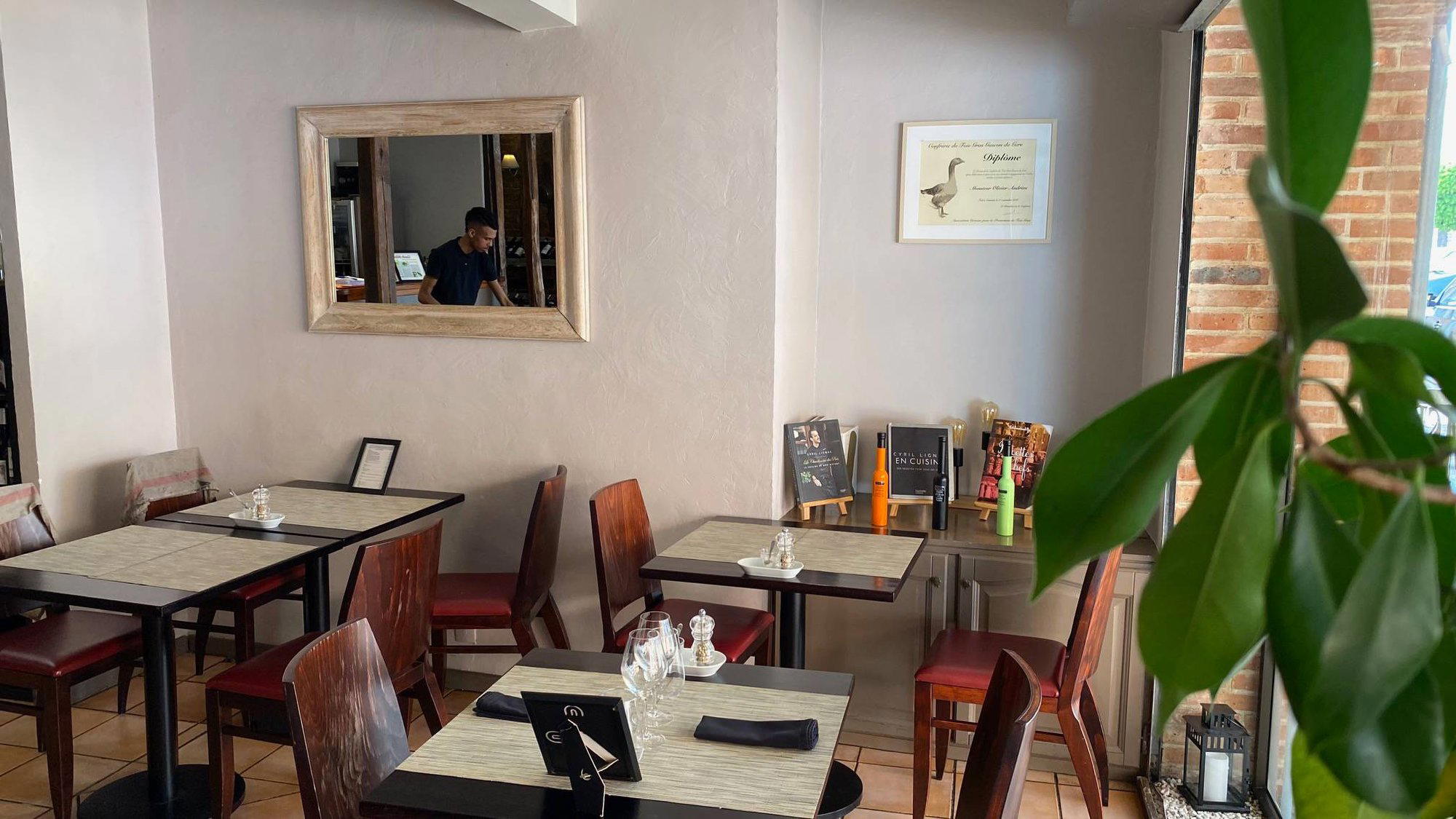
Convivial and pleasant atmosphere in a tiny restaurant with about a dozen tables in the heart of town.