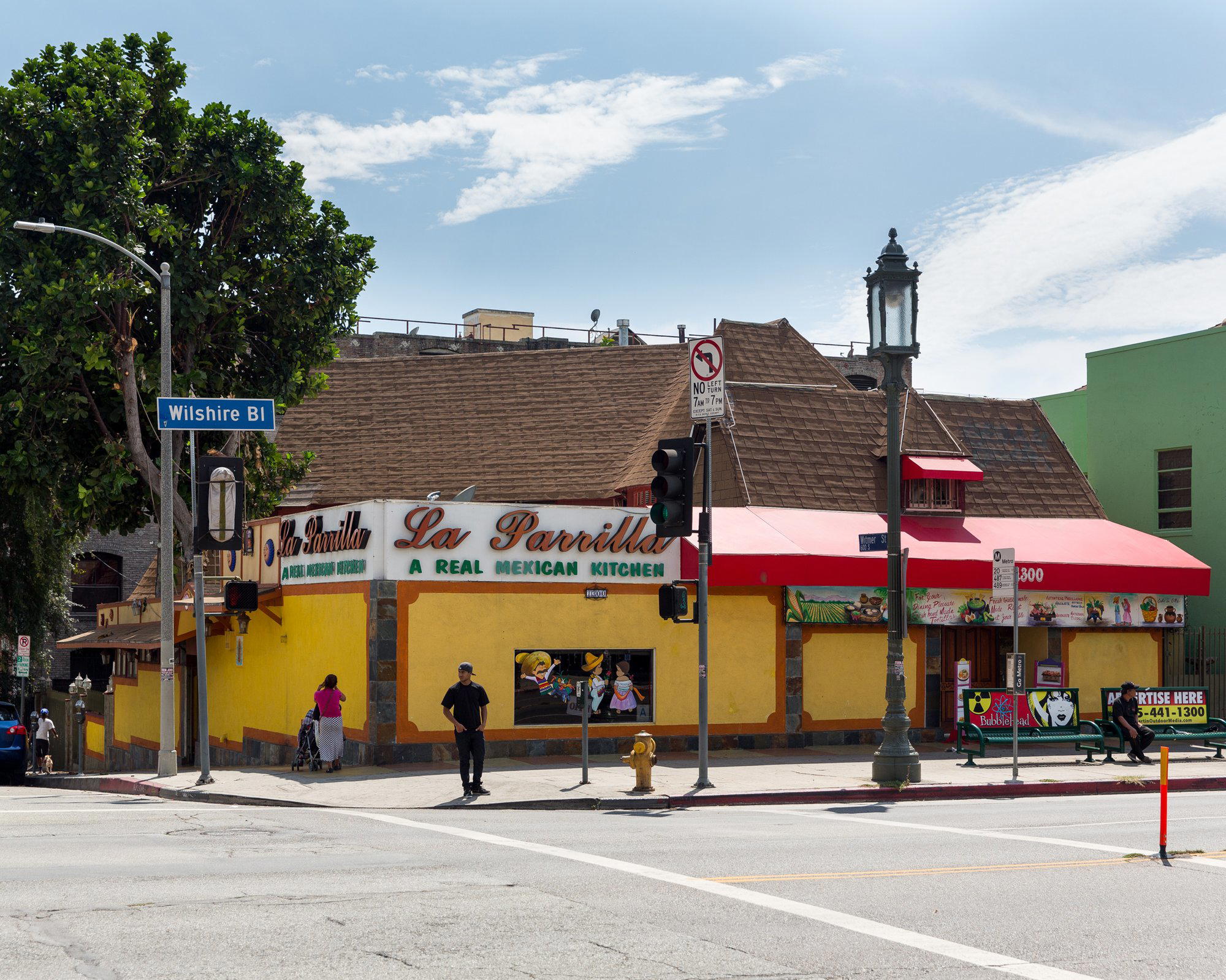
La Parrilla
Our verdict
On East Cesar Chavez Avenue in Boyle Heights, La Parrilla occupies a stretch of Los Angeles where Mexican cooking traditions run deep and the neighborhood's identity shapes what ends up on the plate. The address places it inside one of the city's most culturally concentrated corridors for regional Mexican cuisine, where sourcing decisions and cooking lineage matter more than design budgets or tasting-menu ambitions.

Pearl is the En Primeur Club membership app — saves, bookings, and concierge access live there. Same editors, same standards.
- Address
- 2126 E Cesar E Chavez Ave, Los Angeles, CA 90033
- Phone
- (323) 262-3434
- Hours
- Mon–Thu 9 AM–8 PMFri–Sat 9 AM–9 PMSun 9 AM–8 PM
- Website
- la-parrilla.shop
- Directions
- Get directions
- Booking
- Book on the venue's website
The menu
What to order
- Chef Juanita's signature plate
- Azteca molcajete
- Handmade tortillas
- Sizzling fajitas
East Cesar Chavez Avenue moves at a different pace than the parts of Los Angeles that attract restaurant critics on assignment. Boyle Heights is not a neighborhood that reinvents itself for outside approval, and the Mexican cooking along this corridor reflects that. The kitchens here draw from traditions where the sourcing of raw materials, the handling of dried chiles, and the preparation of proteins over live fire are skills passed laterally through communities rather than vertically through fine-dining apprenticeships. La Parrilla sits on this street as part of that longer story, not as a departure from it.
The Sourcing Logic Behind Mexican Parrilla Cooking
The word parrilla refers to the grill, but in the context of Mexican cooking it implies a specific sourcing logic. Cuts selected for parrilla preparation, arrachera, carne asada, costillas, are chosen for their behavior over direct heat rather than for prestige within a butchery hierarchy. The marinade and the smoke do work that expensive dry-aging cannot replicate, and the result is a style of cooking whose quality depends almost entirely on the freshness and origin of the raw material before it reaches the fire. Restaurants in the Boyle Heights corridor that have sustained neighborhood loyalty over time tend to be the ones that understand this distinction.
Los Angeles has a layered Mexican food culture that rarely gets mapped with the precision it deserves. The city's high-end dining conversation is dominated by venues like Providence (Contemporary Seafood), Kato (New Taiwanese, Asian), and Somni (Molecular), each operating in a register where tasting menus and imported technique are the primary currency. Osteria Mozza (Italian) and Hayato (Japanese) similarly represent the city's appetite for ingredient-led precision at high price points. The parrilla tradition on Cesar Chavez operates in an entirely different economy of value, one where a long lunch costs a fraction of those tasting menus and where the sourcing discipline is no less serious, just differently expressed.
What the Boyle Heights Corridor Tells You About LA's Food Geography
Boyle Heights is one of the oldest Mexican-American neighborhoods in Los Angeles, and its restaurant culture reflects a depth of community investment that newer dining districts cannot manufacture. The kitchens along Cesar Chavez tend to source from nearby carnicerias and produce suppliers that have served the neighborhood for decades, creating supply chains that are short, familiar, and accountable in ways that large restaurant groups rarely achieve. This is not farm-to-table as a marketing position. It is neighborhood-to-table as an operational reality.
That sourcing model shapes everything about what parrilla cooking tastes like at its finest: the char on the exterior of the meat, the way the marinade has had time to penetrate, the freshness of the accompaniments. Salsas made from chiles sourced from local Mexican grocers and tortillas pressed from masa ground nearby are not artisanal flourishes. They are the baseline expectation in a neighborhood where regulars have the knowledge and the authority to notice when the quality drops.
For context on how ingredient sourcing drives kitchen identity across American dining at different price points, venues like Blue Hill at Stone Barns in Tarrytown and Single Thread Farm in Healdsburg have made agricultural sourcing the organizing principle of their entire programs. The French Laundry in Napa and Addison in San Diego operate with similar sourcing rigor at the California fine-dining end. The parrilla tradition in Boyle Heights pursues the same underlying principle through a completely different economic and cultural framework, and the proximity of the neighborhood's supply chain is one of its structural advantages.
The Broader Parrilla Tradition in American Mexican Cooking
Across the United States, the parrilla format has rarely received serious critical attention outside of Mexican-American communities despite its technical demands and the quality ceiling it can reach when sourcing and fire management are handled well. Restaurants like Lazy Bear in San Francisco and Alinea in Chicago attract the kind of sustained critical coverage that shifts reputations nationally. The parrilla kitchens of Boyle Heights operate largely outside that attention economy, which means their standards are maintained by community expectation rather than external validation.
That dynamic has parallels in other American cities. Emeril's in New Orleans and Bacchanalia in Atlanta built their reputations partly through critical visibility. Le Bernardin in New York City, Atomix in New York City, and The Inn at Little Washington in Washington occupy the award-validated tier where recognition compounds over time. The Boyle Heights parrilla tradition is validated differently, by repeat customers who live within walking distance and who return weekly, which is its own durable form of endorsement. 8 1/2 Otto e Mezzo Bombana (Hong Kong) in Hong Kong and other internationally recognized addresses operate in entirely different accountability structures, but the underlying principle, that a kitchen's quality is tested by the people who know it leading, applies across all of them.
How to Approach a Visit
The East Cesar Chavez corridor is accessible by car from central Los Angeles, and street parking is generally available along the avenue. The neighborhood itself is navigable on foot once you arrive. Visits during weekend lunch service tend to reflect the kitchen at full capacity, when the grill is running continuously and the accompaniments are turned over frequently. Weekday evenings are quieter and allow for a more considered experience of the menu.
For anyone building a broader picture of what Los Angeles's Mexican food culture looks like at street level, the Boyle Heights stretch of Cesar Chavez is one of the places the full Los Angeles restaurants guide points toward as a counterweight to the city's tasting-menu concentration. The two registers are not in competition. They represent different arguments about what serious cooking looks like, and both arguments are worth engaging with.
Reservations: Walk-in format typical for this corridor; calling ahead is advisable for larger groups. Dress: Casual. Budget: Neighborhood pricing consistent with the Cesar Chavez corridor. Getting there: East Los Angeles; street parking available on and around Cesar Chavez Avenue.
Frequently asked questions
Where is La Parrilla in Los Angeles?
La Parrilla is located at 2126 E Cesar E Chavez Ave, Los Angeles, CA 90033, Los Angeles.
How does La Parrilla compare to other Mexican restaurants along the East Cesar Chavez corridor in Boyle Heights?
The East Cesar Chavez corridor in Boyle Heights represents one of the densest concentrations of Mexican and Mexican-American restaurants in Los Angeles, a city where that category of competition is exceptionally high. La Parrilla at 2126 E Cesar Chavez Ave operates specifically within the parrilla sub-format, which distinguishes it from taqueria, seafood, or family-style mole-focused kitchens that also populate the stretch. Within Boyle Heights, longevity in this corridor tends to reflect sustained community approval rather than critical discovery cycles, which is its own credentialing mechanism.
What should I order at La Parrilla?
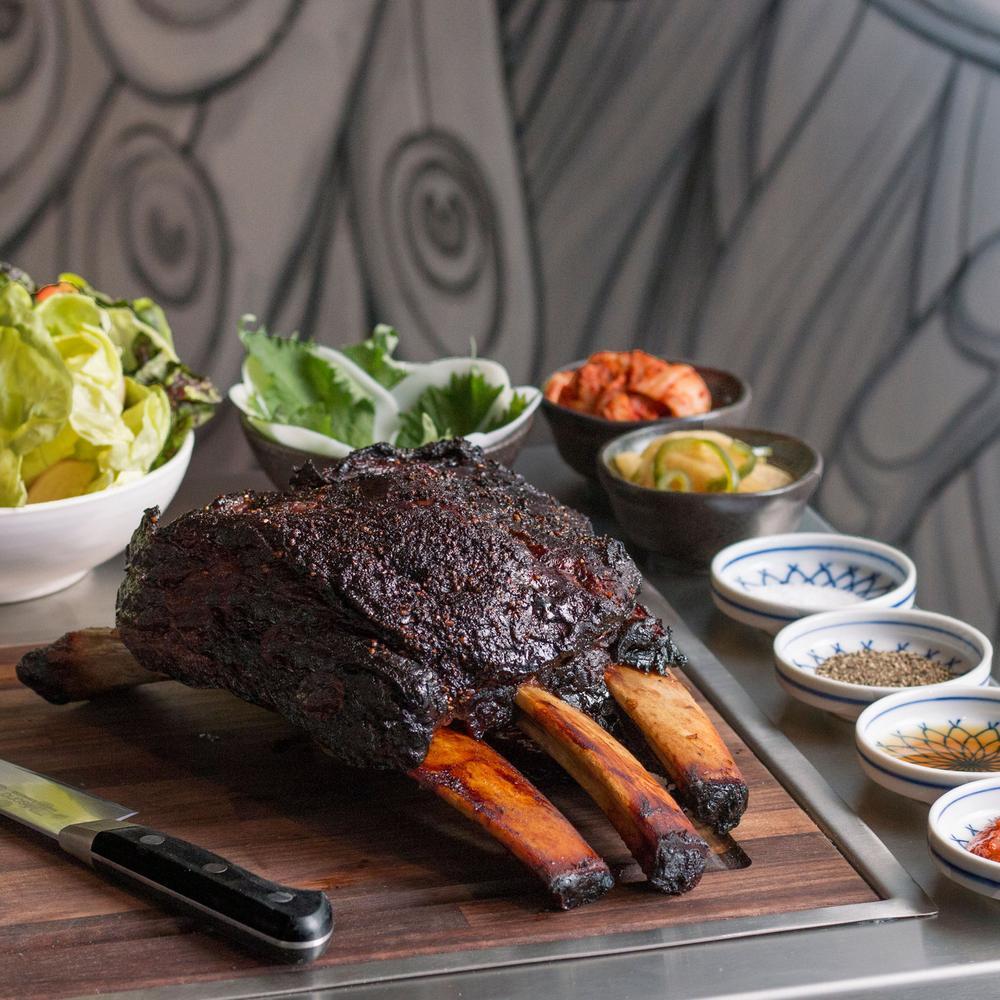
La Parrilla's name points directly to its focus: grilled meats prepared in the Mexican parrilla tradition. Cuts chosen for parrilla cooking are typically selected for their suitability over high, direct heat, so the menu skews toward proteins where the grill does the heavy lifting. Given the restaurant's address on E Cesar Chavez Ave in Boyle Heights, the kitchen operates within a neighborhood that maintains high standards for this format.
Do I need a reservation for La Parrilla?
Reservation requirements are not confirmed for La Parrilla. The East Cesar Chavez corridor in Boyle Heights tends toward counter-service and walk-in formats at this category of restaurant, so arriving earlier in service is a practical approach. Contact details are not currently listed, so visiting in person or checking locally is the most reliable way to confirm current policy.
What do critics highlight about La Parrilla?
That gap is itself telling: the parrilla format in American Mexican cooking has historically received less formal critical attention than its technical complexity warrants, even when individual restaurants in communities like Boyle Heights have built decades of local standing. La Parrilla's position on E Cesar Chavez Ave places it within one of Los Angeles's most established Mexican-American dining corridors.
Is La Parrilla good for vegetarians?
The parrilla format centers on grilled meats by definition, and La Parrilla's name signals that orientation clearly. Vegetarian options at parrilla-style restaurants exist but are rarely the point of the menu.
Cuisine and Credentials
Comparable venues nearby, for context on price, style, and recognition.
| Venue | Cuisine | Price | Awards | Notes |
|---|---|---|---|---|
| La ParrillaThis venue — the venue you are viewing | Authentic Mexican Grill | $20–30 | Not listed | Not listed |
| Cerveteca Culver City | Baja-Style Mexican Taqueria | $10–20 | Not listed | Palms |
| Monte Alban | Authentic Oaxacan Mexican | $20–30 | Not listed | Sawtelle |
| Tacolina | Modern Baja Mexican Taqueria | $20–30 | Not listed | Silver Lake |
| Gloria's Cafe | Salvadoran-Mexican Fusion | $20–30 | Diners, Drive-Ins and Dives Featured Restaurant | Palms |
| Ruta 15 Ceviche Bar & Mexican Kitchen | Mexican Ceviche Bar & Coastal Mariscos | $20–30 | LA Taco Best Tacos in LA #67 | North Alamitos Beach |