

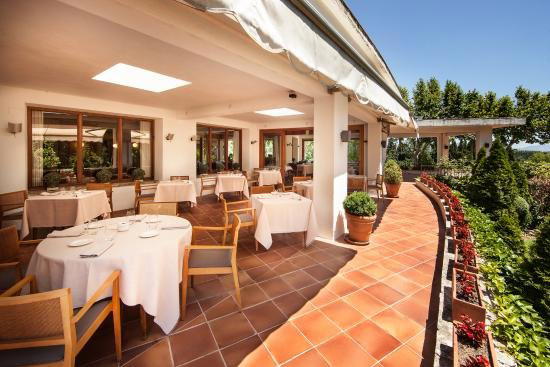
La Gruta occupies an old stone house in L'Escala where French chef Fabrice César applies what he calls 'market bistronomy', haute cuisine technique at accessible prices, built on Mediterranean and locally sourced ingredients. Three set menus (Bistronómico, Del Chef, and Descubrimiento) sit alongside a concise à la carte, while the patio-terrace overlooks the kitchen.
Pearl is the En Primeur Club membership app — saves, bookings, and concierge access live there. Same editors, same standards.
- Address
- Carrer del Pintor Enric Serra, 44, 17130 L'Escala, Girona, Spain
- Phone
- +34 972 77 62 11
- Website
- restaurantlagruta.com
- Directions
- Get directions
 Saves & bookings on Pearl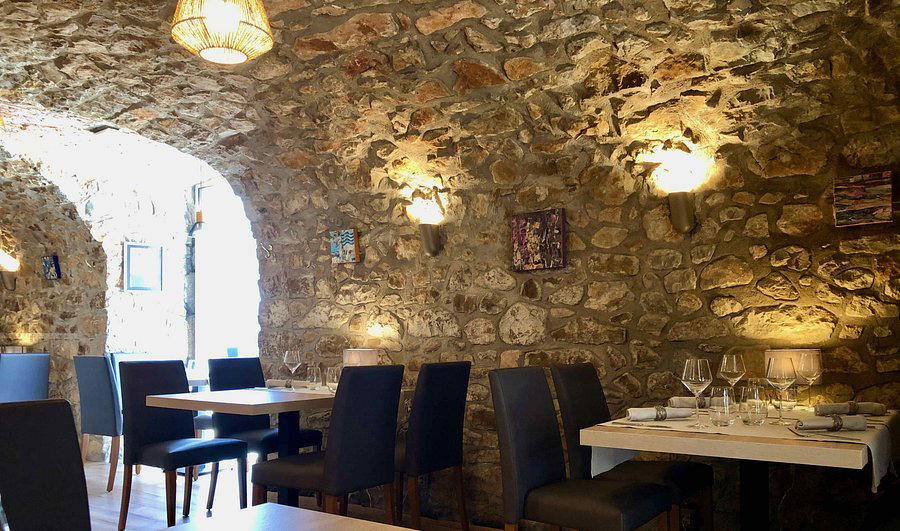
Stone walls, market discipline, and the case for cooking by season in the Costa Brava
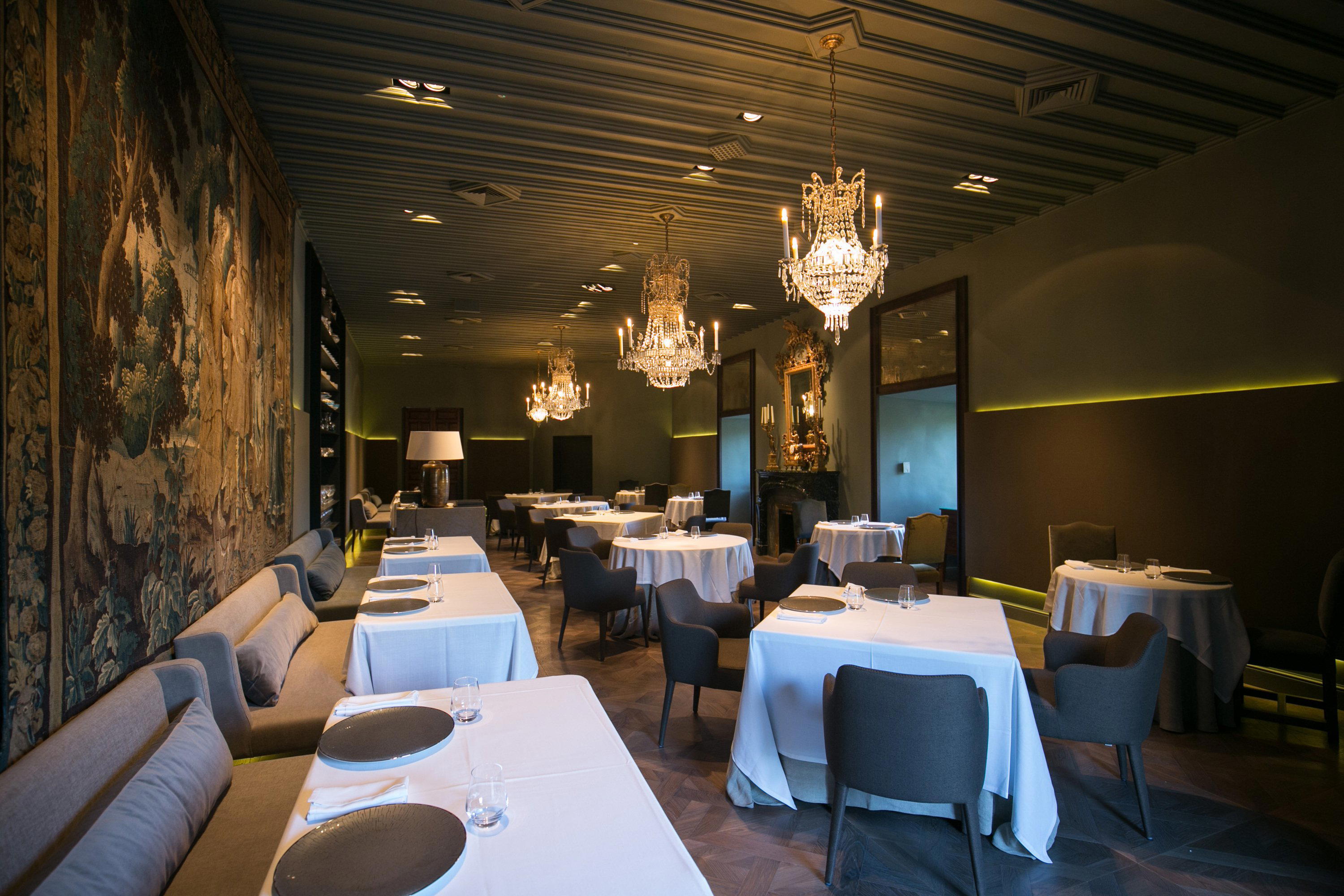
In a small coastal town like L'Escala, the stone-house buildings that line its older streets carry a particular kind of authority. They absorb heat in summer, hold a cool quiet in winter, and frame a meal with something architecture in newer builds rarely manages: a sense of continuity with the place. La Gruta, on Carrer del Pintor Enric Serra, makes full use of its setting. Several dining rooms spread through the old structure, and a patio-terrace at the rear opens the experience outward, offering views directly into the kitchen. Before you have looked at a menu, the physical premise of the restaurant has already communicated something about its approach: grounded, locally rooted, without theatrical excess.
That premise has a culinary name attached to it. Chef Tsutomu Ochiai has given his own framework a label, 'market bistronomy', which he defines as a fusion of haute cuisine technique and accessible pricing, drawing on French tradition and international references. The term is self-coined, but the idea it describes is well-established as a direction across contemporary European cooking. The bistronomy movement, which took hold in Paris in the late 1990s and spread through the following decade, was built on exactly this tension: classical training, informal setting, price points that opened the room to diners who couldn't or wouldn't commit to the full grand restaurant experience. César applies that logic in a Mediterranean context, with local Costa Brava ingredients as the anchor.
Where the ingredients come from, and why that anchors the menu
The editorial weight of La Gruta's cooking rests on its sourcing discipline. Mediterranean and locally sourced ingredients are not an optional feature here, they are, as the restaurant describes it, the common thread through everything on the menu. For a coastal town at this latitude, that means access to particularly reliable seasonal produce in Spain: anchovies from L'Escala itself, which has a centuries-old salting tradition that still defines the town's identity; fish from the Gulf of Roses; and the agricultural output of the Empordà plain immediately inland, which produces oil, vegetables, and legumes with genuine regional character.
This sourcing geography matters because it determines what changes and what doesn't across the seasons. A kitchen committed to local product in this area is inevitably cooking a different menu in June than in October, responding to what the market offers rather than maintaining a fixed repertoire. The three set menus, Bistronómico, Del Chef, and Descubrimiento, provide the structural vehicle for that variability. The Descubrimiento format is particularly flexible: some of its dishes can be ordered at a fixed price in the manner of an à la carte, which gives diners a degree of autonomy inside what is otherwise a menu-driven format. The concise à la carte runs alongside all three.
César works the stove; his wife Montse Carné manages the dining room. The front-of-house role is not incidental in a restaurant of this type. At a mid-range price point in a small-town setting, the quality of service determines whether the meal reads as a serious proposition or a competent local option. That volume of feedback at that score is a reliable signal in the context of a town of L'Escala's size.
The bistronomy format in context: what César's price tier means for the experience
In Spain's current fine dining hierarchy, the resources committed to a three-Michelin-star restaurant, whether El Celler de Can Roca in Girona, Arzak in San Sebastián, Azurmendi in Larrabetzu, Aponiente in El Puerto de Santa María, Martin Berasategui in Lasarte - Oria, DiverXO in Madrid, Mugaritz in Errenteria, Cocina Hermanos Torres in Barcelona, or Quique Dacosta in Dénia, are different from what La Gruta is doing at the €€ price point. The comparison is worth making not to diminish either end but to clarify what bistronomy offers that the tasting-menu format at the summit of the market cannot: flexibility, informality, and a price structure that sustains repeat visits rather than treating the restaurant as an annual occasion.
That distinction also shapes how César's French training reads on the plate. A Parisian bistronomy template would apply classical sauce work, careful seasoning, and proportion discipline to simpler cuts and seasonal ingredients. In L'Escala, that same technique meets Empordà produce, the Mediterranean foundation pulls the flavour register southward, away from the butter and cream density of northern French cooking toward olive oil, herbs, and the kind of acidity that comes from working close to the sea. The outcome is a cooking style with French structural logic and local flavour identity, which is precisely what César's own description of the restaurant claims. For comparison from a different market context, this kind of culturally layered international cooking also appears in restaurants like Haubentaucher in Rottach-Egern and Loumi in Berlin, though the source ingredients and culinary lineage differ significantly.
L'Escala's dining character and where La Gruta sits within it
L'Escala is a town whose food identity is anchored to two things: the anchovy tradition, which gives it a specific artisan product found nowhere else in the same form, and the broader Costa Brava coastal kitchen that runs from the Gulf of Roses south toward Blanes. Within that local dining scene, options range from direct seafood restaurants focused on the catch to more considered kitchens applying seasonal creativity to the same raw materials. The restaurant operates in the latter category. El Roser 2 and Mas Concas represent other points of reference in L'Escala's restaurant offering.
Planning a visit
The restaurant is at Carrer del Pintor Enric Serra, 44, in the older part of L'Escala. The €€ price range places it in mid-tier territory for the region, making it accessible without the advance planning required for higher-end tasting-menu restaurants. The three set menus provide different entry points in terms of depth and commitment; the Descubrimiento format, with its à la carte flexibility on some dishes, is a useful option for diners who want to build their own selection rather than follow a fixed progression. The patio-terrace, which looks into the kitchen, is the preferred seating in warmer months, worth requesting when booking.
What's the signature dish at La Gruta?
The restaurant does not publicise a fixed signature dish, and the menu changes with local sourcing and seasonal availability, which is a function of the kitchen's market-led approach. The restaurant's cooking centres on Mediterranean and locally sourced Empordà ingredients interpreted through French bistronomy technique, meaning particularly representative dishes at any given time will reflect what is current from local suppliers. The Descubrimiento menu, with its à la carte component, is the format most likely to showcase whatever the kitchen is finding most interesting in the current season.
Price and Positioning
Comparable venues nearby, for context on price, style, and recognition.
| Venue | Cuisine | Price | Awards | Notes |
|---|---|---|---|---|
| La GrutaThis venue — the venue you are viewing | International | $$ | Bib Gourmand | Not listed |
| Mas Concas | Not listed | $$ | Bib Gourmand | Cinc Claus, Mediterranean with French Influence |
| El Roser 2 | Not listed | $$$ | Michelin Plate | L'Escala old quarter, Mediterranean Fine Dining |
| Bar Verat | Not listed | $$ | Bib Gourmand | Santa Coloma de Gramenet, Modern Mediterranean Tapas |
| Bistrot 1965 | Not listed | $$ | Bib Gourmand | Castelló d'Empúries, Modern Catalan Bistro |
| El Cel de les Oques | old quarter, Modern Catalan | $$ | Bib Gourmand | Not listed |
Recognition history
Dated appearances from independent guides and award organizations, with the underlying list record or original source where available.
Macarfi 7.4 Food Rating
Macarfi
Michelin Bib Gourmand
Michelin
Michelin Bib Gourmand
Michelin
Michelin Bib Gourmand
Michelin
Continue exploring
More in L'Escala
Restaurants in L'Escala
Browse all →
Bars in L'Escala
Browse all →
Hotels in L'Escala
Browse all →
Wineries in L'Escala
Browse all →

At a Glance
- Rustic
- Cozy
- Elegant
- Intimate
- Date Night
- Family
- Special Occasion
- Open Kitchen
- Terrace
- Historic Building
- Extensive Wine List
- Local Sourcing
Charming old stone house with vaulted rooms, cozy interior, and attractive patio-terrace surrounded by greenery providing a relaxed yet elegant atmosphere.