Attached to one of Paris's most respected food retail institutions, La Table at La Grande Épicerie de Paris translates the store's sourcing philosophy into a seated dining format in the 7th arrondissement. The kitchen draws directly on the épicerie's supplier network, placing provenance at the centre of the menu rather than as a footnote. For visitors already familiar with the store's reputation, La Table offers a logical next step from browsing to eating.
Pearl is the En Primeur Club membership app — saves, bookings, and concierge access live there. Same editors, same standards.
- Address
- 5 Rue de Babylone, 75007 Paris, France
- Phone
- +33144398100
- Website
- lagrandeepicerie.com
- Directions
- Get directions
 Saves & bookings on Pearl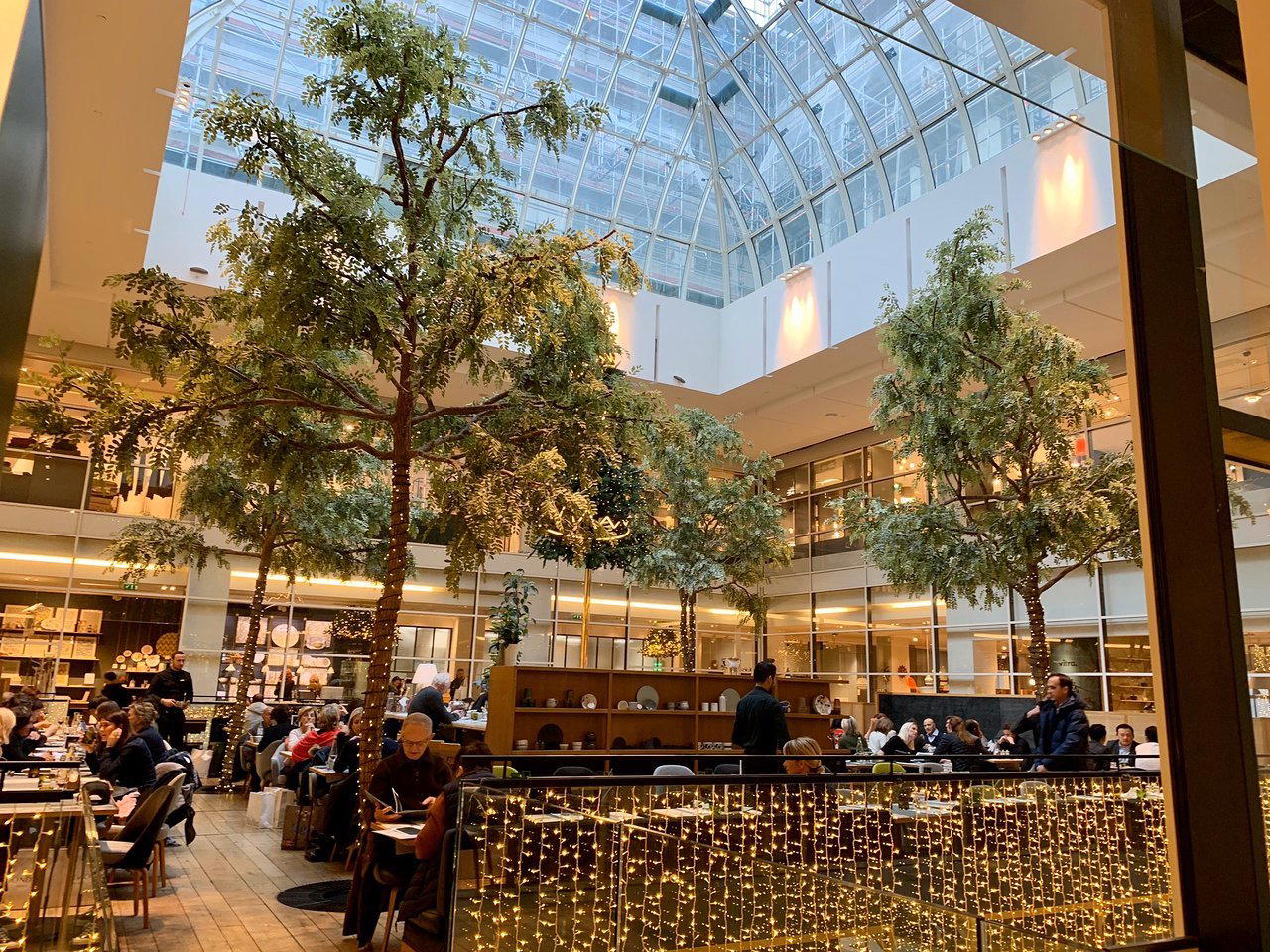
Where the Épicerie Ends and the Restaurant Begins
Paris has a long tradition of grocer-restaurants, where the credibility of a food retail operation bleeds into an adjacent dining room. The logic is simple: if you trust the shelves, you should trust the kitchen. La Grande Épicerie de Paris, the food hall attached to Le Bon Marché on Rue de Babylone in the 7th arrondissement, has long been one of the city's most serious food retail addresses. La Table is the seated expression of that sourcing infrastructure, a restaurant that positions itself not as a separate creative project but as an extension of the buying relationships the épicerie has built with producers across France and beyond.
At addresses like Alléno Paris au Pavillon Ledoyen or Arpège, the kitchen's identity is inseparable from a named chef's philosophy and technique. La Table operates with a different premise: the ingredient network is the argument, and the cooking exists to make that network legible on the plate.
The Sourcing Logic Behind the Menu
French haute cuisine has always claimed proximity to notable producers, but the claim is often rhetorical. What separates the épicerie model from a standard restaurant sourcing story is structural: the retail side of La Grande Épicerie operates on a buyer's calendar, vetting suppliers with the rigour of a serious food merchant rather than a restaurant's ad hoc purchasing. That infrastructure, built over decades, includes relationships with small-scale producers of cheese, charcuterie, bread, chocolate, and seasonal produce that most Parisian restaurants access only indirectly or at arm's length.
The restaurant's position at 5 Rue de Babylone places it inside the 7th arrondissement, a neighbourhood that sits between the institutional weight of Saint-Germain-des-Prés and the quieter residential quality of the 6th and 15th. It is not a neighbourhood that generates the same dining press as the Marais or the 8th, but it carries a consistent local clientele and a steady flow of visitors drawn to Le Bon Marché. That customer base tends to arrive already oriented toward quality and provenance, which shapes what the restaurant can assume about its audience.
Bras in Laguiole built its entire identity around the Aubrac plateau's botanical resources. Mirazur in Menton operates its own gardens as a sourcing system. Flocons de Sel in Megève draws on Alpine producers with a specificity that the Alps' short growing season demands. Each of these approaches treats sourcing as the creative constraint rather than the backdrop. La Table's version of that argument is urban and retail-anchored, which is a different kind of discipline.
The 7th Arrondissement and Its Dining Register
The 7th is where Paris goes to eat well without theatre. It is where Paris goes to eat well without theatre. The neighbourhood's serious restaurants tend toward classicism, with L'Ambroisie on the Place des Vosges (technically the 4th, but emblematic of the same sensibility) representing the category's ceiling. Kei in the 1st shows what happens when French technique meets Japanese precision within the city's formal dining register. La Table sits in a different tier, closer to a confident mid-range than to the €€€€ ceiling of those addresses, though the épicerie connection gives it a sourcing credibility that exceeds what a comparable restaurant without that infrastructure could claim.
That positioning has parallels in how hotel dining rooms use their parent institution's purchasing scale. Le Cinq at the Four Seasons Hôtel George V benefits from the hotel's ability to secure notable product at volume. La Table's version of that advantage is more specialist and more transparently connected to a retail operation that any visitor can walk through before or after eating.
How La Table Fits into the Broader French Kitchen Tradition
French culinary history is full of instances where the leading eating happened closest to the source: at the market, at the producer's table, or at a restaurant that shortened the chain between field and plate. What the épicerie model updates is the curation layer. The buying team at La Grande Épicerie does the work of identifying notable producers at scale, which means the kitchen inherits a pre-vetted network rather than building its own from scratch.
That is not the approach of the great destination restaurants of the French provinces. Troisgros in Ouches and Auberge de l'Ill in Illhaeusern built sourcing relationships over generations, with the kitchen and the producer evolving together. Paul Bocuse's Auberge du Pont de Collonges anchored its identity to the produce of the Lyon region with an almost ideological conviction. Auberge du Vieux Puits in Fontjoncouse and Assiette Champenoise in Reims each reflect their respective terroirs with a depth that comes from physical proximity to those landscapes.
La Table does not claim that kind of deep territorial rootedness. What it can claim is access to the breadth of what the épicerie has assembled, which spans French regions and international producers in a way that no single-territory kitchen can replicate. That breadth is both the restaurant's strength and its most interesting editorial tension: does access to everything lead to a more coherent argument about sourcing, or a more diffuse one? The answer depends heavily on what the kitchen does with the selection it inherits.
For comparison from outside France, Le Bernardin in New York has long made sourcing the centrepiece of its communication around seafood quality, while Atomix in New York uses Korean producer relationships as a narrative spine. AM par Alexandre Mazzia in Marseille and Au Crocodile in Strasbourg show how French regional kitchens can anchor their menus to local supply chains without losing technical ambition.
Just the Basics
Comparable venues nearby, for context on price, style, and recognition.
| Venue | Price | Notes |
|---|---|---|
| La Grande Épicerie de Paris - La TableThis venue — the venue you are viewing | $$$ | Not listed |
| Maison Blanche | $$$ | 8th arrondissement, Modern French Fine Dining |
| Saturne | $$$ | 2nd Arrondissement, Modern French with Nordic Influences |
| BANG | $$$ | Place-Vendôme, Contemporary French Bistro |
| Café Ruc | $$$ | Louvre / Palais-Royal, Classic French Brasserie |
| Les Cartes Postales | $$$ | Louvre/Palais-Royal, French-Japanese Fusion |
Continue exploring
More in Paris
Restaurants in Paris
Browse all →
Bars in Paris
Browse all →

Hotels in Paris
Browse all →



At a Glance
- Elegant
- Classic
- Sophisticated
- Casual Hangout
- Historic Building
- Extensive Wine List
Current opening hours
- Monday
- 8:30 AM–5:30 PM
- Tuesday
- 8:30 AM–5:30 PM
- Wednesday
- 8:30 AM–5:30 PM
- Thursday
- 8:30 AM–5:30 PM
- Friday
- 8:30 AM–5:30 PM
- Saturday
- 8:30 AM–5:30 PM
- Sunday
- 8:30 AM–5:30 PM
Hours can change for holidays and private events. Last verified .
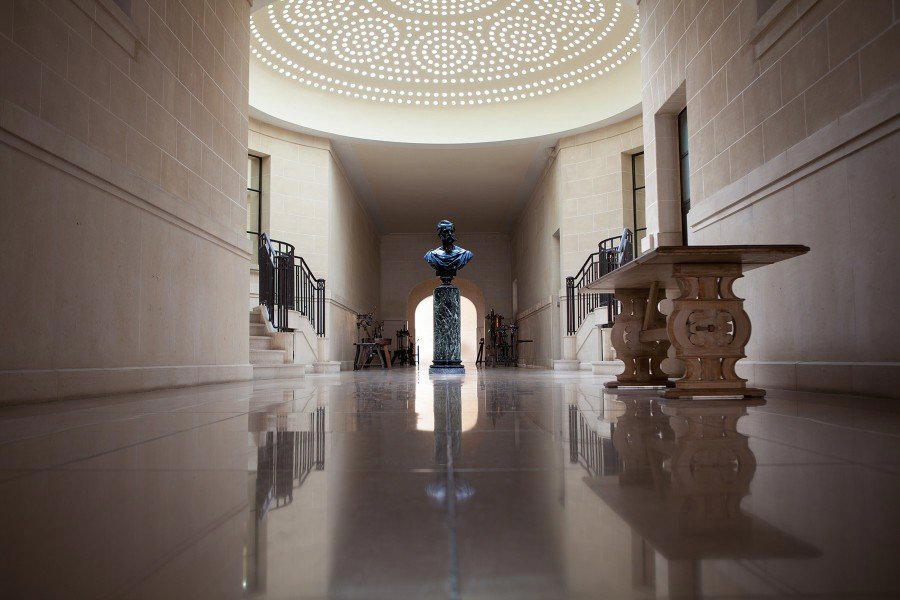
Bright and luminous space bathed in natural light from a huge glass roof, creating a welcoming and airy atmosphere.