La Fontelina sits at the base of the Faraglioni rocks on Capri's southern shore, operating as a beach club and restaurant where the sourcing logic is literally tidal: what arrives from the water that morning shapes what lands on the plate by afternoon. It occupies a position in Capri's dining scene that formal restaurants cannot replicate, unhurried, sun-soaked, and tied to place in a way that no indoor room can manufacture.
Pearl is the En Primeur Club membership app — saves, bookings, and concierge access live there. Same editors, same standards.
- Address
- Via dei Faraglioni, 2, 80073 Capri NA, Italy
- Phone
- +39 081 837 0845
- Website
- fontelina-capri.com
- Directions
- Get directions
 Saves & bookings on Pearl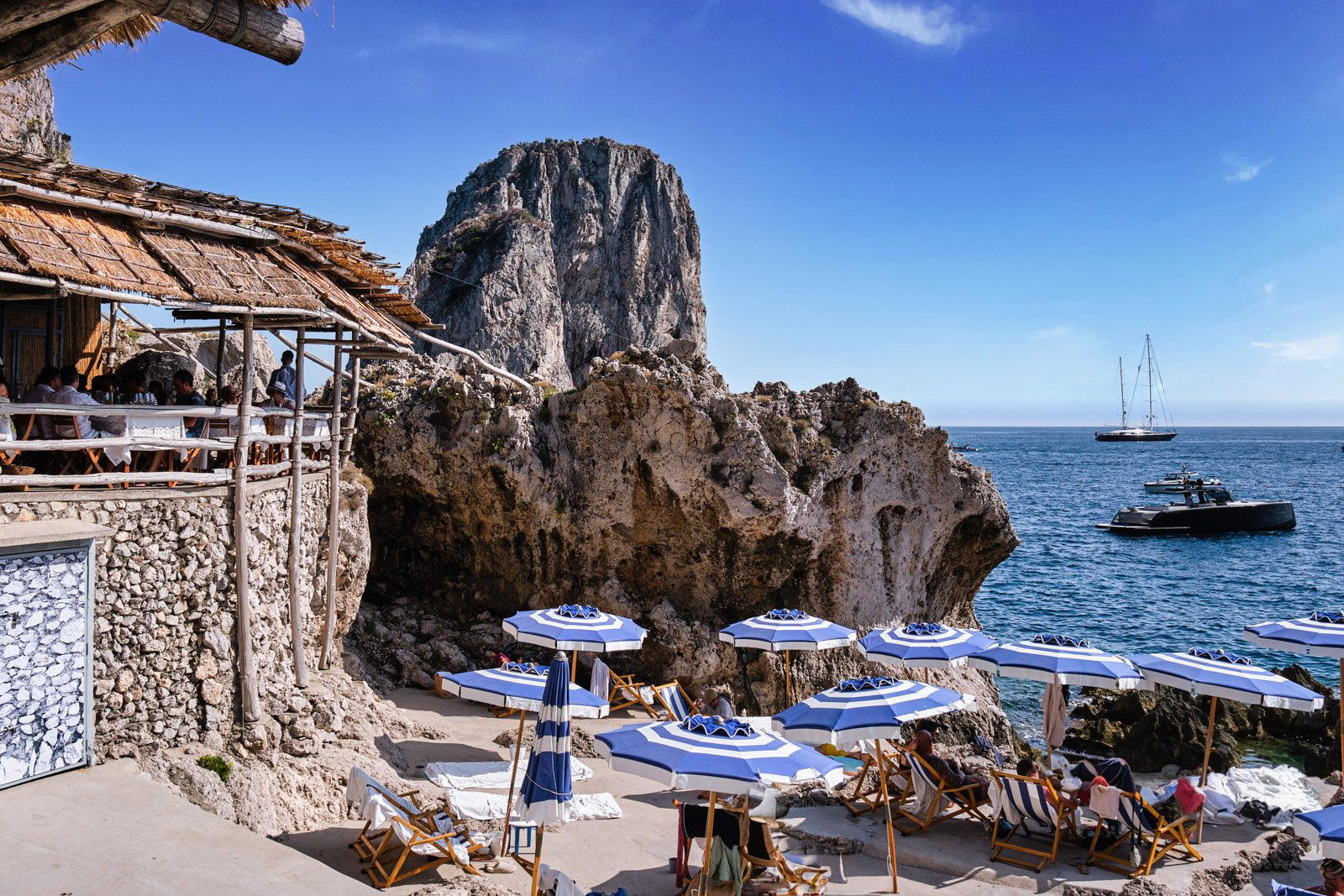
Where the Sea Decides the Menu
Capri's dining scene divides cleanly into two registers. The first is the island's formal restaurant tier, places like Le Monzù (Contemporary) and Bianca Rooftop, where kitchens work from structured menus, reservations are expected well in advance, and the experience is shaped as much by the room and the service choreography as by the food itself. The second register is smaller, more contingent, and considerably harder to manufacture: lunch at the water's edge, where the kitchen's sourcing logic runs no more than a few hours behind the catch. La Fontelina operates in that second register, and it does so from among the more geographically specific addresses on the island.
Positioned at the base of the Faraglioni rock formations on Capri's southern coastline, the restaurant and beach club occupies a ledge of terraced stone directly above the Tyrrhenian. The walk down from the road, a descent through Mediterranean scrub with the sea appearing in increments below, functions as a kind of decompression. By the time you reach the water level, the logic of the place becomes apparent: this is not a restaurant that could be relocated. The Faraglioni are not backdrop; they are the entire premise.
Sourcing at Sea Level
Along Italy's Campanian coast, proximity to the water has always been the primary credential for seafood quality. The fishing villages of the Amalfi coast and the Bay of Naples developed a culinary tradition built around morning catches and same-day cooking, a model that fine dining restaurants in Milan or Rome can approximate but never quite replicate. At venues like Quattro Passi in Marina del Cantone, which holds Michelin recognition and works the same coastal sourcing tradition at a more formal register, the kitchen's relationship with local fishermen is treated as a structural commitment, not a seasonal marketing point. La Fontelina operates by the same logic, compressed into a beach club format where the gap between sea and plate is at its shortest.
This matters because Campanian seafood cookery rewards restraint. The ricci di mare (sea urchin), totani (flying squid), and alici (anchovies) that characterise the Bay of Naples tradition are ingredients that degrade faster and reward simpler treatment than almost anything sourced inland. A kitchen operating from the shoreline, adjusting its offer based on what local fishermen bring in, is structurally aligned with how these ingredients are meant to be cooked. That alignment is what separates a genuinely sourcing-led coastal restaurant from one that imports its seafood and plates it with a sea view.
For readers who want to understand where this approach sits within Italy's broader seafood tradition, the contrast with restaurants like Uliassi in Senigallia, three Michelin stars, Adriatic-sourced, and operating at the technical apex of Italian seafood cuisine, clarifies the spectrum. Uliassi transforms coastal ingredients through intensive technique. La Fontelina, occupying a different position entirely, applies minimal intervention to ingredients caught within the day. Both approaches are legitimate; they serve different purposes and different types of travellers.
The Beach Club as Dining Format
Italy's beach club restaurant is a specific format that deserves to be understood on its own terms rather than measured against indoor dining conventions. The concession of the format is that the surroundings will do significant work: light off the water, the sound of swimming, the physical looseness that comes with being in a bathing suit or linen. The obligation the kitchen carries, in exchange for those environmental advantages, is to not waste them with food that demands too much attention. Dishes should be immediate, clean, and calibrated to appetite sharpened by salt air and swimming.
On Capri, this format has particular cultural weight. The island has attracted a specific kind of European leisure traveller since the early twentieth century, and its beach clubs have always been part of that social infrastructure, not an afterthought. The restaurant sits at the end of the Via dei Faraglioni and has operated long enough to accumulate the kind of institutional familiarity that makes it a fixture rather than a trend. It does not need to explain itself; the address does that.
For a broader map of how Capri's dining options are distributed across formats and price tiers, the island's range runs from the formal end, where Aurora Capri and Al Chiaro di Luna hold their respective positions, through to more casual neighbourhood options. Concettina ai Tre Santi represents a different register again, rooted in Neapolitan tradition rather than island geography.
Placing La Fontelina in the Italian Coastal Conversation
Italy's most celebrated coastal restaurants operate at the formal end of the spectrum. Dal Pescatore in Runate, Enoteca Pinchiorri in Florence, and the technically ambitious kitchens of Osteria Francescana in Modena or Piazza Duomo in Alba set a national benchmark for what Italian fine dining can achieve. Further north, Atelier Moessmer Norbert Niederkofler in Brunico and Le Calandre in Rubano extend that benchmark into alpine and Venetian registers respectively. Enrico Bartolini in Milan anchors the urban end of contemporary Italian technique. Reale in Castel di Sangro pushes into experimental territory.
The restaurant is not in conversation with any of those restaurants. Its reference points are geographical and seasonal. The same reader who books Le Bernardin in New York City for its technical seafood mastery, or Atomix in New York City for its precision tasting menu, may also want a two-hour lunch at the base of the Faraglioni where the menu is shorter, the sourcing is immediate, and the Tyrrhenian is close enough to feel on the back of your neck. These are different decisions, not competing ones.
A Quick Peer Check
Comparable venues nearby, for context on price, style, and recognition.
| Venue | Cuisine | Price | Notes |
|---|---|---|---|
| La FontelinaThis venue — the venue you are viewing | Traditional Capri Seafood | $$$$ | Not listed |
| La Palma Beach Club | Modern Italian Seafood | $$$$ | Marina Piccola |
| Bianca Rooftop | Contemporary Italian Steakhouse & Raw Bar | $$$$ | Capri Town Center |
| La Palette Ristorante | Modern Italian Seafood | $$$ | Matermania |
| Ristorante Panorama Capri | Neapolitan Pizza & Seafood | $$$ | Capri town |
| Da Paolino | Traditional Capri Italian in a Lemon Grove | $$$$ | Palazzo a Mare |
Continue exploring
More in Capri
Restaurants in Capri
Browse all →
Bars in Capri
Browse all →
Hotels in Capri
Browse all →
At a Glance
- Scenic
- Romantic
- Well Known
- Elegant
- Special Occasion
- Date Night
- Celebration
- Waterfront
- Terrace
- Panoramic View
- Extensive Wine List
- Local Sourcing
- Waterfront
Current opening hours
- Monday
- 9:30 AM–5:30 PM
- Tuesday
- 9:30 AM–5:30 PM
- Wednesday
- 9:30 AM–5:30 PM
- Thursday
- 9:30 AM–5:30 PM
- Friday
- 9:30 AM–5:30 PM
- Saturday
- 9:30 AM–5:30 PM
- Sunday
- 9:30 AM–5:30 PM
Hours can change for holidays and private events. Last verified .
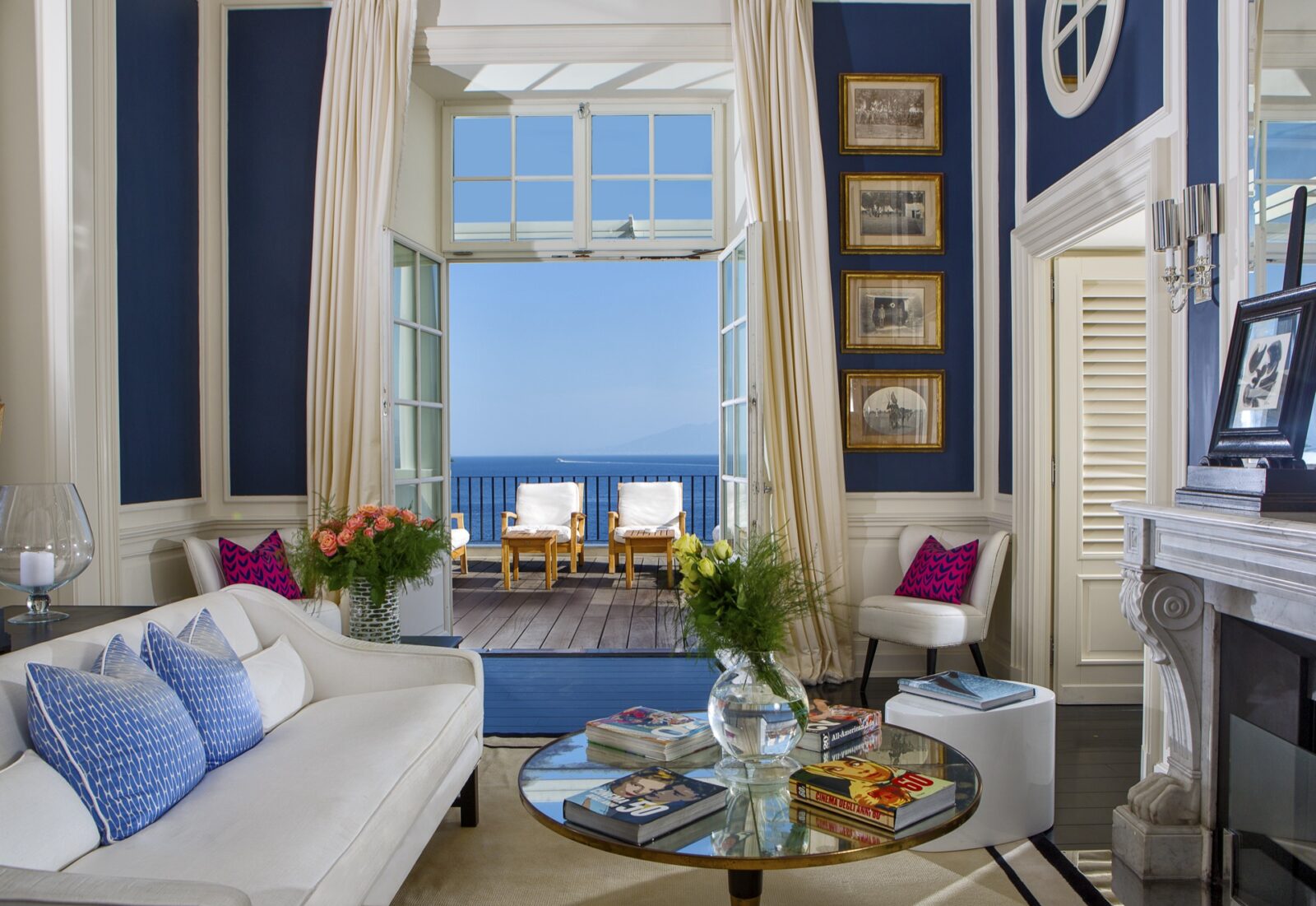
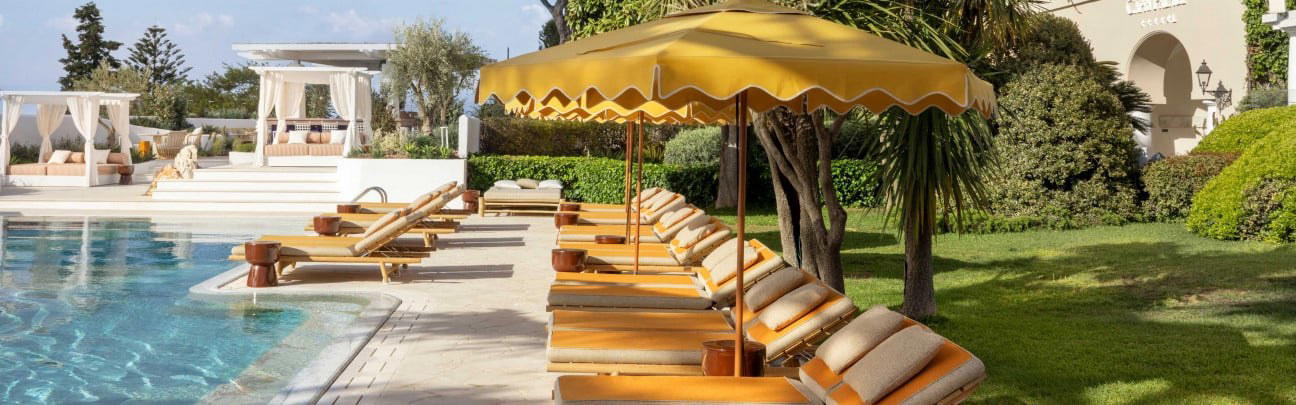
Sunny beachside atmosphere under straw-roofed pergolas with dramatic panoramic views of the Faraglioni and Mediterranean Sea.