La Carnita on Queen Street East brings Toronto's casual taco tradition to Leslieville's neighbourhood-driven dining scene. The 780 Queen St E address plants it squarely in a stretch where independent restaurants outnumber chains, and where sourcing and technique carry more weight than formality. For tacos in an east-end setting that rewards repeat visits, this is a practical first stop.
Pearl is the En Primeur Club membership app — saves, bookings, and concierge access live there. Same editors, same standards.
- Address
- 780 Queen St E, Toronto, ON M4M 1H4, Canada
- Phone
- +16473440780
- Website
- lacarnita.com
- Directions
- Get directions
 Saves & bookings on Pearl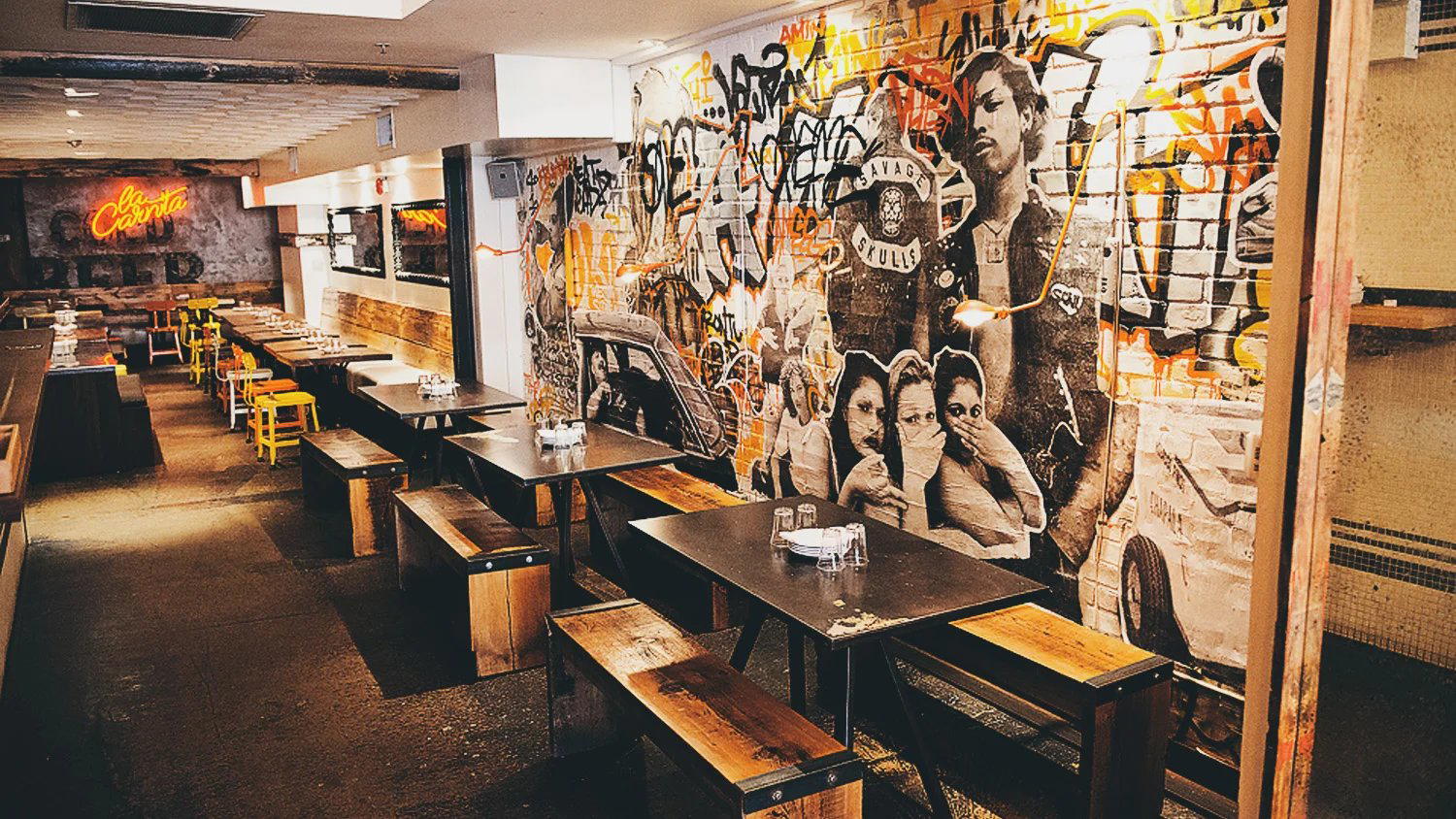
Queen Street East and the Logic of Neighbourhood Taco Culture
Toronto's taco scene has never been monolithic. At the high end, kitchens like Alo (Contemporary) and Aburi Hana (Kaiseki, Japanese) anchor a tier of dining defined by omakase pacing and tasting menus priced well above $200 per head. La Carnita operates in a completely different register, the neighbourhood casual tier where the currency is accessibility, regularity, and the kind of food that earns a postcode its reputation through repetition rather than occasion. On Queen Street East in Leslieville, that distinction matters enormously.
Leslieville developed its dining identity relatively late by Toronto standards. Where Yorkville built prestige and King West built spectacle, this stretch of Queen East accumulated independent operators who stayed because the neighbourhood did. The result is a strip where a taco spot, a natural wine bar, and a weekend brunch institution can share the same block without any of them feeling misplaced. La Carnita at 780 Queen St E sits inside that logic, part of a corridor where the crowd at 7pm on a Tuesday tells you more about a restaurant's actual standing than any review ever could.
Where the Ingredients Come From, and Why That Shapes the Plate
Across Canada's better casual Mexican kitchens, sourcing decisions tend to bifurcate early in the supply chain. Operations that treat tacos as throughput, high-volume, low-margin, designed for speed, source proteins and produce at commodity scale. The flavour ceiling is fixed by that decision before a single tortilla is pressed. The other approach, more common in neighbourhood-rooted spots on corridors like Queen East, involves tighter sourcing loops: Ontario-raised proteins, produce timed to what's available domestically, and a tortilla program that treats the corn or flour base as something worth caring about rather than an afterthought.
La Carnita has built its reputation in Toronto on the second model. The chain, which has operated multiple Toronto locations since the early 2010s, arrived through a food truck origin that forced ingredient discipline at volume. Food truck economics are unforgiving: there is no back-of-house sprawl to absorb waste, no extensive cold storage to carry surplus, and no front-of-house theatre to distract from a substandard product. That operational origin shapes how the kitchen thinks about what goes on the plate, even as the format has expanded into brick-and-mortar. For the sourcing-forward reader, this context matters. The approach is not farm-to-table in the high-minded, menu-annotated sense you find at Eigensinn Farm in Singhampton, but it is ingredient-aware in ways that distinguish it from purely commoditised alternatives.
Ontario's protein supply chain, particularly for pork, the backbone of any serious carnitas program, is tighter and more traceable than most diners assume. Pulling from regional producers rather than continental distribution networks shortens the cold chain and tends to produce better texture on low-and-slow cuts. Carnitas specifically, a braise-then-crisp preparation, rewards quality at the fat cap and shoulder more than almost any other preparation: the difference between a commodity pork shoulder and a well-raised Ontario heritage cut shows up unmistakably in the finished taco. At this price tier, that sourcing decision is a genuine competitive differentiator.
The Leslieville Dining Context: What the Neighbourhood Signals
Understanding La Carnita's position requires understanding what Leslieville has become for Toronto dining. The neighbourhood sits east of the Don River, between Riverdale to the west and the Beach to the east, and its Queen Street stretch functions as a daily-use dining corridor rather than a destination strip. The difference is consequential. Destination dining, the model operating at Sushi Masaki Saito (Sushi, Japanese) or DaNico (Italian), depends on a diner making a deliberate choice to travel to a room. Daily-use dining depends on being good enough, consistently enough, that people build it into the rhythm of where they already are.
La Carnita earns that status in Leslieville through a format that scales well: a menu short enough to execute properly at volume, price points that allow return visits without planning, and a casual atmosphere that makes the space functionally accessible for groups at different stages of a Queen East evening. Comparable casual taco operations in other Canadian cities, including spots in Vancouver's Mount Pleasant corridor or Montreal's Plateau, face the same test. The ones that endure do so because the food holds up under frequency. Novelty carries a restaurant through its first year; sourcing and execution carry it through its fifth.
Comparing the Toronto Casual-to-Fine Spectrum
To calibrate where La Carnita sits, the table below places it against a cross-section of Toronto dining by format and price positioning.
| Venue | Cuisine | Price Tier | Format |
|---|---|---|---|
| La Carnita - Leslieville | Mexican / Tacos | $$ | Casual neighbourhood |
| DaNico | Italian | $$$$ | Fine dining |
| Don Alfonso 1890 | Contemporary Italian | $$$$ | Fine dining / hotel |
| Alo | Contemporary | $$$$ | Tasting menu |
| Aburi Hana | Kaiseki, Japanese | $$$$ | Omakase / kaiseki |
The gap between La Carnita and the $$$$ tier is not a quality judgment, it reflects entirely different dining propositions. Toronto's strength as a dining city lies partly in having credible operators across all price tiers, not just at the leading. Similar breadth is visible in Montreal through Jérôme Ferrer - Europea in Montreal at the fine end and various neighbourhood operators below it, or in the contrast between Tanière³ in Quebec City and Quebec City's more casual dining infrastructure. Canadian dining at every tier has matured considerably over the past fifteen years, and neighbourhood spots like La Carnita are part of that broader story.
Planning Your Visit
Credentials Lens
Comparable venues nearby, for context on price, style, and recognition.
| Venue | Cuisine | Price | Notes |
|---|---|---|---|
| La Carnita - LeslievilleThis venue — the venue you are viewing | Contemporary Mexican Street Food | $$ | Not listed |
| Papi Chulo's | Authentic Mexican Taqueria | $$ | Trinity Bellwoods |
| Atomic 10 | Modern Latin Fusion Tacos | $$ | Oakwood Vaughan |
| Fonda Balam | Authentic Mexican Taqueria | $$ | Little Italy |
| Fonda Lola | Modern Mexican Cantina | $$ | Trinity Bellwoods |
| La Nayarita | Modern Mexican Taqueria | $$$ | Trinity Bellwoods |
Continue exploring
More in Toronto
Restaurants in Toronto
Browse all →
Bars in Toronto
Browse all →
Hotels in Toronto
Browse all →



At a Glance
- Lively
- Trendy
- Energetic
- Modern
- Casual Hangout
- Group Dining
- After Work
- Live Music
- Open Kitchen
- Standalone
- Craft Cocktails
- Beer Program
Current opening hours
- Monday
- 4–8 PM
- Tuesday
- 4–8:30 PM
- Wednesday
- 4–9 PM
- Thursday
- 4–9 PM
- Friday
- 4–10 PM
- Saturday
- 12–10 PM
- Sunday
- 4–8 PM
Hours can change for holidays and private events. Last verified .
Edgy, lively space designed with local street artists featuring graffiti-style murals and hip-hop soundtrack; lively and energetic atmosphere.