Our verdict
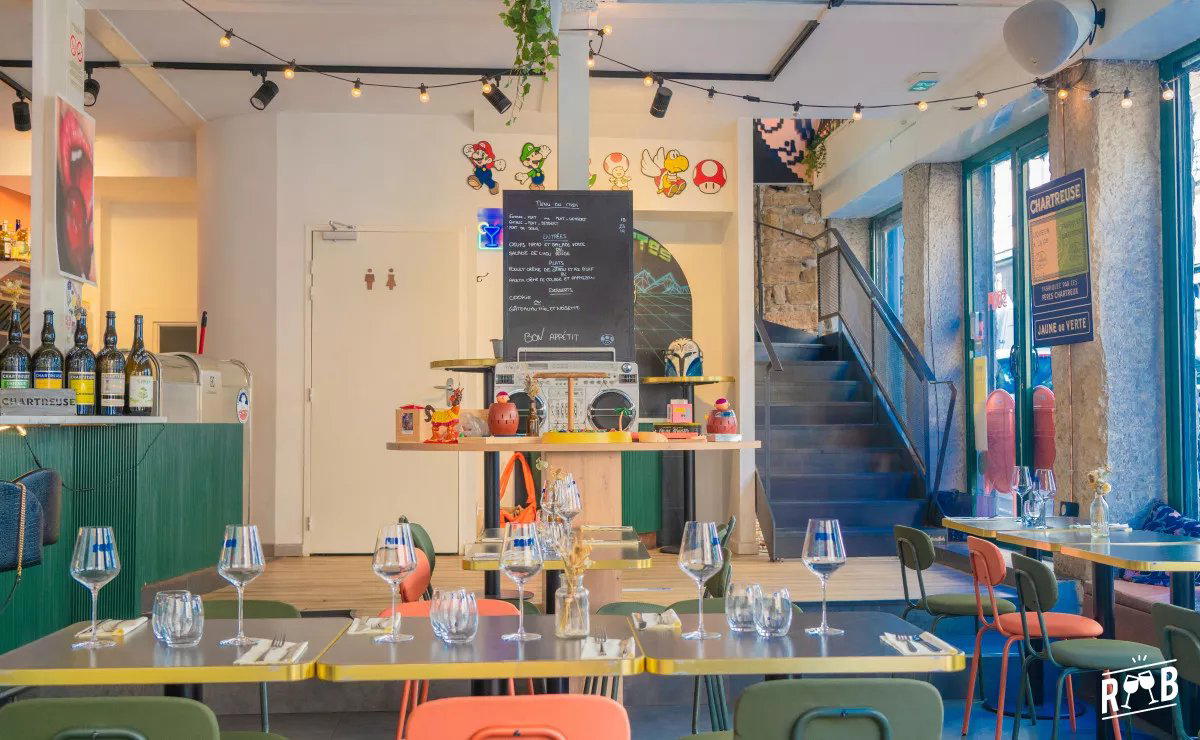
La Boname de Bruno sits on the Grande Rue des Feuillants in Lyon's first arrondissement, a street that captures the city's particular talent for tucking serious dining into unremarkable-looking addresses. Lyon's restaurant scene rewards those who read beyond surface signals, and this address is part of that tradition, a neighbourhood table in a city that has never needed to shout about its cooking.

Pearl is the En Primeur Club membership app, where members save venues, book tables and use the concierge.

A Street Where Lyon's Dining Logic Becomes Clear
The Grande Rue des Feuillants runs through the first arrondissement with the quiet confidence of a street that has never needed a rebrand. The Presqu'île district, the peninsula between the Rhône and the Saône, is where Lyon's eating habits reveal themselves most honestly: small rooms, no-theatre cooking, and a local clientele that measures quality in regularity rather than occasion. La Boname de Bruno occupies number 5, and the address alone positions it inside one of the most demanding dining publics in France. Lyon diners are not impressed by pedigree or press coverage alone; they return because the plate justifies it.
This is a city where the bistrot tradition has always coexisted with haute cuisine without either format apologising for itself. At the serious end of the spectrum, you have multi-star operations like La Mere Brazier, the address that anchors Lyon's Michelin story back to its origins. Below that, a tier of ambitious contemporary rooms, Le Neuvième Art, Takao Takano, Au 14 Février, that compete on precision and creative range. And then there are the neighbourhood addresses that the city relies on for its daily rhythm, where the cooking is rooted and the room is without performance. La Boname de Bruno fits somewhere in that register, at an address where proximity to Lyon's historic core gives the setting an inherent seriousness.
The Atmosphere the Presqu'île Produces
The Presqu'île has a particular quality of light in the late afternoon. The limestone facades deflect the sun at angles that make the streets glow in a way that the city's tourist photography consistently fails to capture. Walking from the Place des Terreaux south along the small streets toward the Feuillants quarter, you pass covered passages, boulangers operating on old schedules, and the kind of wine shops where the owner expects to be asked a question. This is not a neighbourhood curated for visitors; it functions first for the people who eat and work here.
In that context, the approach to a table on the Grande Rue des Feuillants carries weight that a comparable address in a tourist-first city would not. The physical environment before you sit down, the scale of the street, the low shop fronts, the absence of menu boards engineered for passing trade, tells you something about the register of the room inside. Lyon trains its diners to read these signals.
Where This Address Sits in Lyon's Competitive Set
Lyon has more serious restaurants per capita than any comparable French city, and that density creates a genuinely demanding selection process. Burgundy by Matthieu operates in the modern cuisine bracket at the €€€ price tier, while the city's most adventurous contemporary rooms push into €€€€ territory. The neighbourhood address, by contrast, operates under different competitive logic: it earns its place by being the room people want on a Tuesday, not just for a celebration.
France's most decorated dining operates at some distance from Lyon's everyday scene. The country's reference points, Alléno Paris au Pavillon Ledoyen in Paris, Mirazur in Menton, Troisgros in Ouches, and the enduring institution of Paul Bocuse - L'Auberge du Pont de Collonges just north of the city, represent the upper stratum of French gastronomy. Lyon's neighbourhood addresses carry none of that institutional weight, but they participate in the same culinary seriousness at a different register. It is worth understanding that contrast before you arrive, because the Presqu'île's leading local tables do not compensate for lacking stars; they operate under entirely different criteria.
Regionally, the comparison set extends to addresses like Flocons de Sel in Megève and Auberge de l'Ill in Illhaeusern, both of which demonstrate how deeply the French provinces have invested in cooking as a form of local identity. Lyon's specific contribution to that tradition is the idea that serious food need not announce itself. The city's mères, its bouchons, and its neighbourhood tables have always argued that restraint and repetition are virtues.
Lyon's First Arrondissement as a Dining Reference Point
The first arrondissement is not Lyon's most visited dining quarter, the Vieux-Lyon quarter across the Saône, with its Renaissance traboules and tourist bouchons, absorbs more foot traffic. But the Presqu'île's northern sector, including the Feuillants street, operates as a reference point for residents who take eating seriously. It is where the market habit still drives the menu, where weekly specials are taken as a given, and where a room without a reservation policy is not necessarily an informal room, it may simply be one that trusts its regulars to plan ahead.
For visitors working from our full Lyon restaurants guide, the first arrondissement rewards attention beyond the headline addresses. The streets between Place des Terreaux and Place de la République contain more cooking per block than most French cities manage across an entire quartier. France's other ambitious regional scenes, the technical ambition of AM par Alexandre Mazzia in Marseille, the classical depth of Assiette Champenoise in Reims, the Alsatian institution of Au Crocodile in Strasbourg, each reflect a city's relationship with its own culinary identity. Lyon's identity is the most self-sufficient of all of them, and the neighbourhood table is where that self-sufficiency is most legible.
For context on what serious dining looks like at the international reference level, Le Bernardin in New York and Atomix demonstrate the range of ambition that earns sustained global attention. Lyon's local tables operate at the opposite end of the visibility spectrum, and intentionally so. The city has never been interested in exporting its dining culture; it has always been more interested in maintaining it. An address on the Grande Rue des Feuillants participates in that maintenance.
Planning a Visit: What the Address Tells You
La Boname de Bruno is located at 5 Grande Rue des Feuillants, in the first arrondissement. The Presqu'île is walkable from the main Lyon Part-Dieu and Lyon Perrache rail terminals, and the address falls within the city's central tram and metro network. No booking data, hours, or price information is currently held in the EP Club database for this address; contacting the venue directly before visiting is the appropriate approach, particularly for weekend sittings when demand across the arrondissement's smaller rooms tends to run ahead of availability.
The first arrondissement addresses generally fill without heavy advance marketing, relying instead on neighbourhood word of mouth. That pattern is consistent across Lyon's local dining tier, and worth factoring into any itinerary that treats this as a specific destination rather than a walk-in option. Lyon rewards the visitor who plans at the neighbourhood level, not just at the headline-restaurant level.
Frequently asked questions
What part of town is La Boname de Bruno in?
La Boname de Bruno is located at 5 Gd Rue des Feuillants, 69001 Lyon, France, Lyon.
How does La Boname de Bruno fit into Lyon's dining scene compared to restaurants in Vieux-Lyon?
La Boname de Bruno sits on the Grande Rue des Feuillants in Lyon's first arrondissement, on the Presqu'île peninsula rather than in Vieux-Lyon across the Saône. The Presqu'île tends to attract a local professional clientele rather than the tourist-facing trade that concentrates around the Renaissance quarter, which generally means kitchens here are cooking to repeat diners with higher baseline expectations. That distinction matters in a city where Lyon's restaurant density per capita is among the highest of any comparable French city.
What dish is La Boname de Bruno famous for?
Given its address in Lyon's first arrondissement, a city where Burgundian technique and bouchon tradition inform even contemporary menus, the kitchen almost certainly draws on classical French foundations. Contacting the restaurant directly at 5 Grande Rue des Feuillants will give the clearest picture of the current menu focus.
Is La Boname de Bruno reservation-only?
Lyon's first arrondissement dining scene runs competitive at most price points, and walk-in availability at serious addresses on the Presqu'île is rarely guaranteed on evenings or weekends. Calling ahead or visiting in person at 5 Grande Rue des Feuillants is the practical approach.
Reputation Context
Comparable venues nearby, for context on price, style, and recognition.
| Venue | Cuisine | Price | Notes |
|---|---|---|---|
| La Boname de BrunoThis venue (the venue you are viewing) | Bistronomique French | $30–50 | Not listed |
| bouchon palais grillet | Traditional Lyonnais Bouchon | $30–50 | Quartier Bellecour Cordeliers |
| Grive | Modern French Bistro with Tapas | $30–50 | Quartier Quartiers Anciens |
| Le Poêlon d'Or | Traditional Lyonnais Bouchon | $30–50 | Quartier Bellecour Carnot |
| Maison Moly | French Bistronomique | $30–50 | Quartier Bas des Pentes Presqu'île |
| Le Casse Museau | Bouchon Lyonnais | $30–50 | Quartier Bas des Pentes Presqu'île |