Kusa Nori

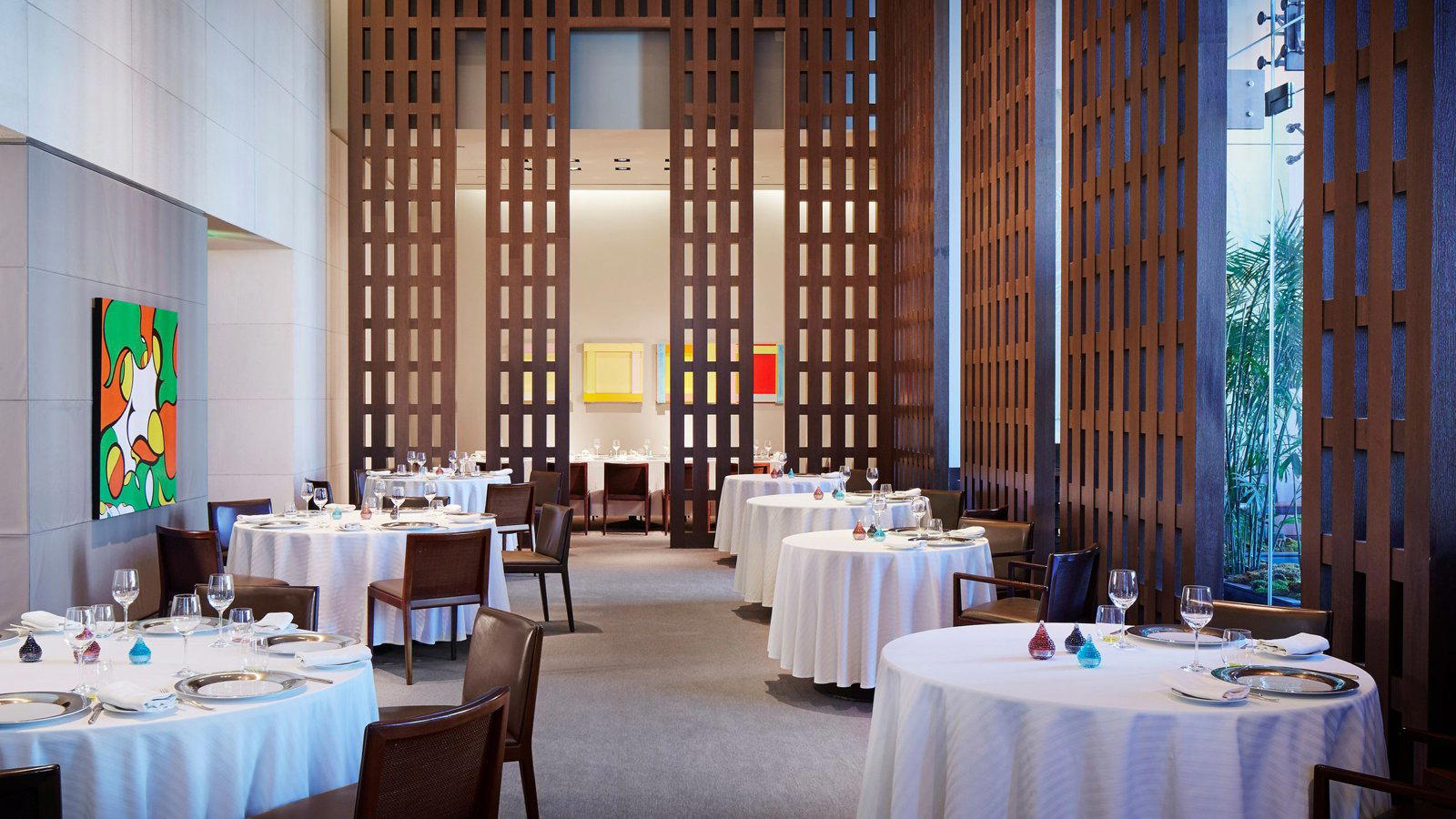
Inside Resorts World Las Vegas, Kusa Nori channels Japanese seafood tradition through a design-forward room where oversized fish sculptures hover above the dining room and a black octopus spans a cherry-red wall. The kitchen runs teppanyaki, a sushi bar, and a six-course omakase that rotates with seasonal ingredients. A serious sake list and business-casual dress code set the register.
Pearl is the En Primeur Club membership app — saves, bookings, and concierge access live there. Same editors, same standards.
- Address
- 3000 S Las Vegas Blvd, Las Vegas, NV 89109
- Phone
- (702) 676-6965
- Website
- rwlasvegas.com
- Directions
- Get directions
 Saves & bookings on Pearl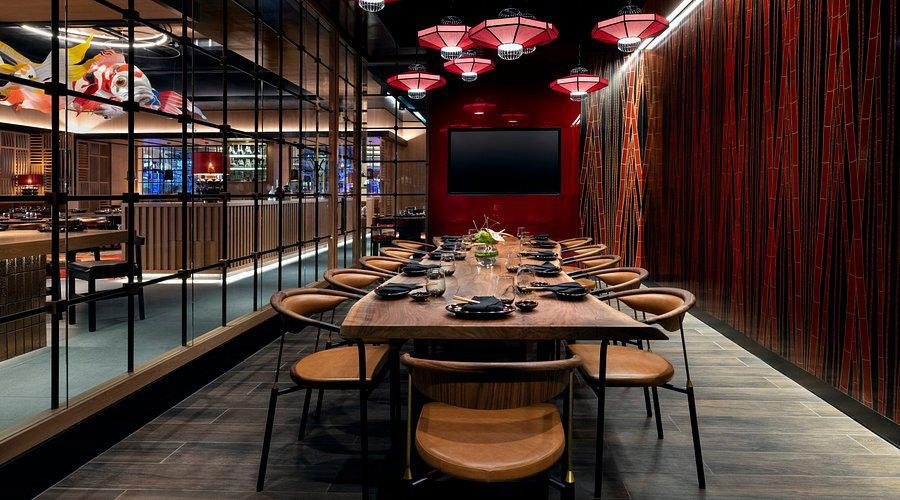
The Room Before the Meal
Las Vegas has always used spectacle as an appetizer, and the Japanese restaurant tier on the Strip has developed its own vocabulary for it. At Kusa Nori, inside Resorts World Las Vegas at 3000 South Las Vegas Boulevard, that vocabulary is marine: plump, oversized fish sculptures float above the dining room, a black octopus stretches across a cherry-red wall, and small colorful spotlights throw fish shadows across the floor. The room is deliberately dim, deliberately theatrical. It reads as a hot-spot before a single plate arrives, and that atmosphere shapes expectations in both directions, it draws a crowd that wants the show, and it raises the bar for whether the kitchen can match the set design.
That question is worth asking seriously, because the Strip has plenty of restaurants where the room outperforms the food. Kusa Nori's answer is a program built around raw material quality, tableside technique, and a level of plate composition that justifies the environment rather than apologizing for it. For a broader view of where this fits in Las Vegas dining, the full Las Vegas restaurants guide maps the competitive field.
Ingredient Logic in a Strip Kitchen
Japanese cuisine at its most serious is an argument about ingredients: that the cook's role is to understand, protect, and present raw materials rather than transform them beyond recognition. That tradition sits somewhat awkwardly inside a Las Vegas resort context, where volume and spectacle tend to pull against restraint. Kusa Nori positions itself in the more ingredient-forward half of that tension.
The misoyaki black cod illustrates the approach. The fish arrives with seaweed crust intact, its surface covered with arare, the small, crunchy rice cracker balls common in Japanese snacking tradition, and finished with yuzu-sake foam. The combination is technically considered: yuzu's citrus acidity cuts through the miso's fermented sweetness, the arare adds textural contrast without overwhelming the fish, and the foam delivery keeps the portion from reading as heavy. These are decisions made at the ingredient and technique level, not purely at the decoration level.
Wasabi handling at Kusa Nori reinforces the same logic. Ask for it, and a server grates the root tableside. The distinction from powdered paste is substantial, fresh wasabi has heat that rises and fades cleanly rather than sitting on the palate, and offering it in this form signals a kitchen that treats supporting ingredients with the same care as the headline proteins. In Japanese seafood cooking, the condiment tier is not an afterthought.
The Kusa Nora roll, wagyu tataki, lobster tempura, asparagus, yuzu emulsion, caviar, crispy garlic, and truffle ponzu, reads like a luxury ingredient checklist, which is a familiar Strip move. But the yuzu and truffle ponzu framing keeps the acid-fat balance in check, and the asparagus adds vegetable structure that prevents the roll from collapsing into pure richness. Whether you read it as a composed dish or as a Las Vegas gesture depends on your threshold for luxury-forward menus; either way, it is an honest representation of what the kitchen is doing.
The moriawase, chef's selection of sushi or sashimi, arrives composed with leaves, gingko nuts, lemon slices, and pink pickled daikon on ice. The pickled daikon is detail work: a palate-cleansing element that also contributes visual precision. Even shrimp tempura gets specific treatment, with crispy-rice-crusted shrimp plated over wasabi honey aioli and kabosu gel in a circular pattern. The citrusy kabosu is a yuzu relative from Oita Prefecture, where its use in local cuisine is central enough that restaurants like Beppu Hirokado in Oita treat it as a defining regional ingredient. Its appearance here marks a deliberate sourcing choice.
The Teppanyaki Counter as Theater Within Theater
Teppanyaki occupies a specific position in Japanese-American dining history: it arrived in the United States as spectacle, the knife tricks and onion volcanoes becoming more famous than the food itself. The better teppanyaki programs have always tried to reclaim the cooking from the performance, treating the grill as a precision tool rather than a prop.
At the restaurant, the teppanyaki chefs work the grill with technical dexterity, slicing, dicing, and timing proteins across a hot surface in front of seated guests. The lobster is flagged by inspectors as a worthwhile addition to the standard format, both for the ingredient quality and for what it demonstrates at high heat. Teppanyaki-grilled lobster, handled well, caramelizes the sugars in the flesh without overcooking the interior, a narrow window that separates competent execution from sloppy. The format suits the room: teppanyaki is inherently theatrical, and in a space already built around visual experience, the two reinforce rather than compete with each other.
Compared to the quieter, more counter-focused approach of Aburiya Raku, which operates off-Strip and represents a different Japanese dining register entirely, the restaurant is a louder proposition. Neither is wrong. They are targeting different reader decisions, and knowing which one fits your evening is the more useful frame than ranking them against each other.
The Sake Program
The sake list at the restaurant is described as sizable, and the Heavensake junmai daiginjo is specifically noted as a strong pairing choice. Junmai daiginjo sits at the premium end of the sake classification system: rice polished to at least fifty percent of its original size, no added alcohol, and a production approach that emphasizes clean, fruity, and floral aromatics. It is the category that has attracted crossover interest from wine drinkers, and pairing it with seafood-forward Japanese cooking follows direct logic. The sake program signals that the kitchen expects guests to think about the drink alongside the food rather than treating beverage as an afterthought.
For further context on Las Vegas drinking, the full Las Vegas bars guide covers the wider scene.
The Omakase Format
The format that leading expresses what the restaurant's kitchen can do is the omakase. The six-course structure gives chefs latitude to sequence seasonal ingredients in a way that individual ordering rarely achieves. Omakase at this level, inside a resort property, against a comparable set that includes high-volume sushi bars and celebrity-chef outposts across the Strip, functions as a credibility signal. It requires kitchen confidence to commit to a set sequence built around what is freshest rather than what is most profitable to push. The recommendation to order it comes from inspector notes, which carry more weight than a menu description.
For comparison, the omakase tradition reaches its most refined expression at counter-only formats in Japan, where restaurants like Mitsuyasu in Kyoto represent the kaiseki-adjacent end of that spectrum. The restaurant is not operating in that register, but the decision to anchor the menu around a seasonal tasting format places it in a more serious comparable set than most resort Japanese restaurants.
Planning a Visit
The restaurant operates on a business-casual dress code: polished shorts and dressed-up sandals are permitted, but hats, baseball caps, flip-flops, beach wear, and athletic wear are not. Reservations are recommended, and the restaurant offers both self-parking and valet at Resorts World Las Vegas. Private dining is available for groups. Gluten-free and vegetarian options are on the menu, and the bar is open for those coming specifically for sake or cocktails rather than a full meal.
If you are building a broader Las Vegas itinerary around dining, the full restaurants guide covers the range from resort-format Japanese to Craftsteak, Bazaar Meat by Jose Andres, Bardot Brasserie, and Bacchanal Buffet. Guides to hotels, wineries, and experiences round out the planning picture.
Cuisine and Credentials
Comparable venues nearby, for context on price, style, and recognition.
| Venue | Cuisine | Price | Notes |
|---|---|---|---|
| Kusa NoriThis venue — the venue you are viewing | Modern Japanese Sushi and Robata | $$$ | Not listed |
| Sushi Roku | Contemporary Japanese Sushi | $$$ | South Las Vegas |
| Raku | Japanese Robatayaki Izakaya | $$$ | The Asian District |
| Aburiya Raku | Japanese Robatayaki Izakaya | $$$ | The Asian District |
| Kabuki Japanese Restaurant | Japanese Sushi & Traditional | $$ | Boulder Junction |
| Soho Japanese Restaurant | Modern Japanese Sushi | $$$ | Arden |
Recognition history
Dated appearances from independent guides and award organizations, with the underlying list record or original source where available.
Forbes 4-Star
Forbes
Forbes 4-Star
Forbes
Continue exploring
More in Las Vegas
Restaurants in Las Vegas
Browse all →
Bars in Las Vegas
Browse all →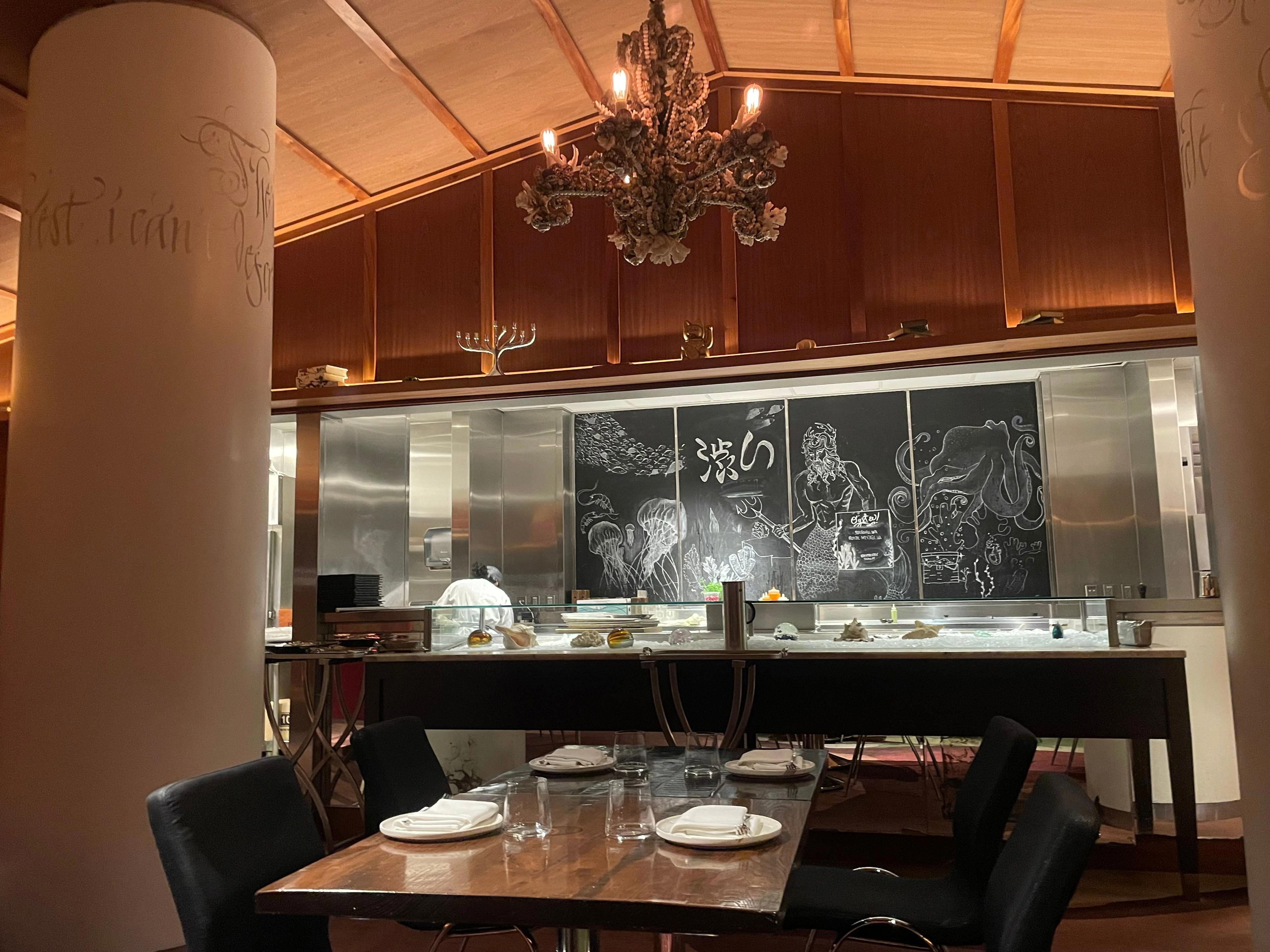


At a Glance
- Trendy
- Modern
- Elegant
- Sophisticated
- Date Night
- Special Occasion
- Business Dinner
- Open Kitchen
- Sake Program
- Craft Cocktails
Current opening hours
- Monday
- 4–10 PM
- Tuesday
- 4–10 PM
- Wednesday
- 4–10 PM
- Thursday
- 4–10 PM
- Friday
- 4–10 PM
- Saturday
- 4–10 PM
- Sunday
- 4–10 PM
Hours can change for holidays and private events. Last verified .
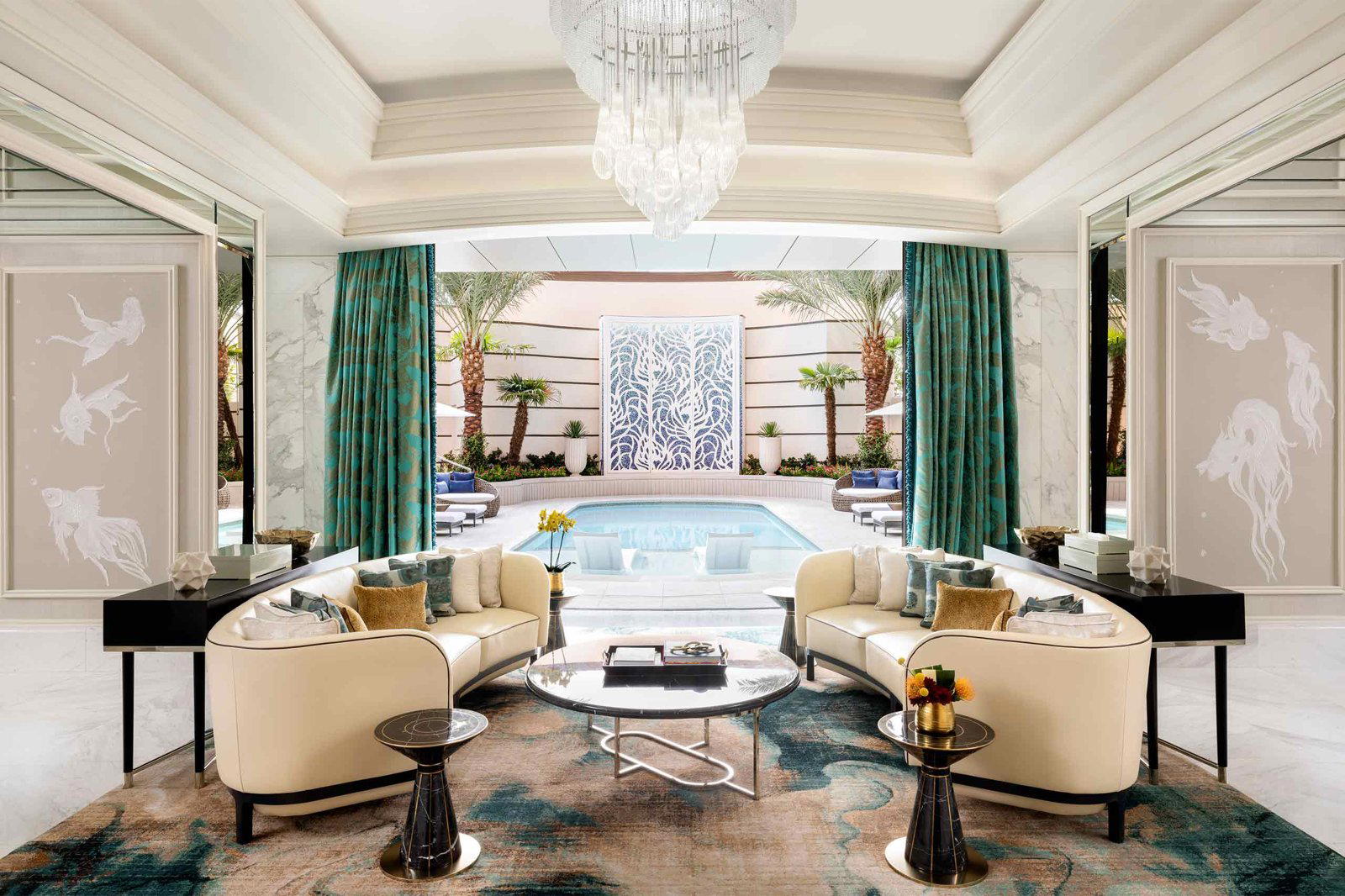
Relaxing and elegant with whimsical decor featuring hard wood, bamboo, and sea creature motifs, offering an upscale yet welcoming atmosphere.