

Star Wine List · Tabelog 100 #49
Our verdict
Ko-Ya sits on the third floor of a Doujima address in Kitashinchi, Osaka's most concentrated stretch of serious nightlife dining. The nine-seat French-based counter fills with wine-focused regulars rather than tourists, operating at a scale where the format itself is the statement. It belongs to the small category of Osaka restaurants where creative French technique meets deeply personal service ratios.
Kitashinchi and the Counter Format That Defines It
Kitashinchi is not a neighbourhood that rewards casual wandering. Osaka's densest concentration of after-dark dining, it operates on referral, regulars, and the kind of institutional knowledge that takes years to build. The streets between Doujima and Sonezaki hold more serious restaurants per block than most Japanese cities manage per district, and the competition across French, kaiseki, and creative formats is sharp enough that any counter running at full capacity every night is doing something right. Ko-Ya, on the third floor of a Doujima building, runs at nine seats. Those nine seats are full.
The counter format at this scale is a particular commitment. Across Osaka's premium French and innovative category, which includes three-star houses like HAJIME and chef-driven French rooms like La Cime, most operators have settled into either the full tasting-menu dining room or the intimate counter. Ko-Ya sits at the intimate end of that spectrum, and the nine-seat count places it in a peer group defined less by formal dining protocol and more by conversation, wine, and close-range attention to each plate. The format is not a gimmick. In Kitashinchi, it is a studied choice about what kind of experience can be delivered at that ratio of cook to guest.
French Technique in an Osaka Register
The history of French cuisine in Japan is longer and more layered than the Michelin era alone suggests. French training routes through Lyon, Paris, and Burgundy became an established path for serious Japanese cooks from the 1970s onward, and Osaka absorbed that influence alongside Tokyo without the same degree of international scrutiny. The result, across decades, is a city where French-based restaurants operate with considerable technical fluency and a local sensibility that does not feel borrowed. Ko-Ya belongs to that lineage: French-based and innovative, working in a city where that combination has genuine roots rather than novelty status.
Innovative designation matters here as a positioning signal. It separates Ko-Ya from the stricter kaiseki tradition represented by restaurants like Kashiwaya Osaka Senriyama and Taian, and from the more formally codified French tasting-menu format. Innovative French in Osaka, when it works at a nine-seat counter, tends to mean courses built around a logic that borrows from both traditions without being wholly accountable to either. It is worth comparing Ko-Ya to Fujiya 1935, another Osaka house working in the innovative register, to understand how differently that mandate can be interpreted at the same price tier. The two addresses represent distinct interpretations of what creative cooking in Osaka actually means at practice level.
Wine as a Structural Element
Detail that Ko-Ya draws wine lovers specifically is not a secondary note. In a city where the dominant fine-dining grammar is kaiseki, where sake, shochu, and tea pairings carry centuries of precedent, a French-based counter that fills with wine-focused guests is making a statement about its kitchen priorities. Wine-centric counters in Japan tend to follow a particular logic: the cooking calibrates toward acid, fat, and texture ranges that pair cleanly with European wine, which means the menu architecture is shaped by pairing potential as much as by ingredient seasonality alone.
This connects Ko-Ya to a broader Japan-wide conversation about how French-technique restaurants engage with wine culture. Harutaka in Tokyo represents one answer to that question at the omakase end of the spectrum. Gion Sasaki in Kyoto answers it differently, at the intersection of kaiseki and French sensibility. Ko-Ya's answer, at a nine-seat Kitashinchi counter, is to make wine central enough that the room fills with people who treat it as the primary lens rather than an accompaniment. That is a narrower, more specific audience, and it is also a more coherent one. The counter format rewards that kind of focused guest far more than a large dining room would.
Positioning Within Osaka's Broader Dining Map
Osaka's restaurant identity is sometimes flattened by the shorthand of takoyaki and kushikatsu, which describes street-level eating culture accurately but leaves the serious fine-dining tier underexplained internationally. The city's three-star French and Japanese rooms compete directly with Tokyo peers on technique and sourcing, and the intermediate tier, where Ko-Ya operates, is genuinely competitive across formats. Visitors spending serious time in the Kansai region tend to move between Osaka, Kyoto, and Nara as a circuit: akordu in Nara and Gion Sasaki in Kyoto represent the kind of creative and traditional poles that give context to what Ko-Ya is doing specifically in Osaka's night-dining core.
Further afield in Japan, the French-innovative format finds expression at Bleston Court Yukawatan in Nagano and at giueme in Akita, both operating with the same broad designation but in radically different regional contexts. The comparison is useful because it shows how much location shapes the meaning of French-based innovative cooking in Japan: Ko-Ya's Kitashinchi address, its wine-centric audience, and its nine-seat configuration make it a specific urban version of that format, not a generalised one. Internationally, the counter-format French restaurant that prioritises wine pairing and close guest ratios has clear reference points, Le Bernardin in New York City and Emeril's in New Orleans occupy different register points but anchor the same broad idea of French technique finding a distinct local identity.
Planning a Visit
Ko-Ya is located at 1-3-1-3F, Doujima, Kita-ku, in central Osaka, well within reach of the main Umeda transport hub. The Kitashinchi area is compact and walkable from multiple subway lines, with the concentration of serious restaurants meaning that a dining-focused evening in this neighbourhood can involve drinks before or after without the logistical overhead of moving across the city. Given the nine-seat capacity, reservations should be treated as non-negotiable rather than preferable: counters at this scale in Kitashinchi do not carry walk-in availability in any meaningful sense. There is no public phone number or booking website listed, so approach through hotel concierge services or established reservation platforms that cover Osaka's premium restaurant tier. For the wider Osaka dining picture, our full Osaka restaurants guide covers the city's key addresses across format and price point, and our Osaka hotels guide, bars guide, wineries guide, and experiences guide cover the full trip context. Visitors connecting Osaka with Fukuoka should note that Goh in Fukuoka operates in a comparable innovative-French register and is worth sequencing into a wider Kyushu itinerary.
Frequently asked questions
Is Ko-Ya Michelin-listed?
Ko-Ya has received recognition including: Ko-Ya is a French-based innovative restaurant in Kitashinchi, Osaka's busiest night-time area. There are only 9 seats at the counter and they are full of wine lovers every day. The dishes are very nic....
What part of town is Ko-Ya in?
Ko-Ya is located at 1-3-1-3F, Doujima, Kita-ku, Osaka city, Osaka.
What's the must-try dish at Ko-Ya?
Given the format, 9 seats, wine-focused, nightly full capacity, the menu almost certainly changes according to season and product availability. The most reliable approach is to arrive without fixed expectations and let the counter format guide the meal.
Should I book Ko-Ya in advance?
Yes. Ko-Ya runs just 9 counter seats in Kitashinchi, Osaka's most concentrated after-dark dining district, and the counter fills nightly. That combination of minimal capacity and consistent demand means same-week bookings are unlikely to succeed. Reservations well ahead of your visit date are the practical standard here.
What's the defining dish or idea at Ko-Ya?
The defining idea at Ko-Ya is French technique applied through an Osaka register, with wine given structural weight rather than treated as an accompaniment. The 9-seat counter in Kitashinchi creates a format where the menu, the wine selection, and the pacing are each part of the same continuous argument. It is a wine-led counter in a city where sake and kaiseki have historically set the fine-dining terms.
How does Ko-Ya handle allergies?
Counter-format restaurants in Japan, particularly those operating at this scale in Kitashinchi, typically require allergy information at the time of booking rather than on arrival.
Is Ko-Ya in Osaka suitable for serious wine drinkers, or is the focus primarily on the food?
Wine is a structural element at Ko-Ya, not a secondary feature. The Kitashinchi counter consistently draws wine lovers specifically, which is notable in Osaka's fine-dining scene where sake and kaiseki tradition have long set the dominant format. The French-based kitchen and the wine focus are treated as a single proposition across the 9-seat counter at Doujima, Kita-ku.
Pricing, Compared
| Venue | Cuisine | Price | Awards | Notes |
|---|---|---|---|---|
| Ko-YaThis venue (the venue you are viewing) | Creative French | Not listed | Star Wine List · Tabelog 100 #49 | Not listed |
| HAJIME | Avant-Garde Japanese Fine Dining | $300–500 | 3 Michelin Stars · World's 50 Best #83 | French, Innovative |
| La Cime | Modern French with Japanese Ingredients | $150–200 | 2 Michelin Stars · World's 50 Best #13 | French |
| Kashiwaya Osaka Senriyama | Seasonal Kaiseki Omakase | $200–300 | 3 Michelin Stars · La Liste Top Restaurants | Japanese |
| Taian | Traditional Japanese Kaiseki Omakase | $150–200 | 3 Michelin Stars · La Liste Top Restaurants | Kaiseki, Japanese |
| Fujiya 1935 | Modern Japanese with European influences | $100–150 | 2 Michelin Stars · La Liste Top Restaurants | Innovative |
Recognition history
Dated appearances from independent guides and award organizations, with the underlying list record or original source where available.
Star Wine List
Star Wine List
Tabelog 100 #49 · No. 49
Tabelog · Tabelog 100 - French - WEST - 2025
Continue exploring
More in Osaka
Restaurants in Osaka
All restaurants in Osaka →


Bars in Osaka
All bars in Osaka →
Hotels in Osaka
All hotels in Osaka →

Wineries in Osaka
Browse all →
Details
- Cozy
- Intimate
- Sophisticated
- Date Night
- Special Occasion
- Chefs Counter
- Extensive Wine List
- Omakase
- Wine
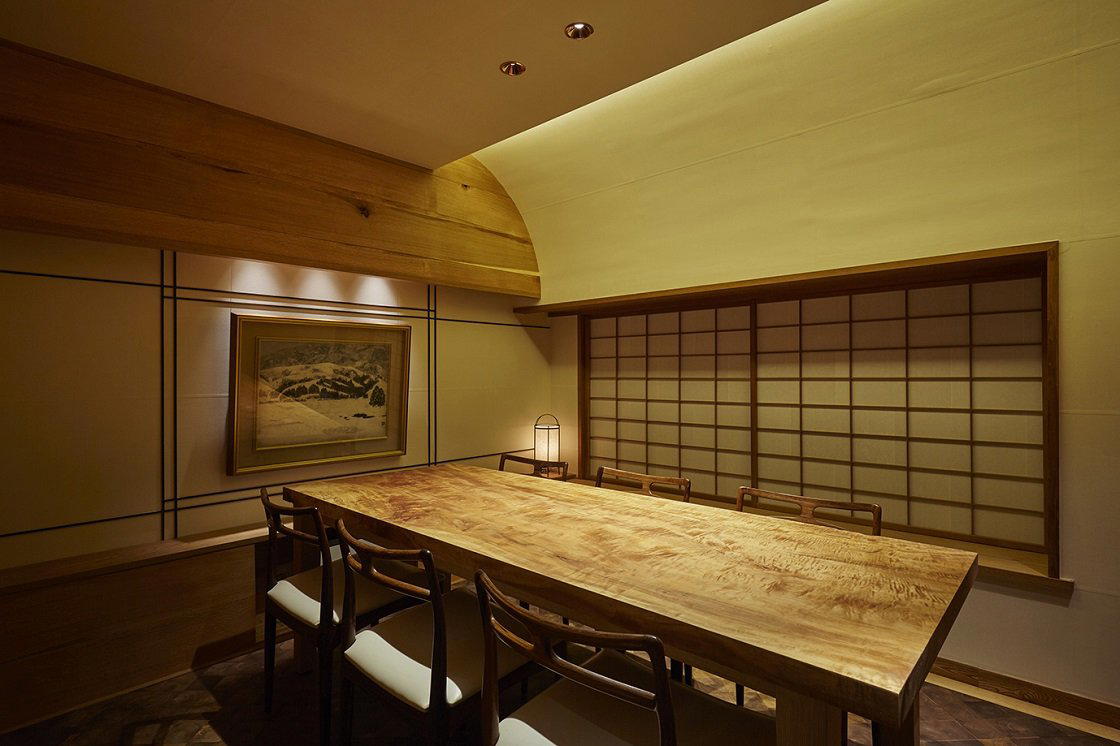
Relaxed and homey atmosphere with comfortable seating distance.