
Tabelog 100 #59
Our verdict
Kosuda compresses Osaka’s creative-dining impulse into a five-seat counter near Tenjimbashisuji Rokuchome, with reservation-only service and a 2025 Tabelog 100 selection for Innovative / Creative cuisine. The appeal is scale: a small room, a narrow audience, and a format built for diners who follow Osaka beyond takoyaki, kappo, and hotel dining rooms.

Pearl is the En Primeur Club membership app, where members save venues, book tables and use the concierge.
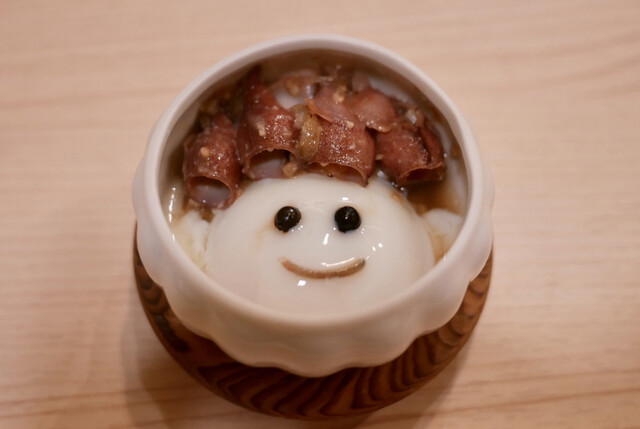
In Osaka, the restaurant is best approached with attention to its verified signals rather than assumptions about format or style. Osaka dining is often caricatured as loud, generous, and street-level, but the city also supports quieter, more focused meals. In that setting, a recognized restaurant can feel less like a single fixed performance than part of a continuing conversation between local taste, visitor curiosity, and the pace of the city.
That is the useful way to understand Kosuda. Its 2025 Tabelog Hyakumeiten recognition in the Innovative category places it in a narrow Osaka tier, apart from everyday curry shops, bakeries, and quick-service institutions. The category sets the rhythm for expectations, rewarding diners who are comfortable with a meal that may not fit a single familiar template. The useful comparison is not spectacle versus simplicity, but how a restaurant in Osaka uses focus, pacing, and restraint to distinguish itself.
Creative cooking and the Osaka dining tradition
Osaka has long made high-skill dining feel physically immediate. Specialist restaurants across the city turn proximity, repetition, and craft into part of the appeal. Innovative dining here can differ from the same label in Tokyo or Kyoto: less solemnity, more wit, compression, and quick tempo shifts. A focused creative restaurant sharpens that tendency. There is less room for vague expectations, and more value in arriving ready to follow the restaurant’s own logic.
The Tabelog category matters because “Innovative” in Japan covers a wide range of restaurants that do not sit cleanly inside one familiar genre. Kosuda’s recognition signals placement on the experimental side of Osaka dining, not simply in the city’s everyday casual circuit. For travellers mapping the city by category, that distinction is useful: a meal here belongs closer to Osaka’s contemporary creative culture than to a generic checklist of local comfort food.
The repeat-diner perspective is often the honest one in restaurants of this kind. Guests who understand the pace and accept the format on its own terms tend to read the experience differently from first-timers chasing a famous name. The reward is not breadth for its own sake; it is concentration.
For a wider Osaka food itinerary, Kosuda sits opposite casual daytime stops, bakery-led addresses, and quick-service staples. It also differs from other Osaka dining rooms that make their appeal through a clearer single-genre promise. The choice is clear: this is the Osaka booking for diners who want the city’s recognized Innovative language, not another version of comfort, speed, or genre fidelity.
How it sits against Osaka's casual and premium range
Osaka’s restaurant range can be brutally wide. Alcyon, Naminino Curry, Gunjo, and Cafe Fate occupy lower everyday price bands, where frequency and convenience drive decisions. Kuma no Yakitori 106 sits in a more premium bracket, but with yakitori’s clearer genre promise. Kosuda operates in a narrower lane: planned, Innovative dining with a Tabelog Hyakumeiten signal and a listed JPY 15,000 - JPY 19,999 dinner range. It is less useful as a spontaneous dinner than as a planned anchor for a food-focused trip.
The city rewards that planning. Osaka has a different energy from visitor corridors built around polished hotel-dining circuits, with local restaurants, shopping streets, and residential pockets shaping the context of a meal. A serious meal here feels consistent with the city, not transplanted into it. The setting is not a tourist stage set; it is part of the argument for eating here.
The format has practical implications even when the exact service details should be checked directly. Parties need to think about size, timing, and confirmation before committing. A solo diner or pair will often read a focused restaurant differently from a larger group, and small Japanese dining rooms can reward guests who understand how the evening moves. That unwritten etiquette matters: arrive prepared, do not treat the meal as background noise, and accept that the restaurant’s focus is the point.
Japan’s innovative-dining category asks travellers to loosen menu expectations. Unlike a restaurant with a widely understood grammar, or a clearly defined specialist elsewhere in Japan, the innovative label can shift course to course. That ambiguity is not a weakness in a restaurant recognized in this category; it is the premise. Diners who need a fixed signature order may find less comfort than those who enjoy a meal as a sequence of decisions.
Where Kosuda fits in a Japan dining itinerary
For travellers building a Japan trip across cities, Kosuda works as counterpoint rather than replacement for regional specialties. Other Japanese cities have their own casual formats, modern rooms, and independent restaurants, each with a different relationship to pace, restraint, and local appetite. Taken together, they show how broad Japan’s restaurant map has become beyond the usual luxury circuit.
That map explains why Osaka’s creative restaurants deserve attention. The city need not imitate Tokyo’s international polish or Kyoto’s ceremonial calm. Its stronger contemporary rooms prize immediacy, compactness, and appetite. Kosuda’s appeal comes from that local logic: a 2025 Tabelog Hyakumeiten-recognized Innovative restaurant in Osaka, with a listed score of 3.90 and a dinner range of JPY 15,000 - JPY 19,999.
Travellers extending the itinerary outside Japan can frame the decision against Japanese-influenced addresses abroad in general terms. Those places translate parts of Japanese food culture for another market. Eating in Osaka is the reverse: the context is not translated, and the diner has to meet the restaurant on its own terms.
Use the broader city guides to build around that choice: Our full Osaka restaurants guide for dining, Our full Osaka hotels guide for where to stay, Our full Osaka bars guide for after-dinner drinking, Our full Osaka wineries guide for wine-focused planning, and Our full Osaka experiences guide for cultural time around the meal. The smarter itinerary does not treat Kosuda as a standalone trophy. It places the restaurant inside a city that can move from quick casual food to creative formats in the same day, without pretending those experiences serve the same purpose.
Frequently asked questions
Where is Kosuda located?
Osaka.
Is Kosuda more mid-range or high-end?
Pricing at Kosuda is listed as JPY 15,000 - JPY 19,999.
What's the best way to book Kosuda?
For booking, check the venue's official channels or current listing information before planning a visit. With a JPY 15,000 - JPY 19,999 dinner range, advance coordination is the sensible approach.
What's the defining dish or idea at Kosuda?
The defining idea is the restaurant’s Innovative designation, supported by its 2025 Tabelog Hyakumeiten recognition. In Osaka, that category is the clearest verified signal: this is a focused listing rather than a broad everyday dining recommendation.
Can Kosuda adjust for dietary needs?
Those details are not published. That matters at Kosuda because it is listed in the JPY 15,000 - JPY 19,999 range, where advance coordination is the sensible approach. Check the venue's official channels for the latest details.
Where the Accolades Land
Side-by-side context: comparable cuisine and price.
| Venue | Cuisine | Price | Awards | Notes |
|---|---|---|---|---|
| KosudaThis venue (the venue you are viewing) | Innovative Japanese Omakase Counter | $100–150 | Tabelog 100 #59 | Not listed |
| Makisumi Madara | Creative wood & charcoal Japanese-Italian with yakitori focus | $50–100 | Tabelog 100 #27 | Kita |
| Think Shokudo | Creative multi-national vegetable-focused diner | $20–30 | Tabelog 100 #97 | Kita |
| Wine Chan Kawara Machi Roji | Yoshoku wine bistro with signature hamburger steak | $50–100 | Tabelog 100 #75 | Chūō |
| STUN.S | Innovative Japanese | $30–50 | Tabelog 100 #68 | Miyakojima |
| Katsuya charcoal grill steakhouse | Charcoal Grill Steakhouse | $100–150 | Tabelog 100 #88 | Kita |
Recognition history
Dated appearances from independent guides and award organizations, with the underlying list record or original source where available.
Tabelog 100 #59 · No. 59
Tabelog · Tabelog 100 - Innovative / Creative cuisine - 2025
Continue exploring
More in Osaka
Restaurants in Osaka
All restaurants in Osaka →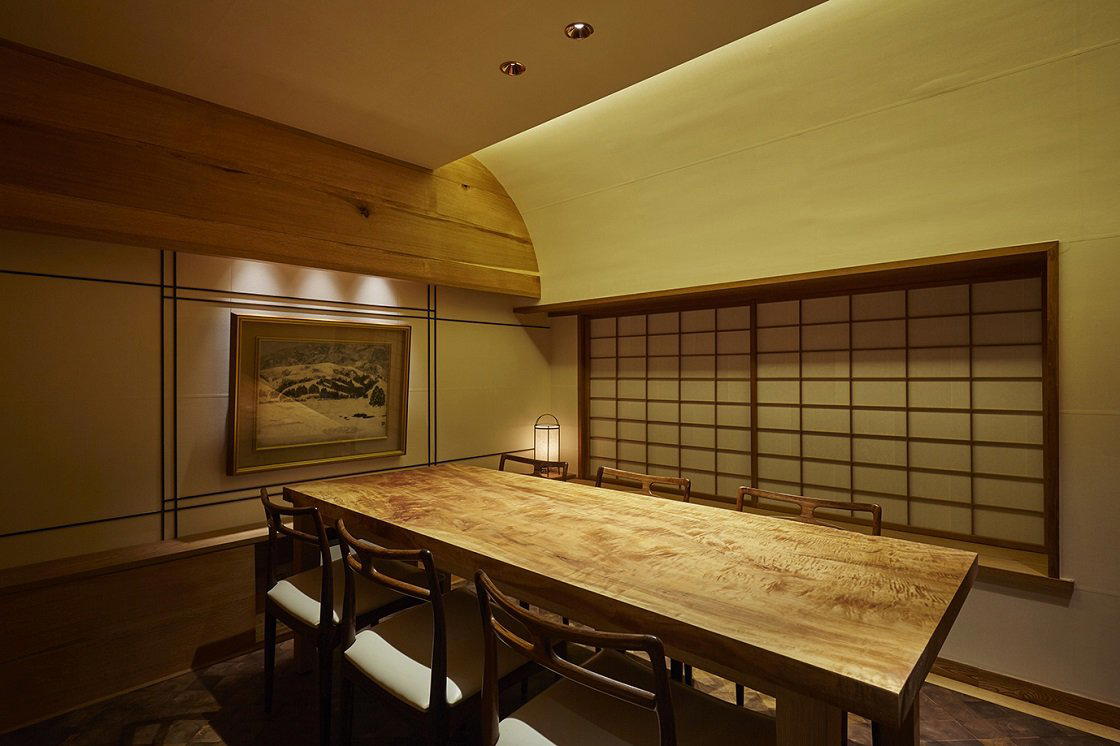

Bars in Osaka
All bars in Osaka →
Hotels in Osaka
All hotels in Osaka →

Wineries in Osaka
Browse all →
Details
- Intimate
- Cozy
- Modern
- Date Night
- Special Occasion
- Celebration
- Solo
- Business Dinner
- Private Event
- Chefs Counter
- Private Dining
- Standalone
- Design Destination
- Sake Program
- Tasting Menu
- Omakase
- Counter Dining
- Set Menu
- Sake
- Wine
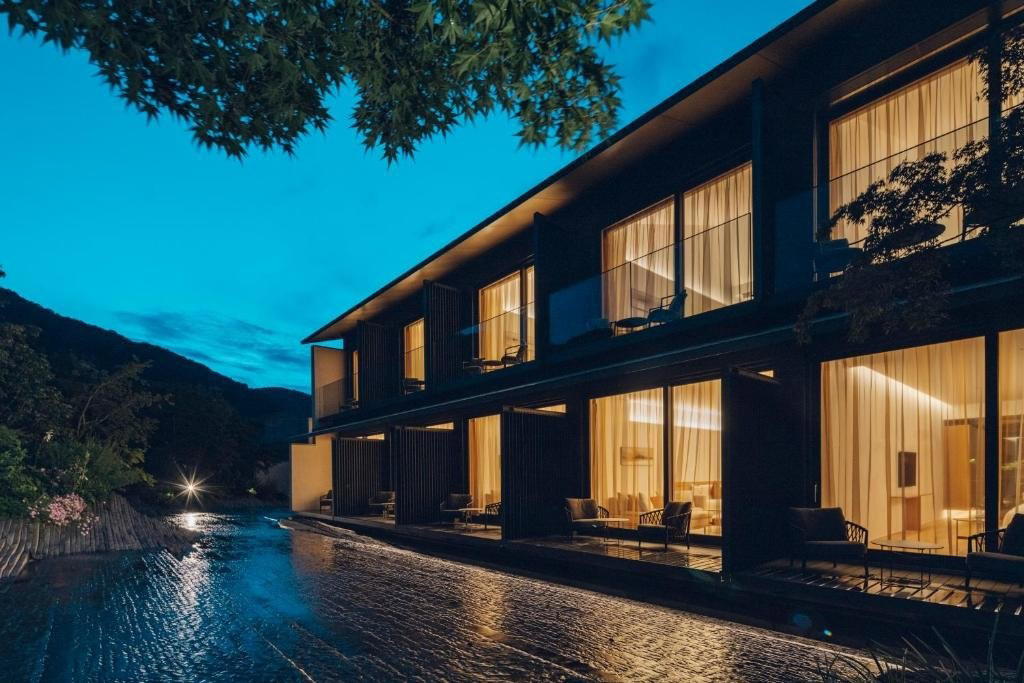
An intimate, reservation-only counter with just five seats, non-smoking and quietly tucked away on the second floor, creating a cozy yet modern atmosphere suited to focused, course-style dining rather than casual traffic.