Tabelog 100 #68
Our verdict
STUN.S belongs to Osaka’s compact creative-dining tier, where room design, counter proximity, and a flexible drinks culture matter as much as category labels. Its selection for Tabelog 100 Innovative / Creative Cuisine 2025 gives it a useful external signal, while the Kyobashi setting places it outside the city’s more predictable luxury dining circuits.

Pearl is the En Primeur Club membership app, where members save venues, book tables and use the concierge.
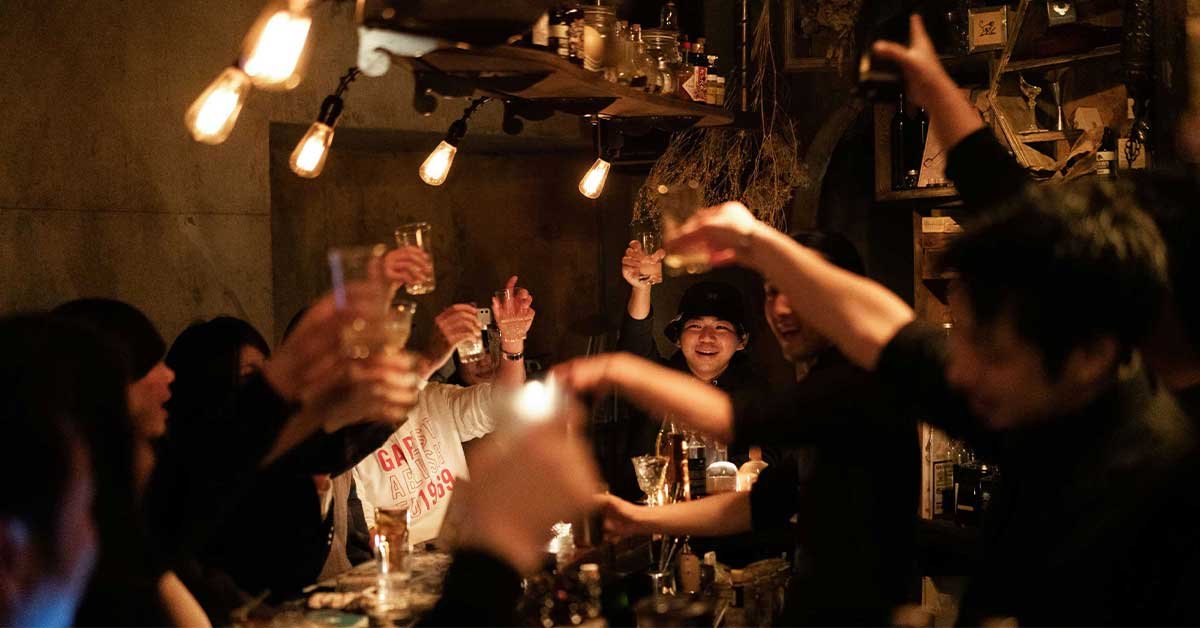
Osaka changes tempo quickly: commuter energy, side-street drinking rooms, then dining rooms where the setting starts doing editorial work before the menu. Osaka’s creative restaurants often read differently from Tokyo’s polished tasting-menu circuit: more conversational, and comfortable with the overlap between informal rhythm, drinks-led looseness, and ambitious cooking. STUN.S fits that Osaka pattern as an Innovative venue: the meal is framed less by grand arrival theatre than by the city’s appetite for direct, flexible dining.
That matters because innovative cooking in Osaka can become an abstract label. In practice, it spans formal dining rooms, counter formats, and drinks lists crossing Japanese and Western habits across the city. The useful question is not whether a restaurant calls itself innovative, but whether the experience supports that cooking. Here, the available external signals point to an Osaka restaurant positioned around that category. For diners used to fine dining’s discreet rituals, this is better read through Osaka’s dining culture: less ceremonial, more spatially direct.
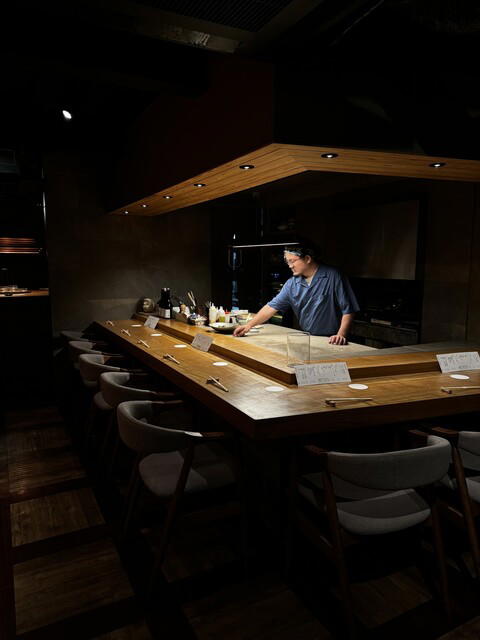
A compact Osaka room built for counter-led innovative cooking
The design signal to look for is not architectural spectacle, but how the room supports the evening. In a city where serious meals often happen behind plain doors and in modest-feeling settings, atmosphere can be a practical advantage. Innovative cuisine is read through pacing, plating, glassware, conversation, and the rhythm of service, not only through a sequence of dishes. When the setting keeps those elements close to the diner, the mood shifts again: less hushed temple of technique, more grown-up Osaka dining with a sharper sense of purpose.
The Tabelog Hyakumeiten 2025 selection for the Innovative category places STUN.S inside a broader conversation, not just a local one. That recognition is useful because Osaka’s dining identity is often flattened into takoyaki, okonomiyaki, kushikatsu, and big-market seafood. Those foods remain central, but they do not explain its more ambitious Innovative venues. The more interesting Osaka split is between high-volume street-level appetite and restaurants that borrow the city’s informality while tightening the cooking. Here, the category becomes more than a label: it sets the meal’s terms.
Compared with Sushidokoro Hirokawa, where sushi gives diners a clearer script, innovative dining asks for more trust in format. Compared with Izakaya Toyo, whose appeal is street-level theatre and price-accessible energy, this sits in a more composed evening bracket. Washington Shokudo occupies another lane entirely, closer to everyday city feeding than destination-led dining. Osaka rewards precision in choosing the right kind of night: not every serious meal needs white tablecloth discipline, and not every casual room is loose in its cooking.
Flexible pacing points to Osaka's hybrid dining culture
The category signal is Innovative, and the broader dining signal is hybrid rather than doctrinaire. That says much about contemporary Osaka dining. The city does not require ambitious cooking to abandon local ease, or treat formality as the only marker of seriousness. A table can move through a meal with structure, appetite, and conversation without forcing the evening into a single imported grammar.
The surrounding Osaka context matters again. In larger restaurants, ambition can sometimes feel like inventory. In more focused Innovative dining, it becomes choices around pace and temperature: what opens the appetite, carries the evening, and lets the table loosen without losing focus. That is the Osaka advantage when handled well. The city’s hospitality culture is comfortable with appetite, drinking, conversation, and craft occupying the same space.
For a wider map of the city’s dining range, Our full Osaka restaurants guide sets the frame. The contrast is useful: other Osaka dining rooms show the daytime, casual, local-craving, imported-form, and European registers that sit alongside more destination-led meals. Together, they show why an Osaka Innovative venue is not an outlier but part of a city keeping multiple dining tempos in motion.
Who should put this on an Osaka dining itinerary
This is stronger for travellers who already understand that Osaka’s serious food culture is not confined to luxury districts. Osaka is not a blank postcard city; it is a working dining environment with station gravity, after-work drinking, and restaurants that reward diners who do not need every cue translated into ceremony. The better use case is an evening built around Innovative dining in Osaka, not a search for formal fine-dining choreography.
The value proposition differs from the city’s blowout sushi and kappo meals. A Tabelog score of 3.64, a dinner budget of JPY 4,000 - JPY 4,999, and a 2025 Hyakumeiten selection give credible external validation, but the appeal is not trophy collecting. It is the alignment of category, price bracket, and city: Innovative cooking in Osaka, with the format and pacing doing the heavy lifting.
Planning Osaka well means thinking beyond restaurants alone. Our full Osaka hotels guide helps with base selection, while Our full Osaka bars guide, Our full Osaka wineries guide, and Our full Osaka experiences guide fill in the evening. For readers comparing Japanese dining across cities, the broader archive ranges across many unnamed dining rooms in Japan and abroad. The wider point remains: Japanese dining travels widely, but rooms like this make the Osaka version legible through category, scale, and pace.
Frequently asked questions
What's the address for STUN.S?
Osaka.
Is STUN.S more mid-range or high-end?
Pricing at STUN.S is listed as JPY 4,000 - JPY 4,999.
Should I book STUN.S in advance?
Yes. STUN.S has a Tabelog Hyakumeiten selection for 2025 in the Innovative category, so advance planning is sensible, especially for dinner in Osaka.
What is STUN.S known for?
STUN.S is known as an Innovative venue in Osaka, with a 2025 Tabelog Hyakumeiten selection and a listed score of 3.64.
In Context: Similar Options
Comparable venues side-by-side for orientation.
| Venue | Cuisine | Price | Awards | Notes |
|---|---|---|---|---|
| STUN.SThis venue (the venue you are viewing) | Innovative Japanese | $30–50 | Tabelog 100 #68 | Not listed |
| Meganeya | Creative Yoshoku & Wine Bar | $30–50 | Tabelog 100 #71 | Yodogawa |
| Chaos Spice Diner Yotsubashi amerikamura ten | Spice curry & Asian fusion dining bar | $10–20 | Tabelog 100 #14 | Nishi |
| Yuni yumo | Modern Japanese Izakaya Counter | $30–50 | Tabelog 100 #17 | Kita |
| Ganesh m Kitahama ten | Specialty Japanese curry house with global curry influences | $10–20 | Tabelog 100 #77 | Chūō |
| Hiraoka Coffee Ten | Dining | Not listed | Tabelog 100 #43 | Chūō |
Recognition history
Dated appearances from independent guides and award organizations, with the underlying list record or original source where available.
Tabelog 100 #68 · No. 68
Tabelog · Tabelog 100 - Innovative / Creative cuisine - 2025