Kopitiam by Chandy's

On Al Falah Street, one of Abu Dhabi's older commercial corridors, Kopitiam by Chandy's brings Malaysian kopitiam culture to the Gulf at a price point, marked $, that sits well below the city's Michelin-recognised dining average. A 2025 Michelin Plate signals kitchen discipline that the. For Malaysian food in Abu Dhabi, there is no comparable alternative at this tier.
Pearl is the En Primeur Club membership app — saves, bookings, and concierge access live there. Same editors, same standards.
- Address
- Al Falah Street - Old Pasport Rd - Zone 1 - Abu Dhabi - United Arab Emirates
- Phone
- +971 50 234 7278
- Directions
- Get directions
 Saves & bookings on Pearl
Al Falah Street and the Case for Kopitiam Culture
Al Falah Street, running through Abu Dhabi's older passport-road quarter, has long operated as a counterweight to the city's hotel-lobby dining circuit. The street's commercial character, independent shopfronts, working-neighbourhood foot traffic, a pace set by residents rather than tourists, is precisely the environment in which a kopitiam belongs. The kopitiam, a Malay-Chinese coffeehouse tradition rooted in the Straits Settlements of the nineteenth century, was never designed for grand dining rooms. It was designed for marble-topped tables, condensed-milk coffee, and food that arrives fast and costs little. Kopitiam by Chandy's, earning a 2025 Michelin Plate on that same street, is Abu Dhabi's clearest expression of that tradition translated outside Southeast Asia.
The Michelin Plate designation matters here as a calibration tool rather than a prestige badge. Where a star signals controlled technique, the Plate recognises kitchens producing consistently good food, a distinction that fits the kopitiam format well. Abu Dhabi's Michelin-recognised restaurants span a wide range: Talea by Antonio Guida operates at the $$$$-starred end of Italian fine dining, while Hakkasan anchors premium Cantonese at the same price tier. Kopitiam by Chandy's receives its recognition at the $ tier, a point the guide rarely reaches in Abu Dhabi's submission pool, which makes the inclusion a stronger editorial statement than it might first appear.
The Ritual of the Kopitiam Meal
Understanding how to eat at a kopitiam is as important as knowing what to order. The format is not structured around courses or pacing directed by a front-of-house team. Drinks arrive early and anchor the table: kopi (coffee brewed with a cotton sock filter, often sweetened with condensed milk or evaporated milk depending on the order specification) or teh (tea prepared by the same method) sets the tone before food appears. In Malaysian tradition, the beverage order is often the first social act of the meal, the way a diner signals whether they know the register.
Food in a kopitiam arrives when it is ready, not in a choreographed sequence. Toast with kaya (coconut jam) and soft-boiled eggs with soy sauce and white pepper is a standard anchor, eaten at any hour. Noodle dishes, whether curry mee, char kway teow, or pan mee, sit alongside rice plates and occasional hawker-style specials. The expectation is abundance at low cost, shared across the table without formality. At Kopitiam by Chandy's, that framework translates to Abu Dhabi's working-lunch and early-dinner rhythms, where the $ price point makes multiple dishes per person the default rather than the exception.
7 across 708 reviews is a signal worth reading carefully in this context. High-volume, low-price restaurants accumulate reviews at a different rate than fine-dining counters, and maintaining 4.8 at that volume points to consistent execution rather than occasional brilliance. In Abu Dhabi's dining scene, where LPM and Erth occupy a different price tier and a different mode of hospitality entirely, Kopitiam by Chandy's has built its reputation through repetition and reliability, the kopitiam's core promise.
Malaysian Food in the Gulf: A Thin Category
Malaysian cuisine occupies a small footprint in the Gulf's restaurant ecosystem. The food's complexity, it draws on Malay, Chinese, Indian, and Peranakan traditions simultaneously, with regional variation across Penang, Kuala Lumpur, and the east coast, makes it difficult to replicate without sourcing infrastructure and a kitchen team that understands the layered spice architecture. In Kuala Lumpur, restaurants like Dewakan and Beta push Malaysian technique into fine-dining territory, while more traditional expressions continue at places like Ah Hei Bak Kut Teh, Akar, and Anak Baba. Beyond Southeast Asia, Malaysian restaurants remain scarce: Azalina's in San Francisco and Bee See Heong in Seberang Perai represent the diaspora in different ways. In the Gulf specifically, the category is thin enough that restaurant functions not just as a restaurant but as a reference point for what Malaysian food in Abu Dhabi looks like.
The comparison set in Abu Dhabi's affordable dining tier includes Emirati options and Lebanese and Mediterranean tables at the $-$$ range. Malaysian falls outside those regional traditions entirely, which means the restaurant operates with limited direct competition locally. That absence of competition within its category does not explain the Michelin recognition, the Plate is awarded on kitchen merit, not category scarcity, but it does explain why the restaurant carries outsized cultural weight for Abu Dhabi's Malaysian and Southeast Asian resident community.
Positioning Within Abu Dhabi's Dining Scene
Abu Dhabi's restaurant scene has matured in a particular direction: high-end hotel dining and ambitious standalone fine-dining have captured most of the critical attention, while the city's affordable independent sector remains less documented internationally. The Michelin Guide's inclusion of a $ kopitiam in its Abu Dhabi selection signals an attempt to map that full range. For diners who know the city primarily through its hotel-corridor restaurants or its high-design beachfront properties, Al Falah Street represents a different register entirely. The neighbourhood has more in common with the older commercial districts of Southeast Asian cities, shophouses, independent traders, a density of working life, than with the glass towers of the Corniche.
That context shapes how the restaurant should be approached. It is not a destination in the way that a Michelin-starred counter demands a reserved evening. It is a meal that fits into the rhythm of the neighbourhood: arrive without ceremony, order generously at the $ price point, linger over kopi. For visitors building a broader Abu Dhabi itinerary, the restaurant anchors a different kind of afternoon than Marmellata Bakery or the hotel-anchored tables. Those exploring the city's dining range more broadly can start with our full Abu Dhabi restaurants guide, while travellers planning around accommodation or evening programming will find relevant context in our Abu Dhabi hotels guide, bars guide, and experiences guide.
For those tracking how Southeast Asian food travels globally, the comparison with something like Trèsind Studio in Dubai, which applies fine-dining technique to South Asian traditions, is instructive. Both represent a category of cuisine that earns Michelin recognition outside its home geography, but through entirely different methods. Trèsind operates through innovation and reinterpretation. The restaurant earns its recognition through fidelity: the kopitiam form, delivered with the discipline the Plate requires, on a street that fits the tradition's original context better than most of the city could.
Planning Your Visit
The restaurant sits on Al Falah Street in Abu Dhabi's Zone 1, on the Old Passport Road corridor, an area accessible by taxi or rideshare from the city centre without difficulty. The $ price point means a full table order, including drinks, remains well under the cost of a single course at the city's fine-dining tier. Reservations are recommended, and the restaurant is open Monday, Wednesday through Sunday from 11 AM to 11 PM; Tuesday is closed. The Abu Dhabi wineries guide covers beverage-focused experiences for those building a wider evening itinerary.
A Tight Comparison
Comparable venues nearby, for context on price, style, and recognition.
| Venue | Cuisine | Price | Notes |
|---|---|---|---|
| Kopitiam by Chandy'sThis venue — the venue you are viewing | Malaysian | $$ | Not listed |
| Tean | Al Saadiyat Island, Modern Levantine | $$$ | Not listed |
| terra | Al Maqtaa, Traditional Italian Trattoria | $$$ | Not listed |
| Oii | Al Maqtaa, Modern Mediterranean | $$ | Not listed |
| Antonia | Not listed | $$$ | Al Saadiyat Island, Authentic Italian Trattoria |
| Li Beirut | Al Bateen, Contemporary Lebanese | $$$ | Not listed |
Recognition history
Dated appearances from independent guides and award organizations, with the underlying list record or original source where available.
Michelin Plate
Michelin
Continue exploring
More in Abu Dhabi
Restaurants in Abu Dhabi
Browse all →
Bars in Abu Dhabi
Browse all →

At a Glance
- Cozy
- Family
- Casual Hangout
- Open Kitchen
Current opening hours
- Monday
- 11 AM–11 PM
- Tuesday
- Closed
- Wednesday
- 11 AM–11 PM
- Thursday
- 11 AM–11 PM
- Friday
- 11 AM–11 PM
- Saturday
- 11 AM–11 PM
- Sunday
- 11 AM–11 PM
Hours can change for holidays and private events. Last verified .
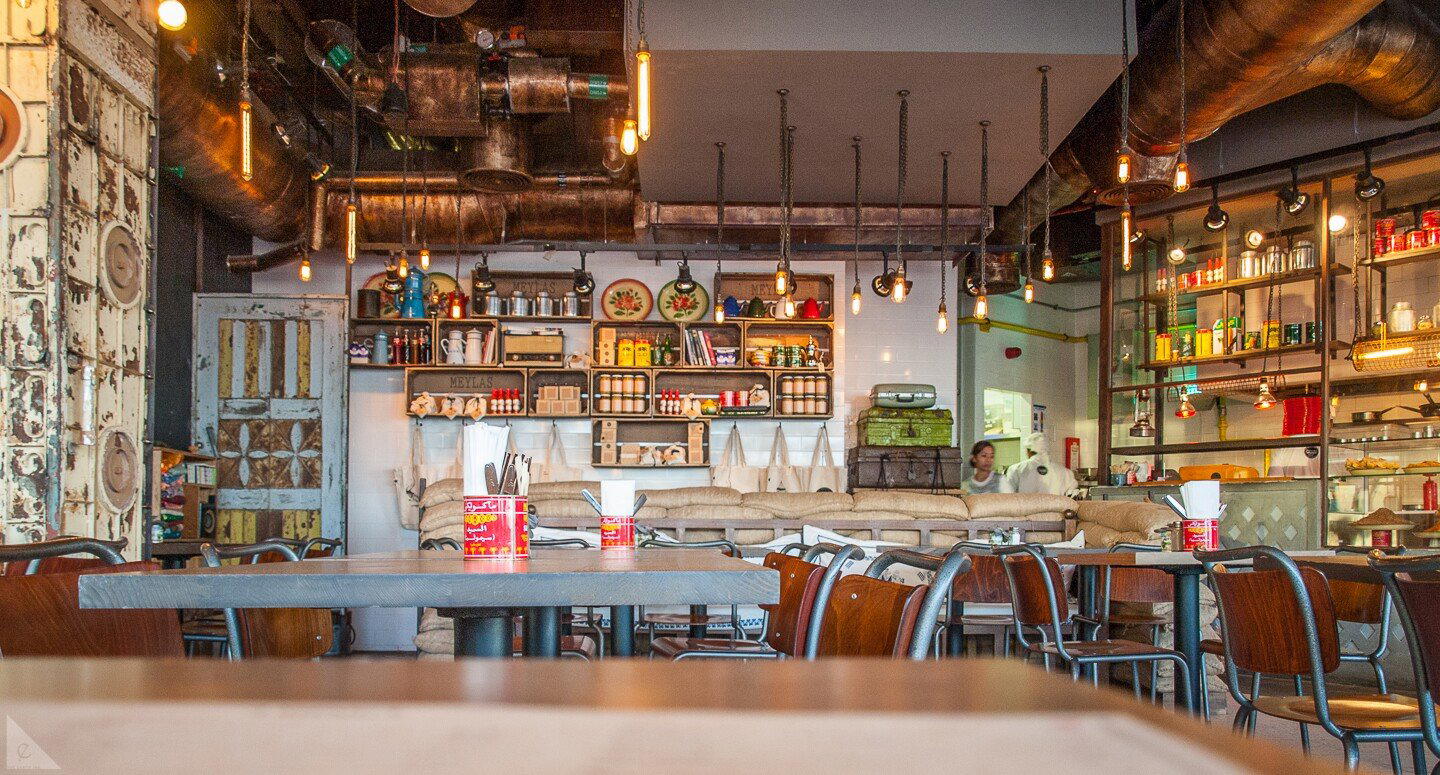
Cozy, homely atmosphere with Malaysian charm, clean and spotless with warm hospitality.