Konoba Perast
On the waterfront of one of the Adriatic's most preserved Baroque villages, Konoba Perast sits inside the konoba tradition that has shaped Montenegrin coastal dining for generations. The emphasis is on what the Bay of Kotor itself provides: seafood drawn from waters a short distance from the table, prepared in the regional style that prioritises the ingredient over the technique. For visitors making their way along the Bay, it represents a direct encounter with that tradition.
Pearl is the En Primeur Club membership app — saves, bookings, and concierge access live there. Same editors, same standards.
- Address
- Perast, Montenegro
- Directions
- Get directions
 Saves & bookings on Pearl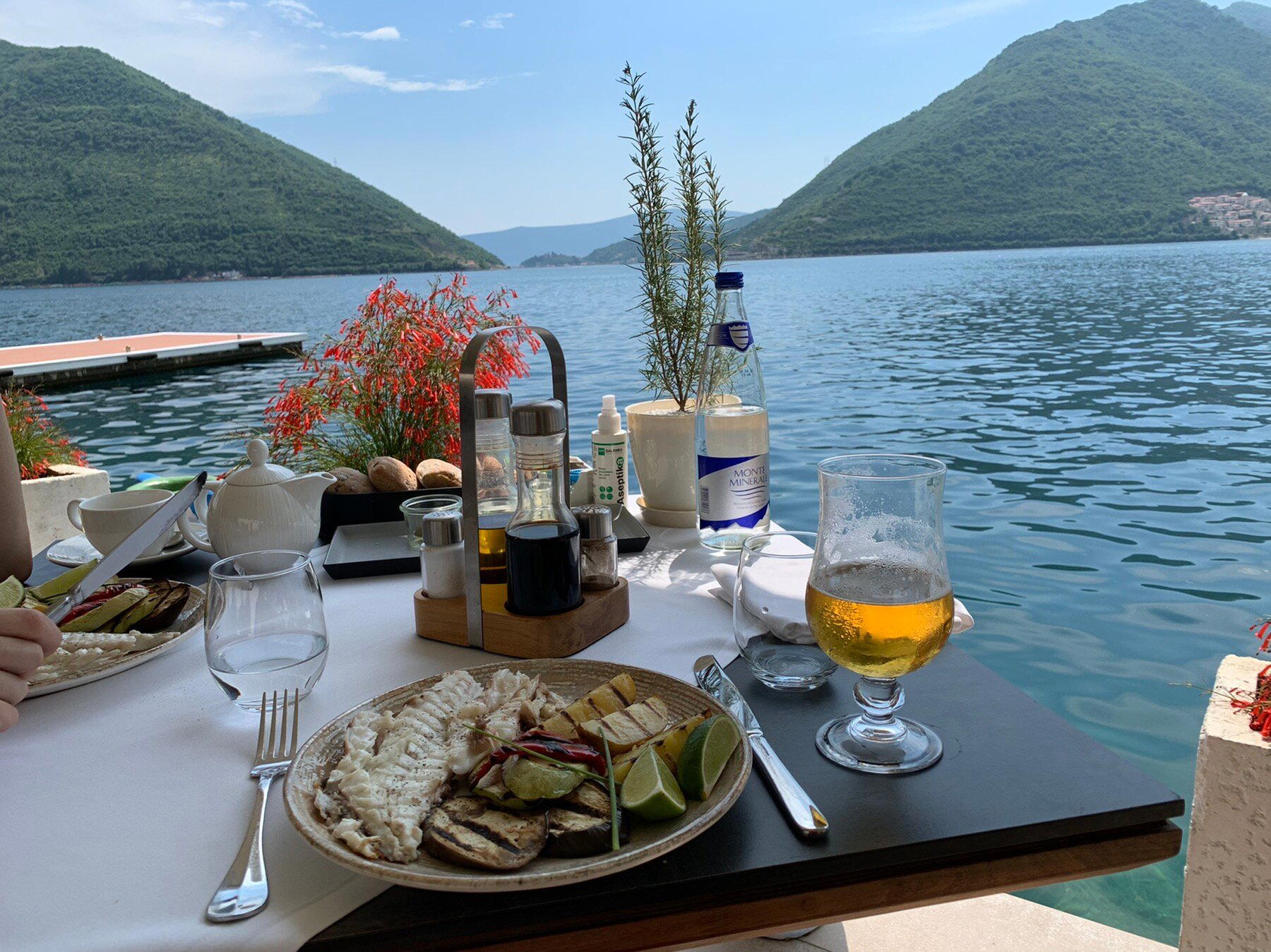
Where the Bay Sets the Menu
Perast occupies a stretch of the Bay of Kotor so narrow and so still that the water reads more like a lake than an inlet of the Adriatic. The village itself is compact enough to cross on foot in minutes, and the waterfront that runs along it is lined with the kind of stone buildings that have resisted both time and renovation. Approaching a konoba on that promenade, the sensory cues are consistent: a breeze off the water, the light shifting on the surface of the bay, and the smell of wood smoke and brine that defines cooking in this region. Konoba Perast is a restaurant in Perast, Montenegro, serving Montenegrin Seafood & Grill at about $25 per person. It belongs to this physical and culinary context before it belongs to any individual identity.
The konoba format across Montenegro's coast is not a restaurant category in the way that word functions in Western Europe. It is a specific cultural institution: a family-run dining room, typically in a stone building, where the menu reflects what was caught or grown locally rather than what a chef has decided to cook. The form has persisted across the entire Montenegrin littoral, from the Boka Kotorska to the open coast further south, and in villages like Perast it remains the dominant dining structure. Konoba Perast, as the name directly signals, positions itself inside that tradition.
The Bay as Larder
The Bay of Kotor operates as among the more productive marine environments in the eastern Adriatic. Its enclosed shape, the freshwater inflows from the Karst springs beneath the surface, and the relative absence of heavy commercial fishing inside its inner reaches combine to produce shellfish and fin fish of notable quality. The mussels and oysters farmed in the bay have a specific character shaped by those brackish, cool conditions, and they sit at the centre of the region's seafood tradition. Any konoba working within the bay's culinary logic sources from this immediate geography. Pescatore Oysters & Mussels Farm, operating in the same bay, illustrates how closely the region's dining and its aquaculture are linked.
Ingredient sourcing logic that defines konoba cooking in this region is worth understanding clearly. The dishes that appear on a table here are the product of what the bay and the local hinterland yield in a given season. They are the product of what the bay and the local hinterland yield in a given season. That means the menu shifts with the water temperature, the catch, and the season. In autumn and winter, certain shellfish are at their most productive. In summer, fin fish dominate. The cook's role in this tradition is primarily one of restraint: to apply heat, olive oil, herbs, and time without obscuring the quality of what arrived that morning.
Across the broader Montenegrin coast, kitchens that maintain this discipline represent the serious end of the dining spectrum. Restaurants that drift toward generic Adriatic tourist menus, frozen imports, and year-round consistency sacrifice the specificity that makes coastal Montenegrin food worth eating in the first place. The konoba format, when working as intended, resists that drift by keeping its identity tied to place and season rather than market positioning.
Perast in Its Regional Context
Within the Bay of Kotor dining scene, Perast occupies a particular niche. It is smaller and quieter than Kotor itself, where restaurants like Bastion 1 in Kotor and Dalmatinska Konoba Cesarica operate within a more established and competitive dining environment. Perast attracts visitors primarily because of its architectural coherence and the two small islands visible from its waterfront, and its dining scene is correspondingly focused and unhurried. A konoba here competes less on refinement or range and more on directness: the proximity between what the bay produces and what arrives at the table.
Further along the Montenegrin coast, kitchens at Sabia in Kumbor and Porto in Podgorica operate in registers that are more urban and more formal. The contrast is instructive: what Perast offers is the village-scale, water-adjacent version of the same regional culinary tradition. The setting is doing a significant portion of the work, and that is not a criticism. It is an acknowledgment that in places like this, the setting, the sourcing, and the simplicity are the product.
For those tracking the range of coastal Adriatic seafood traditions across a broader journey, the comparison with places like Quattro Passi in Marina del Cantone on the Italian side of the Adriatic is useful. The underlying philosophy of letting marine ingredients carry the weight of the dish, minimal intervention, local sourcing, is consistent. What differs is the specific character of the ingredient, shaped by a different sea, a different microclimate, and a different farming tradition.
Planning a Visit
Perast is accessible by road along the bay from Kotor, roughly twenty minutes by car. The village has no large car parks, and in peak summer months the waterfront fills early. Arriving by water taxi from Kotor is a practical and more atmospheric option that avoids the question of parking entirely. Most konoba operations in the village work on a walk-in basis rather than formal advance reservations, though this can vary, and arriving at the shoulder of the lunch or dinner service, before the peak period, typically yields a better experience. The summer season runs from June through September, when tourist volume is highest and the waterfront operates at full capacity. The bay months of May and October carry lower footfall and, for seafood specifically, conditions that many local cooks consider more productive than midsummer.
The Konoba Tradition Beyond Perast
The konoba format is not distinctive to Perast or to Montenegro. It shares its logic with the konoba tradition of the Croatian coast, with the rough taverna formats of the Greek islands, and with the trattoria di pesce of the Italian coast. What these forms share is a resistance to abstraction: the food points directly at its source, and the cooking does not intervene beyond what is necessary. Serious seafood restaurants internationally, from Le Bernardin in New York City to the ingredient-led approach at Atelier Moessmer Norbert Niederkofler in Brunico, apply the same underlying principle at higher levels of technical sophistication. The konoba version of that principle is its village-scale, pre-formal expression: the same respect for the ingredient, without the Michelin architecture around it.
That lineage matters when evaluating what a place like Konoba Perast is doing. It is not trying to be something it is not. It is working within a form that the bay and the village have sustained for generations, and the value it offers is precisely that continuity. Visitors arriving with that frame in place will find the experience coherent. Those expecting the range and execution of a contemporary seafood restaurant will be reading it incorrectly.
Quick Comparison
Comparable venues nearby, for context on price, style, and recognition.
| Venue | Cuisine | Price | Notes |
|---|---|---|---|
| Konoba PerastThis venue — the venue you are viewing | Montenegrin Seafood & Grill | $$ | Not listed |
| Pescatore Oysters & Mussels Farm | Fresh Oysters & Mussels from Bay Farm | $$ | Perast |
| NOA | Modern Montenegrin-Mediterranean | $$$ | Enovče |
| Mamula | Mediterranean Fine Dining with Crudo Focus | $$$$ | Herceg Novi |
| Kod Iva | Seafood & Mediterranean | $$ | Budva |
| Restobar Štrudla | Montenegrin-European Fusion | $$ | Center of the town |
Continue exploring
More in Perast
Restaurants in Perast
Browse all →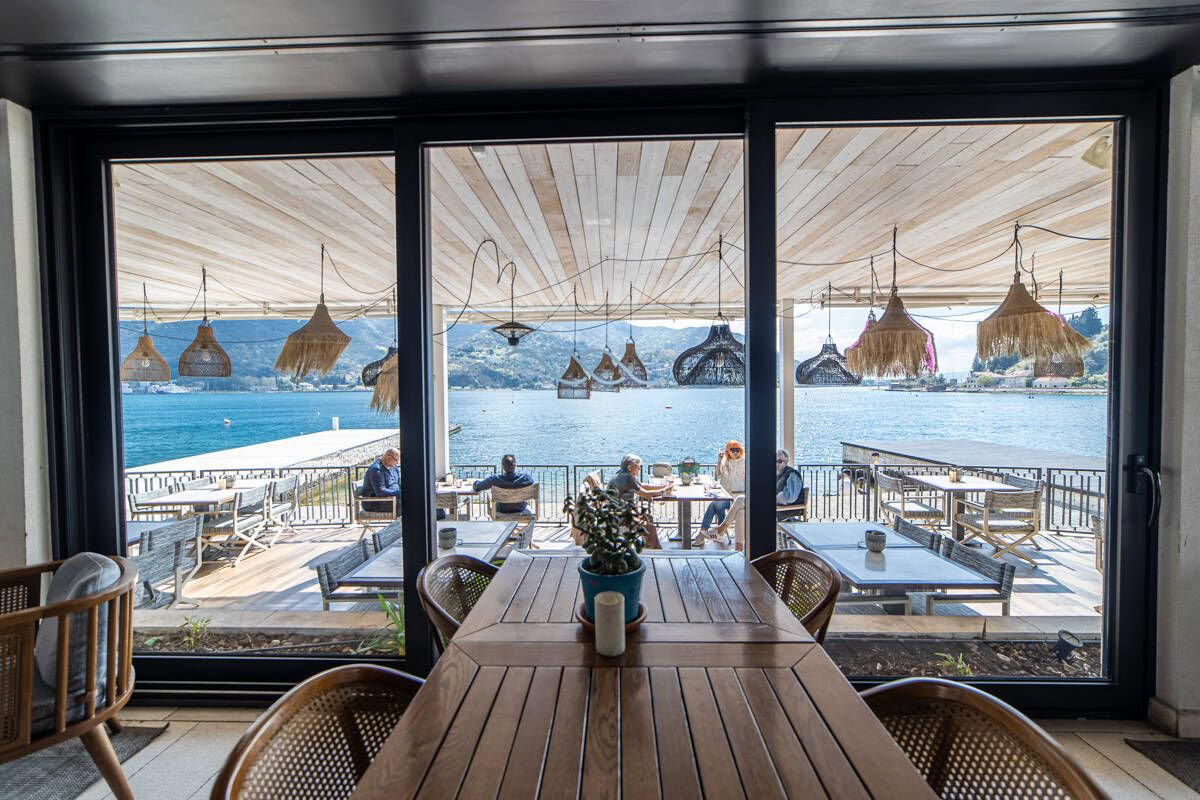
Bars in Perast
Browse all →

Hotels in Perast
Browse all →

Wineries in Perast
Browse all →
At a Glance
- Rustic
- Scenic
- Casual Hangout
- Family
- Terrace
- Local Sourcing
- Waterfront
Current opening hours
- Monday
- 12–10 PM
- Tuesday
- 12–10 PM
- Wednesday
- 12–10 PM
- Thursday
- 12–10 PM
- Friday
- 12–10 PM
- Saturday
- 12–10 PM
- Sunday
- 12–10 PM
Hours can change for holidays and private events. Last verified .
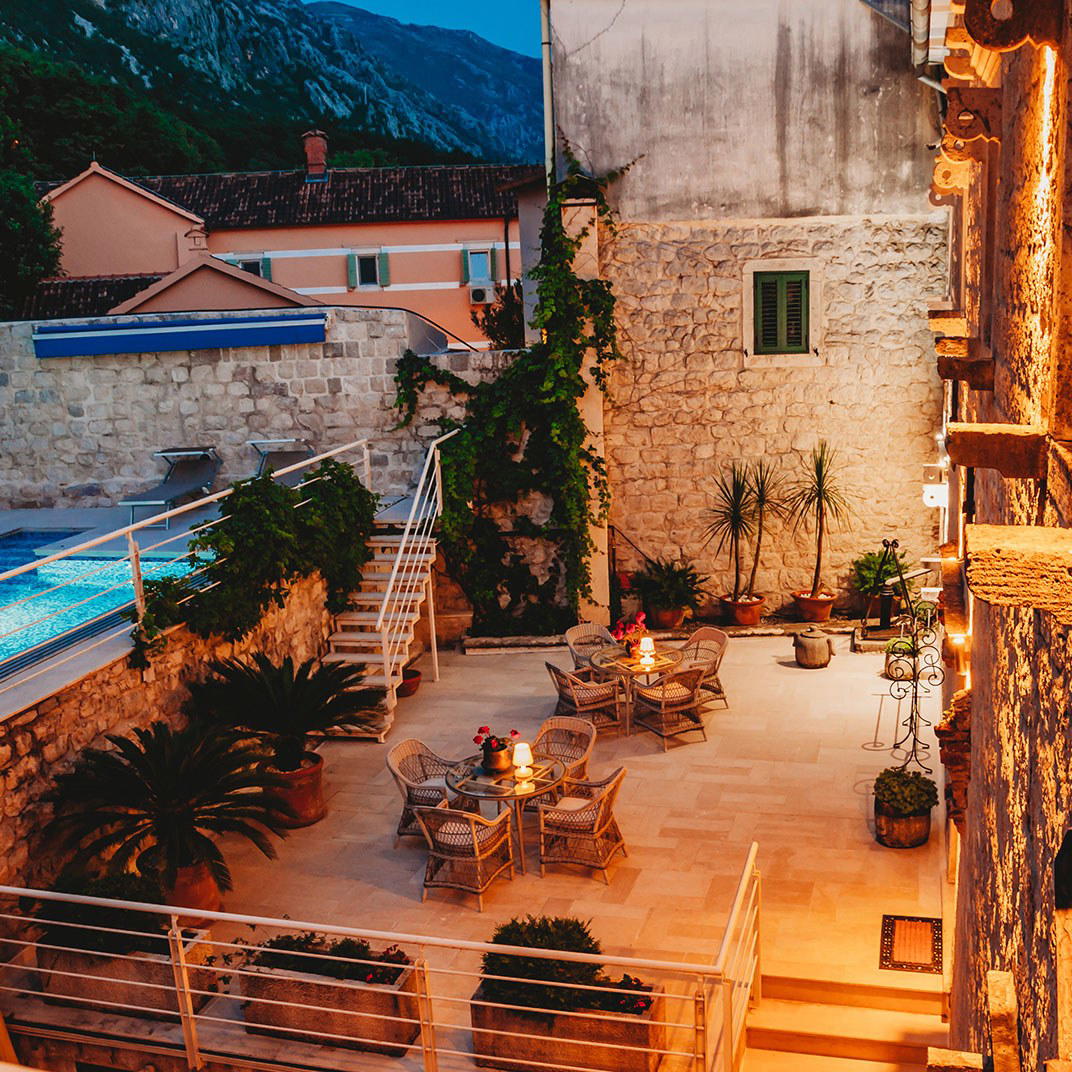
Rustic and charming with a cool covered patio ideal for leisurely summer lunches overlooking the bay.