Pescatore Oysters & Mussels Farm
On the waterfront edge of Perast, Pescatore operates as a working oyster and mussel farm on the Bay of Kotor, one of the Adriatic's most sheltered bivalve-growing environments. The farm sits where Montenegro's aquaculture tradition meets direct-to-table eating: shellfish pulled from the bay and served as close to the source as the geography allows. For anyone tracing the Adriatic coast's seafood provenance, this is a logical stop on the Montenegrin Riviera.
Pearl is the En Primeur Club membership app — saves, bookings, and concierge access live there. Same editors, same standards.
- Address
- Uzgajalište "PESCATORE, Perast 85330, Montenegro
- Phone
- +382 69 447 508
- Website
- instagram.com
- Directions
- Get directions
 Saves & bookings on Pearl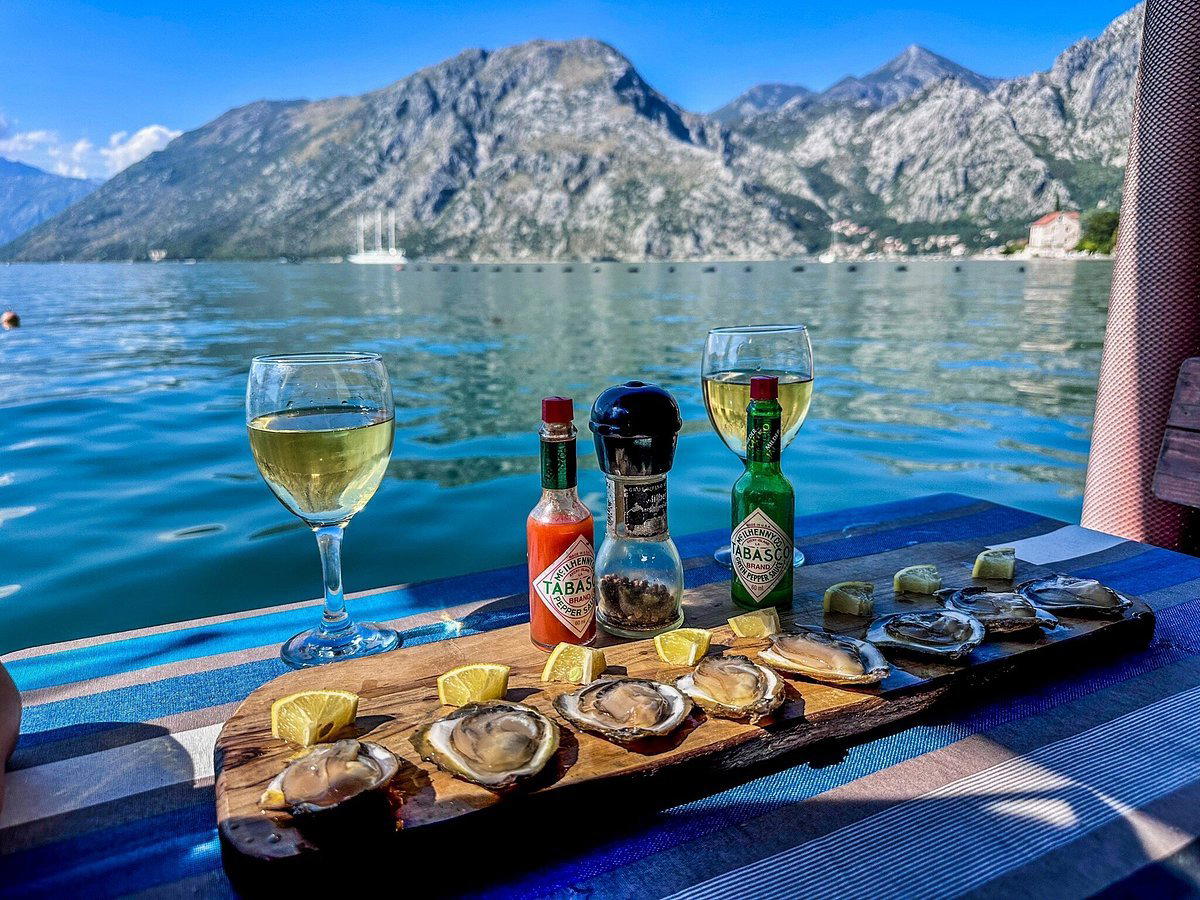
Where the Bay Grows the Meal
The Bay of Kotor is not a conventional restaurant setting. The water here is deep, cold in its lower layers, and partially enclosed by the Vrmac and Orjen mountain ridges, which help keep the currents slow and the salinity stable through most of the year. Those conditions, shaped by centuries of Adriatic geography rather than by any culinary trend, make the inner bay one of the more productive shellfish-growing environments in the eastern Mediterranean. Pescatore Oysters & Mussels Farm sits on the Perast waterfront at the heart of that environment, and the proposition is a direct one: the shellfish in front of you grew in the water you are looking at.
Pescatore removes the usual distance between claim and evidence. The sourcing argument is settled by geography alone.
The Aquaculture Tradition of the Inner Bay
Mussel and oyster farming in the Bay of Kotor has local roots that predate any contemporary interest in sustainable seafood. The bay's enclosed shape creates the kind of protected growing conditions that bivalve aquaculture requires: consistent water temperature gradients, reduced wave stress, and a steady flow of phytoplankton from the freshwater inflows that meet the saltwater at the bay's upper reaches. Perast, positioned at one of the widest and deepest points of the inner bay, has historically been a fishing town, and the current farm operations in the area are a continuation of that pattern rather than a reinvention of it.
Across the Adriatic and the broader Mediterranean, oyster and mussel farming at this scale occupies a specific market position: it sits below the highly processed, hotel-catering tier of seafood supply and above the purely recreational fishing context. The farm-to-table format, where visitors eat on or near the production site, has gained traction in Croatia, France, and Ireland as a way of connecting eating audiences directly to the growing environment. Pescatore fits that model in a Montenegrin context, where the practice is less widely marketed than in those countries but more intact as a local food tradition.
What the Setting Communicates
Approaching Perast from the Kotor road, the town presents one of the more photographed waterfront profiles in Montenegro: a compact baroque streetscape, two island churches visible offshore, and the bay flat and reflective in the morning light. The farm address, registered at Uzgajalište Pescatore on the Perast waterfront, places it within that visual context without being insulated from the working character of the water. This is not a designed dining terrace imported into a scenic location. The production infrastructure of the farm is present in the setting, which is part of the point.
That physical transparency is consistent with how serious aquaculture eating experiences operate at their leading. In the oyster villages of Brittany and the mussel-growing estuaries of Galicia, the pleasure of eating at source is inseparable from the industrial-agricultural reality of the farm itself: the ropes, the cages, the tidal rhythms that structure the work. Pescatore, from what the address and format indicate, does not abstract away from that reality.
Perast in the Wider Montenegro Dining Picture
Perast is a small town operating at the intersection of heritage tourism and Adriatic food culture. It sits within easy reach of Kotor, which carries the denser concentration of restaurants on the bay, including Bastion 1 in Kotor and the broader options documented in our full Perast restaurants guide. The local konoba tradition, represented in Perast itself by Konoba Perast, offers a complementary experience: the broader Dalmatian-influenced menu of grilled fish, local wine, and shared plates that defines casual eating along this coastline.
Pescatore occupies a more specific position. It is not a full-service restaurant in the konoba sense but an aquaculture operation with a direct eating format, which places it in a niche that requires a particular kind of visitor appetite. Travellers moving through the Bay of Kotor who have already covered the broader dining options, including La Veranda in Kumbor and Kavkaz Restarant in Enovici, will find the farm format here a different register of eating entirely. Further afield on the Montenegrin coast, Dalmatinska Konoba Cesarica and Duomo Crna Gora in Becici represent the more formal end of the regional seafood spectrum, while the inland capital Podgorica offers a different culinary register entirely at venues like Masala Art in Podgorica.
For visitors benchmarking against international seafood formats, the farm-eating model at Pescatore is structurally closer to the oyster shacks of Cancale or the farm-table setups in Ireland's Connemara than to the polished Mediterranean seafood restaurants found in Monaco at venues like Alain Ducasse at Louis XV or in New York at Le Bernardin. The value proposition is different: proximity to source over culinary elaboration.
Planning a Visit
The farm is located on the Perast waterfront at the address registered as Uzgajalište Pescatore, Perast 85330. Perast is accessible by car from Kotor in approximately 10 to 12 minutes along the bay road, and the town is small enough that the waterfront is the obvious orientation point on arrival.
How It Stacks Up
Comparable venues nearby, for context on price, style, and recognition.
| Venue | Cuisine | Price | Notes |
|---|---|---|---|
| Pescatore Oysters & Mussels FarmThis venue — the venue you are viewing | Fresh Oysters & Mussels from Bay Farm | $$ | Not listed |
| Konoba Perast | Montenegrin Seafood & Grill | $$ | Perast |
| Bastion 1 | Seafood and Mediterranean | $$ | Stari Grad |
| Lee Fast | Korean Street Food | $$ | Jula |
| Kod Iva | Seafood & Mediterranean | $$ | Budva |
| Masala Art | Authentic North Indian Cuisine | $$$ | Heart of Podgorica |
Continue exploring
More in Perast
Restaurants in Perast
Browse all →
Bars in Perast
Browse all →


Hotels in Perast
Browse all →
Wineries in Perast
Browse all →
At a Glance
- Rustic
- Scenic
- Cozy
- Intimate
- Casual Hangout
- Special Occasion
- Waterfront
- Natural Wine
- Organic
- Local Sourcing
- Sustainable Seafood
- Waterfront
Current opening hours
- Monday
- 11 AM–5 PM
- Tuesday
- 11 AM–5 PM
- Wednesday
- 11 AM–5 PM
- Thursday
- 11 AM–5 PM
- Friday
- 11 AM–5 PM
- Saturday
- 12–5 PM
- Sunday
- 11 AM–5 PM
Hours can change for holidays and private events. Last verified .
Simple rustic setting with wooden benches, perched on the waterfront amid far-reaching bay landscapes, offering a calm and rich atmosphere.