Duomo Crna Gora
Our verdict
Duomo Crna Gora sits in Bečići, the quieter southern extension of Budva's Riviera strip, where the Adriatic coast trades peak-season congestion for a more measured pace. The restaurant draws on the ingredients and cooking traditions that define Montenegro's culinary character, a convergence of Balkan, Mediterranean, and Venetian influence shaped by centuries of coastal trade. It belongs to a dining scene that rewards those who look beyond the waterfront tourist corridor.

Pearl is the En Primeur Club membership app, where members save venues, book tables and use the concierge.
The menu
What to order
- Homemade pasta
- Wood-fired pizzas
Where the Montenegrin Coast Sets Its Own Table
Approach Bečići from Budva and the shift is gradual but legible. The promenade thins, the hotel towers space out, and the restaurants that line the shore begin to reflect something closer to the actual ingredients of this coast rather than a generic Adriatic menu assembled for package tourists. This is the context in which Duomo Crna Gora operates, not as a destination marooned from its surroundings, but as part of a dining corridor that is slowly defining what Montenegrin coastal cooking can look like when it takes its own geography seriously.
Montenegro's Adriatic seaboard is among the shorter coastlines in Europe, roughly 300 kilometres, but it compresses an unusual range of culinary inputs into that distance. The Bay of Kotor brings sheltered water and centuries of Venetian trade. The hinterland above Bečići and Budva connects almost immediately to the Lovćen massif, where lamb, cheese, and cured meats follow a tradition largely untouched by the modernisation that reshaped food production elsewhere in the region. That proximity, sea to mountain in under an hour, gives the restaurants here a sourcing premise that few coastal zones in the broader Mediterranean can match for compactness.
The Ingredient Logic of the Adriatic Littoral
Adriatic fish cookery on this stretch of coast has historically been simple by design. The fish are the argument: dentex, sea bass, John Dory, and the small silver fish, sardines, anchovies, sprats, that have fed Montenegrin fishing families for generations. What distinguishes the more considered restaurants along this coast from the tourist-facing grills is an understanding of season and source. The Adriatic's southern pocket, where Montenegro sits, runs warmer and shallower than the northern reaches near Istria, which affects the flavour profile of what comes out of the water. That specificity matters at a table where olive oil, salt, and fire are often the only additions to the fish.
The lamb that appears on menus across this region deserves the same framing. Karst-grazed animals from the limestone plateaus above the coast eat a diet of aromatic scrub, wild herbs, sparse grasses, mineral-rich soil, that is reflected in the fat and flavour of the meat in ways that grain-finished alternatives cannot replicate. The Njeguši plateau, roughly an hour's drive from Bečići, produces prosciutto and hard sheep's cheese that appear on Montenegrin tables with the same regularity and local pride that Parma ham commands in Emilia-Romagna. These are not decorative details; they are the actual architecture of a meal eaten here.
For broader context on how Montenegro's coastal restaurants vary across the bay, the Bastion 1 in Kotor entry in our network offers a useful point of comparison, Kotor's walled-city setting and more established tourism infrastructure push restaurants there toward a different price and expectation register than Bečići. Similarly, Konoba Perast in Perast operates in the slower, more contemplative upper bay, where the sourcing tradition leans more heavily on freshwater fish and local produce from the surrounding hills.
Bečići in the Budva Riviera Pecking Order
Bečići sits immediately south of Budva proper, separated by a short headland. It shares the same two-kilometre sand beach, one of the longest on the Montenegrin coast, but carries a lower operational intensity than central Budva, which during July and August operates at a density comparable to the more saturated parts of the Croatian coast. That lower intensity is both a limitation and an advantage. The restaurant trade here does not benefit from the foot traffic that sustains a dozen covers a night without effort, but it also does not have to engineer its menu around the preferences of a crowd that arrived on a three-night package deal.
The competitive set in Bečići is smaller and less documented than Budva's, which means that individual restaurants bear more of the responsibility for setting their own standard. In cities with a dense critical apparatus, a restaurant press, annual rankings, a Michelin inspector circuit, the market does some of that work for venues. Montenegro has none of those mechanisms at scale. The signalling, for a restaurant operating here, comes from word of mouth, repeat guests, and the kind of editorial attention that platforms like EP Club are beginning to direct at the Adriatic's less-covered southern reaches. Our full Becici restaurants guide maps the broader options across the area for those planning a longer stay.
Restaurants in the region that have attracted attention from further afield include La Veranda in Kumbor, which sits on the Bay of Kotor's southern rim and operates in a similarly low-key coastal register. Kavkaz Restarant in Enovici takes a different approach, bringing Caucasian cooking traditions into the Montenegrin coast context, a reminder that the dining scene here is not monolithic, and that the tourist economy has drawn enough long-term settlers to diversify the offer beyond konoba-style Adriatic cooking.
Planning a Visit
Bečići is most accessible from Tivat Airport, which serves the Bay of Kotor region and sits roughly 25 kilometres north along the coast road, a drive that, outside the August peak, takes under 40 minutes. Podgorica's international airport is further but carries a wider range of long-haul and European connections. The shoulder seasons, May to June and September to early October, offer the most functional dining conditions: the coast is open, temperatures are manageable, and the midsummer competition for tables along the waterfront has not yet materialised. Those visiting the wider region may find it useful to cross-reference Dalmatinska Konoba Cesarica and Lee Fast in Budva for additional context on the range of formats operating at different price points across the Montenegrin riviera.
For international comparisons of ingredient-led coastal cooking, the kind of sourcing discipline that separates a serious Adriatic table from a competent one, it is instructive to look at what practitioners in other premium coastal environments have built. Le Bernardin in New York City remains the reference point for how a singular commitment to ingredient quality can sustain a restaurant's reputation over decades. At the opposite end of the format spectrum, Lazy Bear in San Francisco demonstrates what happens when sourcing philosophy is built into the structure of the dining experience rather than listed as a footnote on the menu.
Frequently asked questions
Is Duomo Crna Gora good for families?
Bečići is a resort-oriented stretch of the Budva Riviera, and restaurants in this area typically receive a mixed clientele of families, couples, and longer-stay guests. Duomo Crna Gora sits within that coastal village context, making it a practical option for groups visiting the two-kilometre beach nearby.
What's the vibe at Duomo Crna Gora?
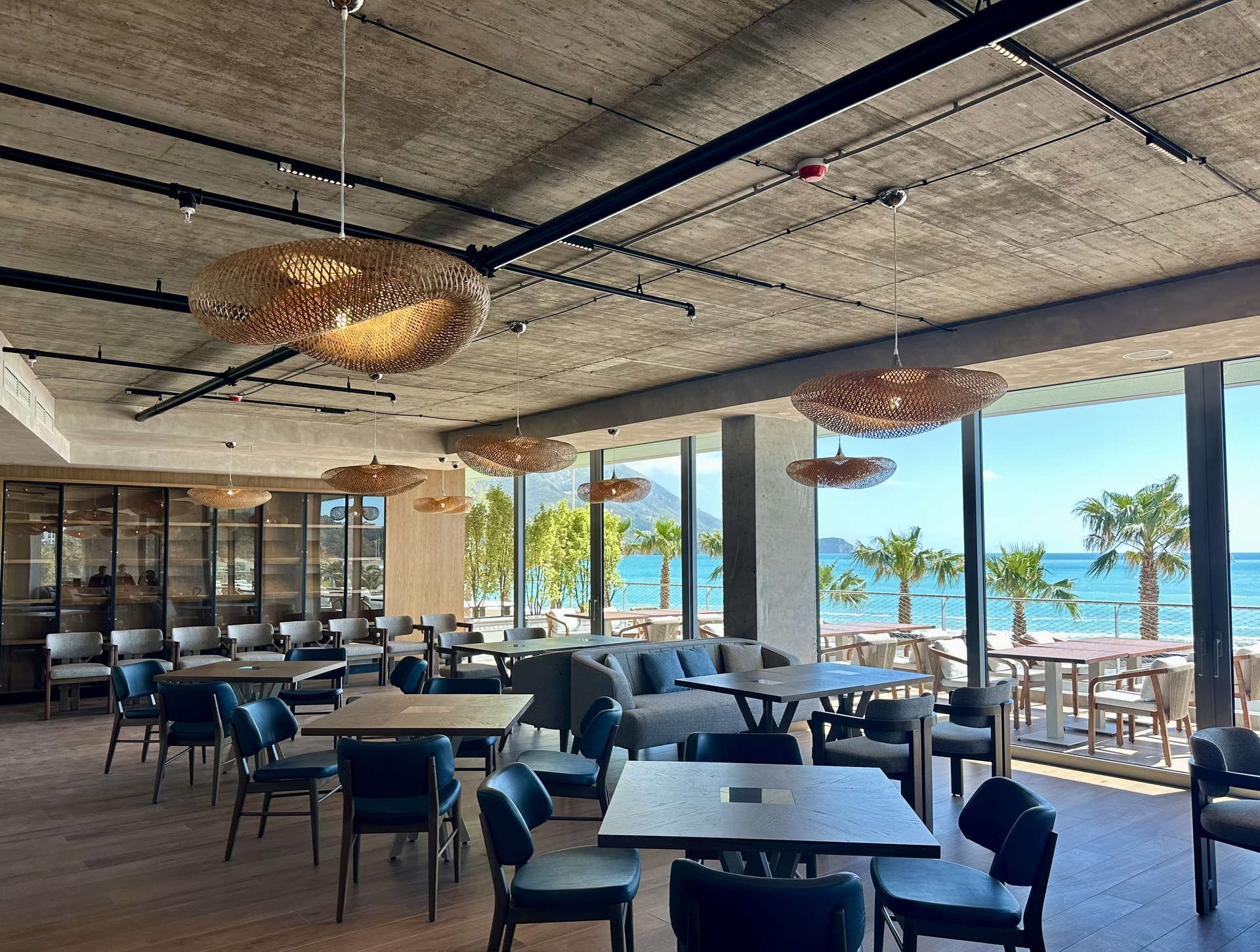
Bečići sits just south of Budva proper, where the pace is noticeably quieter than the old town's summer crowds. Restaurants along this stretch tend toward relaxed, sea-facing settings rather than the louder bar-restaurant format dominant in central Budva. Duomo Crna Gora fits within that pattern, positioned on the Montenegrin coast where the draw is the setting as much as the food.
How does Duomo Crna Gora compare to other restaurants in Bečići and the Budva Riviera?
Bečići occupies a quieter section of the Budva Riviera, where the restaurant scene is smaller and less reviewed than in Budva's old town. Duomo Crna Gora is one of the named dining destinations in this village rather than in the more competitive Budva core, which typically means lower foot-traffic pressure and a more local clientele outside peak summer months. No awards or Michelin recognition are recorded for the venue at this time.
What's the best thing to order at Duomo Crna Gora?
The Adriatic littoral running from Bečići through Budva has historically built its menus around the day's catch: dentex, sea bass, and John Dory prepared with minimal intervention, typically grilled with olive oil, garlic, and local herbs. Ask what came off the boat that morning before committing to a dish.
Quick Comparison
Comparable venues nearby, for context on price, style, and recognition.
| Venue | Cuisine | Price | Awards | Notes |
|---|---|---|---|---|
| Duomo Crna GoraThis venue (the venue you are viewing) | Authentic Italian | Not listed | Not listed | Not listed |
| Sabia | Modern Italian with Sardinian Influences | $50–100 | Star Wine List · Wine Spectator Award of Excellence | Kumbor |
| Porto | Mediterranean Seafood | $30–50 | Not listed | City Center |
| La Veranda | Modern Montenegrin Steakhouse | Not listed | Star Wine List | Kumbor |
| Kokotov rep | Cocktail Bar | $20–30 | Not listed | Bulevar Stanka Dragojevića |
| Lee Fast | Korean Street Food | Not listed | Not listed | Jula |
Continue exploring
More in Budva
Restaurants in Budva
All restaurants in Budva →
Bars in Budva
All bars in Budva →
Hotels in Budva
All hotels in Budva →
Wineries in Budva
Browse all →
Details
- Elegant
- Sophisticated
- Date Night
- Special Occasion
- Hotel Restaurant
- Waterfront
- A La Carte
Current opening hours
- Monday
- 8 AM–12 AM
- Tuesday
- 8 AM–12 AM
- Wednesday
- 8 AM–12 AM
- Thursday
- 8 AM–12 AM
- Friday
- 8 AM–12 AM
- Saturday
- 8 AM–12 AM
- Sunday
- 8 AM–12 AM
Hours can change for holidays and private events. Hours as of .
Elegant ambiance with attentive service providing a delightful Italian dining experience.