Königsberger Hof Restaurant
On Königsberger Strasse in Eschweiler, this address represents the kind of neighbourhood restaurant that anchors a mid-sized German city's dining life: rooted in regional produce, removed from the metropolitan fine-dining circuit, and valued precisely because of that distance. For visitors approaching from Aachen or Cologne, it offers a grounded alternative to the area's more destination-driven tables.
Pearl is the En Primeur Club membership app — saves, bookings, and concierge access live there. Same editors, same standards.
- Address
- Königsberger Str. 5, 52249 Eschweiler, Germany
- Phone
- +4924038306802
- Website
- koenigsberger-hof.de
- Directions
- Get directions
 Saves & bookings on Pearl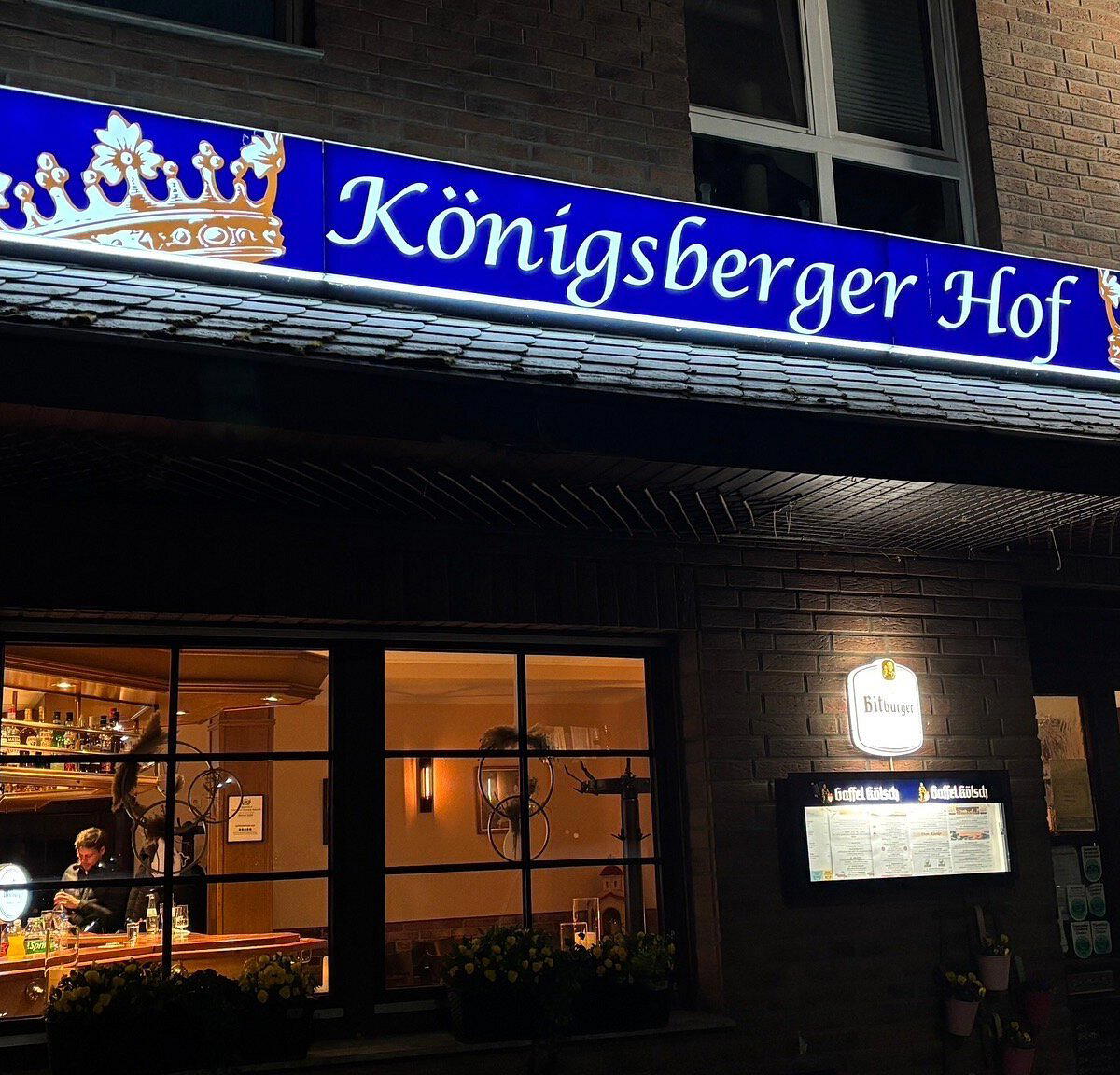
Dining in Eschweiler: The Regional Table and What It Tells You
Eschweiler sits in the Aachen district of North Rhine-Westphalia, a mid-sized industrial city that has never attracted the same dining press as Cologne, Düsseldorf, or Aachen itself. That relative quietness is, in part, the point. Germany's most interesting regional restaurants often operate in exactly this kind of setting: far enough from metropolitan scrutiny to develop a kitchen identity that answers to the local table rather than to food-media trends. Königsberger Hof Restaurant, addressed at Königsberger Str. 5, occupies that position. It is the kind of address that defines a neighbourhood's eating life without seeking recognition beyond it. For context on how the broader German dining scene is structured, our full Eschweiler restaurants guide maps the city's options by category and price tier.
The Physical Address and What to Expect on Arrival
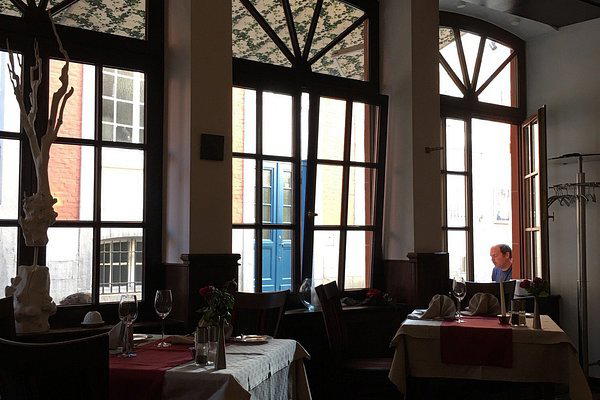
Königsberger Strasse is a residential corridor, and the restaurant's presence there signals something important about its function. This is not a destination placed in a converted warehouse or a hotel lobby designed to attract passing trade. The address reads as a neighbourhood institution: the kind of place where the room feels lived-in, where regulars are recognised, and where the atmosphere is shaped less by interior design decisions and more by accumulated habit. In German dining culture, this format carries its own authority. The Gaststätte or Hof tradition, a civic restaurant tied to its immediate community, predates modern fine dining by centuries, and it remains one of the more honest formats in which to eat well in a German city.
Ingredient Sourcing and the Regional Supply Chain
The Aachen region sits at a productive agricultural intersection. North Rhine-Westphalia borders Belgium and the Netherlands, and the broader Eifel plateau to the south supplies game, dairy, and foraged produce that define the local culinary register. A restaurant on Königsberger Strasse in Eschweiler draws from that same supply geography, whether sourcing meat from regional butchers, vegetables from Rhineland market gardens, or fish from the inland waterways and North Sea suppliers that service this part of western Germany.
This matters because ingredient sourcing in Germany's mid-tier restaurants is often where the real quality signal lives. The country's network of regional producers, cooperative farms, and specialist butchers is considerably more developed than most international visitors assume. When a neighbourhood restaurant in Eschweiler makes sound sourcing decisions, the kitchen has access to produce that competes with what reaches metropolitan tables in Cologne or Hamburg. The question is always whether the kitchen has the discipline to let good raw material do the work rather than masking it. This is the axis on which Germany's regional restaurants are most usefully evaluated, and it is a different axis than the one applied to destination restaurants like Aqua in Wolfsburg or the three-Michelin-star cooking at Schwarzwaldstube in Baiersbronn.
Where Königsberger Hof Sits in the Wider German Dining Picture
Germany's fine-dining tier is both larger and more geographically distributed than casual observers realise. The country holds more Michelin stars than France in per-capita terms in certain categories, and the concentration of ambitious kitchens extends well beyond Munich and Berlin. Addresses like Vendôme in Bergisch Gladbach, Waldhotel Sonnora in Dreis, and Victor's Fine Dining by Christian Bau in Perl demonstrate how German restaurant ambition distributes itself across secondary cities and rural settings rather than pooling in capitals.
Königsberger Hof operates in a different tier entirely. It is not competing for recognition in the same bracket as JAN in Munich or the dessert-forward programme at CODA Dessert Dining in Berlin. Nor should it be evaluated against those addresses. This tier rarely attracts international editorial attention, but it is where most Germans actually eat well, most frequently.
For comparison to other regional German addresses that sit closer to this middle ground, the wine-country cooking at Schanz in Piesport or the Trier table at Bagatelle illustrate how western Germany's smaller cities have developed their own confident dining identities. Further afield, ES:SENZ in Grassau and AURA by Alexander Herrmann and Tobias Bätz in Wirsberg represent the ambition that Bavaria and Franconia bring to regional German cooking. Even internationally, the question of how a restaurant roots itself in its immediate geography connects to kitchens as different as Le Bernardin in New York City, where sourcing discipline defines an entire kitchen identity, and Atomix, where Korean pantry integrity anchors a tasting menu format. The principle scales across price points: sourcing decisions are a kitchen's most legible expression of intent.
Planning Your Visit
Eschweiler is accessible by rail from Aachen, with regular connections running approximately 20 minutes. By road from Cologne, the journey runs roughly 60 kilometres west. The restaurant's address on Königsberger Strasse places it within the residential fabric of the city rather than in any dedicated dining or commercial district, which means arriving by car is practical. Given the neighbourhood format, walk-in capacity at quieter times is plausible, but confirmation is advisable for weekend visits or larger groups. For additional restaurants in the area spanning different formats and price points, consult our Eschweiler dining guide.
Visitors coming from further afield should consider pairing a visit with the broader Aachen eating circuit: the city's historic centre holds a concentrated range of formats, from casual Rhineland cooking to more contemporary addresses. Nearby, ammolite in Rust, ATAMA by Martin Stopp in Sankt Ingbert, and AUGUST in Augsburg demonstrate the range of ambition that Germany's western and southern regions now sustain. Restaurant Haerlin in Hamburg offers a further reference point for the country's classical-tradition fine-dining tier.
How Königsberger Hof Restaurant Eschweiler: Hours & Verdict compares with similar nearby venues.
| Venue | Cuisine | Price |
|---|---|---|
| Wettsteins Restaurant | Country cooking | € |
| Alte Feuerwache | Country cooking | €€€ |
| Sankt Benedikt | Creative | €€€€ |
| plaisir by Hamid Heidarzadeh | Contemporary | €€€ |
Continue exploring
More in Eschweiler
Restaurants in Eschweiler
Browse all →
Bars in Eschweiler
Browse all →
Hotels in Eschweiler
Browse all →
Wineries in Eschweiler
Browse all →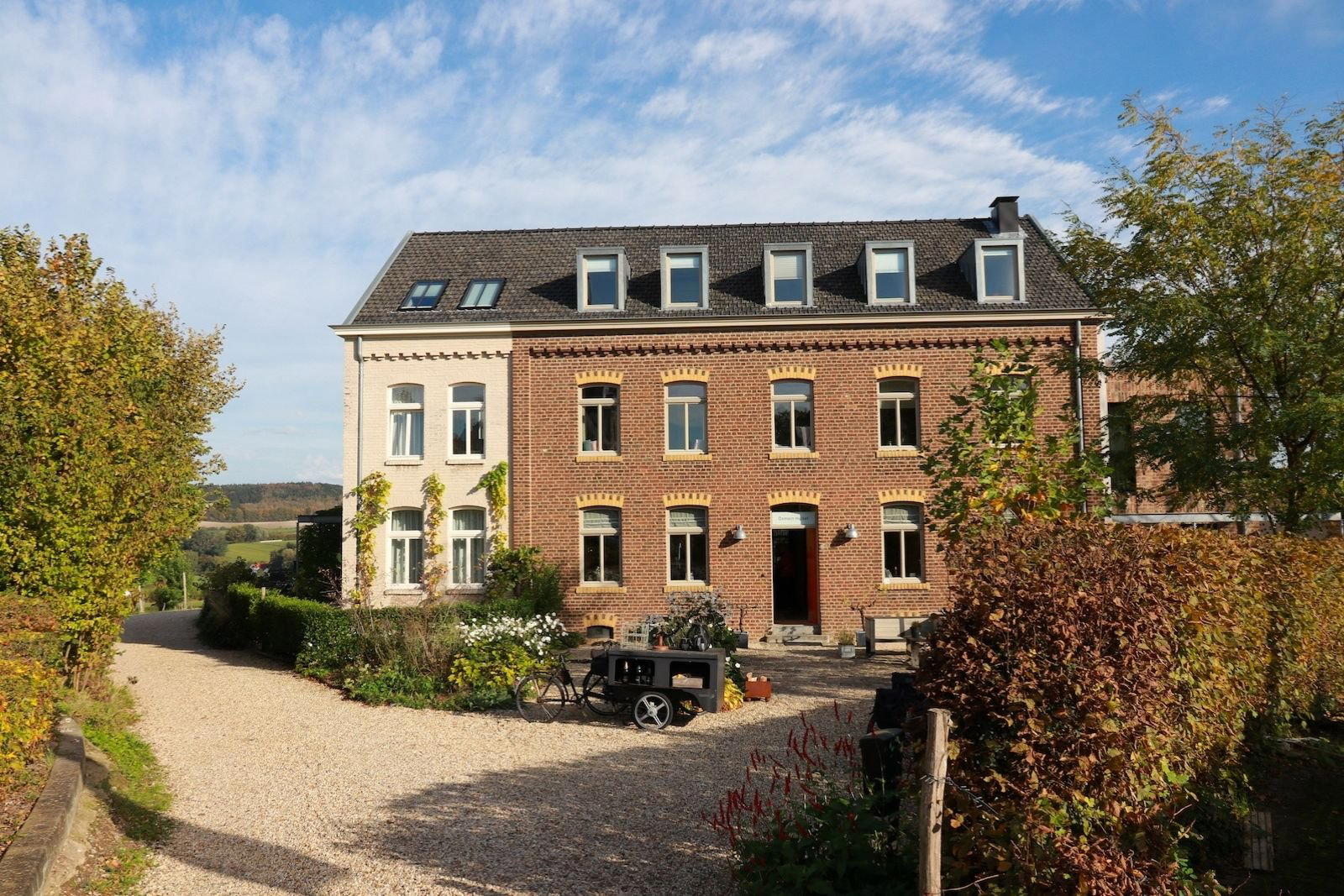

At a Glance
- Classic
- Cozy
- Family
- Group Dining
- Beer Program
Current opening hours
- Monday
- Closed
- Tuesday
- Closed
- Wednesday
- 5–9 PM
- Thursday
- 5–9 PM
- Friday
- 5–9 PM
- Saturday
- 5–9 PM
- Sunday
- 11:30 AM–9 PM
Hours can change for holidays and private events. Last verified .
Classic and welcoming with freshly prepared dishes served in style