
Kohaku places Hamamatsu’s gyoza culture in a modest, low-cost register rather than a destination-dining frame. Its selection for Tabelog 100 - Dumplings - 2024 gives it a clear credential within a city better known nationally for dumplings and eel, while the room’s counter and tatami seating keep the experience close to everyday local eating.
Pearl is the En Primeur Club membership app — saves, bookings, and concierge access live there. Same editors, same standards.
- Address
- 269-2 Furukawacho, Chuo Ward, Hamamatsu, Shizuoka 435-0032, Japan
- Phone
- +81 53-426-0919
- Website
- tabelog.com
 Saves & bookings on Pearl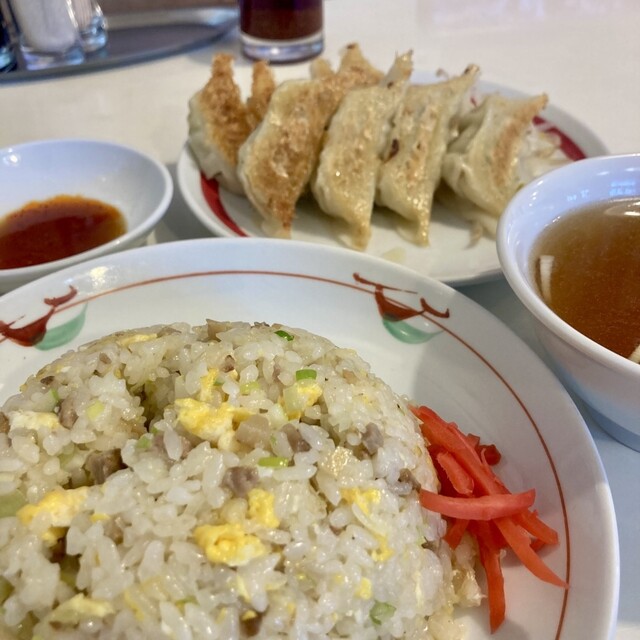
Approach this part of Hamamatsu and the mood shifts from station-front convenience to low-rise, car-forward suburbia: houses, small lots, and restaurants that feel part of a neighbourhood routine rather than a staged food pilgrimage. That setting matters for gyoza. Hamamatsu’s dumpling culture has never depended on ceremony; it is repeatable pleasure, quick turnover, family tables, and a local appetite that treats pan-fried dumplings as ordinary dinner, not special-occasion theatre.
Kohaku fits that register. Its Tabelog 100 - Dumplings - 2024 selection places it in a national gyoza conversation, but the category remains democratic: inexpensive, direct, and judged as much by consistency as novelty. In a city where eel houses often demand higher budgets and more planning, dumpling restaurants serve another social function. Their craft is visible through repetition: filling, folding, frying, serving, clearing, and doing it again.
Hamamatsu gyoza, read through a neighbourhood room
Hamamatsu and Utsunomiya dominate Japan’s public gyoza discussion, and that rivalry has made dumplings part of the city’s edible identity. For travellers, the point is not one definitive style but how gyoza fits the local meal pattern. It is casual food with civic pride attached, a dish comfortable beside rice, beer, sake, Chinese-leaning sides, or take-out orders.
The restaurant’s listed categories, dumpling, Chinese, and tripe, show that wider working vocabulary. This is not gyoza isolated as a tasting-menu object. It is dumpling culture tied to the Chinese-Japanese diner tradition, where offal, small plates, and alcohol share a table. The presence of sake is also useful: the drink program is not framed through elaborate pairing language, but gyoza in Japan has always worked with whatever the neighbourhood drinks.
Ingredient sourcing is rarely advertised at this tier as it is in luxury kaiseki or farm-branded Italian cooking, but gyoza makes sourcing legible through structure. Pork, cabbage or other vegetables, wrappers, oil, and heat leave little room to hide. A dumpling shop rises or falls on filling-to-skin balance, moisture control, and the kitchen’s ability to repeat the same result through service. Hamamatsu’s gyoza culture also has an agricultural backdrop: Shizuoka is a major food-producing prefecture, and the city’s dumpling identity grew from everyday local demand rather than imported prestige.
That is why a Tabelog 100 dumpling listing carries a different weight from a luxury award. It signals a place measured against peers in a narrow, highly familiar category. Diners know what gyoza should cost, how it should behave on the plate, and how quickly a weak version exposes itself. Recognition here is less spectacle than survival among hundreds of casual specialists.
Where it sits against Hamamatsu's stronger food identities
Hamamatsu’s restaurant map is not only dumplings. Eel has long drawn destination traffic, and its price tier is visibly different: Sumiyaki Unagi Aoiya sits in the JPY 3,000 to JPY 3,999 bracket, while Unagi Ryori Atsumi is listed at JPY 5,000 to JPY 5,999. By contrast, the city’s gyoza addresses occupy a more accessible lane. Fukumitsu and Mutsugiku sit in a similar low-price band to Kohaku, making them more relevant comparisons for travellers deciding how much of a Hamamatsu day should go to dumplings rather than eel.
That contrast helps. Eel in Hamamatsu often carries regional product identity, charcoal technique, and a longer sit-down rhythm. Gyoza is quicker, noisier, less formal, and easier for mixed groups. It can be lunch, early dinner, or a stop between other plans. The category also rewards repetition: one address rarely explains the city alone. Reading across places such as Fukumitsu, Binshan Li, Abondance, Kibori, and Honkaku Teuchi Moriya Toukyou ten shows how Hamamatsu moves between everyday specialists, higher-spend Chinese cooking, French-influenced dining, and noodle craft.
Kohaku’s appeal is not that it replaces the eel meal. It clarifies another side of the city: affordable regional appetite, a house-restaurant setting, and food whose value comes from directness. The 28-seat layout, with counter seats, table seating, and raised tatami seating, explains the audience. Solo diners can eat without ceremony, groups can share, and families are part of the intended pattern.
How to place it in a Hamamatsu itinerary
For a focused food day, treat gyoza as part of a wider Hamamatsu argument. Eel explains status and regional product; gyoza explains frequency and local appetite. The city rewards both readings. Visitors who only book higher-budget meals miss the everyday form that made Hamamatsu a national dumpling name.
The practical texture is plain enough to set expectations. The restaurant is listed as a non-smoking room with take-out service, no private rooms, and payment conditions favouring cash or QR code payments over cards. Parking is part of the setup, suiting the suburban location and making the experience feel more local than transit-led. The absence of reservations changes the rhythm: plan flexibly and avoid treating it like a fixed fine-dining appointment.
EP Club readers using Hamamatsu as more than a single-meal stop should map the city by category, not only individual names. Start with our full Hamamatsu restaurants guide, then widen the trip through our full Hamamatsu hotels guide, our full Hamamatsu bars guide, our full Hamamatsu wineries guide, and our full Hamamatsu experiences guide. For cross-city context on how casual Japanese specialties travel across formats, compare the listings for -Grilled beef Sukiyaki- KAMAKURA TANUKIAN 鎌倉 たぬき庵 in Kamakura,. 鮪と炭火焼き うお炭 秋葉原店 in Tokyo,.cafe in Osaka,.know in Kumamoto, (Shoku) Vietnam in Kawasaki, [Curry Senmon Ten] Maruyama Kyoju. in Sapporo, Jōdo Saké Bar in Los Angeles, and Onigiri Time in Pasadena. The through-line is not luxury; it is how narrow food forms gain authority when a city eats them often enough.
Fast Comparison
Comparable venues by cuisine and price in the same metro.
| Venue | Cuisine | Price | Awards | Notes |
|---|---|---|---|---|
| KohakuThis venue — the venue you are viewing | Hamamatsu gyoza & Chinese dumpling house | $ | , | |
| Binshan Li | Modern Chinese dim sum & small plates | $$$ | , | / Daiichi Dori area (central Hamamatsu) |
| Mutsugiku | Hamamatsu gyoza specialist | $ | , | Naka-ku |
| Kibori | Hamamatsu gyoza & ramen shop | $ | , | Chuo Ward (Takatsuka area) |
| Fukumitsu | Hamamatsu gyoza & Chinese dumplings | $ | , | Chuo Ward |
| Sumiyaki Unagi Hajime | Charcoal-grilled Unagi Specialist | $$$ | , | Nishi-ku |
Continue exploring
More in Hamamatsu
Restaurants in Hamamatsu
Browse all →

Hotels in Hamamatsu
Browse all →
At a Glance
- Lively
- Cozy
- Hidden Gem
- Classic
- Solo
- Family
- Casual Hangout
- Group Dining
- After Work
- Standalone
A relaxed, down-to-earth neighborhood dumpling shop with counter seats and small tatami areas, bright and informal, attracting families, solo diners, and friends for casual meals rather than special-occasion dining.