Koç Restaurant
On Atatürk Bulvarı in Ondokuzmayıs, Koç Restaurant occupies a position in a provincial Anatolian dining scene where produce-driven, unfussy cooking tends to outperform urban ambition. The address places it along one of the city's main commercial corridors, situating it in the broader tradition of Turkish lokanta and grill culture that still defines everyday dining across the Black Sea interior.
Pearl is the En Primeur Club membership app — saves, bookings, and concierge access live there. Same editors, same standards.
- Address
- Mimar Sinan, Atatürk Bulvarı No
- Phone
- +903625112230
- Directions
- Get directions
 Saves & bookings on Pearl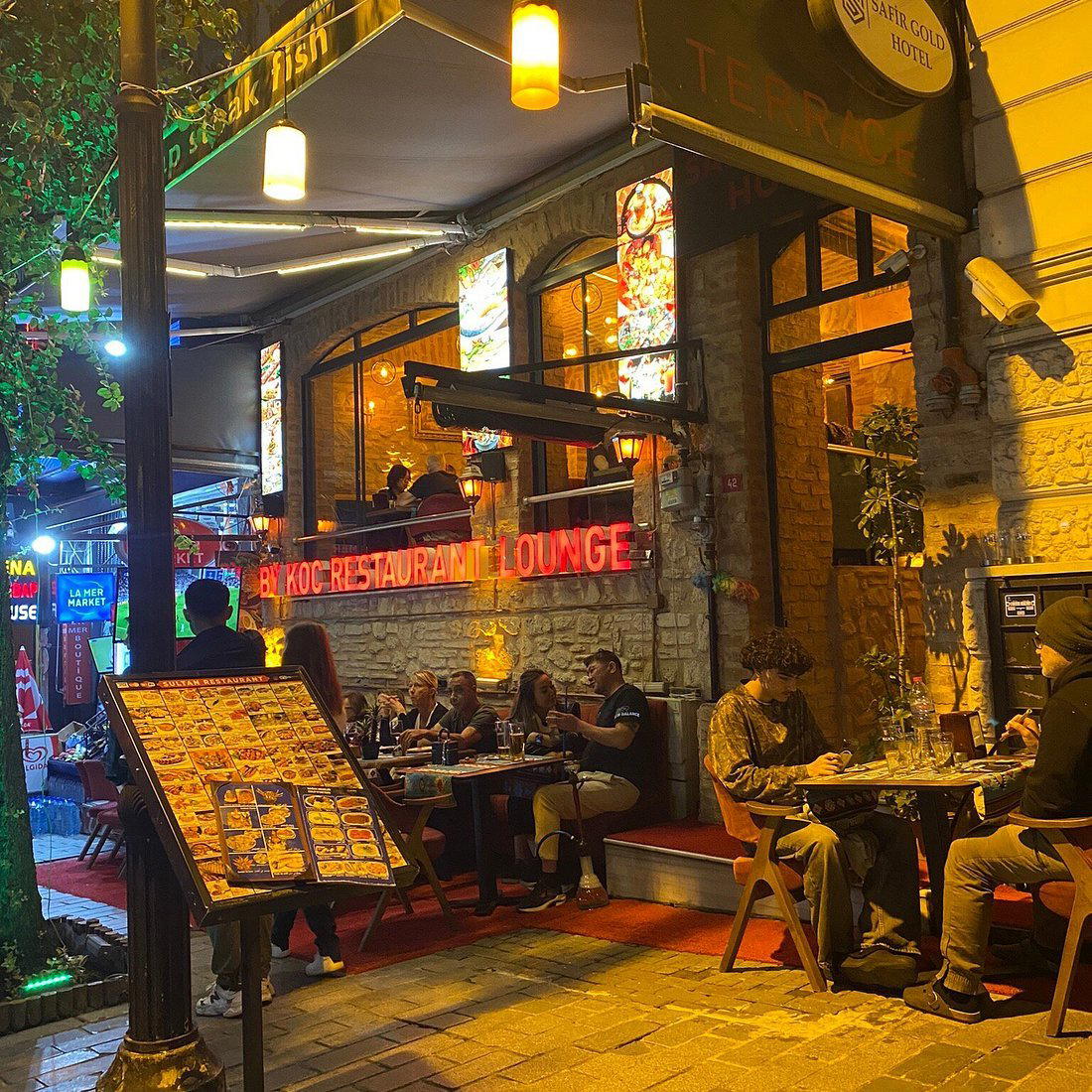
A Main Boulevard Address in Provincial Anatolia
Atatürk Bulvarı, in nearly every Turkish city of moderate size, functions as the civic spine: banks, municipal buildings, tea houses, and the kind of restaurant that has fed the same families across generations without needing a rebrand. In Ondokuzmayıs, a small city in Samsun province, Koç Restaurant sits at this kind of address. The setting is not designed for atmosphere in the curated, Instagram-legible sense. What you encounter instead is the working texture of provincial Turkish hospitality: interior spaces built around function rather than concept, the smell of charcoal and roasting meat reaching the street, and a clientele that judges the food rather than the aesthetic around it.
That context matters enormously when assessing what a place like Koç actually is. The Black Sea coast and its hinterland have one of Turkey's more coherent regional food identities, anchored in corn bread, hamsi (anchovy), slow-cooked bean dishes, and grilled meats sourced at the local rather than the national scale. A restaurant on the main boulevard of a mid-sized provincial city in this region is not competing with Turk Fatih Tutak in Istanbul or Maçakızı in Bodrum. It is operating inside a different and older logic: daily cooking, sourced nearby, priced for regulars.
Where the Food Comes From
The ingredient question is central to understanding why provincial Anatolian restaurants either work or do not. In regions with strong agricultural identity, proximity to the source is a structural advantage, not a marketing position. Samsun province produces tobacco, hazelnuts, maize, and a range of vegetables that move through local markets before they reach any supply chain. The livestock picture is similarly local in character: small-scale sheep and cattle farming remains embedded in the economy of settlements across the plateau, which means that grilled and braised meat dishes in restaurants like Koç draw from a supply network that is geographically tight by default.
This contrasts sharply with the sourcing realities facing Istanbul's premium tier. Venues operating at the ₺₺₺₺ price point, whether Narımor in Izmir or the more conceptually ambitious modern Turkish kitchens of the Bosphorus, invest significant effort in recreating supply relationships that provincial restaurants inherit by geography. The argument for eating in a place like Ondokuzmayıs is partly this: the food arrives at your table with fewer intermediaries between field and kitchen.
This principle of short supply chains runs across Turkish provincial dining. You see it at Hiç Lokanta in Urla, where Aegean herb culture shapes the menu almost automatically, and at Kartepe Organic Foods in Kartepe, where the sourcing is made explicit as a proposition. At Koç, the sourcing is implicit, encoded in the regional cooking tradition rather than announced on a chalkboard.
The Lokanta and Grill Tradition It Sits Within
Turkish restaurant culture has never been monolithic. Istanbul's fine dining modernists, the Anatolian ocakbaşı grill houses, the Aegean meyhane circuit, and the Black Sea region's own lokanta tradition represent distinct lineages with different relationships to sourcing, format, and occasion. The lokanta format, in particular, occupies a place in Turkish civic life that has no precise Western European equivalent: it is closer to a canteen than a bistro, built around a daily rotation of prepared dishes held warm in bain-marie trays, served to office workers, tradespeople, and families with neither ceremony nor apology.
Grill restaurants in provincial Anatolia often sit adjacent to this tradition, sharing the lokanta's civic function while centering the menu on live-fire cooking of meat and regional flatbreads. Kısmet Etliekmek ve Lahmacun Salonu in Karaman represents a version of this format in Central Anatolia, where etliekmek, the region's elongated flatbread topped with ground meat, anchors the menu the way adana kebab anchors restaurants like Ciğerci Mahmut in Adana. These are not restaurants in competition with one another; they are local expressions of a national grammar.
Koç sits within this grammar.
Ondokuzmayıs as a Dining Context
Ondokuzmayıs is named for the date, May 19th, that marks the beginning of the Turkish War of Independence, commemorated here because Mustafa Kemal Atatürk landed in Samsun on that date in 1919. The city's civic self-understanding is shaped by that history, and the main boulevard reflects it: this is a place of institutional weight, not tourist infrastructure. Dining here is not built for visitors passing through. It is built for residents, which means the quality threshold is set by repeat customers with long memories rather than by guidebook coverage.
For travelers moving along the Black Sea coast or cutting through the interior toward Samsun or Amasya, this kind of town offers something that purpose-built tourist destinations cannot: a restaurant culture calibrated to locals. The comparison with more famous Turkish dining addresses runs in an unexpected direction. Asitane in Fatih reconstructs Ottoman court cuisine from historical records. Dürümzade in Beyoglu has become a reference point for the dürüm format. Kocak Baklava in Gaziantep operates within one of Turkey's most documented food cities. Koç operates without any of that scaffolding, which is its condition rather than its deficit.
Travelers with a broader interest in Turkish regional cooking who have traced the premium end of the spectrum through venues like Kritikos Meyhane in Mudanya or Bayramoğlu Döner in Beykoz will recognize in provincial addresses like this one a different but continuous thread of the same national food culture.
Planning a Visit
The Mimar Sinan and Atatürk Bulvarı address places Koç on a central and walkable corridor within Ondokuzmayıs. Walk-in visits or local inquiry are the practical route to confirming hours and current availability. Provincial Turkish restaurants at this kind of address tend to observe lunch-heavy schedules aligned with the working day, with dinner service present but less dominant than in major cities. Visiting at midday, when prepared dishes are at their freshest and the lokanta format is at its most functional, is generally the more reliable approach in this context. There is nothing here to suggest a formal dress expectation: the boulevard restaurant format in provincial Anatolia runs on a come-as-you-are basis.
For travelers building a broader itinerary around Turkish dining, pairing a stop in the Black Sea interior with the Aegean or Istanbul tier maps the full geographic and stylistic range of what Turkish restaurant culture actually contains. The contrast with international reference points, whether Le Bernardin in New York City or Atomix in New York City, is instructive: those kitchens spend considerable resource approximating terroir; a provincial Anatolian grill restaurant on Atatürk Bulvarı has it by default.
How It Stacks Up
Comparable venues nearby, for context on price, style, and recognition.
| Venue | Cuisine | Price | Notes |
|---|---|---|---|
| Koç RestaurantThis venue — the venue you are viewing | :null | Not listed | Not listed |
| Kebapçı Halil Usta | Traditional Gaziantep Kebabs | $$ | Şehitkamil |
| Bayramoğlu Döner | Traditional Turkish Döner | $$ | Kavacık |
| Metanet Katmer | Traditional Gaziantep Katmer | $$ | Suyabatmaz |
| Burak Usta Pide Lahmacun Salonu | Turkish Pide and Lahmacun | $ | Çilhane |
| nathan's Famous | American Hot Dogs | $ | Bakırköy |
Continue exploring
More in Ondokuzmay S
Restaurants in Ondokuzmay S
Browse all →
At a Glance
Current opening hours
- Monday
- 4 AM–8 PM
- Tuesday
- 4 AM–8 PM
- Wednesday
- 4 AM–8 PM
- Thursday
- 4 AM–8 PM
- Friday
- 4 AM–8 PM
- Saturday
- 4 AM–8 PM
- Sunday
- Closed
Hours can change for holidays and private events. Last verified .