Our verdict
Where Thrace Puts Meat on the Table Edirne has always occupied a peculiar position in Turkish culinary geography. The city sits at the far northwestern edge of Anatolia, closer to Sofia and Thessaloniki than to Istanbul, and its food reflects...

Pearl is the En Primeur Club membership app — saves, bookings, and concierge access live there. Same editors, same standards.
- Address
- Barutluk, Kıyık Cd., 22020 Edirne Merkez/Edirne, Türkiye
- Phone
- +902842127541
- Hours
- Mon–Sat 11 AM–12 AMSun 1 PM–12 AM
- Directions
- Get directions
The menu
What to order
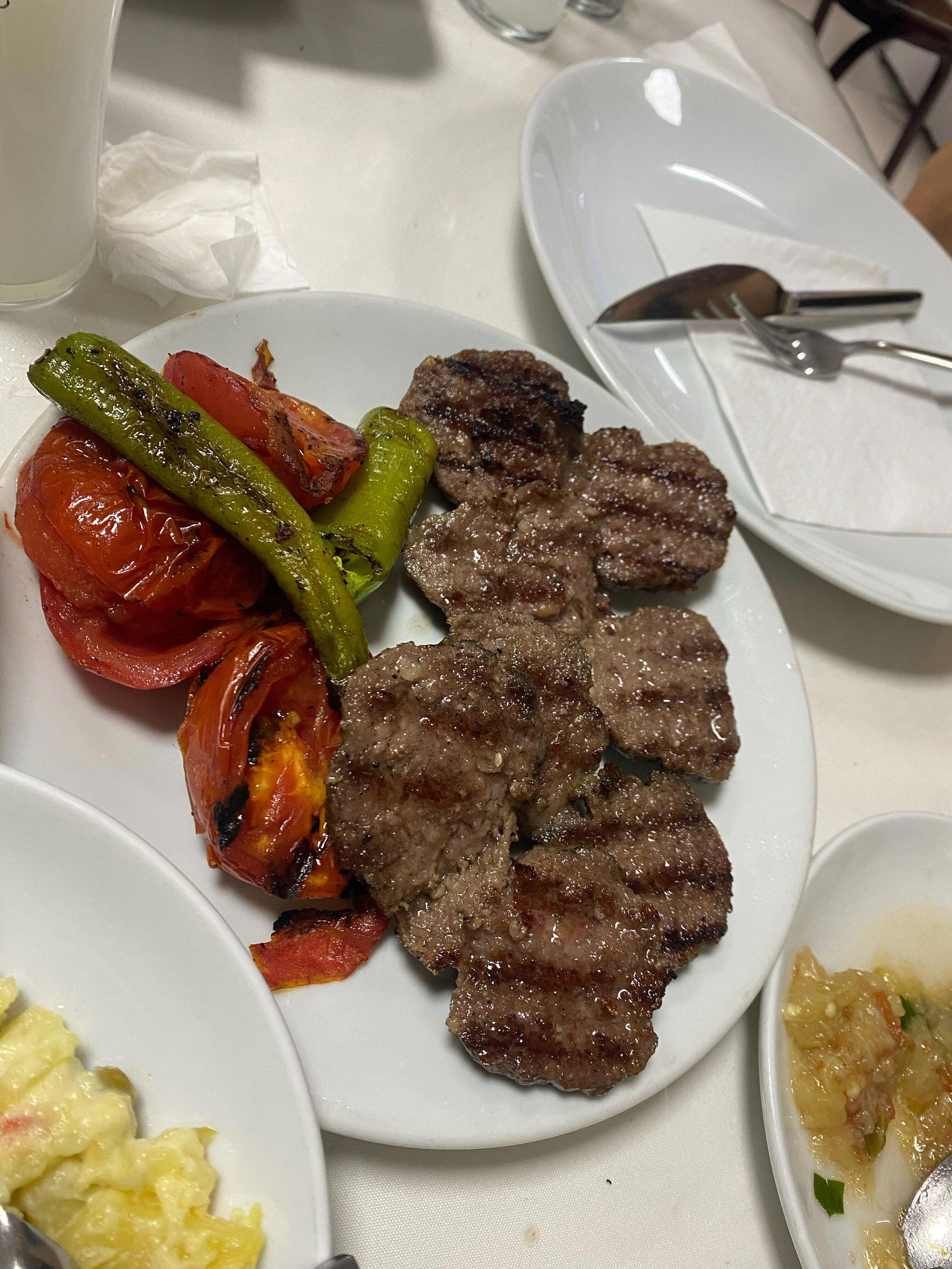
- Köfte
- Pirzola
- Ciğer
- Kuzu çöp şiş
- Böbrek
Where Thrace Puts Meat on the Table
Edirne has always occupied a peculiar position in Turkish culinary geography. The city sits at the far northwestern edge of Anatolia, closer to Sofia and Thessaloniki than to Istanbul, and its food reflects centuries of Ottoman court influence filtered through Thracian agricultural abundance. Livestock has moved through this land for millennia, and the city's meat-eating culture carries that weight in a very literal sense. In a place where lamb, beef, and offal are treated as primary texts rather than supporting ingredients, a lokanta dedicated entirely to meat is not a novelty but a direct expression of local identity.
Kıyık Et Lokantası occupies an address on Kıyık Caddesi in the Barutluk district, a part of the city that sits outside the usual tourist circuit of the old town and its Ottoman monuments. Approaching on foot, the surroundings signal a working neighbourhood rather than a polished dining quarter. That positioning is relevant: this is a lokanta in the Turkish vernacular sense, a place oriented around daily sustenance and direct craft rather than atmosphere designed for outside visitors. The room will not surprise anyone expecting tablecloths and candlelight. What it offers instead is the particular honesty of a restaurant that has never needed to perform for an audience beyond its own regulars.
Thracian Livestock and the Logic of Sourcing
The argument for eating meat in Edirne rests almost entirely on geography. The Thrace region, stretching across the Turkish side of the Balkan peninsula, produces beef and lamb under conditions quite different from those in central and eastern Anatolia. The climate is temperate, rainfall is relatively consistent, and the pastureland supports animals that are not pushed through feedlot systems at the pace of high-volume industrial production. This is not a romantic claim about artisan farming so much as a practical observation about what the regional supply chain looks like at its finest: shorter distances from pasture to plate, less handling, and a product that arrives at the kitchen with its character intact.
In cities like Istanbul, where restaurants at the ₺₺₺₺ tier such as Turk Fatih Tutak or coastal properties like Maçakızı in Bodrum build their sourcing stories into the editorial identity of the venue, the provenance conversation is explicit and priced accordingly. In Edirne, the same supply logic operates without the accompanying narrative. The Thracian carcass arrives at a lokanta like this one not because the kitchen has curated a sourcing manifesto, but because it is simply the meat that grows here.
This dynamic is visible across the Turkish provincial restaurant scene. Meat-forward lokantalar in cities with strong regional livestock traditions, from Karaman's etliekmek counters to Adana's offal specialists, operate on the same implicit premise: the region supplies what the menu serves, and no further explanation is required. The lokanta format itself, with its open kitchen and rotating daily preparations, is built around produce that arrives fresh that morning and disappears by early afternoon.
The Lokanta Format in Context
Understanding what Kıyık Et Lokantası is requires understanding what a Turkish et lokantası does as a category. These are not restaurants in the European sense of a place you might linger for two hours with a wine list. They function more like highly specialised canteens: lunch-weighted, counter-oriented, built around a limited number of preparations executed with accumulated practice. The competition for regulars in this format is won not by menu breadth but by consistency, portion honesty, and the quality of the raw material on any given day.
Across Turkey, the et lokantası sits at a distinct point in the restaurant hierarchy, below the full-service kebapçı with its tableside service but above the fast-turnover street grill. In Edirne specifically, where the city's culinary reputation has historically centred on liver (the famous Edirne ciğer tava), offal preparations, and slow-cooked meat dishes, an establishment in this category is operating in a competitive local field. The bar for acceptance among Edirne's own population is set by people who eat this food regularly and have strong opinions about it.
For context on how Turkey's broader restaurant culture handles meat as a primary subject, Bayramoğlu Döner in Beykoz and Konya Kebap Evi in Selcuklu each show how the category translates across different regional traditions. Edirne's version is shaped specifically by Thracian ingredients and Ottoman-era technique, a combination that distinguishes it from the spice-forward traditions of southeastern Anatolia visible at places like Kocak Baklava in Gaziantep.
Planning Your Visit
Edirne is reachable from Istanbul in under two hours by car via the E80 highway, and the city's compact centre means most eating destinations are within a short walk of one another. Lokantalar in Turkey generally operate on a lunch-primary schedule, with many winding down service by mid-afternoon once the daily preparations are sold out. Arriving early in the service window typically means the full range of that day's preparations is available; arriving late risks finding a reduced selection. The Barutluk district, where Kıyık Et Lokantası sits on Kıyık Caddesi, is not the most tourist-trafficked part of the city, so orientation on foot from the main square requires a few minutes' walk. For a fuller orientation to eating in the city, our full Edirne restaurants guide maps the broader scene.
The restaurant sits in a different register entirely from the destination-dining circuit that draws visitors to places like Asitane in Fatih for its reconstructed Ottoman court cuisine, or to Narımor in Izmir for its Aegean produce focus. It shares more DNA with neighbourhood specialists like Hiç Lokanta in Urla, where the proposition is regional honesty over ceremony. Readers who approach it expecting the self-aware sourcing language of a Le Bernardin or the conceptual precision of an Atomix will be looking at it through the wrong lens entirely. The point here is what Thrace produces and what daily practice does with it.
Frequently asked questions
Would Kıyık Et Lokantası be comfortable with kids?
Et lokantaları in Turkey operate as no-fuss, functional dining rooms where the pace is brisk and the format straightforward — order, eat, leave. Kıyık Et Lokantası on Kıyık Caddesi fits that category, which tends to suit families with children reasonably well: there are no tasting menus to sit through and the food is simple and direct. The lokanta format is not child-hostile, though it is not designed around them either.
What's the overall feel of Kıyık Et Lokantası?
The atmosphere follows the et lokantası template: a working dining room oriented around the grill and the butcher's counter, not around décor or occasion. Located in the Barutluk neighbourhood of central Edirne, it draws a local crowd rather than a tourist one, which keeps the register practical and unaffected. Expect communal tables or close seating, direct service, and a room that smells of charcoal and rendered fat from the moment you walk in.
Is Kıyık Et Lokantası a good option for visitors travelling from Istanbul to Edirne?
Edirne sits under two hours from Istanbul via the E80 highway, making it a practical day-trip or weekend stop, and Kıyık Et Lokantası on Kıyık Caddesi in the Barutluk quarter sits within the compact city centre where most of Edirne's eating destinations are concentrated. For travellers making the trip specifically for regional food, an et lokantası of this type — rooted in Thracian livestock and the lokanta format rather than tourist positioning — represents exactly what the city's meat tradition looks like in daily practice. No advance booking infrastructure is publicly listed, so arriving at conventional lunch hours is the pragmatic approach.
What dish is Kıyık Et Lokantası famous for?
Edirne's culinary reputation is anchored in its meat, particularly tava ciğeri (pan-fried liver) and various cuts of Thracian-raised lamb and beef prepared over open heat. As an et lokantası, Kıyık's menu revolves around grilled and slow-cooked meats sourced from the surrounding Thrace region, where grazing conditions produce animals with notably different fat profiles than those from central Anatolia.
What part of town is Kıyık Et Lokantası in?
Kıyık Et Lokantası is located at Barutluk, Kıyık Cd. 22020 Edirne Merkez/Edirne, Türkiye, Edirne.
Comparable Venues
Comparable venues nearby, for context on price, style, and recognition.
| Venue | Cuisine | Price | Notes |
|---|---|---|---|
| Kıyık Et LokantasıThis venue — the venue you are viewing | Traditional Turkish Meyhane & Grill | $10–20 | Not listed |
| The House Of Memories | Traditional Turkish Testi Kebab | $10–20 | Uchisar |
| Metanet Katmer | Traditional Gaziantep Katmer | $1–10 | Suyabatmaz |
| Kocak Baklava | Traditional Gaziantep Baklava | Not listed | Şehitkamil |
| Tarihi Karadeniz Döner | Black Sea-Style Turkish Döner | Not listed | Beşiktaş |
| Öz Şanlıurfa Ciğercisi | Turkish Ciğerci (Liver House) | Not listed | Bayraklı |
Continue exploring
More in Edirne

Details
- Cozy
- Rustic
- Intimate
- Casual Hangout
- Family
- Group Dining
- Historic Building
- A La Carte
- Small Plates
Current opening hours
- Monday
- 11 AM–12 AM
- Tuesday
- 11 AM–12 AM
- Wednesday
- 11 AM–12 AM
- Thursday
- 11 AM–12 AM
- Friday
- 11 AM–12 AM
- Saturday
- 11 AM–12 AM
- Sunday
- 1 PM–12 AM
Hours can change for holidays and private events. Last verified .
Samimi and nostalgic atmosphere with no disturbing music, featuring TRT Turkish art music broadcasts, reminiscent of classic Turkish films' cozy, unpretentious meyhane settings.