
Osaka’s gyoza culture usually points toward speed, beer, and late-night repetition; Kitashinchi Fuka moves the form into a counter-led, course-driven register. Its Tabelog 100 Dumplings 2024 selection, eight-seat counter format, and Dojimahama basement setting place it in a smaller category: dumpling gastronomy treated with the discipline of modern Japanese dining.
Pearl is the En Primeur Club membership app — saves, bookings, and concierge access live there. Same editors, same standards.
- Address
- Japan, 〒530-0004 Osaka, Kita Ward, Dojimahama, 1 Chome−3−22 Build. Dojima Town, B1(奥側
- Phone
- +81 6-7653-6840
- Website
- fuka.works
 Saves & bookings on Pearl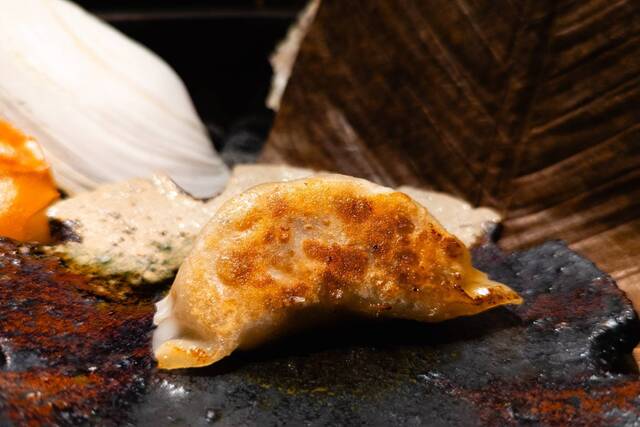
Dojimahama’s basement dining circuit has a different charge from Osaka’s street-level gyoza shops. The mood is quieter, the audience more intentional, and the counter slows a democratic food of repetition and speed into structure: wrapper, filling, heat, pacing, and service all have to land together.
That shift places Kitashinchi Fuka outside the city’s casual dumpling rooms. Osaka has long blurred class lines, from department-store counters to standing bars and late-night noodles. The newer premium tier asks whether a familiar form can carry a course menu without losing its direct appeal. Here, the answer is less novelty than control.
Gyoza treated as a course format, not a side order
The useful frame is “dumpling, innovative,” the category attached to the restaurant’s public listing. It separates the cooking from izakaya grazing and luxury kaiseki mimicry. The idea is gyoza as a complete culinary form, with skin and filling treated as equal subjects rather than one wrapping the other. In Osaka, where appetite often beats ceremony, that is a notable repositioning.
The Tabelog 100 Dumplings 2024 selection gives the room a concrete signal in a category where reputation can be anecdotal. Tabelog’s Hyakumeiten lists tend to reward category specialists rather than general glamour, so the recognition says this is being judged within Japan’s dumpling conversation, not simply as a polished Kitashinchi dinner. The listed score of 4.01 reinforces its high-attention bracket for the genre.
Eight-seat counter is not just a capacity note; it defines the meal’s logic. At this scale, the kitchen and service team cannot hide behind spectacle. Timing, handoff, drinks, and clearing must function as one small unit. The format suits cuisine built on narrow margins: a dumpling is exposed if skin, filling, and finish fall out of sync. In a larger room, that can read as inconsistency; at a counter, it becomes the central performance.
Kitashinchi Fuka opened in 2023, inside a recent Osaka pattern: compact specialist rooms using familiar Japanese categories as the base for structured evenings. Yakitori Ichimatsu works the premium counter grammar through grilled chicken, while Shokudo Uchino uses Japanese dining as its frame; both show Osaka diners have room for smaller formats that ask for attention rather than volume. Fuka’s distinction is applying that pressure to gyoza, a food many still associate with casual abundance.
The team dynamic is the point of the counter
Because no public chef biography is needed to understand the meal, the better reading is operational. A room this small depends on a tight triangle: kitchen rhythm, front-of-house pacing, and drink service. The counter makes that collaboration visible. Courses can be released in short intervals, guests read quickly, and the experience stays closer to a workshop than a dining room with layers of separation.
This matters in Kitashinchi, whose hospitality culture has long prized controlled intimacy. The neighborhood is built for evening dining, client meals, and small rooms where the margin between warmth and stiffness is thin. A dumpling counter here has to avoid two traps: turning gyoza into precious theater, or leaving the premium setting unjustified. The better version sits between them, using the counter to sharpen the form rather than decorate it.
The comparison with casual Osaka gyoza is useful but limited. A place like 551 Horai (551蓬莱) represents the city’s mass-affection side: portable, familiar, and woven into daily movement. Fuka belongs to the opposite end, where the diner pays for sequence, technique, and the accumulated attention of a small team. Both are Osaka, but they answer different appetites.
That spectrum makes the city compelling. A serious eating day might start with bread at 52CHO-ME BAKERY, move through coffee at .cafe, and end at a counter where a single category is pulled apart course by course. Osaka’s range also includes 99 Pizza Napoletana Gourmet and a canto (Italian), reminders that its premium dining conversation is not confined to Japanese formats.
Where it fits in an Osaka dining itinerary
This is a narrow-purpose dinner, and that is its strength. Diners looking for breadth across many Japanese forms may find more range elsewhere; diners interested in how far one everyday format can be pushed will understand the appeal quickly. The no-smoking policy and counter-only scale reinforce an evening built around attention rather than drift.
Practically, the location near Oebashi and Kitashinchi pairs more easily with a drink-led second stop than another full meal. Dojima Samboa, in the same broader nightlife orbit, sits in a lower spend category and shows how the area can move from specialist dinner to classic bar culture without changing districts. For a wider Osaka plan, treat this as one precise meal inside a larger map, not a catch-all introduction to the city.
Readers comparing categories across Japan can place it beside other focused addresses on EP Club, from [ki:] in Kyoto to.know in Kumamoto, (Shoku) Vietnam in Kawasaki, [Curry Senmon Ten] Maruyama Kyoju. in Sapporo. 鮪と炭火焼き うお炭 秋葉原店 in Tokyo, and -Grilled beef Sukiyaki- KAMAKURA TANUKIAN 鎌倉 たぬき庵 in Kamakura. The broader Japanese food diaspora offers another contrast through Jōdo Saké Bar in Los Angeles and Onigiri Time in Pasadena, where familiar forms are translated for different dining cultures.
For city planning beyond one dinner, use Our full Osaka restaurants guide alongside Our full Osaka hotels guide, Our full Osaka bars guide, Our full Osaka wineries guide, and Our full Osaka experiences guide. The sharper reading of Kitashinchi Fuka is not that it makes gyoza luxurious by force; it shows how a compact Osaka team can make a familiar form carry the architecture of a serious dinner.
- Multi-course dumpling tasting menu
- Handmade xiaolongbao
- Original black and red sweet-and-sour pork
- Cod soft roe with shrimp ajillo
- Jamón Serrano soup with duck-stuffed cannelloni
- Wood-fired beef
The Quick Read
Comparable venues by price and recognition.
| Venue | Cuisine | Price | Notes |
|---|---|---|---|
| Kitashinchi FukaThis venue — the venue you are viewing | Not listed | $$$$ | Not listed |
| Mato MATO | Kita, Seasonal Chinese Prix Fixe | $$$$ | Not listed |
| Opus One | Not listed | $$$ | Chūō, Seasonal Fine Chinese with Shark Fin & Seafood Courses |
| Shin Chinese HARAKAWA Kitashinchi ten | Not listed | $$$ | Kita, Modern Chinese (New Chinese Cuisine) |
| TOMONO | Kita, Creative Modern Chinese | $$$$ | Not listed |
| Lime Light | Modern Chinese and wine bar | $$ | Not listed |
Recognition history
Dated appearances from independent guides and award organizations, with the underlying list record or original source where available.
Tabelog 100 #22 · No. 22
Tabelog · Tabelog 100 - Dumplings - 2024
Continue exploring
More in Osaka
Restaurants in Osaka
Browse all →




Bars in Osaka
Browse all →




Hotels in Osaka
Browse all →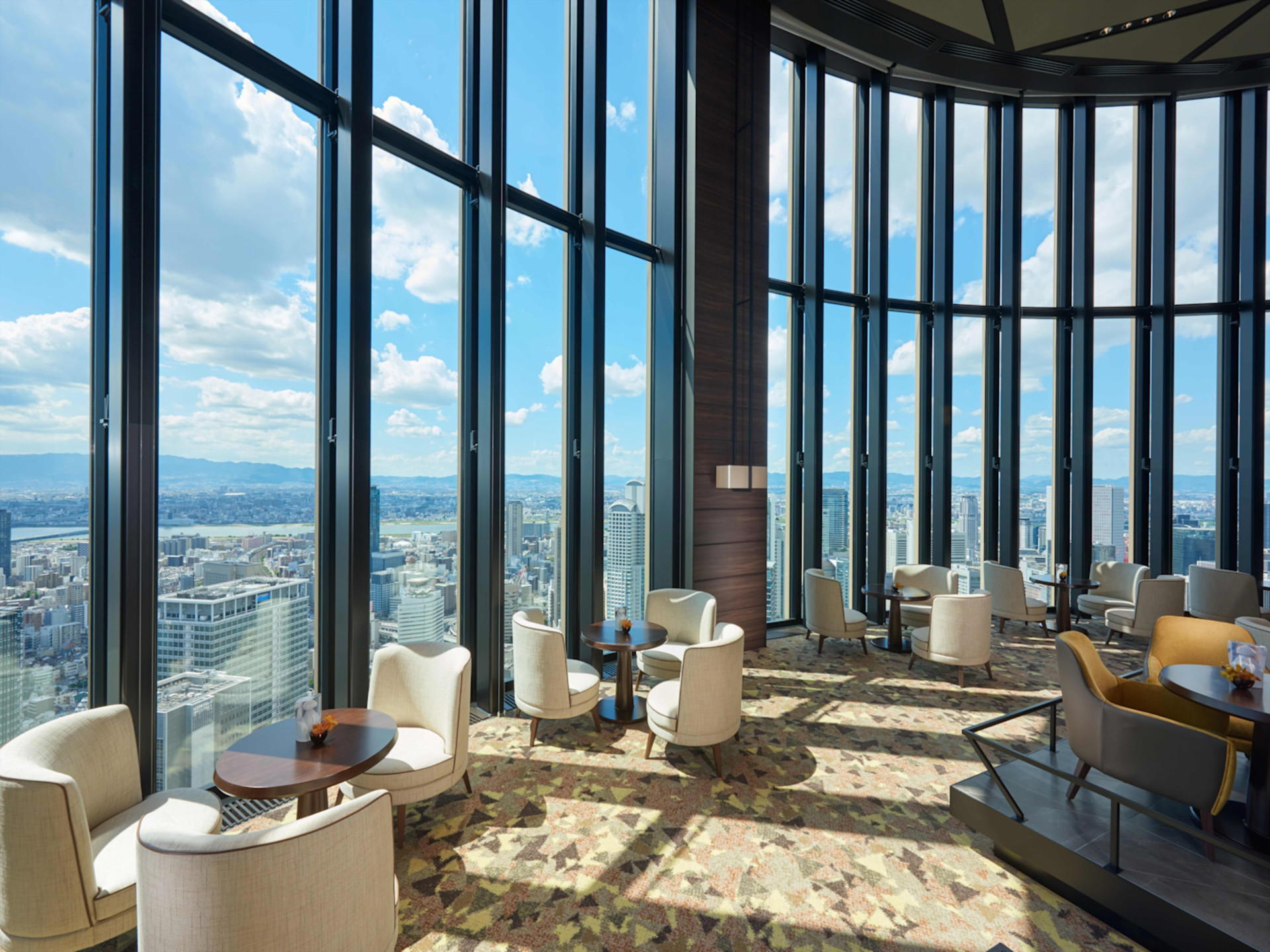




Wineries in Osaka
Browse all →
At a Glance
- Intimate
- Elegant
- Cozy
- Modern
- Date Night
- Special Occasion
- After Work
- Solo
- Celebration
- Chefs Counter
- Design Destination
- Standalone
- Private Dining
Current opening hours
- Monday
- 6–11 PM
- Tuesday
- 6–11 PM
- Wednesday
- 6–11 PM
- Thursday
- 6–11 PM
- Friday
- 6–11 PM
- Saturday
- 6–11 PM
- Sunday
- Closed
Hours can change for holidays and private events. Last verified .
A small, eight-seat counter space with warm lighting, refined but relaxed service, and a quietly luxurious Kitashinchi atmosphere that feels more like a chef’s studio than a typical dim sum restaurant.