
Shin Chinese HARAKAWA Kitashinchi ten belongs to Osaka’s polished Kitashinchi dining circuit, where Chinese technique, seafood focus, and creative-course pacing meet the neighbourhood’s after-dark formality. Its 2026 Tabelog Chinese WEST 100 selection, counter-and-table format, and fish-led cooking place it in a narrower tier than casual Osaka Chinese rooms.
Pearl is the En Primeur Club membership app — saves, bookings, and concierge access live there. Same editors, same standards.
- Address
- 大阪府大阪市北区曾根崎新地1-3-23 FOODEARビル 1F
- Phone
- +815035030304
- Website
- kitashinchi-harakawa.com
 Saves & bookings on Pearl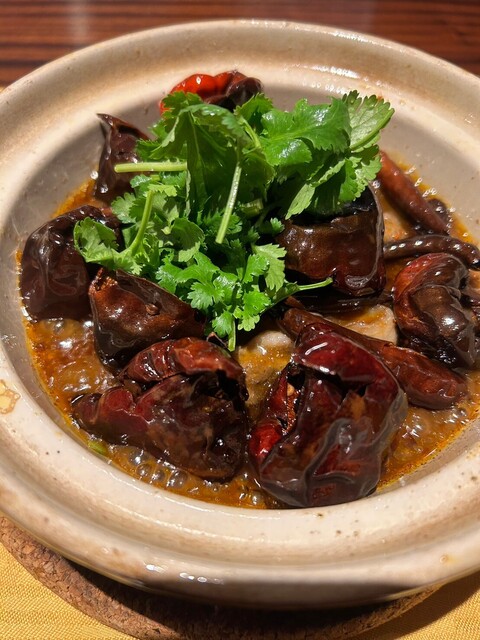
Kitashinchi changes character after office hours. The streets north of the Dojima river lose the daylight practicality of Umeda and become a denser circuit of elevators, small buildings, polished counters, and rooms built for expense-account dinners rather than tourist grazing. In that setting, Chinese cooking takes on a particular Osaka accent: less banquet-hall volume, more seafood, more course structure, and a closer relationship with the kappo rhythm that defines much of the city’s serious dining.
Shin Chinese HARAKAWA Kitashinchi ten fits that neighbourhood logic. The room is compact, split between counter seating and tables, which matters in Osaka because the counter is not just a layout choice; it is a signal of tempo. Chinese restaurants in Japan often move between two poles, the large-format shared table and the chef-facing sequence. Kitashinchi rewards the latter. It allows sauces, seafood timing, and heat control to read with the precision diners expect from Japanese fine dining, while keeping the vocabulary Chinese rather than sliding into generic fusion.
Osaka Chinese cooking, filtered through Kitashinchi restraint
Osaka’s relationship with Chinese food is broader than the city’s premium dining rooms suggest. Steamed buns, gyoza counters, ramen shops, and department-store prepared foods make Chinese-derived dishes part of daily eating, while formal Chinese restaurants occupy a separate register shaped by Cantonese seafood, Sichuan spice, and Japanese seasonality. The Kitashinchi version is narrower and more controlled. It is built for diners who already understand omakase pacing, who expect a meal to progress rather than arrive as a spread, and who read restraint as a form of confidence.
The restaurant’s listed categories, Chinese, seafood, and creative, are useful because they describe a current rather than a novelty. In Japan, contemporary Chinese rooms increasingly borrow the cadence of kaiseki without copying its aesthetics: smaller portions, produce-led sequencing, and an emphasis on how seafood is treated before the sauce reaches the table. HARAKAWA’s fish focus places it in that lane. The point is not maximal luxury; it is the way Chinese technique can sit inside Osaka’s appetite for precision, seasonality, and controlled richness.
Recognition by Tabelog’s Chinese WEST 100 in 2026 gives the restaurant a concrete place within western Japan’s Chinese dining field. Tabelog’s Hyakumeiten lists are especially relevant in Japan because they reward category depth rather than international visibility. For a traveller, that distinction matters. Michelin-style recognition often shapes inbound itineraries; Tabelog’s category lists tend to map where local diners and Japanese restaurant obsessives are already paying attention.
The competitive set is Kitashinchi, not street-food Osaka
Kitashinchi’s dining economy sits apart from the takoyaki-and-kuidaore image that dominates first-time Osaka itineraries. The neighbourhood trades in compact rooms, repeat guests, late dinners, and genre specialists. In the immediate comparison set, San Bettei Kitashinchi ten sits at a lower dinner bracket, while IAKU occupies a higher one; il PePe overlaps closely on dinner pricing but speaks from a different culinary tradition. That spread clarifies the decision: this is not the casual Chinese stop before drinks, and it is not the city’s highest-spend tasting counter either. It belongs to the controlled middle-high tier where format, category recognition, and neighbourhood fit do the work.
The Chinese context also changes how to read value. A Japanese counter restaurant at a similar spend often leans on identifiable luxury ingredients or the ceremony of sushi, tempura, or wagyu. A Chinese seafood-led room can be subtler: heat, texture, stock, wok timing, and sauce balance carry the meal. Diners who judge only by ingredient display may miss the point. Diners who care about technique across courses will understand why this category has become more interesting in Osaka’s premium dining map.
The restaurant is also useful for travellers building a broader Osaka food itinerary. It gives a polished Chinese counterpoint to the city’s casual staples and Italian-Japanese dining rooms. For wider planning, use Our full Osaka restaurants guide alongside nearby and citywide references such as .cafe, 52CHO-ME BAKERY, 551 Horai (551蓬莱), 99 Pizza Napoletana Gourmet, and a canto (Italian). Travellers extending the trip can cross-check Our full Osaka hotels guide, Our full Osaka bars guide, Our full Osaka wineries guide, and Our full Osaka experiences guide.
Who should choose this room
Shin Chinese HARAKAWA Kitashinchi ten makes the strongest case for diners who want Osaka beyond the obvious categories. Sushi, kappo, kushikatsu, and okonomiyaki explain important parts of the city, but they do not cover how Osaka’s premium dining culture absorbs outside cuisines and refines them through local habits. Chinese cooking here is not treated as an import preserved under glass. It is adapted to a city that prizes seafood, timing, and rooms small enough for close attention.
The room’s scale supports that reading. A compact restaurant with counter seats and tables can serve couples, small groups, and family meals with school-age children, but the tone is still Kitashinchi rather than casual family dining. Private rooms are not part of the format, and private use is framed for a small group rather than a banquet. That makes it better suited to diners comfortable with a shared-room atmosphere, where the evening is about pace and focus rather than a loud table spread.
For a broader Japan itinerary, HARAKAWA also sits neatly between regional specificity and cross-city comparison. Osaka travellers looking beyond Kansai can contrast the city’s premium Chinese and seafood sensibility with -Grilled beef Sukiyaki- KAMAKURA TANUKIAN 鎌倉 たぬき庵 in Kamakura. 鮪と炭火焼き うお炭 秋葉原店 in Tokyo.know in Kumamoto, (Shoku) Vietnam in Kawasaki, [Curry Senmon Ten] Maruyama Kyoju. in Sapporo, and [ki:] in Kyoto. For transpacific context on Japanese drinking and casual formats, Jōdo Saké Bar in Los Angeles and Onigiri Time in Pasadena show how Japanese food culture shifts when it leaves Japan.
The editorial answer is clear: choose this restaurant when the brief is polished Osaka Chinese with seafood at the centre, not when the goal is spectacle or a checklist of famous dishes. Its value lies in a specific cultural translation, Chinese technique disciplined by Kitashinchi’s small-room seriousness and Osaka’s long attention to fish.
Price and Positioning
Comparable venues to anchor price and recognition.
| Venue | Cuisine | Price | Notes |
|---|---|---|---|
| Shin Chinese HARAKAWA Kitashinchi tenThis venue — the venue you are viewing | Not listed | $$$ | Not listed |
| Chinese Sai Es Sawada | Kita, Modern Chinese Fine Dining | $$$ | Not listed |
| Marusho Gyoza Ten Dai2 hanna ten | Not listed | $$ | Daito, Gyoza-focused Chinese dumpling shop |
| Nama Gyoza Seizo Tokoro Tenshin no Kimochi | Not listed | $$ | Taishō, Handmade Gyoza & Taiwanese Mazesoba Izakaya |
| Kamifukawa | Kita, Modern Chinese Fine Dining | $$$ | Not listed |
| TOMONO | Kita, Creative Modern Chinese | $$$$ | Not listed |
Recognition history
Dated appearances from independent guides and award organizations, with the underlying list record or original source where available.
Tabelog 100 #99 · No. 99
Tabelog · Tabelog 100 - Chinese cuisine - WEST - 2026
Continue exploring
More in Osaka
Restaurants in Osaka
Browse all →




Bars in Osaka
Browse all →




Hotels in Osaka
Browse all →



Wineries in Osaka
Browse all →
At a Glance
- Elegant
- Modern
- Intimate
- Sophisticated
- Special Occasion
- Business Dinner
- Date Night
- Group Dining
- After Work
- Open Kitchen
- Standalone
- Extensive Wine List
- Sommelier Led
Intimate Kitashinchi dining room with an open kitchen where guests can enjoy the sounds and aromas of cooking; polished but relaxed atmosphere suited to hosting important guests over multi-course Chinese cuisine.