Khanom Mho Kaeng Mae Yai (Phai Ling)

Michelin Bib Gourmand
Our verdict
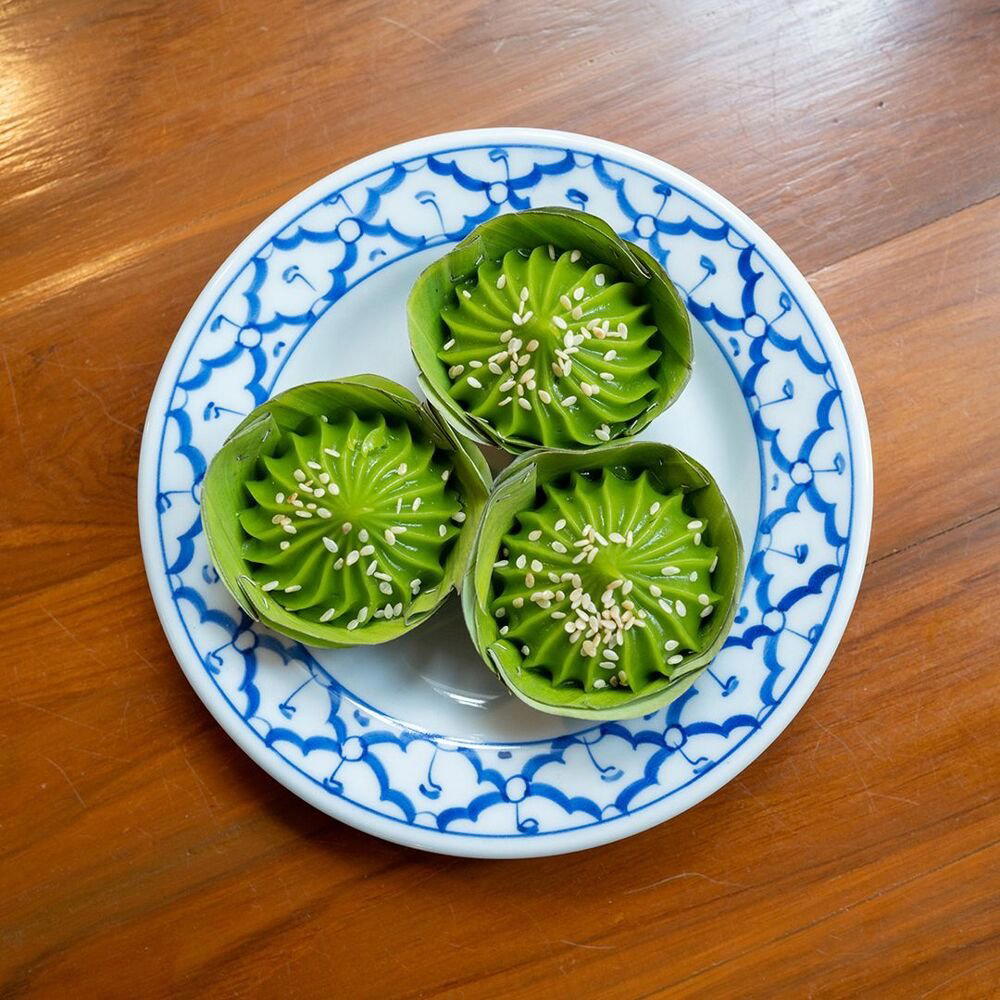
In the Phai Ling district of Ayutthaya, this dessert shop produces between 50 and 70 varieties of traditional Thai sweets daily, with coconut milk pressed fresh each morning. The signature khanom mo kaeng, a silky baked custard with deep eggy richness, anchors a spread that also covers sweet sorghum, thua paep, and piak pun. For visitors tracing the older sweet-making traditions of central Thailand, this is a serious stop.

Pearl is the En Primeur Club membership app, where members save venues, book tables and use the concierge.
The menu
What to order
- Khanom mo kaeng
- Sweet sorghum
- Thua paep
- Piak pun
Where Thai Dessert Culture Takes Its Time
Step into the Phai Ling neighbourhood on the eastern edge of Ayutthaya and the pace shifts noticeably. This is not the temple-circuit bustle of the city's historic core, but a quieter residential and market district where food culture runs on daily ritual rather than tourist footfall. Natural light fills the shop at Khanom Mho Kaeng Mae Yai (Phai Ling), diffused through open frontage in the way that characterises the older-style dessert shops of central Thailand. There are no neon signs or printed English menus directing the visitor. What you get instead is a counter lined with trays and molds in various stages of cooling, and the particular warm scent of freshly pressed coconut milk that signals something made that morning.
Thai dessert traditions in this region are among the oldest and most technically demanding in Southeast Asian confectionery. The central plains, of which Ayutthaya was the royal capital for over four centuries, produced the culinary vocabulary that still shapes what gets served at ceremonial meals, merit-making events, and milestone gatherings across the country. Khanom mo kaeng, the baked egg-and-coconut custard central to this shop's offering, has roots in the royal court, adapted over time from Portuguese influence in the sixteenth and seventeenth centuries into something distinctly Thai: denser, more fragrant, finished with shallot and sometimes coconut cream on leading. That lineage makes shops like this one relevant far beyond their modest footprint.
50 to 70 Varieties, Made Before You Arrive
The production model here is morning-anchored. Coconut milk is squeezed fresh each day, and the range that results, somewhere between 50 and 70 distinct preparations depending on the day, is assembled before the shop opens rather than cooked to order. This matters in practice because availability narrows as the day progresses. Visitors arriving in the afternoon should expect a reduced selection, with the most popular trays sold out by midday or earlier on weekends and public holidays.
The spread maps across several distinct categories of Thai sweet-making. Khanom mo kaeng sits at the centre, a custardy baked preparation with a set leading and a soft, yielding interior that depends entirely on the quality of the coconut milk used. Alongside it, sweet sorghum preparations draw on a grain tradition less common in Bangkok-facing dessert culture. Thua paep, made from split mung beans, and piak pun, a starch-thickened preparation, fill out a range that covers both the ceremonial and the everyday end of the Thai dessert spectrum.
In comparison to Ayutthaya's mid-range restaurant scene, which includes river-facing Thai dining at spots like Baan Mai Rim Nahm or the heritage-inflected setting of Baan Pomphet, a dessert specialist of this type sits in a different category entirely. The price point is negligible by comparison; the draw is cultural specificity rather than a full dining experience. For visitors building a day around Ayutthaya's food culture alongside proper meals at places like Ayutthayarom or Baan Pu Karn, this shop fits naturally as a mid-morning or post-lunch stop.
A Milestone Meal in Miniature
In Thai culture, desserts like khanom mo kaeng carry explicit ceremonial weight. They appear at weddings, ordination ceremonies, and major merit-making events not as an afterthought but as a deliberate marker of occasion. The care involved in preparing them, specifically the fresh coconut milk, the precision of the bake, the choice of varieties, communicates something about the significance of the gathering. Buying from a shop that still operates this way, pressing coconut by hand each morning and producing dozens of varieties daily, is a connection to that ceremonial register even when the occasion is simply a morning visit rather than a formal event.
This framing is worth holding when considering what distinguishes this kind of producer from the packaged Thai dessert market, which has expanded considerably in Bangkok's malls and airport concourses. The coconut milk question is central: industrially produced Thai custard preparations use long-life or canned coconut cream, which produces a flatter, more uniform result. Fresh-pressed coconut milk, used immediately, carries volatile aromatics that disappear within hours of extraction. The difference shows in the finished custard, a richer, more complex base that holds the egg and palm sugar differently. For anyone who has eaten khanom mo kaeng from a supermarket counter and assumed they understood the dish, this shop offers a meaningful correction.
Further afield in Thailand, the emphasis on traditional technique in premium dining contexts can be traced at restaurants like Sorn in Bangkok, which applies similar sourcing rigour to southern Thai cuisine, or Aeeen in Chiang Mai at the northern end of the country's culinary geography. At those price points, provenance and technique are the explicit selling proposition. Here, the same principles operate at the scale of a neighbourhood dessert counter, without the tasting menu framing.
Practical Notes for a Visit
Khanom Mho Kaeng Mae Yai (Phai Ling) operates from a shop address in the Phai Ling subdistrict, on the eastern side of Ayutthaya's island city, at Mu 7 on the Thetsaban Mueang Ayotthaya road. There is no website and no published phone number through which to check availability or hours in advance, which places this firmly in the category of visit-and-see rather than plan-and-confirm. The practical implication: treat a visit here as a morning activity, arrive before 10am if you want the full selection, and build flexibility into the surrounding schedule in case the day's stock has moved faster than expected.
No booking is required; this is a walk-in counter format. Pricing for traditional Thai dessert shops at this level of the market is low by any regional comparison, though precise figures are not available here. Carry cash, as payment infrastructure at Ayutthaya's older independent food shops rarely extends to card or digital wallet systems.
For a fuller view of eating and drinking options across the city, our full Phra Nakhon Si Ayutthaya restaurants guide covers the range from river-dining to street food. The bars guide for Phra Nakhon Si Ayutthaya and the experiences guide cover the rest of a visit. For where to stay, the hotels guide covers the current accommodation options. If you are extending the trip into Nonthaburi or exploring the broader central Thai food corridor, AKKEE in Pak Kret and Angeum in Ayutthaya are worth adding to the itinerary.
Frequently asked questions
Where is Khanom Mho Kaeng Mae Yai (Phai Ling) located?
Khanom Mho Kaeng Mae Yai (Phai Ling) is located at เลขที่95 หมู่ 7 ถนน เทศบาลเมืองอโยธยา Phai Ling, Phra Nakhon Si Ayutthaya District, Phra Nakhon Si Ayutthaya 13000, Thailand, Phra Nakhon Si Ayutthaya.
What awards or recognition does Khanom Mho Kaeng Mae Yai (Phai Ling) have?
Khanom Mho Kaeng Mae Yai (Phai Ling) has received recognition including: This cosy shop bathed in natural light serves 50 to 70 types of authentic Thai desserts. They freshly squeeze coconut milk each morning for rich flavours and aromas. As well as the signature khanom mo kaeng (silky Thai custard), you can sam….
What's the best thing to order at Khanom Mho Kaeng Mae Yai (Phai Ling)?
The khanom mo kaeng is the signature, a silky baked Thai custard made with coconut milk pressed fresh that morning. Beyond it, sweet sorghum, thua paep, and piak pun are among the 50 to 70 varieties on offer, breadth that gives the shop its reputation in the Phai Ling subdistrict of Ayutthaya.
How far ahead should I plan for Khanom Mho Kaeng Mae Yai (Phai Ling)?
Production is morning-anchored, which means popular varieties sell out as the day progresses. Arriving in the morning gives the widest selection across all 50 to 70 types. No advance booking information is published, so an early visit on the day is the practical approach.
What do critics highlight about Khanom Mho Kaeng Mae Yai (Phai Ling)?
The shop's defining credential is process discipline: coconut milk is squeezed fresh each morning rather than sourced pre-packaged, which directly affects the flavour of custards like khanom mo kaeng. The range of 50 to 70 authentic Thai desserts under one roof, in a neighbourhood setting outside the main temple circuit, is what separates it from souvenir-trade dessert stalls in central Ayutthaya.
Can Khanom Mho Kaeng Mae Yai (Phai Ling) adjust for dietary needs?
The menu is built around traditional Thai dessert formats that are predominantly plant-based in their base ingredients, with coconut milk central to most preparations. Egg is a key component of khanom mo kaeng specifically. No formal allergen or dietary customisation information is published for this shop.
Cuisine Context
Comparable venues nearby, for context on price, style, and recognition.
| Venue | Cuisine | Price | Awards | Notes |
|---|---|---|---|---|
| Khanom Mho Kaeng Mae Yai (Phai Ling)This venue (the venue you are viewing) | Authentic Thai Desserts | $1–10 | Michelin Bib Gourmand | Not listed |
| Baan Watcharachai | Authentic Riverside Thai | Not listed | Michelin Plate | Phra Nakhon Si Ayutthaya District |
| Krua Taan | Rustic Thai | Not listed | Michelin Plate | Phra Nakhon Si Ayutthaya |
| Baan Pu Karn | Traditional Thai Seafood | $10–20 | Michelin Bib Gourmand | Phra Nakhon Si Ayutthaya |
| Phae Krung Kao | Traditional Thai Riverside Seafood | $10–20 | Michelin Plate | Ho Rattanachai |
| Baan Ta Ko Rai | Authentic Central Thai | $10–20 | Michelin Bib Gourmand | Khlong Suanplu |
Recognition history
Dated appearances from independent guides and award organizations, with the underlying list record or original source where available.
Michelin Bib Gourmand
Michelin
Continue exploring
More in Phra Nakhon Si Ayutthaya
Details
- Cozy
- Rustic
- Casual Hangout
- Family
- Standalone
- Local Sourcing
- A La Carte
Current opening hours
- Monday
- 9 AM–6 PM
- Tuesday
- 9 AM–6 PM
- Wednesday
- 9 AM–6 PM
- Thursday
- 9 AM–6 PM
- Friday
- 9 AM–6 PM
- Saturday
- 9 AM–6 PM
- Sunday
- 9 AM–6 PM
Hours can change for holidays and private events. Hours as of .
Compact, bright interior bathed in natural light with white tiles, wooden counters, and glass display cases focusing on desserts; relaxed and practical atmosphere.