
Kevin Gideon holds a Michelin Plate (2025), placing it among the more consistently regarded modern cuisine restaurants in Lower Saxony. Chef Gabriele Ravasio leads the kitchen on Donnerschweer Strasse, bringing a precision-led approach to a city not typically associated with this tier of cooking. For Oldenburg, it represents a serious address.
Pearl is the En Primeur Club membership app — saves, bookings, and concierge access live there. Same editors, same standards.
- Address
- Donnerschweer Str. 325, 26123 Oldenburg, Germany
- Phone
- +49 441 18005066
- Website
- kevingideon.de
- Directions
- Get directions
 Saves & bookings on Pearl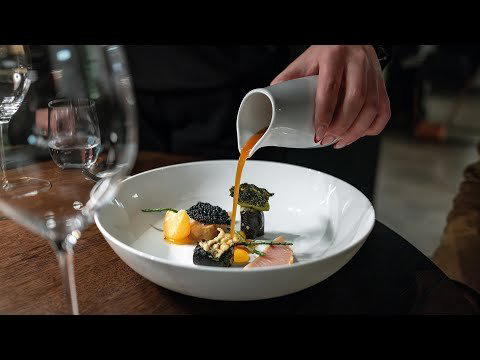
Modern Cuisine at the Edge of Oldenburg's Restaurant Scene
Donnerschweer Strasse is not where most visitors expect to find a Michelin-recognised kitchen. The address sits on a quieter arterial stretch of Oldenburg, away from the pedestrianised centre and the riverside cafes that define the city's more obvious dining circuit. That distance from the tourist track is partly what makes Kevin Gideon interesting. In a city of around 170,000 people in northwest Germany, with a modest fine dining infrastructure compared to Hamburg or Hanover, a restaurant that carries.
Where Kevin Gideon Sits in the German Fine Dining Tier
Germany's Michelin-recognised restaurant scene splits sharply between its decorated upper tier and a wider population of Plate-holders, the latter representing kitchens that the guide considers worth knowing but not yet star-carrying. The Plate designation, introduced by Michelin to flag quality cooking below the star threshold, places Kevin Gideon in a competitive bracket that includes many of the country's most interesting mid-tier restaurants. The starred addresses in Germany cluster heavily in larger cities and resort regions: Aqua in Wolfsburg operates at three stars, Schwarzwaldstube in Baiersbronn similarly, while two-star operations like Vendôme in Bergisch Gladbach and CODA Dessert Dining in Berlin anchor distinct urban markets. For a city like Oldenburg, a Plate-holder carrying near-well-suited public ratings is a meaningful presence, particularly when the price point sits at €€€ rather than the €€€€ bracket that most of those starred peers occupy.
The pricing position matters editorially. At €€€, the restaurant occupies a tier that asks serious intent from its guests without demanding the full financial commitment of a tasting menu at Restaurant Haerlin in Hamburg or Schanz in Piesport. That positioning makes it accessible to a wider local audience while maintaining the credentials that distinguish it from the city's mid-market dining.
Chef Gabriele Ravasio and the Modern Cuisine Frame
Modern cuisine as a category covers considerable ground in Germany, from technically rigorous tasting menus to more relaxed chef-driven formats that borrow from European and Asian traditions without committing fully to either. The designation tells you less about style than it does about orientation: a willingness to move beyond regional German cooking conventions and apply contemporary technique to seasonal product. At the restaurant, the kitchen is led by Chef Gabriele Ravasio, whose name suggests an Italian lineage that would, if accurate, bring a particular sensibility to product selection and flavour balance. Italy's culinary tradition places primary ingredients at the centre of the plate and treats technique as support rather than spectacle, a philosophy that fits comfortably within the modern cuisine bracket at this price tier.
The broader pattern in German fine dining has been a gradual convergence of European influences. Chefs trained across multiple countries, carrying techniques from France, Japan, or Italy into regional German markets, have reshaped the Plate and lower-star tier considerably over the past decade. Restaurants like JAN in Munich and ES:SENZ in Grassau represent this tendency at the starred level, where cross-cultural training has become a credential as legible as regional pedigree. The restaurant reads as part of the same broader movement, applied to a market that has fewer such kitchens and therefore a more attentive local audience for what they produce.
The Oldenburg Context
Lower Saxony's dining identity is defined more by hearty regional cooking and well-priced gastronomy than by fine dining ambition. Oldenburg itself has a university population and a strong agricultural hinterland, both of which shape a food culture oriented toward accessibility and volume rather than the tasting-menu format. Within that context, the presence of a Michelin-recognised modern cuisine kitchen signals either a shift in local demand or a kitchen that has built its audience against the grain of immediate geography.
Visitors coming from Hamburg, about 120 kilometres to the northeast, or from Bremen, roughly 45 kilometres to the south, will find the restaurant representative of something Oldenburg rarely offers: a meal that requires advance planning. Given the review volume and rating consistency, securing a table without a reservation is unlikely on weekends. The restaurant's address at Donnerschweer Str. 325 places it on the northern edge of the city centre, reachable by tram or taxi from the main station in under fifteen minutes.
How It Compares Further Afield
For readers who contextualise German Plate-holders against European modern cuisine more broadly, the reference points extend well beyond Germany's borders. Frantzén in Stockholm and FZN by Björn Frantzén in Dubai represent what the modern cuisine format looks like at its most capitalised and internationally scaled. Closer to the restaurant's tier, places like Bagatelle in Trier and Victor's Fine Dining by Christian Bau in Perl or Waldhotel Sonnora in Dreis illustrate how regional German destinations have built serious fine dining reputations over time. The restaurant is at an earlier stage of that arc, recognised by Michelin but not yet carrying a star. The 2025 Plate designation is a signal that the guide is watching.
Planning Your Visit
The restaurant operates under the €€€ price bracket, which in the German context typically implies a per-person spend in the range of €60 to €100 before wine, though specific menu prices and current hours should be confirmed directly For travellers building a broader Oldenburg itinerary, the restaurant is a restaurant to approach with some advance planning: its rating and Michelin recognition place it in demand above what its address on a northern Oldenburg arterial road might suggest.
In Context: Similar Options
Comparable venues nearby, for context on price, style, and recognition.
| Venue | Cuisine | Price | Awards | Notes |
|---|---|---|---|---|
| Kevin GideonThis venue — the venue you are viewing | Modern Creative European Fine Dining | $$$$ | Michelin Plate | Not listed |
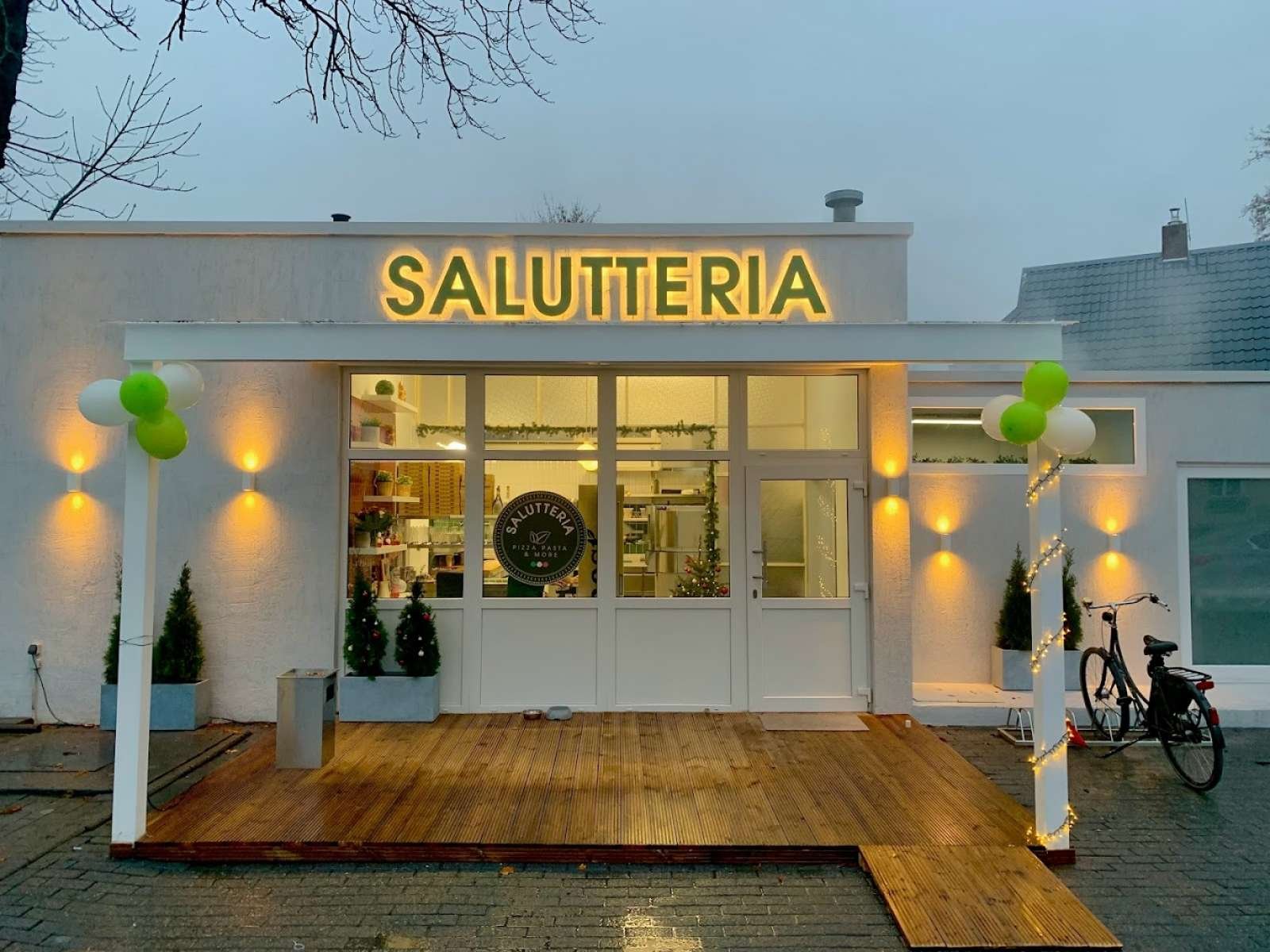
| Salutteria | Pizza Napoletana & Pasta | $$ | Not listed | Oldenburg |
| Kleine Burg | Modern German & European | $$$ | Not listed | Oldenburg |
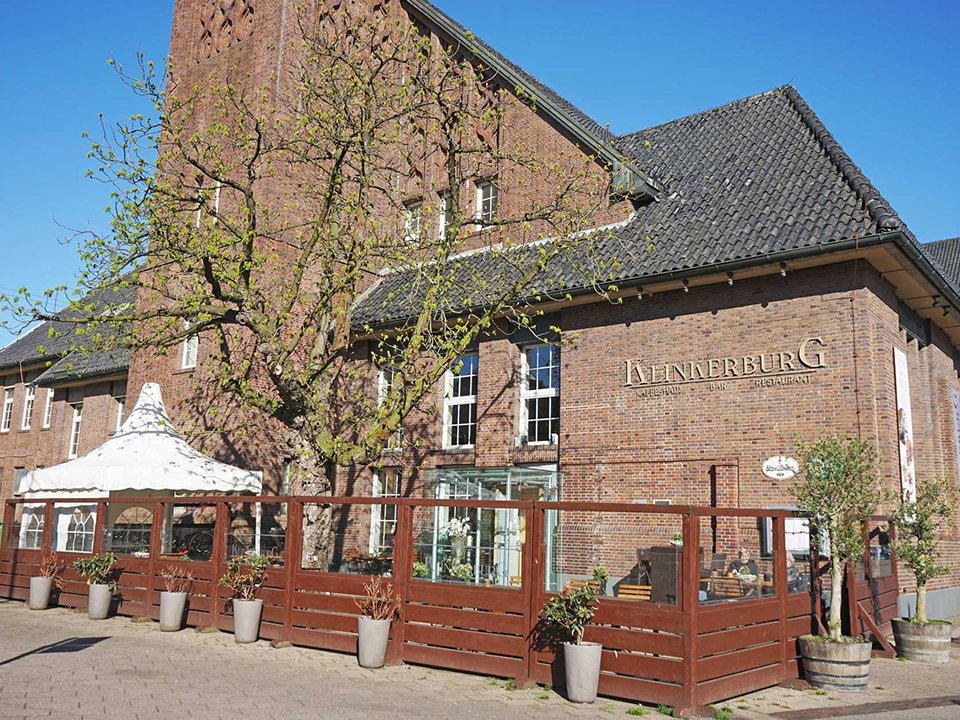
| Klinkerburg | German Classic | $$ | Not listed | Bahnhofsplatz |
| Kaiserküche | Regional German Fine Dining | $$$$ | Not listed | Bahnhofsviertel |
| Rodesand | Modern French Farm-to-Table Pescatarian | $$$$ | Michelin Plate | Bad Malente-Gremsmühlen |
Recognition history
Dated appearances from independent guides and award organizations, with the underlying list record or original source where available.
Michelin Plate
Michelin
Michelin Plate
Michelin
Continue exploring
More in Oldenburg
Restaurants in Oldenburg
Browse all →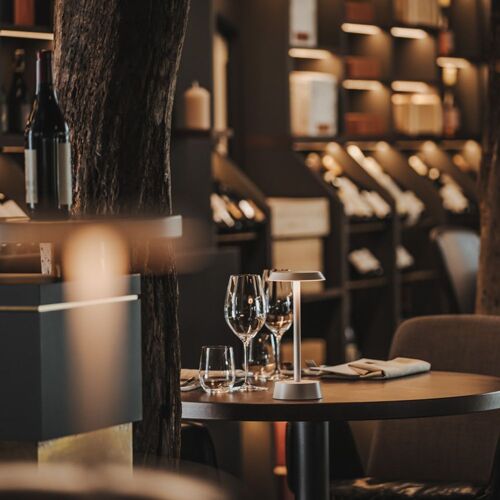
Hotels in Oldenburg
Browse all →
At a Glance
- Elegant
- Modern
- Intimate
- Sophisticated
- Date Night
- Special Occasion
- Celebration
- Open Kitchen
- Standalone
- Sommelier Led
- Beer Program
- Local Sourcing
Current opening hours
- Monday
- Closed
- Tuesday
- 6–11 PM
- Wednesday
- 6–11 PM
- Thursday
- 6–11 PM
- Friday
- 6–11 PM
- Saturday
- 6–11 PM
- Sunday
- Closed
Hours can change for holidays and private events. Last verified .
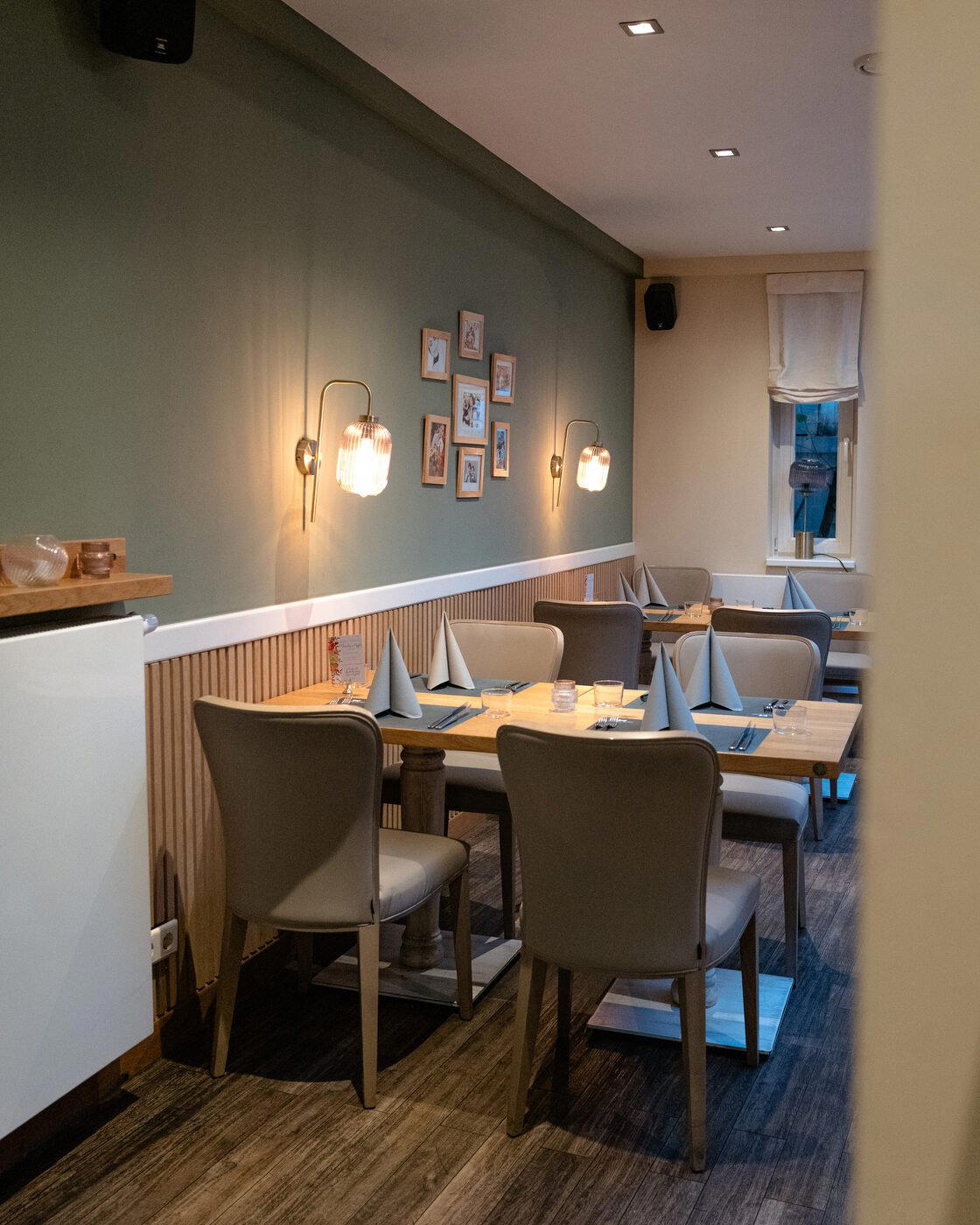
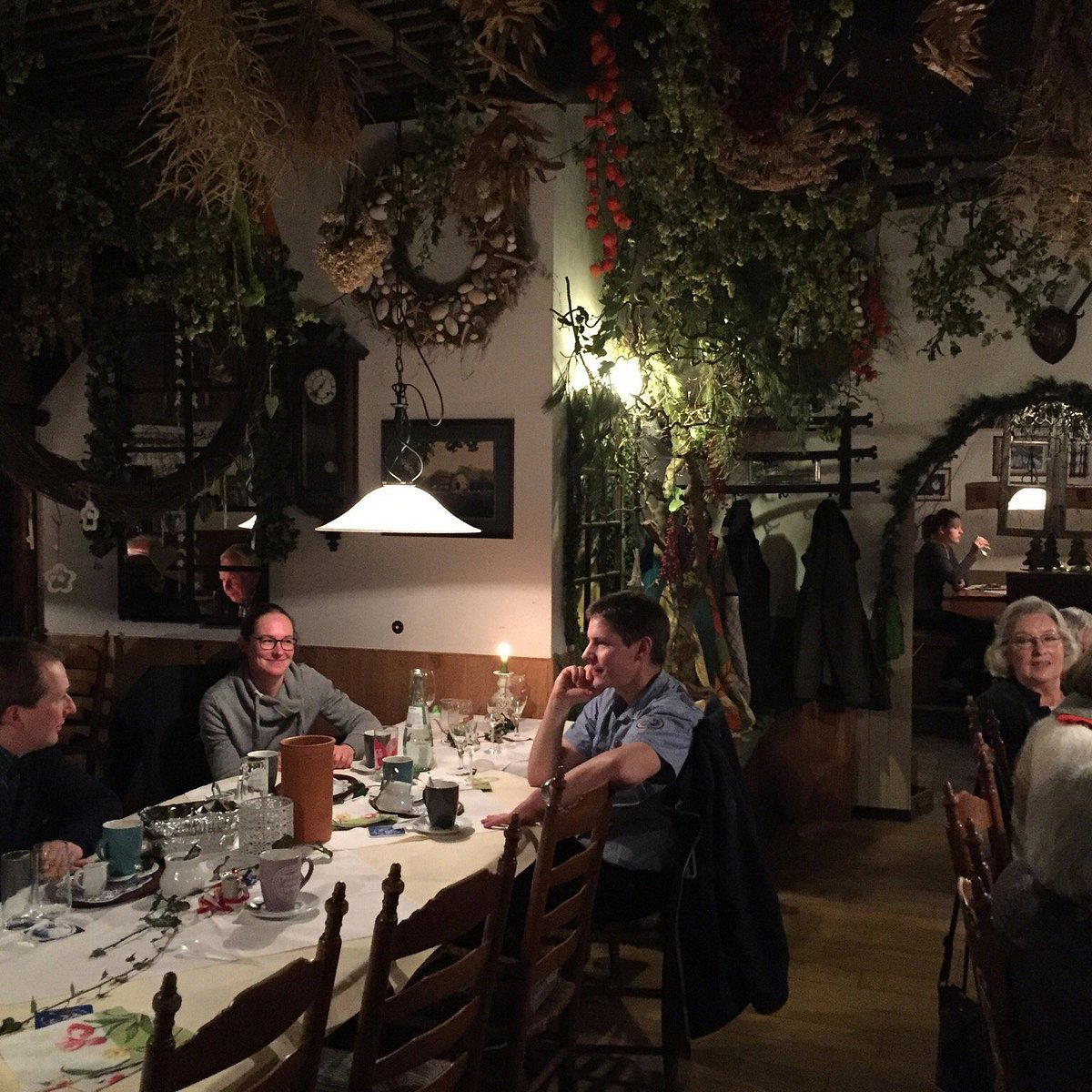
Warm, modern, and comfortable atmosphere in a converted listed barn with muted lighting, sophisticated table arrangement, and refined but unpretentious decor that feels inviting rather than sterile.