Kathmandu
Our verdict
Kathmandu sits on Solano Avenue in Albany, California, bringing the flavors of Nepal and the Indian subcontinent to one of the East Bay's most neighborhood-rooted dining corridors. The restaurant occupies a position in Albany's mid-range dining scene alongside Italian, contemporary, and pan-Asian options that collectively define the avenue's character. Visitors looking for South Asian cooking north of Berkeley will find Kathmandu a consistent local reference point.

Pearl is the En Primeur Club membership app — saves, bookings, and concierge access live there. Same editors, same standards.
- Address
- 1410 Solano Ave, Albany, CA 94706
- Phone
- (510) 526-3222
- Hours
- Mon ClosedTue–Sun 5–9:30 PM
- Website
- kathmandu-restaurant.com
- Directions
- Get directions
The menu
What to order
- Momo
- Khashi Ko Ledo Shekuwa
- Chatamari
Solano Avenue and the Case for Neighborhood South Asian
Albany's Solano Avenue operates as one of the East Bay's most self-contained dining corridors, a stretch where independent restaurants — not chains — set the terms. The block draws from Berkeley to the south and the broader North Berkeley hills to the east, and its dining mix reflects that: Italian trattorias like Caffe Italia Ristorante and Café Capriccio, Korean-American bowl formats like Bowl'd, and steakhouses like Black & Blue Steak and Crab and 677 Prime. Kathmandu, at 1410 Solano Ave, sits within that independent ecosystem, representing a cuisine category that the avenue otherwise leaves largely uncovered.
South Asian restaurants in smaller California cities tend to occupy a specific structural role: they absorb demand from a geographically dispersed population that doesn't have the density to support the dozen-plus specialist blocks you'd find in Fremont or parts of the South Bay. The result is that a single well-placed Nepali or Indian restaurant on a neighborhood corridor often becomes a default reference point, accumulating regulars in a way that larger urban clusters can't replicate. Kathmandu on Solano fits that pattern.
What the Room Signals Before You Sit Down
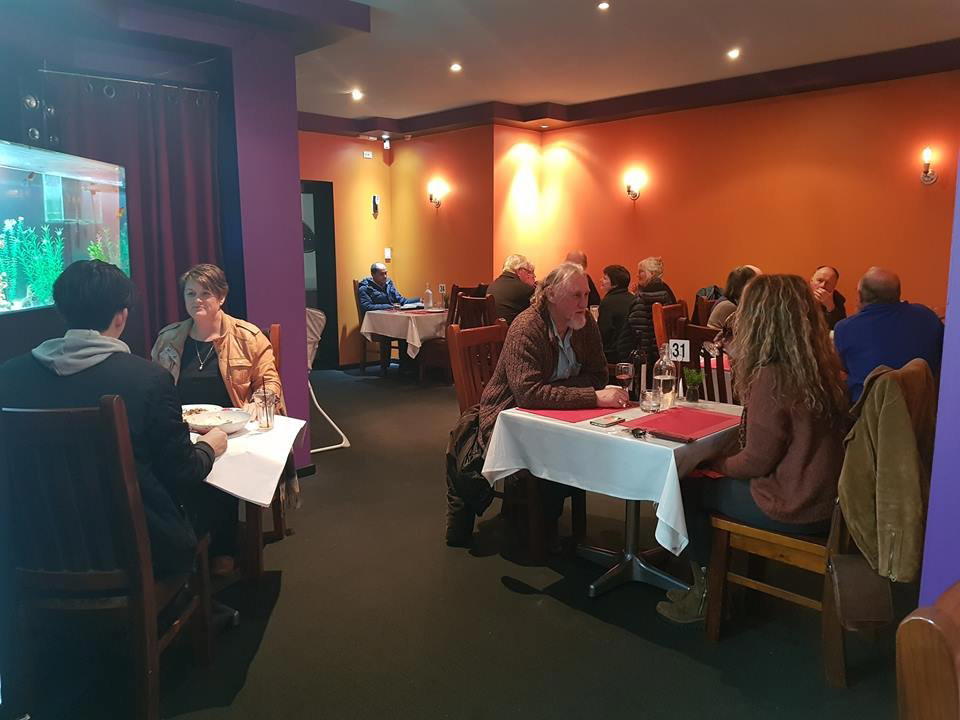
Neighborhood South Asian restaurants in the East Bay tend to communicate their register quickly through the physical space: table spacing, the presence or absence of cloth napkins, whether the menu comes laminated or printed. These are not trivial details. They define whether a room reads as a weeknight local or as a destination-intent dining experience. Kathmandu's address on a pedestrian-friendly stretch of Solano Avenue places it in the former category, approachable on foot from the surrounding residential blocks, the kind of room where the ambient noise level and the pace of service both tilt toward comfort rather than ceremony.
This matters in the context of Albany's broader dining scene, where the higher end of the market is handled by venues like contemporary-leaning Café Capriccio and the steakhouse tier. A Nepali kitchen operating at neighborhood scale fills a different functional slot: accessible weeknight protein, rice-based dishes that travel well, and a spice vocabulary that the rest of Solano's menu largely doesn't offer.
The Collaboration That Defines a Nepali Kitchen at This Scale
At restaurants operating without a high-profile chef name or an awards trail to lean on, the team dynamic becomes the primary determinant of consistency. In a small Nepali kitchen, this typically means a tight structure: a lead cook whose vocabulary runs from dal bhat to momo to curry-forward meat dishes, a front-of-house that manages the pace and guides first-time visitors through unfamiliar menu architecture, and a floor team that calibrates the meal's rhythm without over-formalizing it.
The front-of-house role in this category is underappreciated. Nepali cuisine remains less widely known than North Indian or Thai across California dining culture, which means servers at places like Kathmandu absorb a genuine education function, explaining the difference between Nepali and Indian flavor profiles, flagging heat levels, and managing allergy conversations that the menu may not fully address in print. Whether the team here executes that function well is the kind of insider detail that requires a visit to verify, but structurally, it's the axis on which the whole operation turns.
For comparison, consider how significantly team cohesion shapes the experience at restaurants across price tiers: at Lazy Bear in San Francisco, the front-of-house is essentially a theatrical co-author of the meal. At Atomix in New York City, the sommelier and floor team carry half the narrative weight of each course. The principles scale down, not away. Even at a neighborhood Nepali spot, the person explaining what separates tarkari from a generic curry is doing meaningful work.
Nepali Cuisine in the East Bay Context
The East Bay has a relatively developed South Asian food culture, concentrated in Fremont's Niles district and along certain stretches of Newark and Union City, where Nepali, Bengali, and regional Indian restaurants cluster. Albany sits geographically apart from that density, which positions Kathmandu as something closer to a local institution than a competitive-market entrant. That's a different kind of durability.
Nepali cooking at its core draws from the cuisines of both India and Tibet, with its own distinct register: less cream-heavy than Punjabi, more reliant on mustard oil and timur (Sichuan pepper's Himalayan relative), and structured around dal bhat as a daily staple rather than a restaurant set piece. Momos, steamed or fried dumplings with minced meat or vegetable fillings, have become the most recognizable export of Nepali restaurant culture globally, the dish most likely to appear on a first-time visitor's table. Sekuwa, a grilled meat preparation with a spice profile that diverges sharply from tandoor-cooked equivalents, is the secondary signature. How a kitchen executes both says a great deal about its sourcing priorities and technical discipline.
Against the wider California dining conversation, where restaurants like Single Thread Farm in Healdsburg, The French Laundry in Napa, and Providence in Los Angeles define one pole of ambition, and neighborhood independents like Kathmandu define another, the middle of the market is where most people eat most of the time. The East Bay's culture has always been more comfortable in that middle ground than, say, San Francisco's fine-dining corridor.
Planning Your Visit
Kathmandu is located at 1410 Solano Ave, Albany, CA 94706, on a walkable stretch of the avenue with street parking available in the surrounding residential grid. The restaurant operates as a neighborhood independent without a dedicated booking platform confirmed in public records, which suggests walk-ins are the primary access point, a format common to this category and price tier. Given the Solano Avenue foot traffic patterns, weekend evenings tend to draw the highest local volume; a midweek visit gives you more room and likely more attentive pacing from the floor team. For the full picture of what Albany's dining scene offers across price points and cuisines, see our full Albany restaurants guide.
Where Kathmandu Fits in a Wider Dining Circuit
For travelers moving through the Bay Area with broader dining ambitions, Kathmandu represents the neighborhood end of a spectrum that runs through Le Bernardin in New York City, Alinea in Chicago, Blue Hill at Stone Barns in Tarrytown, Addison in San Diego, The Inn at Little Washington, Emeril's in New Orleans, and 8 1/2 Otto e Mezzo Bombana in Hong Kong. Those restaurants occupy the upper tier of their respective categories. Kathmandu occupies a different tier and answers a different question: where do you eat well on a Tuesday in Albany without driving to Berkeley? That question has its own legitimate answer, and this address is part of it.
Frequently asked questions
What part of town is Kathmandu in?
Kathmandu is located at 1410 Solano Ave, Albany, CA 94706, Albany.
Is Kathmandu in Albany one of the only Nepali restaurants on Solano Avenue?
Kathmandu at 1410 Solano Ave appears to be among a small number of dedicated Nepali restaurants on the Solano corridor, where South Asian representation leans more heavily toward Indian formats. That positioning makes it a practical reference point for East Bay diners specifically seeking Nepali cuisine rather than the broader South Asian category.
What's the must-try dish at Kathmandu?
Nepali restaurants of this type on the Solano corridor typically center their menus on dal bhat, momo dumplings, and slow-cooked curries — dishes that reflect the cuisine's Himalayan roots. Checking directly with the restaurant before your visit will give you the current picture.
How hard is it to get a table at Kathmandu?
Kathmandu operates on Solano Avenue, a walkable Albany corridor where neighborhood restaurants tend to fill steadily on weekend evenings without the months-long waits of destination dining. No booking data is on file, so calling ahead or arriving early on busier nights is the practical approach for this type of independent East Bay spot.
What is Kathmandu known for?
Kathmandu holds a position as one of the few Nepali-focused restaurants on Solano Avenue, a stretch in Albany, CA defined by independent operators rather than chain concepts. The East Bay has a developed South Asian dining culture, and Kathmandu represents the neighborhood end of that spectrum, serving a cuisine that remains less common in the region than Indian or Tibetan options.
What if I have allergies at Kathmandu?
Nepali cooking frequently involves dairy, legumes, and wheat-based preparations, so guests with specific dietary needs should check the venue's official channels before visiting to confirm what can be adjusted.
Is Kathmandu worth it?
For East Bay diners looking for Nepali food outside the Fremont corridor, Kathmandu on Solano Avenue fills a gap that few restaurants in Albany address. No awards or star ratings are currently on file, so the case for the visit rests on the cuisine category itself and the corridor's reputation for sustaining serious independent operators over time.
A Pricing-First Comparison
Comparable venues nearby, for context on price, style, and recognition.
| Venue | Cuisine | Price | Notes |
|---|---|---|---|
| KathmanduThis venue — the venue you are viewing | Authentic Nepalese & Tibetan | $20–30 | Not listed |
| Albany Bowl | Solano Avenue, Korean Rice Bowls | Not listed | Not listed |
| Lanesplitter Pizza Pit Stop | Pizza Pub | $20–30 | West Berkeley, Pizza Pub |
| Chez Mansour | Lebanese Mediterranean | Not listed | Solano Ave, Lebanese Mediterranean |
| Renee's Place | Fresh Szechuan & Hunan Chinese | $20–30 | Solano Avenue, Fresh Szechuan & Hunan Chinese |
| Little Star Pizza | Chicago-Style Deep Dish Pizza | $20–30 | Solano Avenue, Chicago-Style Deep Dish Pizza |
Continue exploring
More in Albany
Restaurants in Albany
Browse all →
Bars in Albany
Browse all →
Hotels in Albany
Browse all →

Details
- Cozy
- Family
- Casual Hangout
- Standalone
- A La Carte
- Vegetarian Friendly
Current opening hours
- Monday
- Closed
- Tuesday
- 5–9:30 PM
- Wednesday
- 5–9:30 PM
- Thursday
- 5–9:30 PM
- Friday
- 5–9:30 PM
- Saturday
- 5–9:30 PM
- Sunday
- 5–9:30 PM
Hours can change for holidays and private events. Last verified .
Homey and comfortable family atmosphere that makes diners feel welcome, featuring cultural elements like prayer wheels and mandalas on the ceiling.