Café Capriccio
Our verdict
Café Capriccio serves Regional Italian Trattoria cooking at 49 Grand St in Albany, with an extensive wine list, conversational room, and leisurely dinner pacing.

Pearl is the En Primeur Club membership app — saves, bookings, and concierge access live there. Same editors, same standards.
- Address
- 49 Grand St, Albany, NY 12207
- Phone
- (518) 465-0439
- Hours
- Daily 5–9 PM
- Website
- cafecapriccio.com
- Directions
- Get directions
- Booking
- Book on the venue's website
The menu
What to order
- Eggplant with four cheeses
- Calamari neri
- Tagliatelle with puttanesca sauce
- Risotto with sun-dried tomato and Gorgonzola
Grand Street After Dark: The Ritual of an Albany Institution
There is a particular quality to old brick on a winter evening in upstate New York, the kind of cold that makes a lit window on a narrow street feel deliberately warm. Grand Street in Albany carries that quality, and at number 49 the signal is clear before you reach the door. Café Capriccio has occupied this address long enough that it has become part of the street's memory, a fixed point in a city that has seen its dining scene shift considerably around it.
Albany's restaurant culture sits at an interesting juncture. The Capital Region has always supported a tier of serious, long-form dining that its size might not immediately suggest, partly because of its political class and university community, and partly because of a genuine regional appetite for Italian and Continental traditions that predate the farm-to-table era by decades. Café Capriccio belongs to that older tier, and understanding it requires understanding the difference between a place that follows trends and a place that has simply kept its head down and done the work.
The Architecture of an Italian-American Meal
Italian-American dining in the northeastern United States developed its own grammar over the course of the twentieth century, distinct from both the regional cooking of Italy and the modernized iterations now common in metropolitan markets. The meal has a structure: bread arrives early, antipasti establish the pace, pasta arrives as a course unto itself rather than a side consideration, and the room is expected to hold you for a while. That structure is not incidental. It is the point.
At Café Capriccio, the pacing follows that grammar. This is not a room that rushes its tables. The dining ritual here is closer to the European model than to the efficient turnover patterns that define most American restaurant economics, and that choice has consequences for how an evening unfolds. You are expected to order in sequence, to allow courses to arrive with space between them, and to treat the meal as its own event rather than a prelude to something else.
The comparison to larger-market peers is useful context. Restaurants like Blue Hill at Stone Barns in Tarrytown or The Inn at Little Washington in Washington have built reputations on exactly this kind of deliberate, ceremony-forward dining format. Café Capriccio operates in the same philosophical register, scaled to Albany's context.
Where Albany's Dining Tiers Sit
Albany's upper tier of restaurants is smaller than comparable cities but more coherent than outsiders might expect. 677 Prime anchors the steakhouse end of the premium market. Black and Blue Steak and Crab covers a similar territory with a slightly broader seafood focus. Contemporary formats appear at places like Juanita and Maude, which operates in the mid-to-upper bracket with a seasonal, produce-driven menu. Caffe Italia Ristorante shares the Italian lineage with Café Capriccio but occupies a different register of the same tradition.
What Café Capriccio represents within that set is the continental Italian model at its most committed: a room where the cuisine is not a concept but a practice, and where longevity is itself a form of editorial statement. Restaurants that have sustained serious Italian cooking in American mid-size cities for multiple decades are rarer than they should be. Most of them either modernize beyond recognition or retreat into tourist-facing versions of themselves. The ones that hold their line become reference points.
For a broader view of where Café Capriccio sits within Albany's full dining geography, the EP Club Albany restaurants guide maps the city's premium and mid-tier options across categories, from Chez Mansour to Bowl'd. The range illustrates how diverse the city's current dining moment has become, even as its foundational institutions have remained relatively stable.
The Italian Tradition in the American Northeast
The northeastern United States has a specific relationship with Italian cooking that no other American region quite replicates. The immigration patterns of the late nineteenth and early twentieth centuries created Italian-American communities in cities across New York, New Jersey, Pennsylvania, and New England, and from those communities came a cooking tradition that drew on southern Italian roots but evolved under different conditions: different ingredients, different economics, different expectations about portion and formality.
That tradition produced a restaurant type that is now in some tension with contemporary dining culture. The formats celebrated at a place like Le Bernardin in New York City or Atomix in New York City are precision-tasting formats, tightly choreographed, minimal in expression. The Italian-American dining room is almost the opposite: generous, sequential, unhurried, built on abundance as its own virtue. Neither is superior to the other, but they serve fundamentally different purposes, and knowing which you want matters before you book.
The tasting-menu era has produced extraordinary work at places like The French Laundry in Napa, Smyth in Chicago, Lazy Bear in San Francisco, Single Thread Farm in Healdsburg, Addison in San Diego, Providence in Los Angeles, and Emeril's in New Orleans, to name a handful across American regions. Across the Atlantic, the same discipline appears at Atelier Moessmer Norbert Niederkofler in Brunico. But the Italian-American table-service model at its finest offers something the tasting format rarely does: the ability to eat exactly what you want, in the sequence you want, at a pace you set with the kitchen as a partner rather than a conductor.
Planning Your Evening at 49 Grand Street
Grand Street sits in downtown Albany, walkable from the State Capitol and within reasonable distance of the major hotels that serve the political and business community. For visitors arriving from New York City, the Amtrak connection at Albany-Rensselaer runs frequently and places you roughly a ten-minute ride from downtown. Given the restaurant's reputation and the size of Albany's serious dining audience, reservations are the practical approach for any weekend evening or mid-week dinner tied to state government schedules, when the dining room draws from the legislative and lobbying community that keeps Albany's premium restaurants busy in ways that have nothing to do with tourism.
The evening format works well when treated as the main event: arrive without a tight end time, let the courses sequence as the kitchen intends, and expect the wine program to integrate with the Italian structure of the meal. That is the context in which Café Capriccio makes the most sense, and the context in which its particular strengths become most legible.
Frequently asked questions
Where do I go for Café Capriccio?
Café Capriccio is located at 49 Grand St, Albany, NY 12207, Albany.
How does Café Capriccio fit into Albany's broader restaurant scene?
Albany's upper dining tier is compact but coherent, and Café Capriccio occupies the Italian-American anchor position within it alongside steakhouse institutions like 677 Prime. Its location on Grand Street in downtown Albany places it within walking distance of the State Capitol, which gives it a regular clientele drawn from the political and legal community that works in that district. That constituency rewards consistency over novelty, which aligns with the long-form Italian-American format the restaurant maintains.
What's the best thing to order at Café Capriccio?
The pasta courses are where Café Capriccio's commitments show most clearly. Italian-American kitchens of this tradition treat pasta as a primary course rather than a side or afterthought, and the sequencing at 49 Grand Street follows that grammar. Order from the pasta section before committing to a secondi and the meal will make more sense structurally.
Can I walk in to Café Capriccio?
Walk-in availability at Café Capriccio is variable and depends heavily on the Albany legislative calendar. During the session months from January through June, downtown Albany dining at the upper tier runs at high occupancy on weekday evenings, particularly when the Capitol is in session. A reservation made in advance is a more reliable approach, especially Thursday through Saturday.
What's the defining dish or idea at Café Capriccio?
The defining idea is structural: Café Capriccio commits to the full arc of an Italian meal, moving from antipasto through pasta to secondi rather than abbreviating the sequence into a single-course format. That approach places it within a northeastern Italian-American tradition that developed its own grammar distinct from both contemporary trattoria formats and regional Italian cooking. At 49 Grand Street, the meal is meant to take time.
Cuisine-First Comparison
| Venue | Cuisine | Price | Awards | Notes |
|---|---|---|---|---|
| Café CapriccioThis venue — the venue you are viewing | Regional Italian Trattoria | $30–50 | Not listed | Not listed |
| China Village | Sichuan Chinese | $20–30 | Michelin Bib Gourmand | Chinese |
| Juanita & Maude | New American with Italian & Global Influences | $30–50 | Michelin Plate | Contemporary |
| Liberte, Albany | French-Vietnamese Fusion | Not listed | Star Wine List | Not listed |
| Black & Blue Steak and Crab | Steakhouse and Seafood | $50–100 | Wine Spectator Award of Excellence | Not listed |
| Bowl'd | Korean Rice Bowls | $20–30 | Not listed | Not listed |
Continue exploring
More in Albany
Restaurants in Albany
Browse all →
Bars in Albany
Browse all →
Hotels in Albany
Browse all →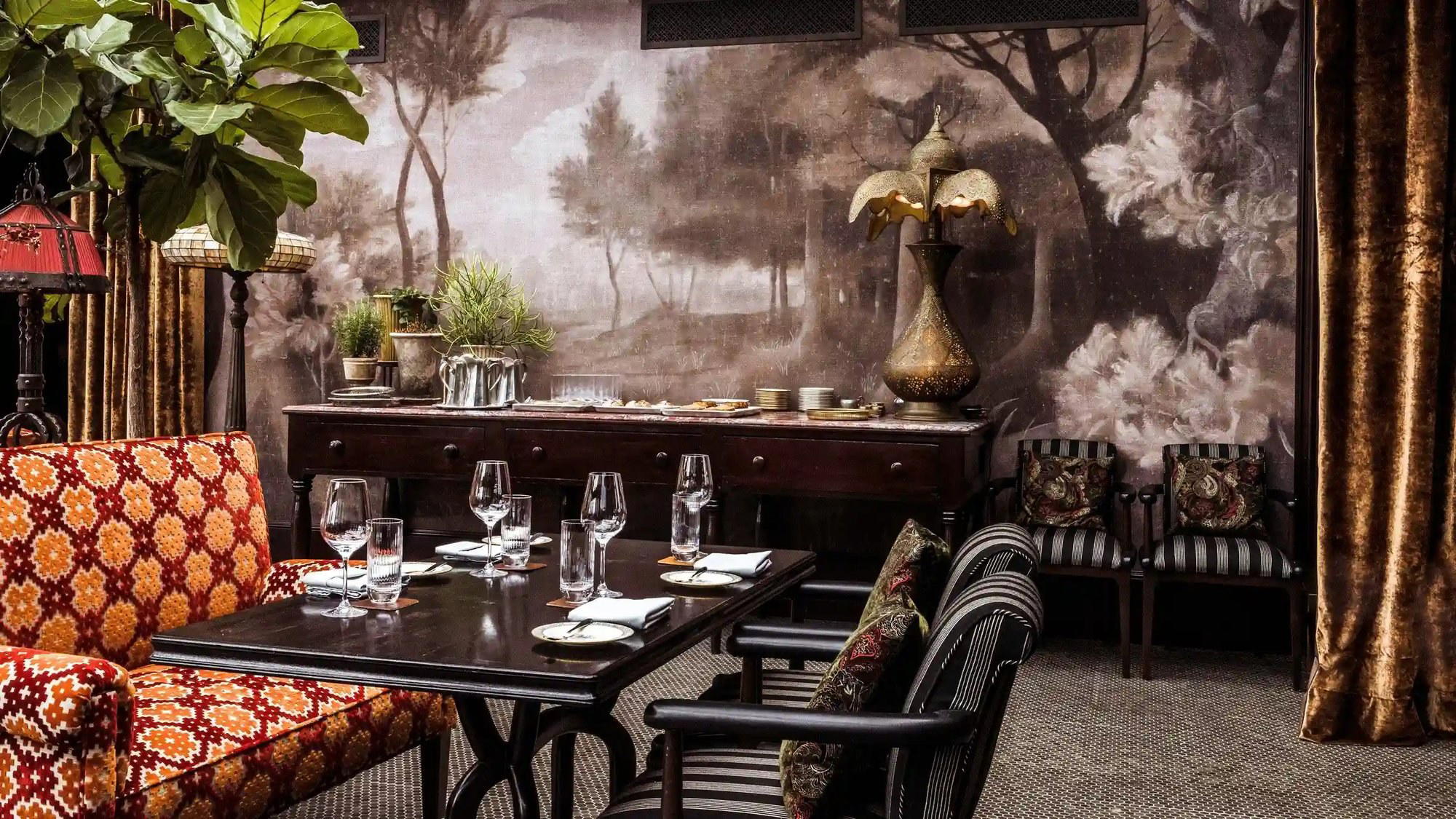
Details
- Romantic
- Classic
- Cozy
- Intimate
- Date Night
- Special Occasion
- Group Dining
- Private Dining
- Standalone
- Extensive Wine List
- Farm To Table
- Organic
- Local Sourcing
- A La Carte
- Wine
- Vegetarian Friendly
- Gluten Free Options
Current opening hours
- Monday
- 5–9 PM
- Tuesday
- 5–9 PM
- Wednesday
- 5–9 PM
- Thursday
- 5–9 PM
- Friday
- 5–9 PM
- Saturday
- 5–9 PM
- Sunday
- 5–9 PM
Hours can change for holidays and private events. Last verified .
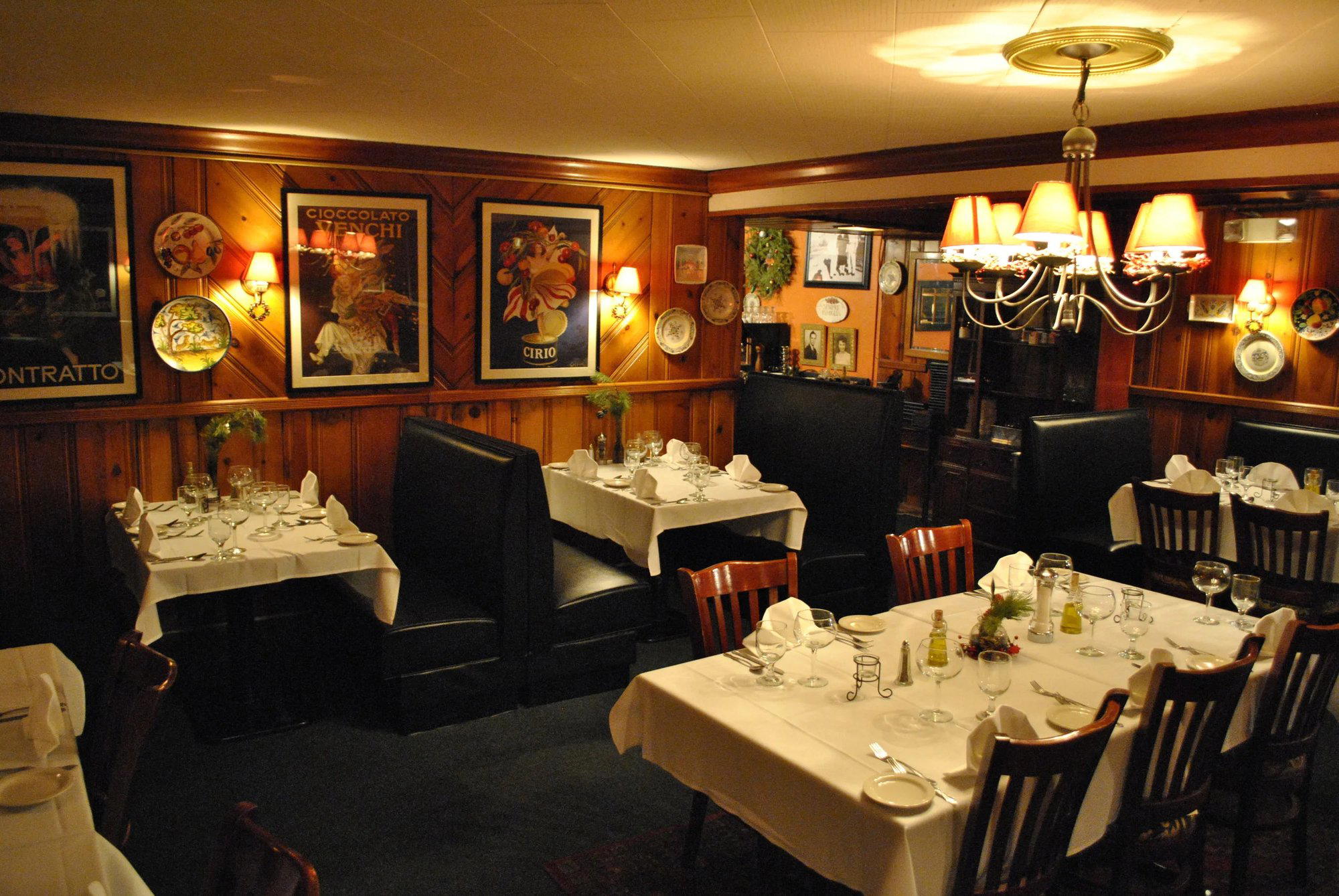
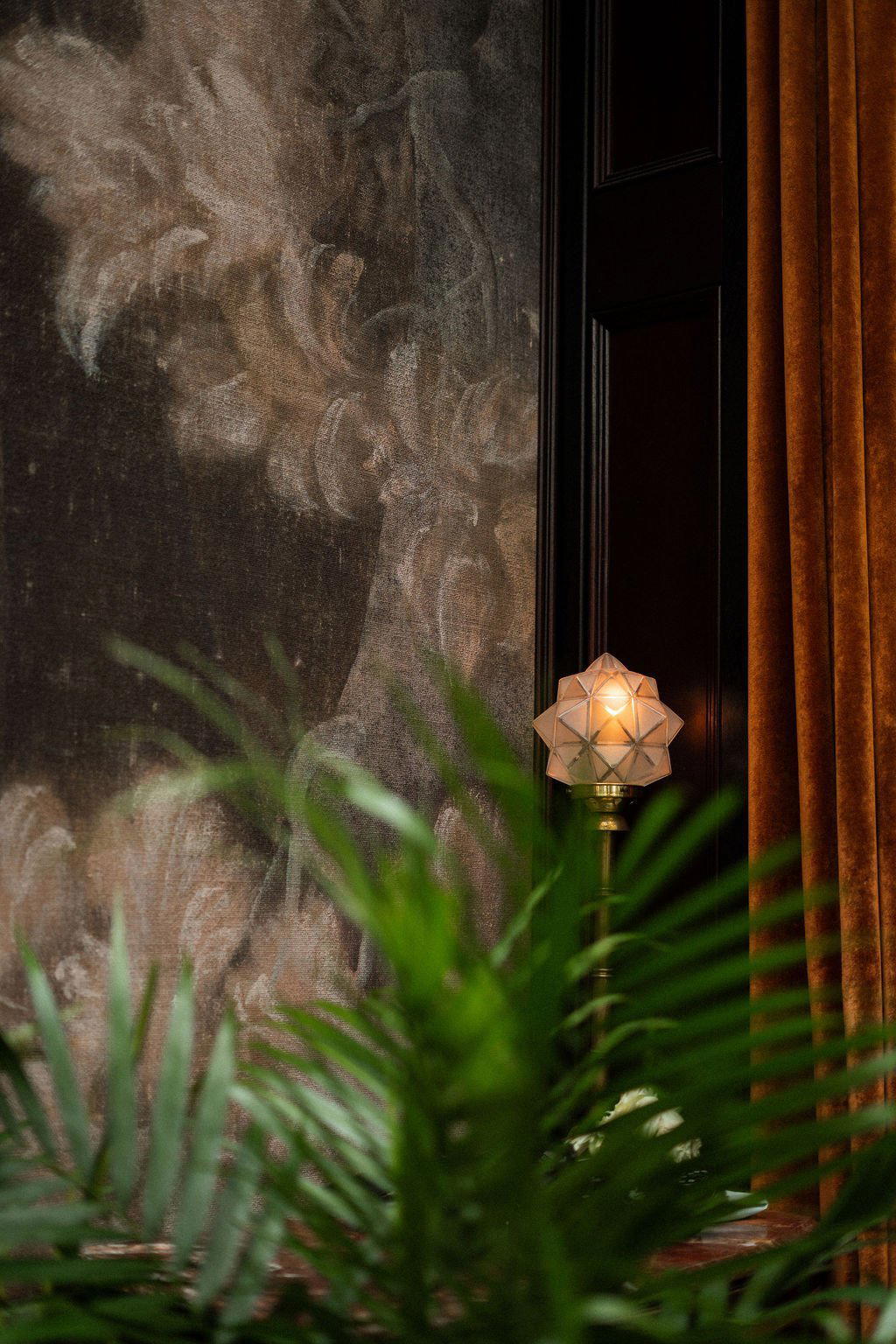
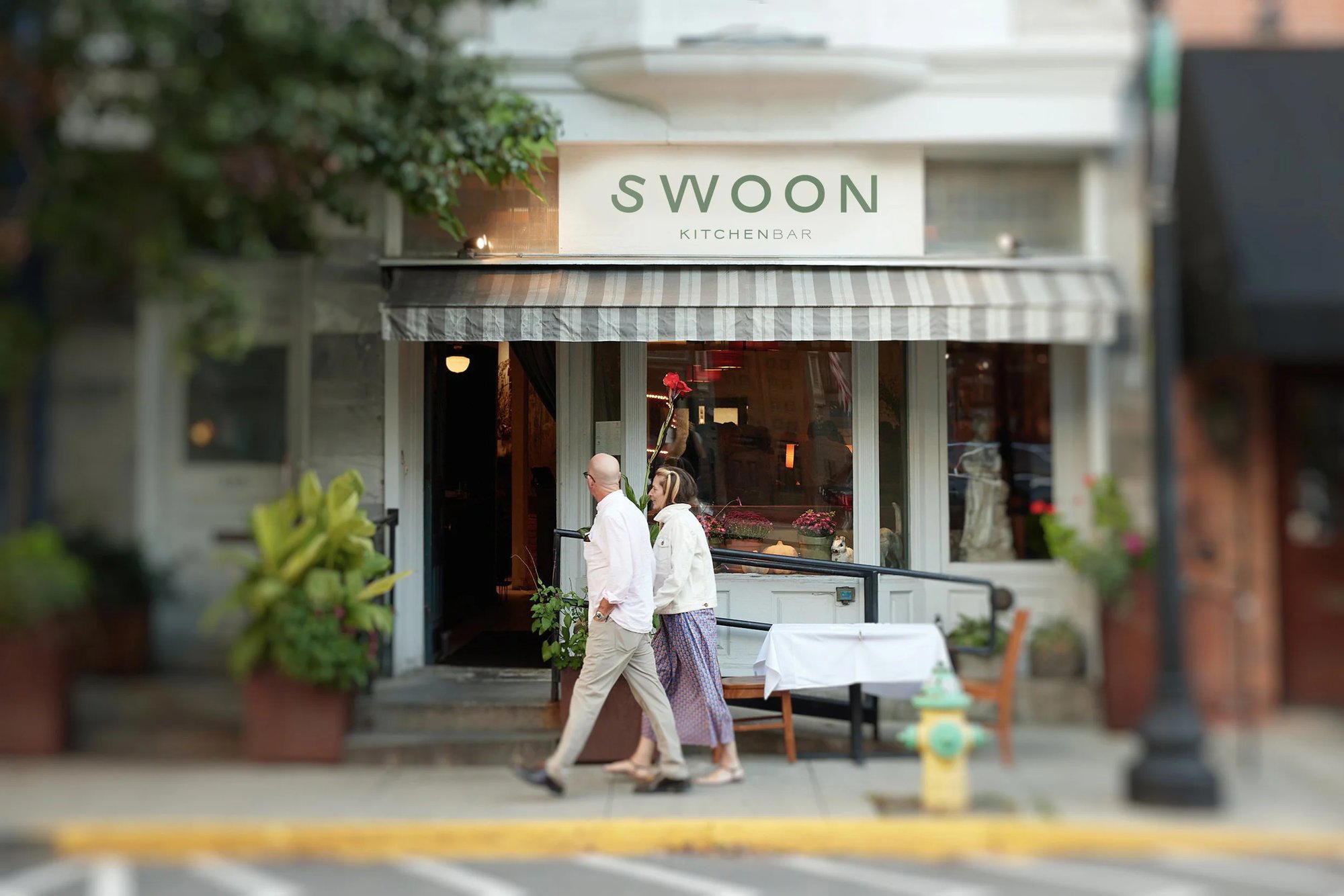
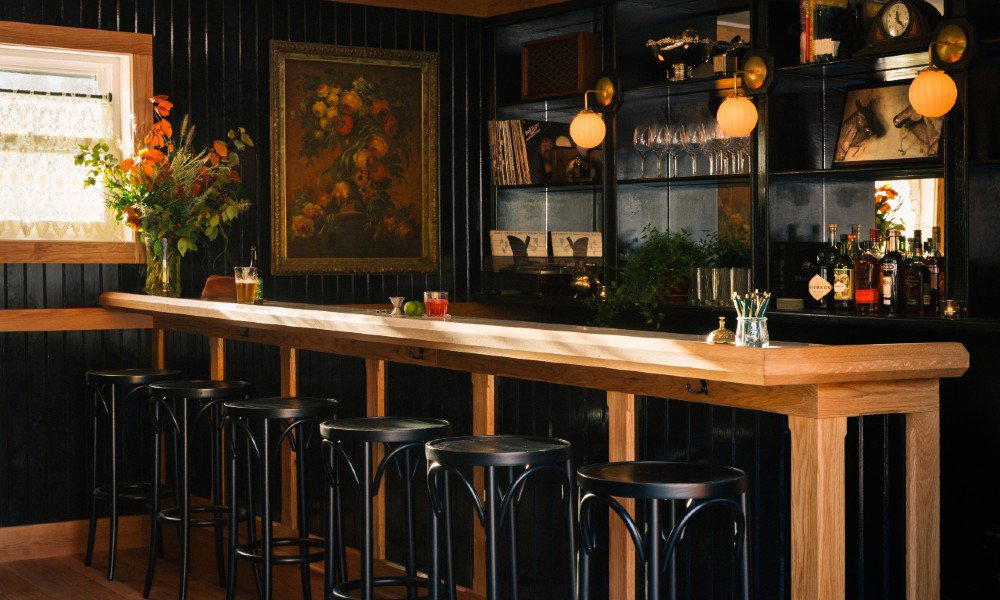
Warm and romantic with wood-paneled walls, leather booths, and a dated but charming retro 1950s aesthetic located just below street level.