Karmine



Michelin Plate · Macarfi 7.9 Food Rating · Guía Repsol 1 Sol
Our verdict
Karmine sits a short walk from Vitoria-Gasteiz's historic centre, where Chef Jabi Sarasua builds tasting menus around near-extinct Álava ingredients and forgotten regional recipes, cocido vitoriano, asparagus a la Urcelay, rice with borage, updated through a modern lens. An 8- or 10-course format, and consecutive Michelin Plate recognition in 2024 and 2025 confirm its place among the city's serious dining addresses.

Pearl is the En Primeur Club membership app, where members save venues, book tables and use the concierge.
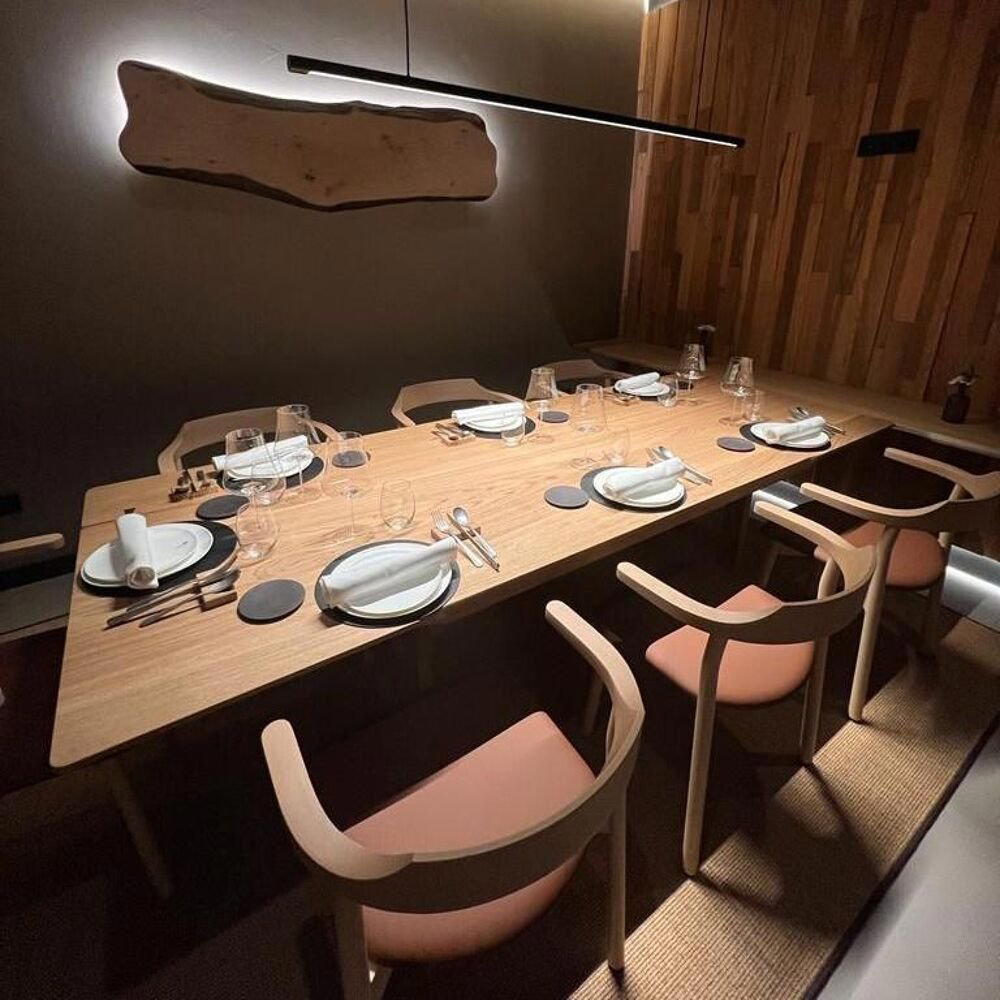
The Ritual of a Meal at Karmine
There is a particular kind of restaurant that treats the meal as a structured event rather than a loose sequence of plates. In Vitoria-Gasteiz, a city that rarely draws the headlines of its Basque Country neighbours yet maintains a serious dining culture of its own, Karmine operates firmly in that mode. The address on Calle de los Herrán, a few minutes on foot from the cathedral and the medieval quarter, is without drama from the outside. Inside, the experience is built around a single tasting menu, available in either an 8- or 10-course format, which means the kitchen dictates the pace and the diner's job is largely to follow. That contract, implicit in any proper tasting menu, shapes everything about how an evening here unfolds.
The choice between eight and ten courses is less about hunger than about how much time you want to spend at the table and how deep into the kitchen's current thinking you wish to go. Both formats draw from the same rotating larder, one that shifts as Chef Jabi Sarasua's relationships with local Álava farmers yield different produce across the seasons. This is not a menu that holds still. What arrives at your table in early spring may have no direct equivalent by autumn, which makes Karmine the kind of place that rewards return visits rather than a single definitive experience.
What the Menu Is Actually Doing
The intellectual project at the centre of Karmine's cooking sits at an interesting intersection: reviving recipes and ingredients that have largely disappeared from Álava's tables, and doing so without resorting to museum-piece recreations. The cocido vitoriano, a regional stew with deep roots in the city's domestic cooking, appears here in a form that acknowledges its origins while operating within a contemporary tasting menu structure. Asparagus prepared a la Urcelay, a preparation associated with local tradition, and rice with borage, a plant common to the Basque region but rarely treated as a primary ingredient at this level, point to a kitchen that is doing archival work as much as creative work.
This places Karmine in a broader movement across northern Spain, where chefs have moved away from purely technical showmanship toward what might be called culinary archaeology: recovering the specific flavours and textures of a region's past and making them legible to a contemporary palate. Arzak in San Sebastián and Azurmendi in Larrabetzu operate at the three-star level of that tradition, while Martin Berasategui in Lasarte - Oria has long made Basque ingredient provenance central to its identity. Karmine works in the same tradition but at a different scale and price point, with a Michelin Plate in both 2024 and 2025 signalling consistent quality without the full star apparatus.
The Valencian thread in Sarasua's background adds a quiet tension to the menu. His mother's roots introduce southern Spanish sensibilities, a different relationship with rice, with certain aromatics, with the idea of what a meal should feel like, into cooking that is otherwise anchored in the agriculture and recipes of Álava province. That cross-regional dialogue tends to surface in ways that are felt rather than announced, the kind of influence that makes a dish feel slightly unexpected without being dislocating.
Where Karmine Sits in Vitoria-Gasteiz's Dining Scene
Vitoria-Gasteiz has a smaller, more concentrated fine dining tier than the Basque coast cities, which makes positioning relatively clear. At the €€€ price range, Karmine shares territory with Andere and Zaldiarán, both of which approach the upper bracket of the city's restaurant economy. A step below, 144. and Kea Basque Fine Food operate at €€, offering entry points into the city's modern and Basque-rooted cooking respectively.
What separates Karmine from its peers at the same price level is the specificity of its stated mission: not modern Basque cooking in a general sense, but the recovery of Álava's particular culinary memory. That narrowness of focus is a genuine differentiator. For reference, the Michelin Plate designation indicates food quality worthy of attention, one tier below a Bib Gourmand and below any starred category, a signal of a kitchen that is doing serious work without yet occupying the upper echelon that restaurants like El Celler de Can Roca in Girona or DiverXO in Madrid hold.
Wine and the Logic of Local Pairing
The Álava wine question is genuinely interesting here. The province sits within the Rioja Alavesa designation, which produces wines from Tempranillo and a handful of white varieties that remain underexposed relative to Rioja proper. Karmine's kitchen works closely with local farmers, and the recommendation to let the house guide wine choices follows the same localist logic: the staff's familiarity with Álava's smaller producers is part of the value. This is not an invitation to surrender judgment, but an acknowledgment that regional pairing knowledge in a place like this runs deeper than any standard wine list annotation can convey. For guests who come from cities with more predictable regional wine cultures, the Rioja Alavesa selections alone can constitute a minor education.
Restaurants operating similar territory elsewhere, Aponiente in El Puerto de Santa María with its Atlantic seafood archaeology, or Cocina Hermanos Torres in Barcelona with its market-first Catalan approach, show that Spain's regional culinary recovery projects can operate across a range of price points and formats. Karmine sits at the more intimate, locally rooted end of that spectrum.
Planning a Visit
Karmine's location on Calle de los Herrán puts it within a few minutes' walk of Vitoria-Gasteiz's historic core, making it direct to combine with an afternoon in the medieval quarter before dinner. For those staying in the city, our full Vitoria-Gasteiz hotels guide covers the accommodation options across different price tiers. The single-menu format means arriving with a clear evening ahead is advisable, particularly for the 10-course option. Booking in advance is the reliable approach given the restaurant's rating and recognition. For a broader picture of the city's eating and drinking, our full Vitoria-Gasteiz restaurants guide, bars guide, wineries guide, and experiences guide map the full range of what the city offers.
Frequently asked questions
What should I budget for a meal at Karmine?
Pricing at Karmine is listed as €€€.
Cuisine and Recognition
| Venue | Cuisine | Price | Awards | Notes |
|---|---|---|---|---|
| KarmineThis venue (the venue you are viewing) | Modern Basque Fine Dining | $50–100 | Michelin Plate · Macarfi 7.9 Food Rating | Not listed |
| 144. | Modern Traveler Fusion | $50–100 | Michelin Plate · Macarfi 7.9 Food Rating | International |
| Andere | Modern Basque | Not listed | Michelin Plate · Macarfi 6.3 Food Rating | Traditional Cuisine |
| Kea Basque Fine Food | Traditional Basque Fine Food | $50–100 | Michelin Plate · Guía Repsol 1 Sol | Basque |
| Zaldiarán | Modern Basque Fine Dining | $50–100 | Michelin Plate · Macarfi 9 Food Rating | Contemporary |
Recognition history
Dated appearances from independent guides and award organizations, with the underlying list record or original source where available.
Michelin Plate
Michelin
Guía Repsol 1 Sol
Guía Repsol
Macarfi 7.9 Food Rating
Macarfi
Full recognition history (5 entries)
Michelin Plate
Michelin
Michelin Plate
Michelin
Continue exploring
More in Vitoria-Gasteiz
Restaurants in Vitoria-Gasteiz
All restaurants in Vitoria-Gasteiz →
Bars in Vitoria-Gasteiz
Browse all →
Hotels in Vitoria-Gasteiz
Browse all →

Details
- Cozy
- Elegant
- Minimalist
- Intimate
- Sophisticated
- Date Night
- Special Occasion
- Open Kitchen
- Extensive Wine List
- Local Sourcing
- Tasting Menu
- Vegetarian Friendly
Current opening hours
- Monday
- Closed
- Tuesday
- Closed
- Wednesday
- 1:30–2:45 PM
- Thursday
- 1:30–2:45 PM
- Friday
- 1:30–2:45 PM, 8:30–9:45 PM
- Saturday
- 1:30–2:30 PM, 8:30–9:45 PM
- Sunday
- 1:30–2:45 PM
Hours can change for holidays and private events. Hours as of .
Cozy and warm minimalist space with careful attention to detail.