Karahi Indian Cuisine
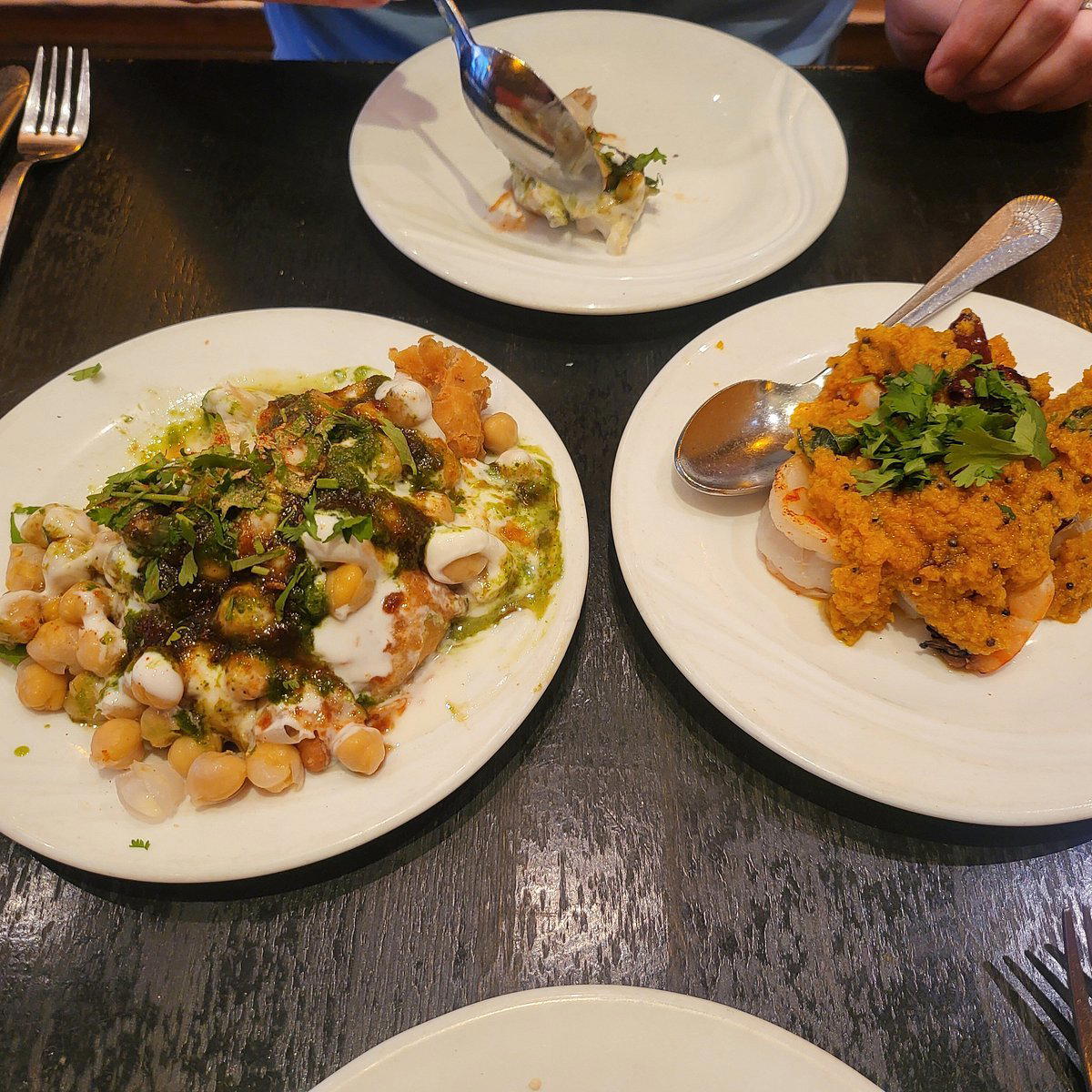
On Ninth Avenue in Hell's Kitchen, Karahi Indian Cuisine occupies a position that much of New York's South Asian dining corridor has moved away from: the karahi as central conceit, not afterthought. The menu's structural logic places communal, wok-cooked preparations at the front of the decision, making it an instructive stop for anyone mapping the difference between subcontinental comfort cooking and its more anglicised derivatives.
- Address
- 803 9th Ave B, New York, NY 10019
- Phone
- +12124591515
- Website
- karahiny.com
- Directions
- Get directions
Hell's Kitchen and the Ninth Avenue South Asian Corridor
Ninth Avenue between 45th and 57th Streets has functioned as one of New York's most condensed stretches of South Asian and Middle Eastern food for several decades. The concentration isn't accidental: the neighbourhood absorbed successive waves of Pakistani, Bangladeshi, and Indian immigrant communities whose restaurant preferences shaped what's on offer far more than any tourist economy. What that means in practice is a strip where the reference points are Lahori street food, Punjabi dhabas, and Mughal-era preparation traditions rather than the butter-chicken-and-naan shorthand that defines Indian dining in less specific parts of the city.
Karahi Indian Cuisine at 803 9th Avenue operates inside that corridor, and its name signals a deliberate editorial choice about what kind of cooking takes precedence. In a city where Indian restaurants often lead with tikka masala and korma, dishes calibrated for broad palatability, a karahi-forward identity positions this kitchen closer to the Lahori and Punjabi end of the subcontinental spectrum, where the iron wok is both tool and genre.
What the Menu Structure Actually Tells You
The karahi, as a preparation format, is worth understanding before the menu makes full sense. The dish, and the vessel, involves a concave, heavy-gauge wok in which protein (typically lamb, chicken, or a combination) is cooked at high heat with tomatoes, green chillies, ginger, and a fat source, reduced until the sauce is thick and oil separates to the surface. That separation, the tarka, is not a sign of poor cooking; it's the intended end state, the marker that the spices have bloomed properly and the moisture has driven off. Restaurants that don't cook to that point are serving something adjacent to the dish, not the dish itself.
A menu architecture that places karahi preparations as its core offering rather than a subcategory within a broader curry section communicates a specific set of kitchen priorities. It suggests the kitchen is optimised for high-heat, single-vessel cooking rather than for the slow, cream-enriched sauces that require different equipment and technique. These are not interchangeable skill sets. The leading karahi operations in Lahore, from Burns Road to Liberty Market, treat the dish as a point of craft rather than a vehicle for sauce variety, and that standard is the implicit benchmark for a restaurant that names itself after the preparation.
Compared to the western end of Midtown's Indian dining spectrum, where price-point and format tend toward the more formal (set menus, wine lists, tablecloths), a neighbourhood karahi house like this one operates with different metrics. The value proposition is portion-to-price ratio, preparation authenticity, and the kind of directness that communal, family-style eating produces. These restaurants don't compete with Le Bernardin or Masa on any axis; they compete with the dozens of other subcontinental kitchens on the same blocks, and the differentiator is how faithfully the karahi is executed.
Situating It in New York's Wider Dining Context
New York's fine dining conversation in 2024 is dominated by tasting-menu formats and a concentrated set of award-holding addresses: Atomix and Jungsik New York for progressive Korean, Per Se for French-inflected contemporary American. That conversation, for all its depth, leaves a large portion of the city's most technically specific cooking unaddressed. Subcontinental wok cooking, done to the standard that Lahori karahi houses have maintained for generations, requires genuine skill, it is not simpler than what happens at a French brigade kitchen, merely different and, in New York, less celebrated by the institutions that distribute recognition.
The same observation applies nationally. The kind of institutional recognition that tracks restaurants like Alinea in Chicago, The French Laundry in Napa, or Blue Hill at Stone Barns in Tarrytown has historically underweighted immigrant-community cooking that doesn't present in Western fine-dining format. Hell's Kitchen's South Asian corridor is a beneficiary and a casualty of that gap simultaneously: largely unknown to readers of award lists, it is well-known to anyone in the city who knows where to eat.
The comparison holds outside the US as well. Formats rewarded by major guides in Hong Kong or Monte Carlo share an aesthetic language with Western fine dining that most subcontinental neighbourhood kitchens don't speak, not because the cooking is less considered, but because the evaluation framework was built around different traditions.
The Neighbourhood as Context
Hell's Kitchen has gentrified substantially since the late 1990s, with the restaurant stock shifting toward higher-margin, lower-specificity formats that serve the area's changed demographics. The Ninth Avenue South Asian corridor has proved more durable than many expected, partly because its customer base extends well beyond the immediate neighbourhood into the city's broader South Asian diaspora, and partly because the food it serves has few substitutes in Manhattan. Comparable Pakistani-Punjabi cooking requires travel to Jackson Heights in Queens or to Brooklyn's Kensington neighbourhood, making the Hell's Kitchen cluster functionally significant for anyone in the borough without easy transit access to those outer-borough concentrations.
For visitors whose New York itinerary is already mapped against addresses like Emeril's in New Orleans or Providence in Los Angeles in terms of formality and price, a Hell's Kitchen karahi house represents a shift in register, not a downgrade in quality of experience. The metrics are different: the question is not whether the service captain knows the wine list, but whether the karahi arrives at the table with oil separation intact and chilli heat unreduced.
Planning Your Visit
Karahi Indian Cuisine is located at 803 9th Avenue B, New York, NY 10019, in the Hell's Kitchen neighbourhood of Manhattan. The 9th Avenue South Asian corridor is walkable from Midtown and accessible via multiple subway lines. Given the neighbourhood's density and the restaurant's local following, timing visits outside peak dinner hours on weekends is sensible.
For a broader map of where Karahi Indian Cuisine sits within New York City's dining options across all price points and cuisines, see our full New York City restaurants guide. Other American destinations with strong regional cooking worth considering include Lazy Bear in San Francisco, Single Thread Farm in Healdsburg, Addison in San Diego, The Inn at Little Washington, and Bacchanalia in Atlanta.
Quick reference: 803 9th Ave B, Hell's Kitchen, Manhattan. Reservations are recommended.
Compact Comparison
Comparable venues nearby, for context on price, style, and recognition.
| Venue | Cuisine | Price | Notes |
|---|---|---|---|
| Karahi Indian CuisineThis venue — the venue you are viewing | Hell's Kitchen, Indian Curry House | $$ | Not listed |
| Ahimsa | Not listed | $$ | Murray Hill-Kips Bay, Authentic Indian Vegetarian |
| Anjappar Chettinad | Not listed | $$ | Murray Hill-Kips Bay, Authentic Chettinad South Indian Cuisine |
| Sahib | Not listed | $$ | Murray Hill-Kips Bay, Authentic Mughlai Indian |
| Curry Heights | Not listed | $$ | Brooklyn Heights, Authentic Indian Cuisine |
| Jaz Indian Cuisine | Hell's Kitchen, Northern Indian | $$ | Not listed |
Continue exploring
More in New York City
Restaurants in New York City
Browse all →
Bars in New York City
Browse all →

Hotels in New York City
Browse all →




At a Glance
- Cozy
- Casual Hangout
- Family
Relaxed and calming atmosphere in a small, cozy space.