
Tabelog 100 #82
Our verdict
Kannai Motsu Niku Ten is a Yokohama tachinomi specialist near Kannai Station, selected for Tabelog 100 - Tachinomi - 2025. The format is compact and social: standing-bar drinking, yakitori, grilled tripe and motsu cooking, with a low posted dinner range and a room built for quick rounds rather than long-form dining.

Pearl is the En Primeur Club membership app, where members save venues, book tables and use the concierge.
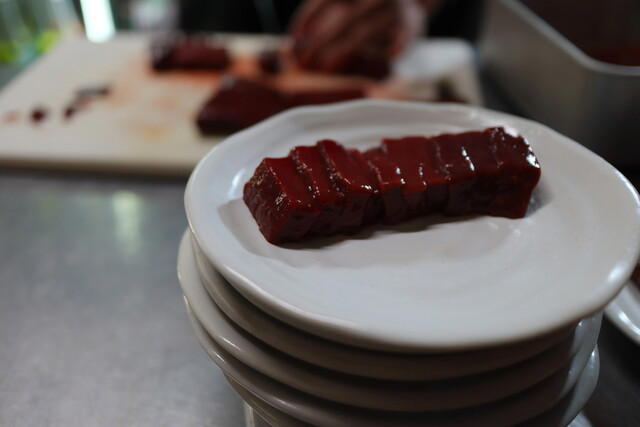
The menu
What to order
- Charcoal-grilled skewers
- Motsu nikomi
- Hormone sashimi
- Grilled offal
Yokohama’s drinking streets work at close range: station exits, narrow shopfronts, smoke-tinted counters and the quick choreography of office workers moving from first drink to skewers. In that setting, tachinomi is not a novelty format. It is an urban habit, built around speed, proximity and a bill that leaves room for another stop. Kannai Motsu Niku Ten belongs to that Yokohama lineage, where offal, grill work and standing-bar informality carry more cultural weight than polished dining-room ritual.
The useful way to read the place is through the category it represents. Tachinomi compresses the izakaya into something leaner: less ceremony, fewer spatial claims, more turnover, and a sharper link between drink and grill. Yokohama’s port-city appetite has long favored this kind of practical hybridity, from casual canteen cooking to after-work bars around transport hubs. For a wider map of the city’s dining spread, Our full Yokohama restaurants guide gives the broader frame, while other Yokohama dining rooms show how varied the city becomes once diners move beyond a single genre.
Tachinomi culture, offal cookery and the Yokohama after-work rhythm
Japanese offal cookery rewards specialization because it depends on trimming, timing and a kitchen’s tolerance for repetition. Motsu and hormone cooking sit in a different register from luxury beef: the appeal is texture, smoke, fat, chew and broth rather than marble-score prestige. A standing bar sharpens that logic. Food arrives as support for drinking, conversation happens shoulder-to-shoulder, and the room’s value lies in pace rather than privacy.
Kannai Motsu Niku Ten’s category listing, stand-up bar, yakitori and grilled tripe, places it inside a working tradition rather than a chef-led tasting counter. Its Tabelog Hyakumeiten 2025 recognition matters because the award is category-specific; it recognizes a drinking format that can be easy to dismiss from the outside and hard to execute consistently from within. The score attached to the listing, 3.56, is also more meaningful in context than as a freestanding number, since casual drinking rooms often compete on repeat use, crowd flow and value rather than luxury markers.
That value positioning separates it from several Yokohama peers in the comparison set. Yokohama Ramen Masagoya, Cinnamon Garden Kannai ten, Toraya, scica and Spice Drunker yabuya each answer a different dining need, which changes expectations around pacing, spend and occasion. The point is not hierarchy; it is use case. A tachinomi offal bar answers a different question from a sit-down curry room, a ramen stop or another dinner address.
What the format tells you before the first order
The room is part of the message. The venue’s category is stand-up bar, which signals a social meal rather than a secluded one. This is not a format built around hushed ceremony or elaborate spatial claims; it is built around proximity, quick ordering and the practical pleasure of eating well without turning the evening into a formal production.
Price and access expectations also reinforce the everyday shape of the experience. The listed range is JPY 1,000 - JPY 1,999, with the budget shown as dinner at JPY 1,000 - JPY 1,999 and no lunch figure provided. These are not incidental details for travelers; they define the kind of night the room supports. Anyone building a Yokohama evening around hotels, drinks or cultural programming can cross-reference Our full Yokohama hotels guide, Our full Yokohama bars guide, Our full Yokohama wineries guide and Our full Yokohama experiences guide for the rest of the night’s architecture.
The cooking idea is direct: yakitori, grilled tripe and motsu-led dishes, rather than a broad, tourist-facing izakaya catalogue. That focus is the reason the venue belongs in the tachinomi conversation. In Japan, the standing bar often functions as a democratic quality test. There is less room to hide behind service theatre, plating or long explanations. The counter has to make offal approachable without sanding off its character, and the drinks format has to keep the room moving.
How to place it within a Japan eating itinerary
For travelers used to reserving sushi counters and kaiseki rooms months ahead, a Yokohama tachinomi recalibrates the scale of Japanese dining. It is not lesser because it is inexpensive, nor casual because it lacks discipline. It is casual because the format was built for ordinary use. That distinction matters. A polished fine-dining itinerary can become sterile if it never makes space for the everyday grammar of skewers, simmered offal, smoke and drink.
Kannai Motsu Niku Ten is also a reminder that Yokohama should not be treated as Tokyo’s overflow. The city has its own drinking culture, its own appetite for compact counters and its own range of regional and immigrant foodways. Other nearby cities broaden the comparison, each pointing to different versions of everyday Japanese dining outside the premium tasting-menu frame.
The broader national context is useful too. Japan’s casual formats travel, mutate and become legible in different cities, from regional cafes and curry counters to compact bars and quick-service food rooms. Overseas, bars and casual Japanese food rooms translate parts of the same grammar in different ways. Kannai Motsu Niku Ten’s version is more local and less exportable: a Yokohama standing offal bar built for friends, regulars and repeat drinking rather than destination dining theatre.
Frequently asked questions
How do I find Kannai Motsu Niku Ten?
Kannai Motsu Niku Ten is located in Yokohama.
How much does it cost to eat at Kannai Motsu Niku Ten?
Pricing at Kannai Motsu Niku Ten is listed as JPY 1,000 - JPY 1,999.
Do I need a reservation for Kannai Motsu Niku Ten?
Plan timing carefully: Kannai Motsu Niku Ten is a standing-bar venue in Yokohama, and its Tabelog Hyakumeiten 2025 recognition signals a level of attention from diners.
What's the defining dish or idea at Kannai Motsu Niku Ten?
The point here is tachinomi drinking matched with yakitori and grilled tripe, backed by the venue’s Tabelog Hyakumeiten 2025 recognition. Expect a standing-bar format at JPY 1,000 - JPY 1,999 in Yokohama.
A Pricing-First Comparison
Comparable venues by cuisine and price in the same metro.
| Venue | Cuisine | Price | Awards | Notes |
|---|---|---|---|---|
| Kannai Motsu Niku TenThis venue (the venue you are viewing) | Japanese Standing Bar / Yakitori & Offal | $1–10 | Tabelog 100 #82 | Not listed |
| Mendokoro Tatsunoki | Japanese Ramen | $10–20 | Tabelog 100 #11 | Hodogaya, Japanese Ramen |
| Hoppy Sennin | Traditional Japanese Hoppy bar | $10–20 | Tabelog 100 #85 | Naka, Traditional Japanese Hoppy bar |
| Iekei Sohonzan Yoshimura Ya | Iekei ramen (Yokohama-style pork and soy sauce ramen) | $10–20 | Tabelog 100 #73 | Nishi, Iekei ramen (Yokohama-style pork and soy sauce ramen) |
| Curry Senmon Ten KEN | Japanese Curry | $1–10 | Tabelog 100 #8 | Aoba, Japanese Curry |
| Sapporo Soup Curry Ananda | Sapporo-style Japanese soup curry | $10–20 | Tabelog 100 #58 | Nishi, Sapporo-style Japanese soup curry |
Recognition history
Dated appearances from independent guides and award organizations, with the underlying list record or original source where available.
Tabelog 100 #82 · No. 82
Tabelog · Tabelog 100 - Tachinomi - 2025
Continue exploring
More in Yokohama
Restaurants in Yokohama
All restaurants in Yokohama →



Bars in Yokohama
Browse all →








Details
- Lively
- Classic
- Energetic
- Casual Hangout
- After Work
- Solo
- Group Dining
- Standalone
- Beer Program
- Sake Program
- A La Carte
- Counter Dining
- Beer
- Shochu
- Hoppy