
Kanmichi Pakutei gives Osaka’s Korean dining tradition a formal, ritual-led setting rather than the faster rhythm associated with casual yakiniku districts. Its course-only Korean royal cuisine format, 30-seat scale, and Tabelog 100 Asian cuisine / Ethnic cuisine WEST selections from 2022 to 2024 place it in a more deliberate bracket of the city’s dining scene.
Pearl is the En Primeur Club membership app — saves, bookings, and concierge access live there. Same editors, same standards.
- Address
- 550-0004 ラシーヌ 四ツ橋 B1 17 7 1丁目, 1 Chome-7-17 Utsubohonmachi, Nishi Ward, Osaka, 550-0004, Japan
- Phone
- +81 6-6448-0355
- Website
- parksamsoon.com
 Saves & bookings on Pearl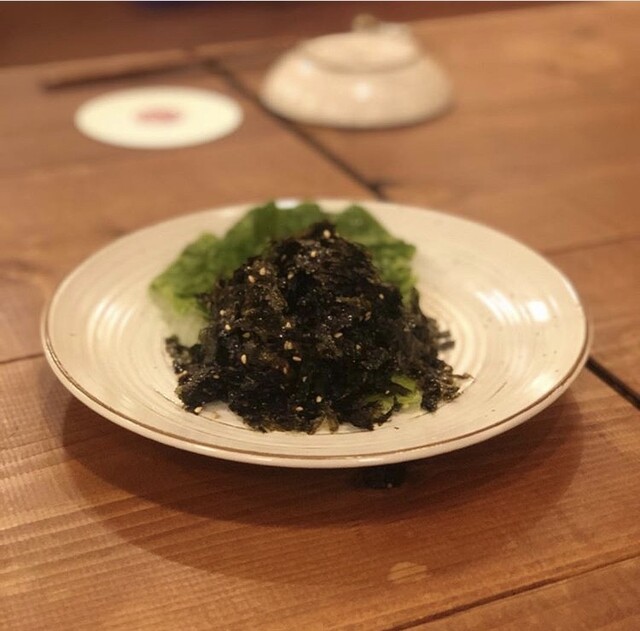
The room sets the terms before the meal: below street level in Utsubo Honmachi, with tatami and sunken seating slowing dinner beyond Osaka’s counter-and-grill default. Korean food in the city is often read through Tsuruhashi, smoke, speed, and communal heat. Kanmichi Pakutei works in another register, organizing the meal as a course where ritual matters as much as appetite.
That distinction matters in Osaka, where Korean dining spans market stalls, yakiniku rooms, family restaurants, and specialist kitchens. A course-only Korean royal cuisine format changes the social contract: the table is not ordering around the grill, but accepting sequence, pacing, and kitchen-led structure. For travelers who know Osaka mainly through takoyaki, kushikatsu, sushi, and late-night noodles, it shows that the city’s Korean food culture has its own formal grammar.
Korean royal cuisine, reframed for Osaka's course-dining tier
The restaurant’s clearest editorial value is category clarity, not novelty. Korean royal cuisine is built around order, balance, and a table unfolding in measured stages. In Osaka, that reads differently from yakiniku’s familiar abundance: a set meal, controlled room, and defined beginning and finish.
The kitchen’s connection to the long-established Korean restaurant Hanmi Ichi gives the project a stronger cultural anchor than a generic premium Korean label. The restaurant highlights a lineage tied to Park Sam-soon, identified with a Level 1 Korean cooking license, and carries forward a Tsuruhashi association around samgyetang. Those details matter because Osaka’s Korean dining history is not imported as trend; it belongs to the city’s postwar food geography, especially neighborhoods where Korean-Japanese communities shaped everyday eating.
Course format also changes how Korean barbecue is understood. Yakiniku in Japan often centers on choice and tempo: cuts selected, grilled, and eaten at the table in quick succession. A royal-cuisine course pulls that energy into a composed frame, suiting diners who want Korean flavors without making the grill the whole evening.
Recognition supports the positioning. Kanmichi Pakutei was selected for Tabelog 100 Asian cuisine / Ethnic cuisine WEST in 2022, 2023, and 2024, a useful signal in a category spanning regional and diaspora cooking across western Japan. Its listed Tabelog score is 3.68, which in Japan’s scoring culture sits in a serious band rather than a casual discovery tier. Awards do not explain the meal, but they confirm that the format has registered beyond neighborhood loyalty.
The dining ritual favors sequence over spectacle
The appeal is strongest for diners who appreciate restraint. Course dining makes the kitchen responsible for rhythm: appetizers before grill elements, warming dishes before the finish, and a meal treating Korean cooking as ceremonial rather than purely convivial. Osaka has many rooms built for speed. This one asks for attention.
The physical setup reinforces that mood. Thirty seats keep the room controlled without entering hushed high-end sushi counter culture. Private rooms are available, including smaller rooms and options for larger groups, which explains the business-dining fit. Tatami, sunken seating, and table seats give the meal a Japanese spatial frame while the cuisine remains Korean in reference.
Its price band places it among Osaka restaurants where format and reservation discipline matter. Imparfait and Rashansen operate in a similar dinner spend range, while W. Bolero Oosaka honmachi ten and Tachinomi Bakery Urapane are more casual. Sushi Kyomachibori Sato sits in another premium lane, built around sushi rather than Korean course dining. The point is not substitution, but reading the city correctly: Kanmichi Pakutei competes not with snack-led Osaka, but with dinners where the table gives the kitchen control.
For a wider sense of the city’s range, EP Club’s full Osaka restaurants guide maps the broader dining field, from bakery-café formats such as 52CHO-ME BAKERY and .cafe to the citywide familiarity of 551 Horai (551蓬莱). Italian dining has its Osaka audience at a canto (Italian) and 99 Pizza Napoletana Gourmet. Against those formats, the Korean royal-cuisine course feels less like an outlier than one answer to Osaka’s appetite for specialization.
Who should choose this table
This is a strong choice for travelers who want Korean cooking treated with ceremony, not diners chasing a casual grill session or quick stop between bars. The reservation-only structure, prepared-course approach, and cancellation request by the previous day point to a kitchen planning around guest count. Allergies require advance discussion, consistent with a course meal where substitutions affect the sequence.
Families should read the rules carefully. Children are welcomed only on weekends and holidays, and children aged 10 and over are charged for a full meal. That makes the restaurant better for planned family dinners than spontaneous meals with young children. Business groups and small private meals are a cleaner fit, especially with private seating options and non-smoking dining space.
The beverage direction is telling: shochu and wine are both emphasized, with particular attention to shochu. That suits a table moving between Korean herbal, fermented, grilled, and soup-based elements without forcing one beverage tradition, another sign the restaurant thinks in courses rather than isolated dishes.
Osaka rewards travelers who do not reduce the city to one flavor profile. For hotels, bars, wineries, and experiences around the same trip, see EP Club’s Osaka hotels guide, Osaka bars guide, Osaka wineries guide, and Osaka experiences guide. For contrast across Japan and beyond, compare formal meat dining at -Grilled beef Sukiyaki- KAMAKURA TANUKIAN 鎌倉 たぬき庵 in Kamakura, casual fire-led cooking at. 鮪と炭火焼き うお炭 秋葉原店 in Tokyo, regional cooking at.know in Kumamoto, Vietnamese dining at (Shoku) Vietnam in Kawasaki, curry specialization at [Curry Senmon Ten] Maruyama Kyoju. in Sapporo, Kyoto minimalism at [ki:] in Kyoto, sake-bar culture at Jōdo Saké Bar in Los Angeles, and Japanese comfort formats abroad at Onigiri Time in Pasadena.
The Short List
Comparable venues to place this listing in its category.
| Venue | Cuisine | Price | Notes |
|---|---|---|---|
| Kanmichi PakuteiThis venue — the venue you are viewing | Not listed | $$$ | Not listed |
| Korean Ryori Mugunfa | Kita, High-end Korean | $$$ | Not listed |
| Hoch | Kita, Korean Izakaya | $$$ | Not listed |
| Wakan Ryori Bulgogi Senmon Ten Jurouku | Not listed | $$$ | Minoh, Japanese–Korean Bulgogi Specialty |
| STEAK HOUSE NARIKIYO | Not listed | $$$ | Nishi, Charcoal-Grilled Wagyu Steakhouse with Counter Dining |
| Yakiniku Futoro | Kita, Casual Wagyu Yakiniku Counter | $$$ | Not listed |
Recognition history
Dated appearances from independent guides and award organizations, with the underlying list record or original source where available.
Tabelog 100 #36 · No. 36
Tabelog · Tabelog 100 - Asian cuisine / Ethnic cuisine - WEST - 2024
Continue exploring
More in Osaka
Restaurants in Osaka
Browse all →




Bars in Osaka
Browse all →



Hotels in Osaka
Browse all →




Wineries in Osaka
Browse all →
At a Glance
- Elegant
- Classic
- Intimate
- Special Occasion
- Date Night
- Business Dinner
- Group Dining
- Chefs Counter
- Standalone
- Design Destination
Current opening hours
- Monday
- 8:30 AM–3 PM, 5–11 PM
- Tuesday
- 8:30 AM–3 PM, 5–11 PM
- Wednesday
- 8:30 AM–3 PM, 5–11 PM
- Thursday
- 8:30 AM–3 PM, 5–11 PM
- Friday
- 8:30 AM–3 PM, 5–11 PM
- Saturday
- 5–11 PM
- Sunday
- 5–11 PM
Hours can change for holidays and private events. Last verified .
Refined, quietly luxurious atmosphere with an intimate basement dining room that focuses attention on elaborate Korean imperial course meals rather than flashy decor, attracting serious diners and food enthusiasts.