Google: 4.6 · 984 reviews
Kampun Gai Yang
.png)
Kampun Gai Yang earned a Michelin Plate in 2024 for its Isan cooking rooted in Nakhon Phanom family recipes, served across two air-conditioned floors on Rochana Road in Ayutthaya. The signature grilled chicken draws most of the 1,677 Google reviewers who have rated it 4.1 out of 5. Halal-friendly, mid-range priced, and open since 2017, it sits at an instructive intersection of regional Thai tradition and accessible everyday dining.
 Discover on Pearl
Pearl is the En Primeur Club membership app — saves, bookings, and concierge access live there. Same editors, same standards.
Wood Panels, Grilled Smoke, and the Isan Table in Ayutthaya
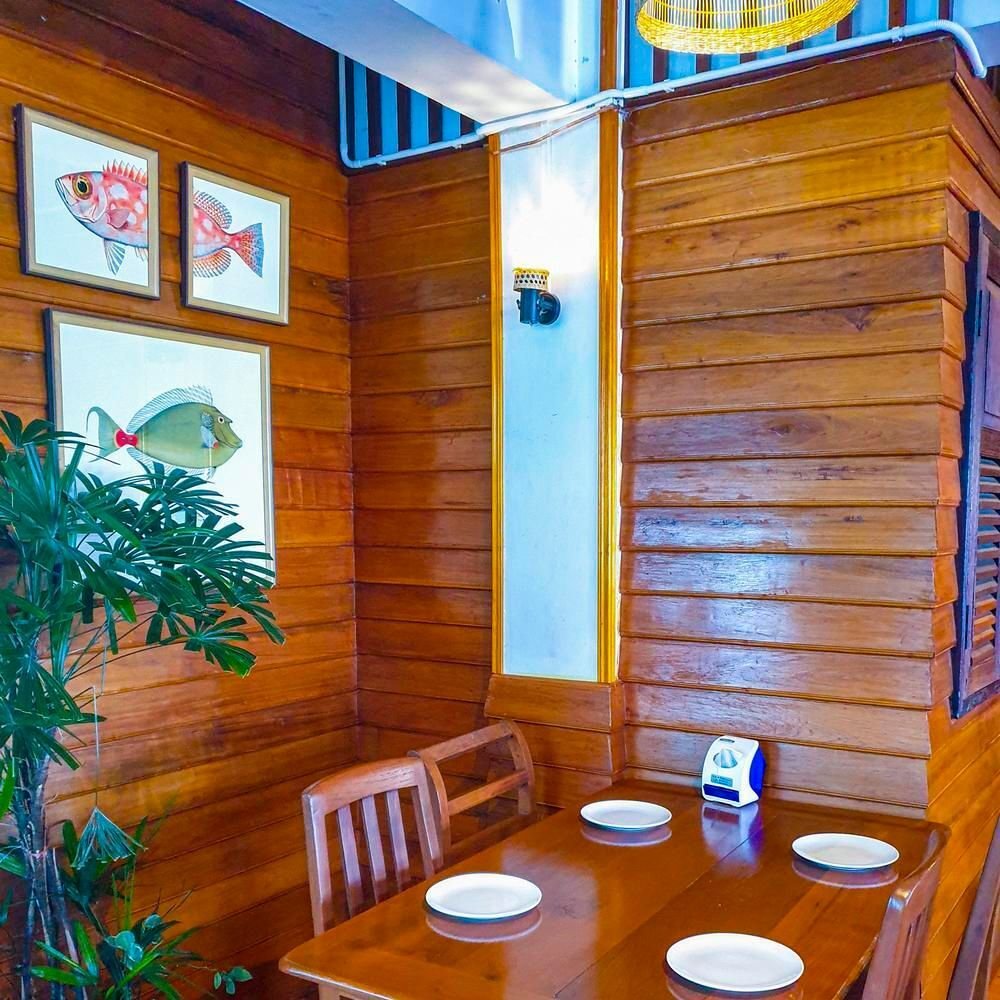
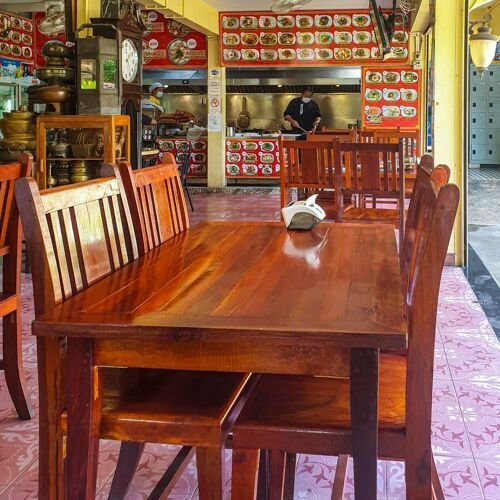
Step into the commercial building on Rochana Road and the interior recalibrates your expectations. Wood panelling lines the walls at intervals that recall the raised-floor village houses of northeastern Thailand, and the air conditioning arrives as a relief rather than a sterile announcement. Two floors of casual dining room spread out above the street, and the ambient sound is the specific clatter of a busy Thai lunch trade: ceramic bowls, short orders called across the room, the scrape of sticky rice baskets on formica. This is not a heritage venue dressed to perform; it is a working restaurant whose design choices point toward a particular regional identity.
That identity is Isan, the cuisine of Thailand's northeastern plateau, and Ayutthaya is an instructive place to encounter it. The former royal capital draws visitors focused on its temples and riverside atmosphere, and its dining scene reflects that mix: central Thai cooking dominates the tourist corridor, while Isan food occupies a more local register. Kampun Gai Yang, operating since 2017, sits inside that local register. A Michelin Plate awarded in 2024 has placed it on a broader radar without visibly altering its format or its clientele, which reads as a meaningful signal about the restaurant's footing.
The Architecture of an Isan Meal
Isan cooking follows a structural logic that differs from central Thai cuisine in tempo, texture, and intent. The meal rarely arrives as a single composed plate. It accumulates. Sticky rice (khao niao) anchors the table first, arriving in a small woven basket. It is the medium through which everything else is consumed, pinched and rolled between the fingers before being pressed against sauced meat or dipped through a chilled larb. The experience is tactile in a way that chopstick or fork eating is not, and it places the diner inside the meal rather than across from it.
At Kampun Gai Yang, this progression begins in earnest with the kitchen's grilled chicken, the dish the Michelin inspectors noted and the one that most of the restaurant's 4.1-star Google rating (drawn from 1,677 reviews) seems to orbit. The Kampun grilled chicken is the signature, and the preparation draws from recipes tracing back to Nakhon Phanom, the northeastern province on the Mekong border with Laos. That lineage matters because Nakhon Phanom sits within the upper Isan cooking tradition, where herb marinades tend toward the aromatic rather than the fiercely spiced, and where the grill is treated as a finishing technique rather than the primary source of flavour. The marinade does the structural work; the grill provides the char and the smoke.
From there, the grilled beef enters the sequence as a secondary but meaningful course. The database record flags it as worth ordering alongside the chicken, and the logic holds within how Isan meals operate: multiple proteins arrive at the table simultaneously or in close succession, each with its own dipping sauce or herb pile, and the diner moves between them rather than following a linear starter-to-main arc. This is the Isan tasting progression, and it is leading understood as a lateral rather than vertical movement through flavour.
Halal Cooking and the Isan Tradition
The kitchen at Kampun Gai Yang prepares halal-friendly food, a detail that carries specific weight in this context. Isan cuisine, built as it is on pork-heavy laabs, fermented sausages, and blood-thickened broths in its most traditional registers, is not automatically accessible to halal diners. A kitchen that maintains halal standards while cooking authentically within the Isan framework has navigated a genuine culinary constraint rather than a cosmetic one. For visitors from Malaysia, Indonesia, or Muslim-majority communities within Thailand itself, this positions Kampun Gai Yang differently from most comparable Isan addresses in the region.
It also positions the restaurant within a specific tier of Thai regional cooking that has attracted Michelin attention precisely because it operates at the intersection of tradition and accessibility. Sorn in Bangkok represents the high end of this movement, earning stars for southern Thai cooking that preserves regional recipes at fine dining scale. Kampun Gai Yang operates at a different price point (฿฿) and in a different format, but the Michelin Plate signals that the inspection process registered something authentic and technically sound rather than merely convenient.
Where It Sits in Ayutthaya's Dining Spread
Ayutthaya's mid-range dining tier includes Vietnamese cooking at Angeum, central Thai riverfront dining at Baan Pomphet and Baan Mai Rim Nahm, and broader Thai menus at Ayutthayarom and Baan Pu Karn. Kampun Gai Yang is the only address in this set with a current Michelin distinction, and it is the only one with a specific Isan regional identity. That specificity is the point. Isan food in Ayutthaya is not as embedded in the tourist infrastructure as central Thai cooking, and finding a practitioner working from documented family recipes rather than a generalist menu requires the kind of local knowledge that the Michelin Plate now codifies.
For context across the broader Isan dining scene, Jum Khao in Nakhon Ratchasima and Kai Yang Rabeab in Khon Kaen represent the tradition in its home provinces. Kampun Gai Yang is interesting precisely because it transplants that tradition to a tourist city without visibly softening it for a non-Isan audience. The Aeeen in Chiang Mai and Agave in Ubon Ratchathani represent other regional cooking traditions operating in their own city contexts, each with a different relationship to tourist and local dining traffic.
Thailand's regional cooking recognition has expanded considerably since Michelin extended its Thailand guide beyond Bangkok. PRU in Phuket and AKKEE in Pak Kret sit at different points on that spectrum of recognition, and the Michelin Plate tier — which signals quality cooking without the full star apparatus — has become the primary mechanism by which the guide acknowledges regional Thai cooking that operates below fine dining price points.
Planning Your Visit
Kampun Gai Yang sits at 94/7 Moo 6 on Rochana Road in Phai Ling, outside the immediate temple island that most visitors default to. Rochana Road is one of the main arterial routes in Ayutthaya, accessible by tuk-tuk or songthaew from the historic centre. The two-floor, air-conditioned format means capacity is reasonable rather than cramped, and the 1,677 Google reviews suggest a consistent throughput of diners. Arriving at standard Thai lunch hours (around noon) or early in the dinner window will avoid peak queuing. The ฿฿ price range places it firmly in the mid-range for Ayutthaya dining, comparable to most of the central Thai restaurants in the same bracket. No booking contact details are available in the public record, so walk-in appears to be the operating assumption.
For anyone building a wider Ayutthaya trip, our full Phra Nakhon Si Ayutthaya restaurants guide covers the city's dining spread in full. The hotels guide, bars guide, wineries guide, and experiences guide cover the rest of the city's offer for visitors planning a longer stay.
In Context: Similar Options
A fast peer set for context, pulled from similar venues in our database.
| Venue | Cuisine | Price | Awards | Notes |
|---|---|---|---|---|
| Kampun Gai Yang | Isan | ฿฿ | Opened in 2017, this restaurant serves authentic Isan food in a commercial build… | This venue |
| Baan Ta Ko Rai | Thai | ฿฿ | Thai, ฿฿ | |
| Pa Lek Boat Noodles | Noodles | ฿ | Noodles, ฿ | |
| Angeum | Vietnamese | ฿฿ | Vietnamese, ฿฿ | |
| Gu Cherng | Chinese | ฿฿฿ | Chinese, ฿฿฿ | |
| Here Klae Pork Satay | Street Food | ฿ | Street Food, ฿ |
Continue exploring
More in Phra Nakhon Si Ayutthaya
At a Glance
- Rustic
- Cozy
- Classic
- Family
- Casual Hangout
- Historic Building
Air-conditioned casual dining room across two floors with wood panelling evoking traditional Thai houses.