The Outer-Ring Scene and Where Kalina's Sits
Sydney's southwest corridor has historically been home to some of the city's most culturally layered food, shaped by Lebanese, Vietnamese, Filipino, and Pacific Islander communities who have built neighbourhood institutions across decades. The city’s food press still concentrates within a 10-kilometre radius of the CBD, which means restaurants like Kalina's accumulate local significance in their own circles.
That dynamic is not distinctive to Sydney. In Melbourne, the northern suburbs long predate the media attention they eventually received; Barry Cafe in Northcote is one example of a venue that built neighbourhood credibility before critical coverage caught up. In regional New South Wales, the same pattern plays out in places like Wollongong, where restaurants such as Kulcha Restaurant have carved out specialist positions outside the mainstream press circuit. The restaurant fits a comparable model: embedded in a suburb with strong community ties, operating without the infrastructure of a press-visible neighbourhood.
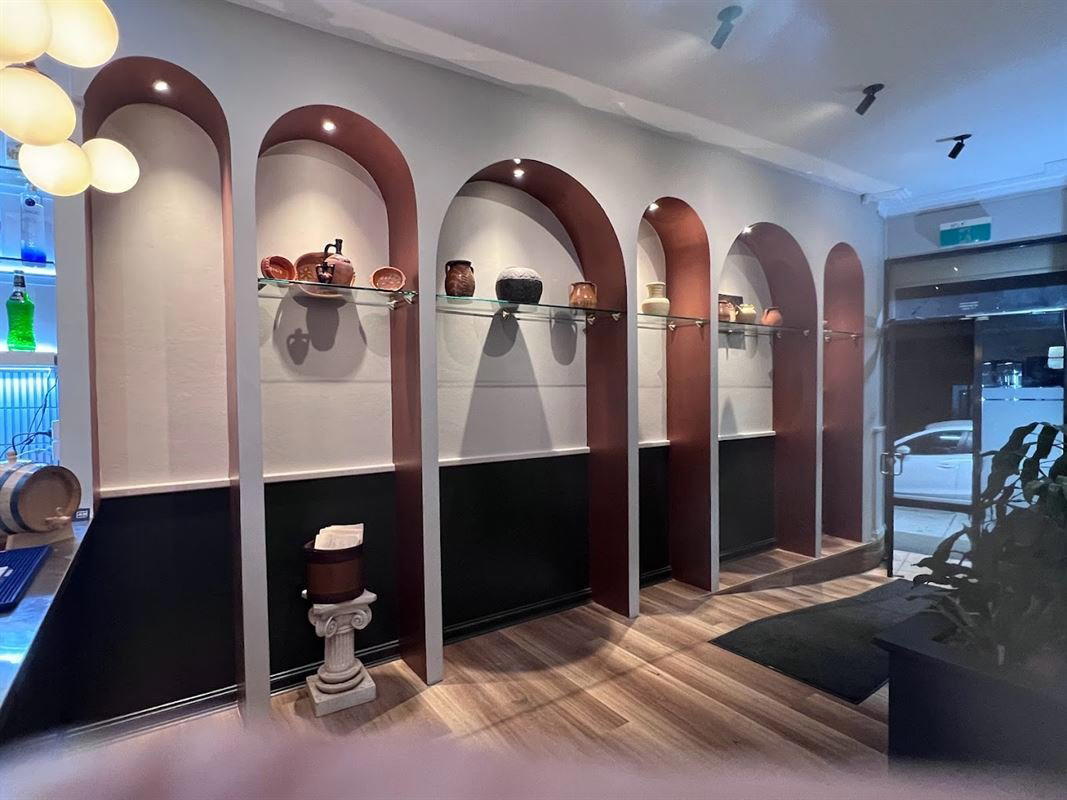
For the reader considering a visit, the restaurant's appeal lies in local loyalty and consistency. The restaurant answers to regulars, not reviewers. That distinction shapes how a dining room operates: the floor tends to know its tables, the menu tends to reflect what the local customer base wants rather than what reads well in a season's trend cycle, and the pace of a meal follows conversation rather than a kitchen's turn schedule.
The Collaborative Floor: Team Dynamic in Neighbourhood Dining
In the tier of Sydney dining where formal tasting menus and large brigade kitchens set the terms, restaurants operating in the structural tradition of Saint Peter on Oxford Street, or the destination-grade ambition of Attica in Melbourne, the relationship between kitchen, sommelier, and front-of-house is a formalised, documented system. Roles are defined, and the guest experience is deliberately choreographed.
At the neighbourhood end of the market, team dynamic works differently and often more fluidly. The front-of-house in a smaller suburban restaurant frequently carries knowledge that would be distributed across multiple specialists in a larger operation: menu context, dietary awareness, pacing judgement, and the kind of regular-customer intelligence that no reservation system captures. The kitchen, operating with a tighter crew, tends toward a more direct feedback loop between cook and diner, information travels faster, adjustments happen in real time, and the absence of a formal sommelier programme places more interpretive responsibility on whoever is taking the order.
This is not a diminished version of the formal model, it is a different model, with its own competencies. The leading neighbourhood restaurants in Sydney's outer ring demonstrate this through consistency over years rather than through a single notable tasting experience. The comparison set for the restaurant is not Le Bernardin in New York City or Atomix, it is the peer group of locally anchored suburban restaurants where the measure of a good service team is how well they know the room.
The Georges Hall Address
The Haig Avenue address places the restaurant in Georges Hall, a residential suburb in Sydney's southwest. This is a meaningful distinction for visitors coming from outside the area: the context here is a local commercial block serving a residential catchment, not a precinct built around hospitality. The surrounding area has the character of a suburb where people live rather than one they visit, which shapes both the price expectations at the table and the atmosphere in the room on any given evening.
Driving is the more practical option for most visitors coming from the inner suburbs or the north shore, with the M5 corridor providing one direct route.
The suburban character of the neighbourhood also means that the restaurant operates in a lower ambient-noise environment than most inner-city restaurants at comparable dining hours, the street outside does not generate the foot traffic or bar-crowd noise that defines evening dining in, say, Crows Nest or Kirribilli. For context on how that contrasts with Sydney's more active neighbourhood dining scenes, venues like Johnny Bird in Crows Nest or Bayly's Bistro in Kirribilli operate in a much higher footfall environment.
Positioning Within the Broader Sydney Dining Picture
Sydney's full restaurant picture extends well beyond the venues that generate editorial coverage. The inner-city modern Australian format, the kind developed and documented across restaurants from 10 William St to bills in Bondi Beach, represents one strand of the city's dining identity, but it coexists with a much larger network of neighbourhood restaurants that operate on different terms. Mediterranean-focused operators like 1021 Mediterranean and the mid-market accessible model of venues like 10 Pounds illustrate how varied the city's dining options are outside the prestige tier.
The restaurant occupies the suburb-anchored segment of that picture. The restaurant operates with a direct local profile and a neighbourhood following. For readers building a Sydney itinerary that extends beyond the inner-city standard circuit, the outer southwest is an underexplored area with genuine dining depth. The restaurant is one data point in that geography.
Know Before You Go
- Address: 4-5/2A Haig Avenue, Georges Hall NSW 2198
- Getting There: Bus from Bankstown or Campsie recommended; driving via M5 is one direct route from the CBD
- Phone: not listed, visit in person or check local directories
- Website: Not currently available
- Booking: Walk-in availability unconfirmed; contact directly before travelling from outside the area
- Hours: not confirmed, verify locally before visiting
- Price Range: Not documented; expect neighbourhood-tier pricing consistent with the outer-southwest Sydney market