KABIN


Top 500 Bars Best Bars #397 · Grub Street Best Food of 2026 (So Far)
Our verdict
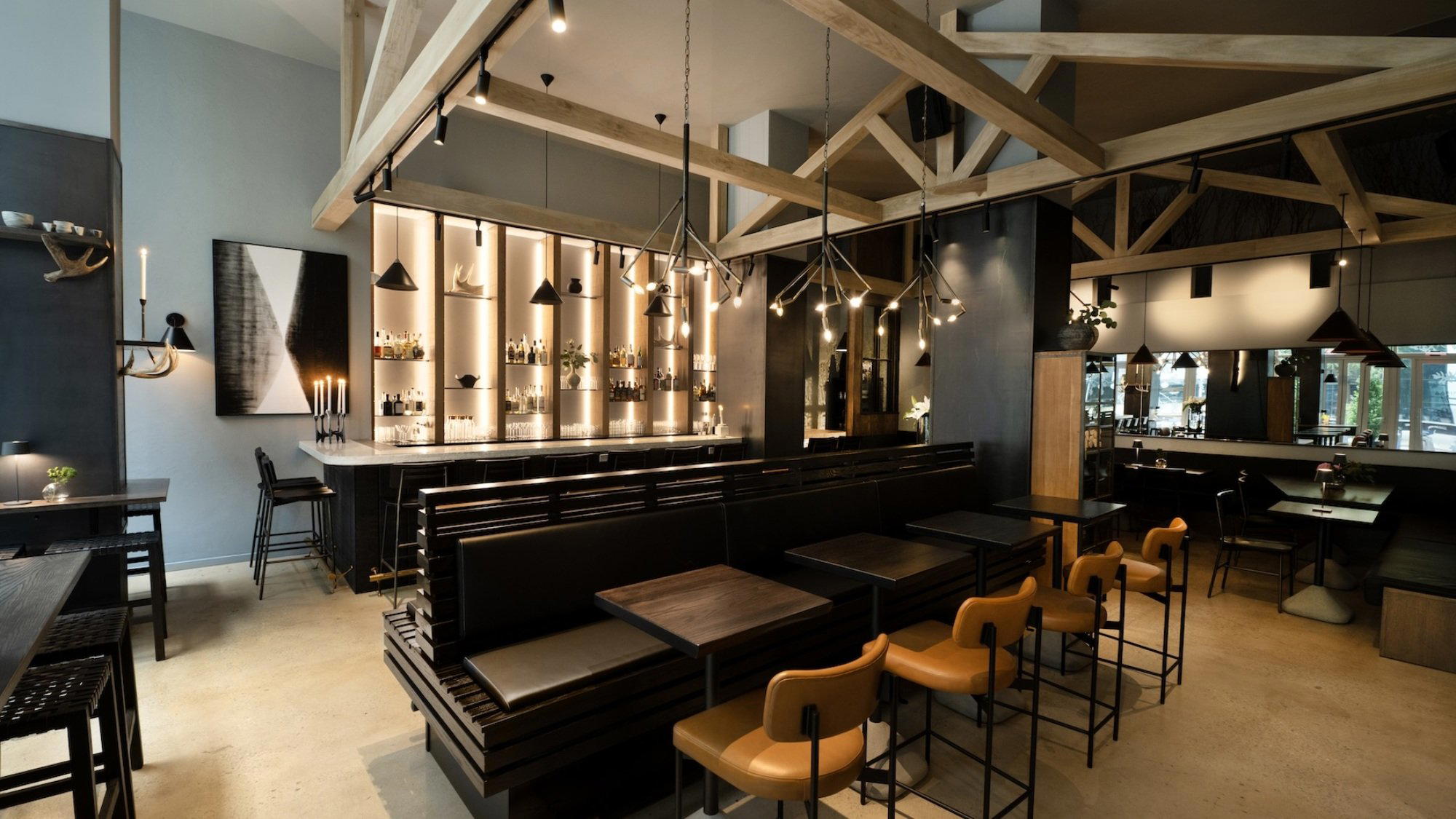
KABIN pairs Modern Scandinavian cooking with craft cocktails at 300 Spring St, with street scene views and a conversational room for dinner or late night.

Pearl is the En Primeur Club membership app, where members save venues, book tables and use the concierge.
The menu
What to order
- Swedish meatballs
- Hasselback potato
- Pickled mackerel
Spring Street, Concrete, and a Room That Does the Talking
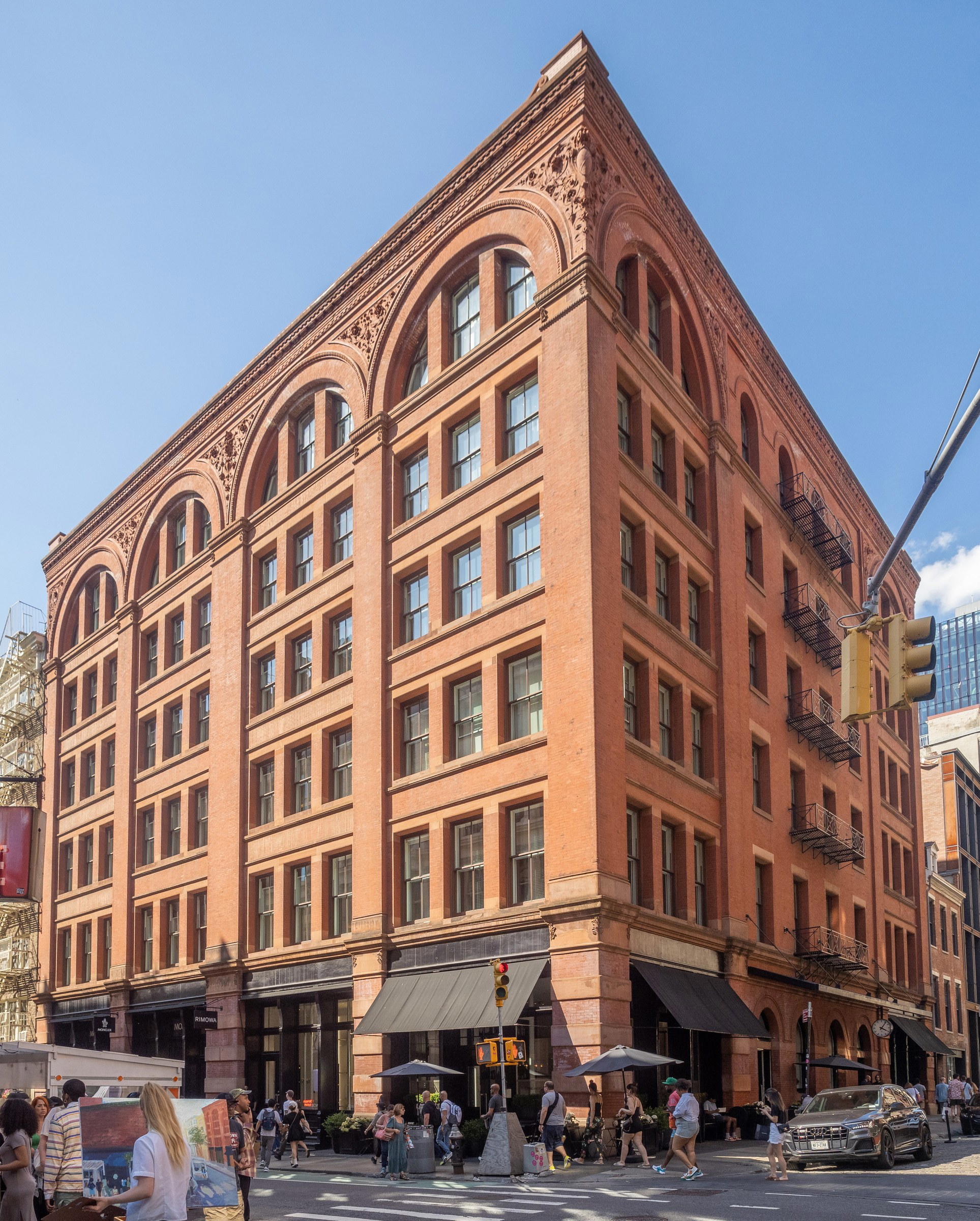
SoHo's restaurant density has shifted considerably over the past decade. The neighborhood that once housed late-night Italian staples and art-crowd bistros now operates a more layered dining tier, with ground-floor spaces on Spring Street carrying premium positioning that would have read as out-of-place twenty years ago. At 300 Spring St, KABIN occupies a specific kind of New York address: central enough to draw from Tribeca and the West Village, distinct enough to reward the walk. The physical approach along Spring tells you something before you arrive, this is a stretch that has quietly shed its mid-range identity and pulled toward a more considered dining register.
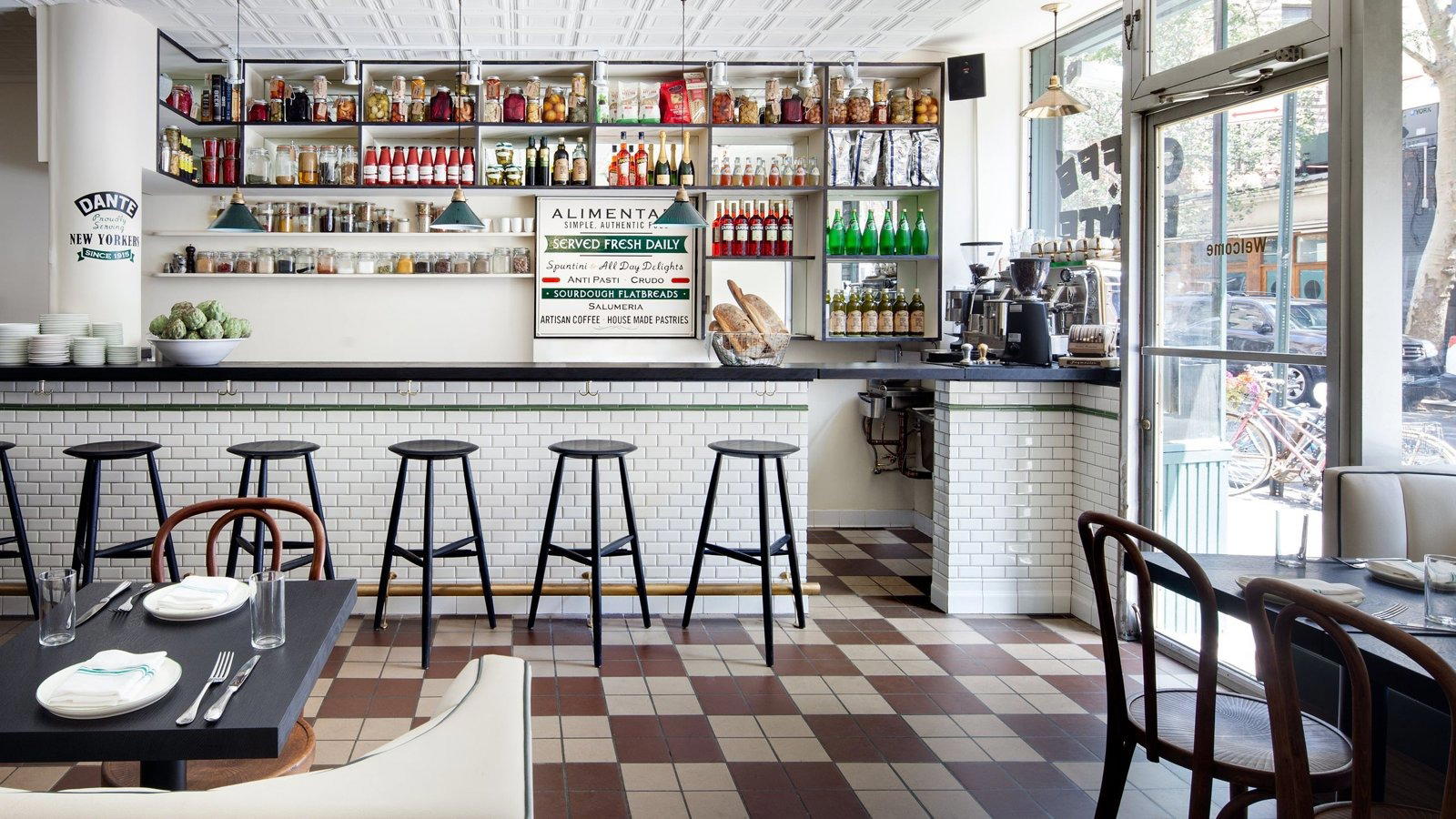
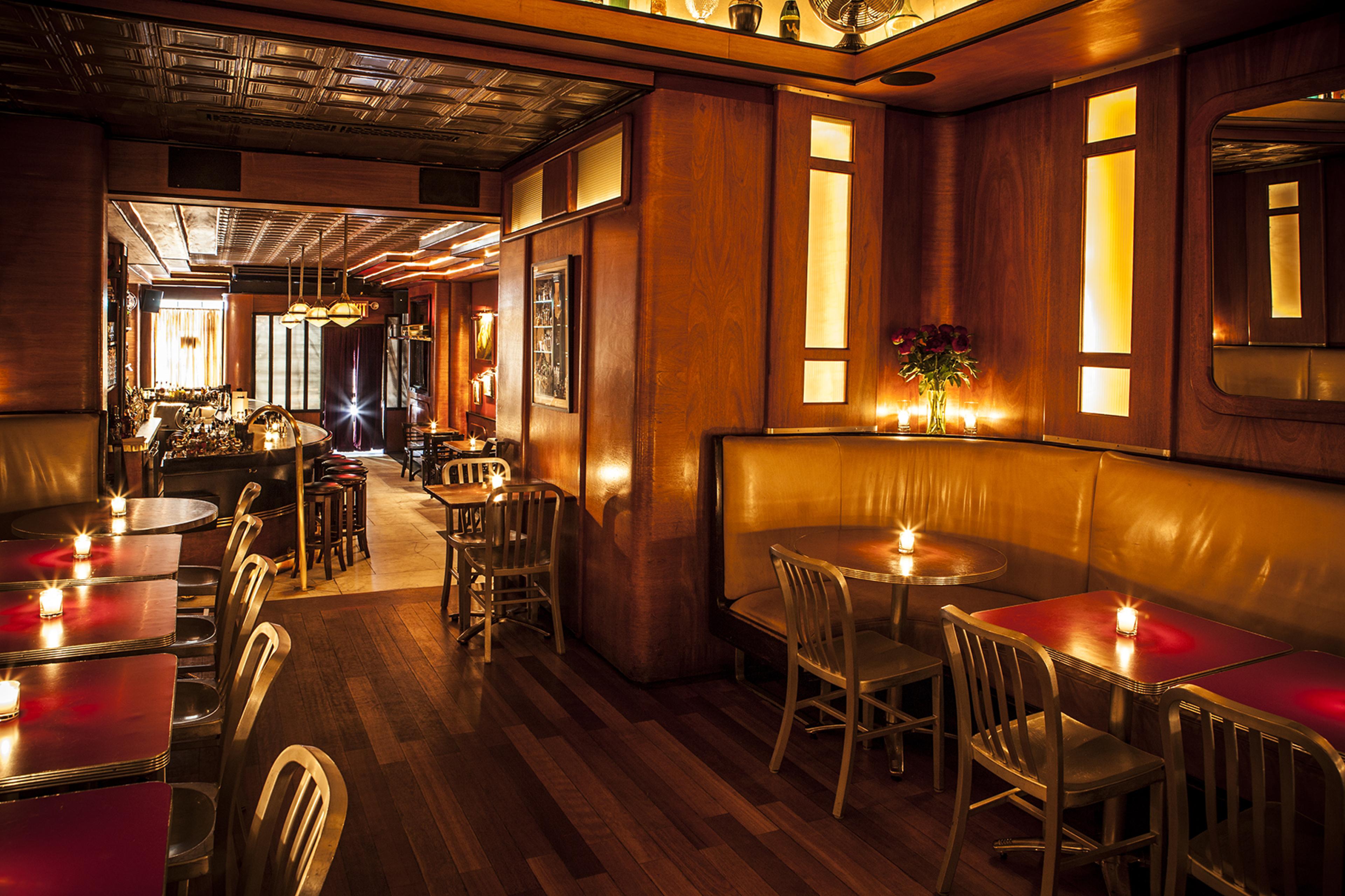
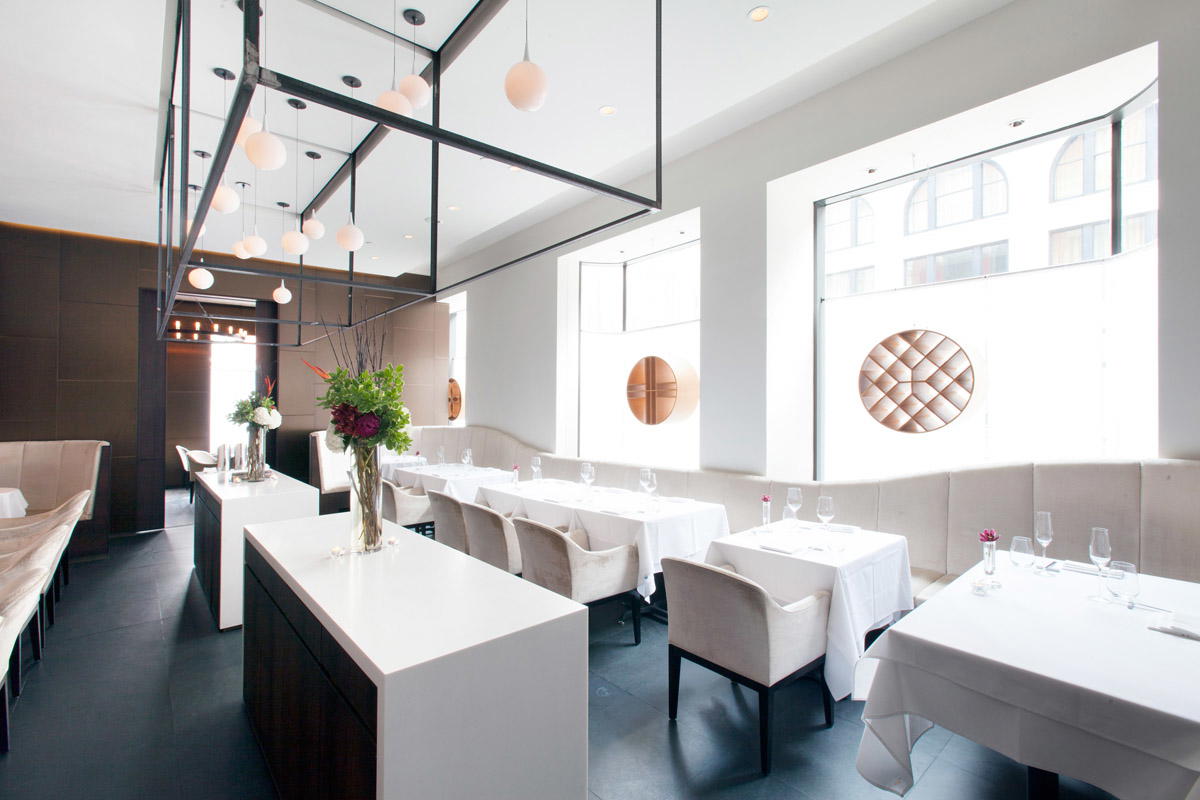
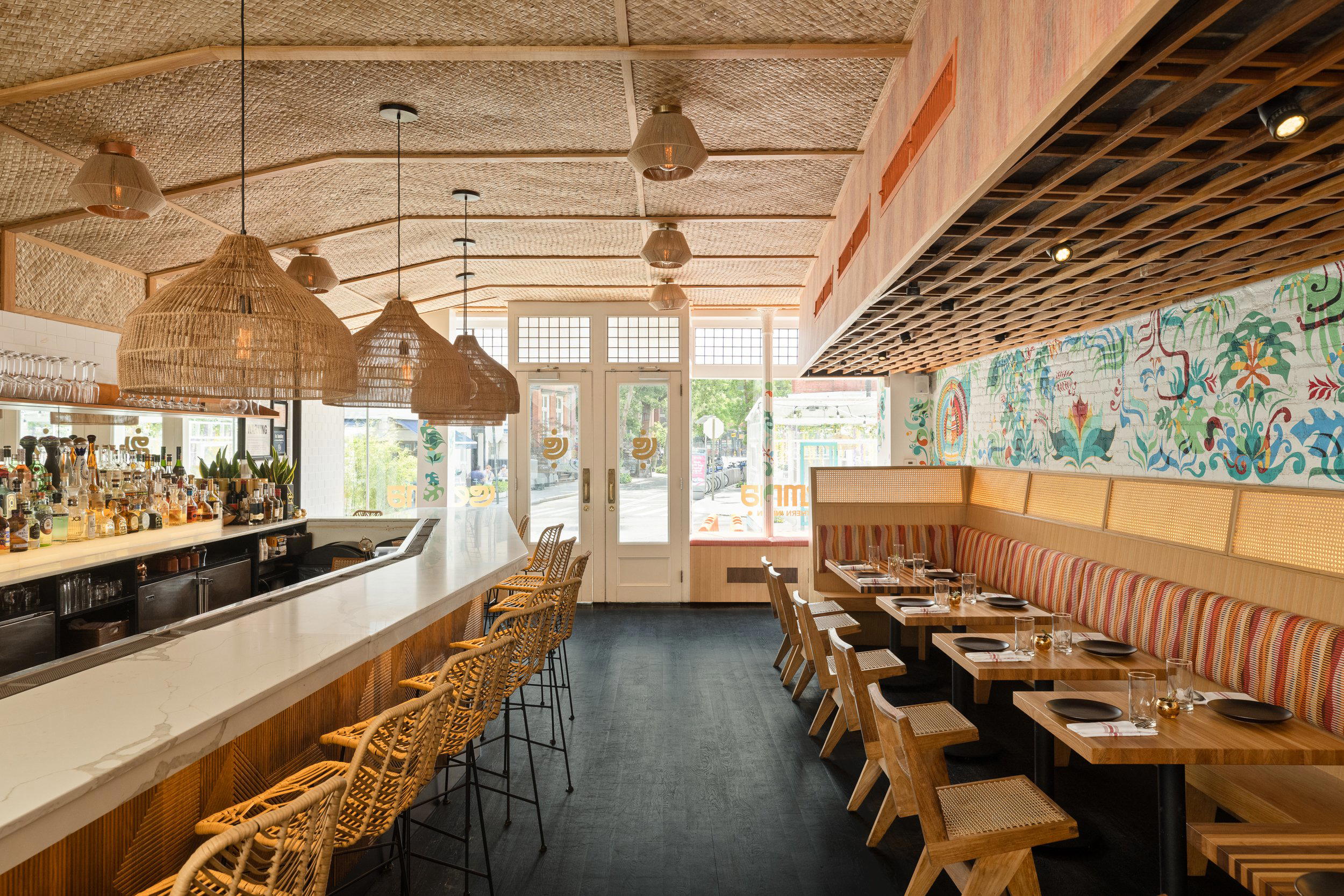
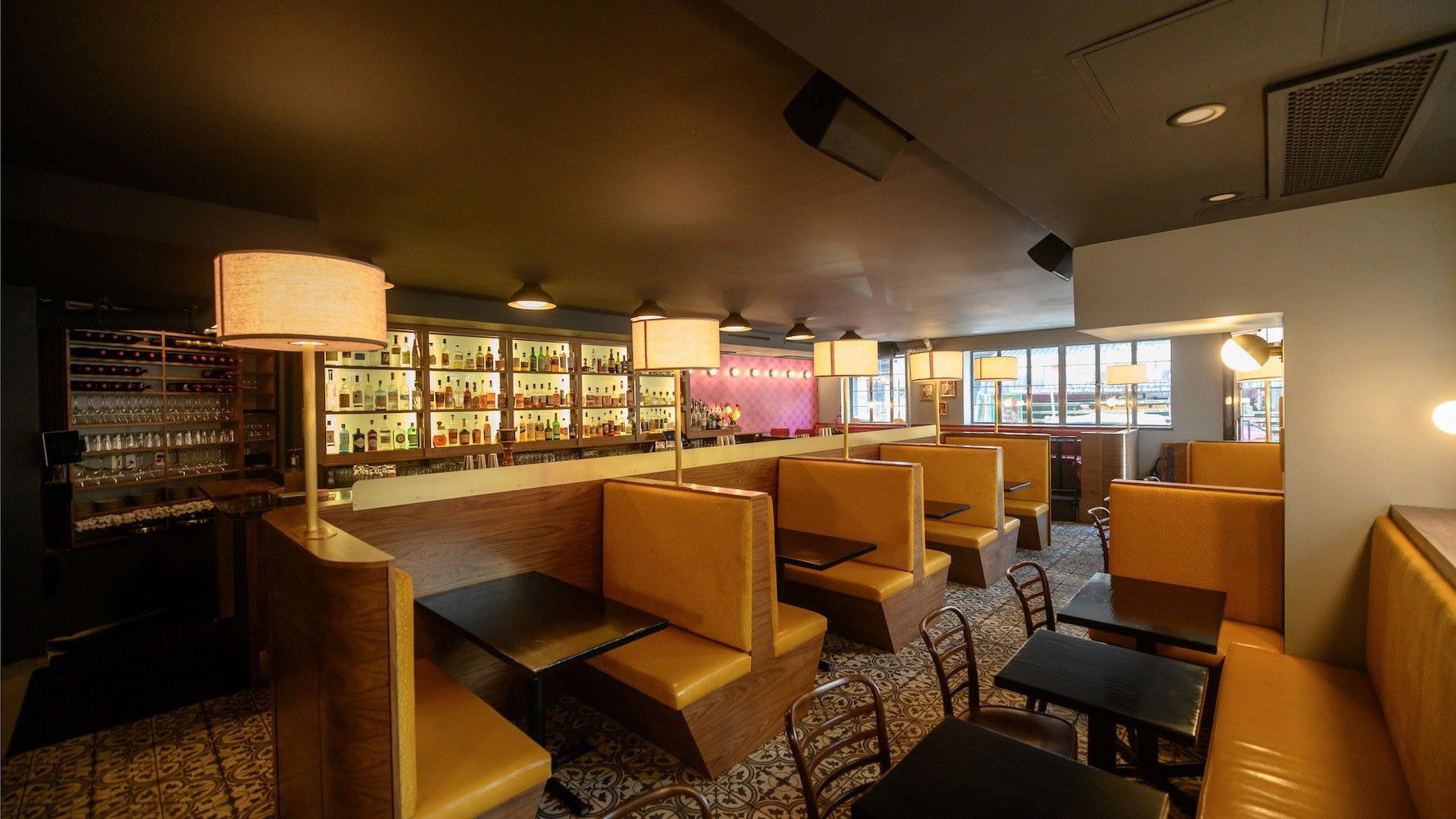
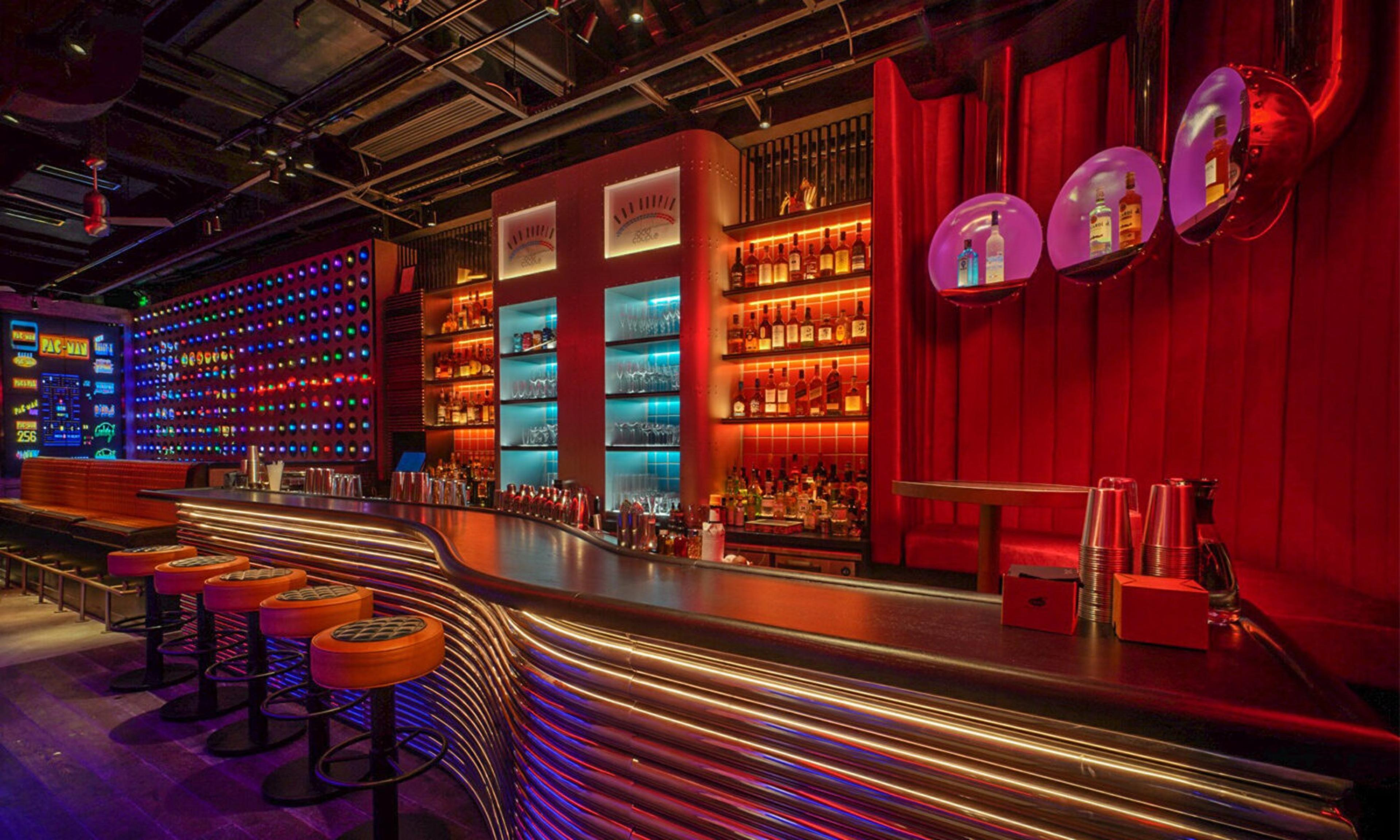
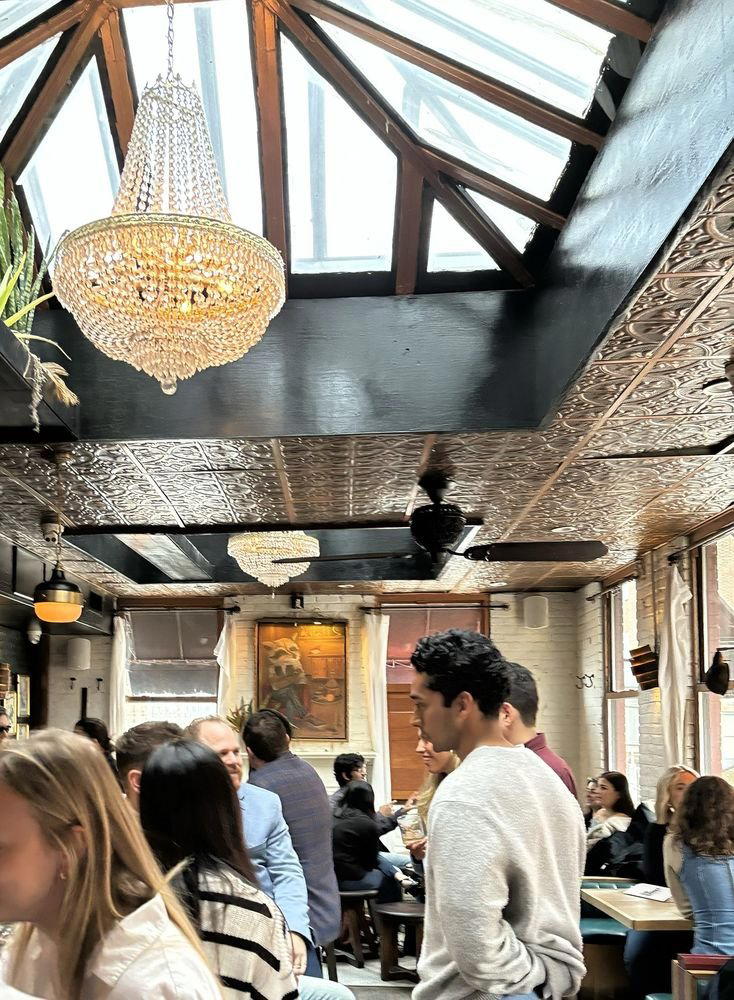
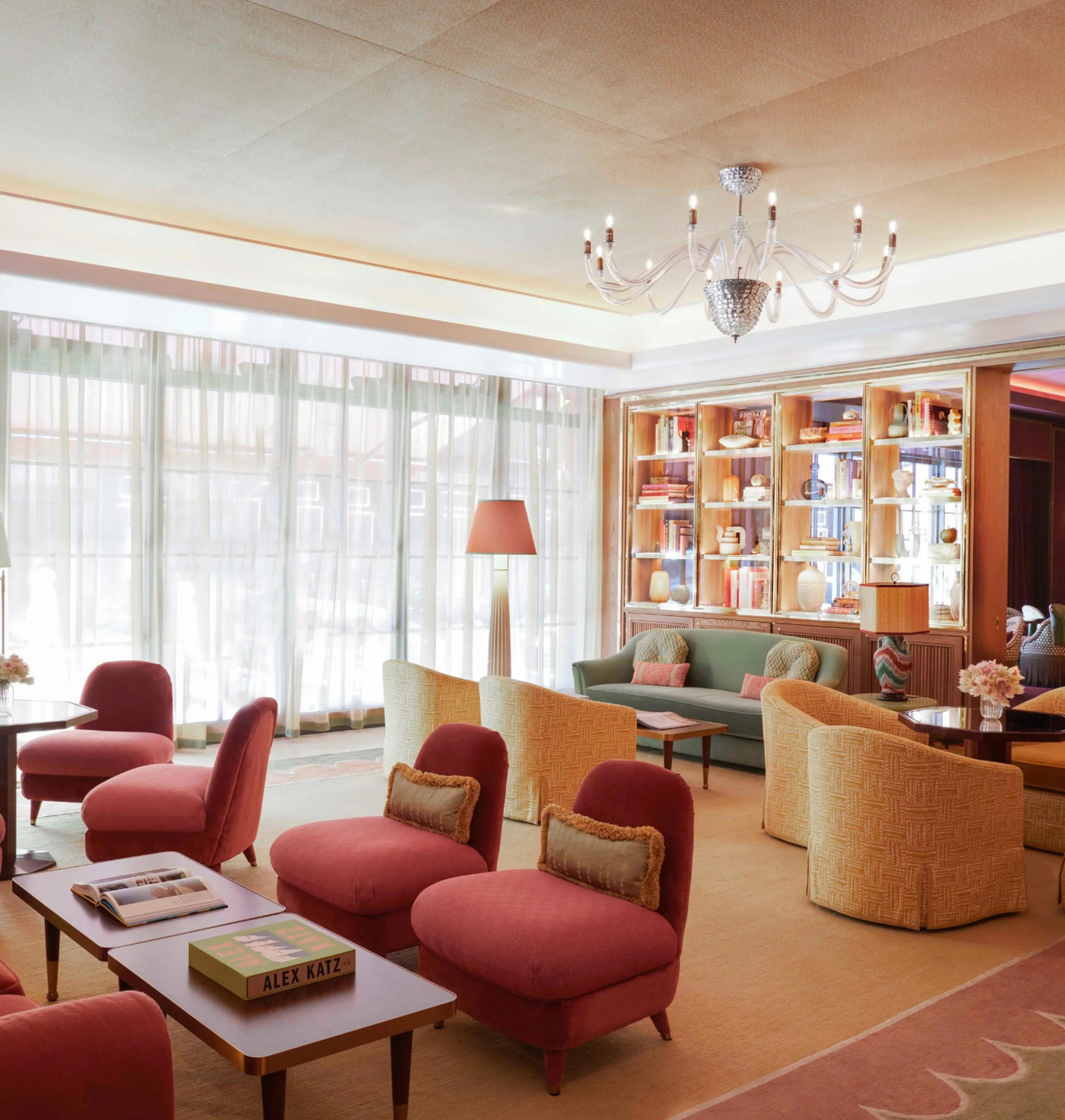
Interior architecture has become one of the more reliable signals of where a New York restaurant positions itself in the current market. The city's upper-mid and fine-dining tiers have largely abandoned the exposed-brick maximalism of earlier decades in favor of spaces that frame the meal through restraint: controlled lighting, deliberate material choices, seating configurations that give the room breathing room rather than packing tables for throughput. KABIN sits within this broader shift. The design language at this address speaks to a room built around the dining experience rather than around the kitchen's press cycle.
What the Space Signals About the Experience
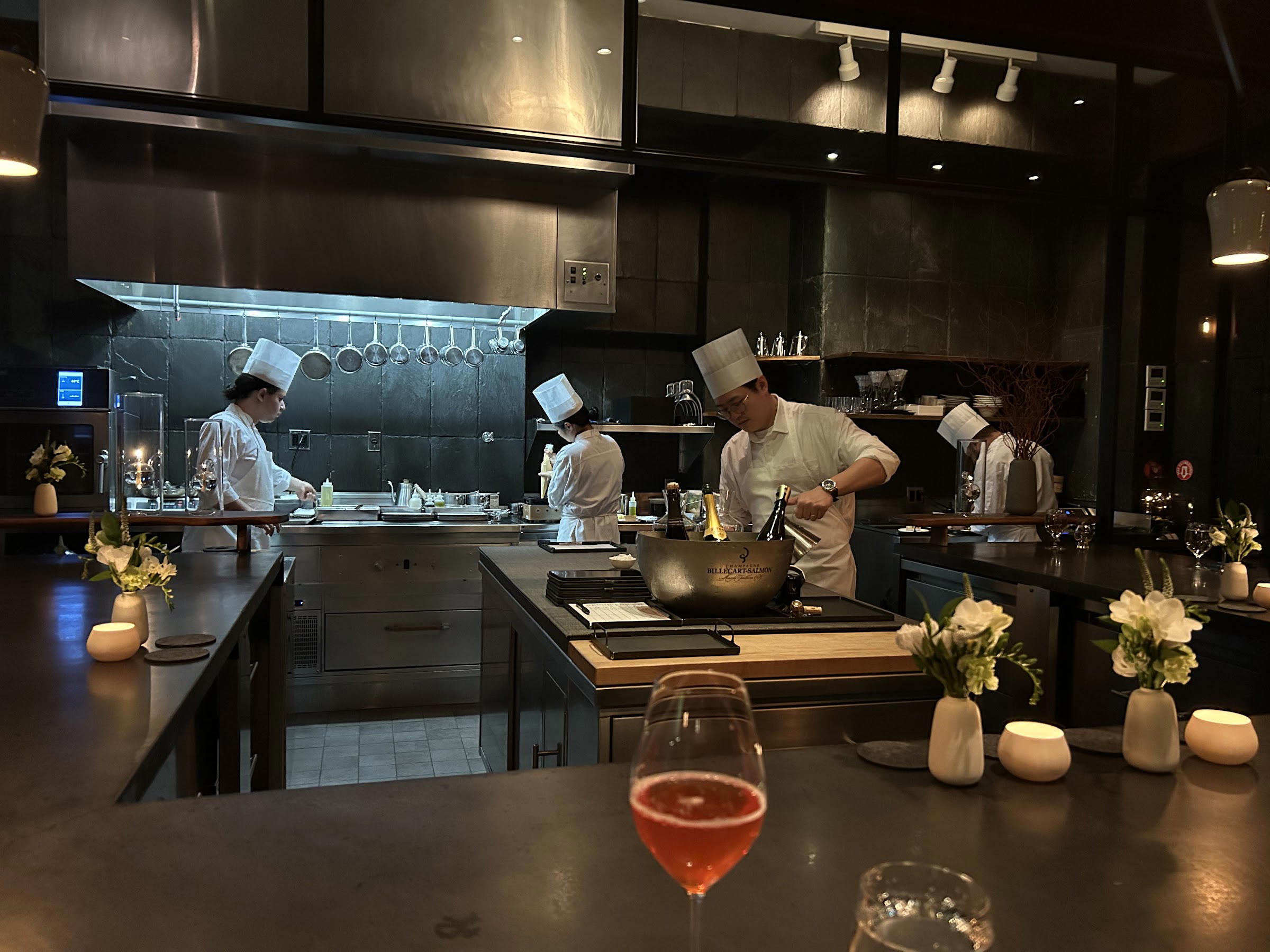
In a city where per-square-foot economics push operators toward density, the decision to design for atmosphere over covers is itself an editorial statement. Restaurants that commit to spatial quality, considered acoustics, proportionate table spacing, materials that age well rather than photograph well, are typically operating on a different margin assumption than volume-driven neighbors. This is the same logic that governs the seating philosophy at Atomix in NoMad, where a limited-seat counter format is part of what maintains its position in the top tier of progressive dining in New York. Space, in that context, is a product choice.
KABIN's address on Spring Street places it in a neighborhood that has always understood design as currency. SoHo's retail architecture set the standard for cast-iron industrial repurposing that the rest of lower Manhattan eventually followed. A dining room that absorbs those spatial values, ceiling height, material honesty, the way light moves through a long floor plate, is operating within a local tradition that goes well beyond hospitality. For the diner, this means the room itself contributes to the experience before the first plate arrives.
Positioning Within New York's Current Dining Tier
New York's high-end restaurant map has consolidated around a recognizable set of reference points. At the very leading, per-person expenditure at counters like Masa or tasting-menu formats like Per Se or Le Bernardin reflects a category where price is partly a function of scarcity and sustained critical attention. Below that tier, a wider band of serious restaurants competes on food quality, design, and neighborhood fit rather than on sheer exclusivity. KABIN occupies the Spring Street coordinates of that second tier, SoHo-proximate, design-conscious, and drawing from a clientele that moves between galleries, fashion appointments, and dinner with equal fluency.
The Korean-inflected wave that has reshaped New York dining over the past several years offers useful context here. Jungsik New York in Tribeca and Atomix in NoMad have demonstrated that Korean technique and ingredient logic can sustain Michelin-level attention in a market as competitive as Manhattan. That shift has expanded what the broader New York dining public is willing to engage with, and restaurants in KABIN's neighborhood tier have benefited from that expanded appetite. The design-forward dining room is no longer an eccentric bet in this city, it has become a baseline expectation for any restaurant asking diners to commit a full evening and a meaningful amount of money.
Comparable Formats Elsewhere in the Country
The design-led, atmospherically driven dining room is not a New York invention, and comparing how other American cities have approached the format is instructive. Lazy Bear in San Francisco built its reputation partly on spatial and experiential intentionality, a communal format that required the room to work as hard as the kitchen. Alinea in Chicago pushed the format further, treating the dining room as a variable element that shifts with each menu iteration. On the farm-to-table axis, Single Thread Farm in Healdsburg and Blue Hill at Stone Barns in Tarrytown use the physical environment, architecture, landscape, material sourcing, as a direct extension of the culinary argument. The French Laundry in Napa has maintained a cottage-garden aesthetic for decades that is as carefully maintained as the kitchen itself.
In the South and Southeast, Emeril's in New Orleans and Bacchanalia in Atlanta have each demonstrated that design coherence at the dining-room level correlates with long-term market durability. On the West Coast, Providence in Los Angeles and Addison in San Diego operate spaces where the physical environment carries specific conceptual weight. Internationally, the spatial discipline of a room like Alain Ducasse at Louis XV in Monte Carlo or 8½ Otto e Mezzo Bombana in Hong Kong shows how design investment functions as a long-term signal of category commitment, not just an opening-week statement. The Inn at Little Washington in Virginia takes the same principle to an operatic register, where the physical container is inseparable from the restaurant's identity. KABIN operates at a different scale and register than those landmarks, but the underlying principle, that the room makes an argument, holds across all of them.
Planning Your Visit
KABIN is located at 300 Spring St in SoHo, accessible from the Spring Street C/E subway station within a short walk. Given limited publicly available booking details at time of publication, contacting the restaurant directly or checking reservation platforms in advance is advisable for any party planning. SoHo restaurants at this positioning tier typically run busiest on Thursday through Saturday evenings; mid-week visits often allow for more relaxed pacing. For the broader New York dining picture, our full New York City restaurants guide covers the city's current tiers in detail.
| Venue | Neighborhood | Price Tier | Format | Booking Lead Time |
|---|---|---|---|---|
| KABIN | SoHo | Not confirmed | Not confirmed | |
| Atomix | NoMad | $$$$ | Tasting counter | Several weeks in advance |
| Jungsik New York | Tribeca | $$$$ | Tasting menu | Several weeks in advance |
| Per Se | Columbus Circle | $$$$ | Tasting menu | Months in advance |
| Le Bernardin | Midtown West | $$$$ | À la carte / tasting | Weeks in advance |
Frequently asked questions
Where is KABIN located?
KABIN is located at î300 Spring St, New York, NY 10013, New York City.
Is KABIN in SoHo suitable for a private or special occasion dinner in New York City?
KABIN's address at 300 Spring St in SoHo places it within one of Manhattan's most architecturally attentive dining corridors, and the room's design-over-density approach suggests it is built for occasions where atmosphere carries weight. No private dining specifications are publicly confirmed, so reaching out to the venue directly is advisable for event planning. The Spring Street C/E station puts it within easy reach of most of lower Manhattan.
What's the must-try dish at KABIN?
KABIN's menu specifics have not been publicly documented at this stage. The safest approach before visiting 300 Spring St is to check directly with the restaurant for current offerings, as the kitchen's focus appears to shift with the room's broader editorial positioning in SoHo's competitive dining corridor.
Can I walk in to KABIN?
Given SoHo's restaurant density and the demand that design-forward rooms in the neighborhood typically generate, contacting the venue directly before arriving is the practical move.
What's the defining dish or idea at KABIN?
The clearest signal from KABIN's positioning is that the space itself is doing deliberate work, the room at 300 Spring St is designed for atmosphere over maximum covers, which is a meaningful editorial choice in a city where per-square-foot economics usually win. The cuisine direction follows from that premise rather than leading it.
Cuisine Lens
Comparable venues nearby, for context on price, style, and recognition.
| Venue | Cuisine | Price | Awards | Notes |
|---|---|---|---|---|
| KABINThis venue (the venue you are viewing) | Modern Scandinavian | $30–50 | Top 500 Bars Best Bars #397 · Grub Street Best Food of 2026 (So Far) | Not listed |
| Cafe Bar J.F. | South American Tavern / Peruvian-leaning New American | Not listed | Not listed | Williamsburg |
| taïm mediterranean kitchen | Mediterranean Street Food | Not listed | Not listed | West Village |
| Sofia's of Little Italy | Italian Trattoria | $30–50 | Not listed | SoHo-Little Italy-Hudson Square |
| Ippudo | Hakata-Style Tonkotsu Ramen | Not listed | Not listed | East Village |
| Cowgirl SeaHorse | Tex-Mex & Southern Comfort | $20–30 | Not listed | Chinatown-Two Bridges |
Recognition history
Dated appearances from independent guides and award organizations, with the underlying list record or original source where available.
Grub Street Best Food of 2026 (So Far)
Grub Street
Top 500 Bars Best Bars #397
Top 500 Bars