On Augusta Avenue in Kensington Market, Jumbo Empanadas occupies a position that most of Toronto's fine-dining circuit ignores: the affordable, walk-in, Latin-inflected counter where technique meets neighbourhood hunger. Against a Toronto restaurant scene dominated by omakase tasting menus and contemporary tasting formats, this is the other end of the spectrum, and for many regulars, the more honest one.
Pearl is the En Primeur Club membership app — saves, bookings, and concierge access live there. Same editors, same standards.
- Address
- 245 Augusta Ave, Toronto, ON M5T 2L8, Canada
- Phone
- +1 416 977 0056
- Website
- jumboempanadas.ca
- Directions
- Get directions
 Saves & bookings on Pearl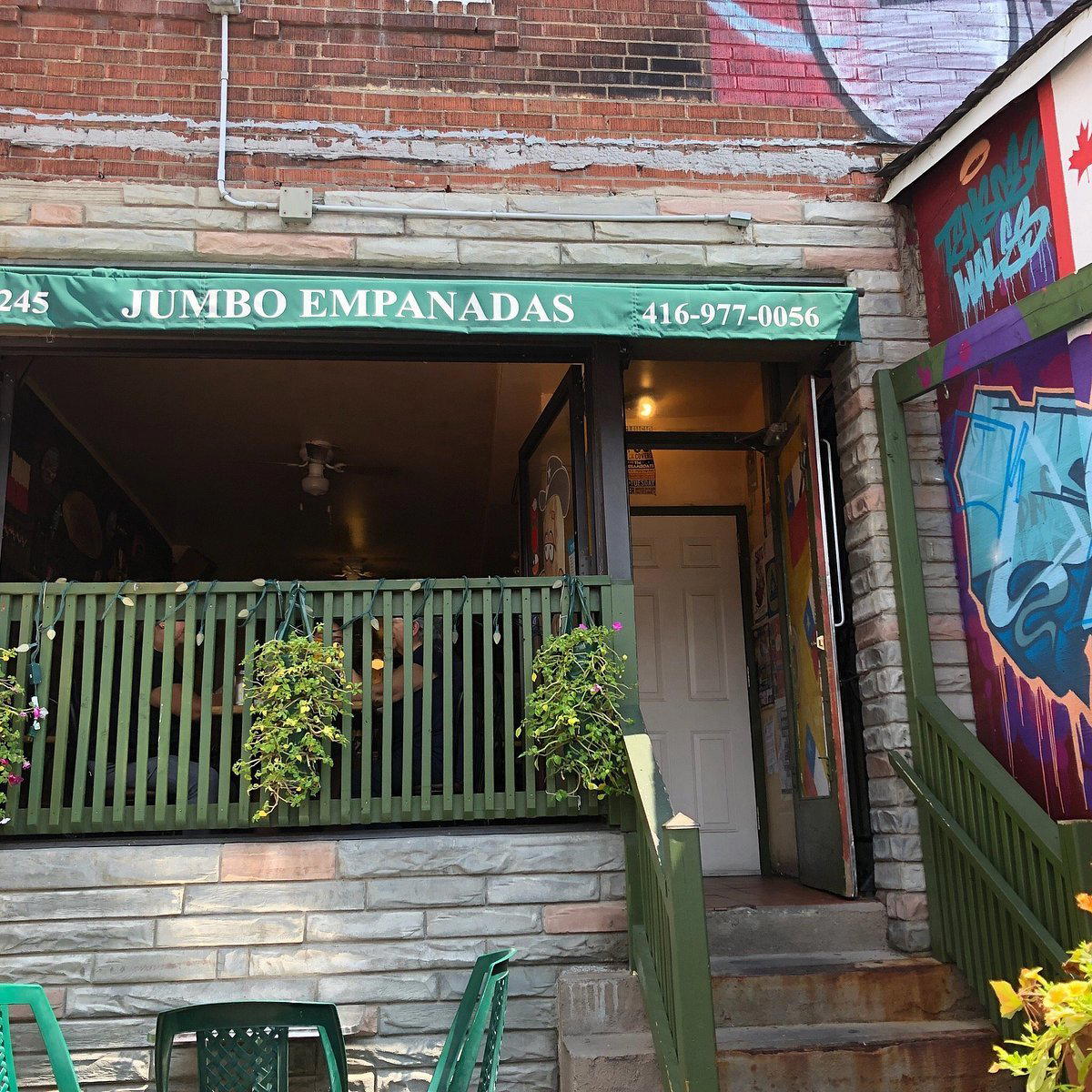
Kensington Market and the Case for the Counter
Jumbo Empanadas is a casual restaurant in Toronto serving authentic Chilean empanadas at 245 Augusta Ave, with a price around US$15 per person. The street holds vintage shops beside fishmongers, Portuguese bakeries beside Caribbean produce stalls, and a rotating cast of street food operators that have been cycling through for decades. Within this particular food environment, the empanada as a format makes unusual sense: it is portable, self-contained, priced for pedestrians, and built around a tradition that crosses multiple Latin American culinary lineages. Jumbo Empanadas, at 245 Augusta Ave, sits inside that tradition rather than apart from it.
Toronto's dominant dining conversation in 2024 and 2025 has largely centred on the upper end of the price spectrum. Operations like Alo (Contemporary), Sushi Masaki Saito, and Aburi Hana define a certain tier of the city's ambitions, where multi-course formats and per-person spend north of $200 are standard. The empanada counter operates in a different economy entirely, one where the value proposition is immediate, physical, and repeatable without financial consequence. These two tiers of the same city's food culture do not compete so much as occupy different registers of how people actually eat.
The Empanada Tradition and Where Toronto Fits In
Across Latin America, the empanada is not a single thing. Argentine versions lean toward beef, hard-boiled egg, and olive in a lard-enriched dough baked to a flaky finish. Chilean empanadas are larger, juicier, often sold at roadside stalls during national holidays. Colombian and Venezuelan iterations shift toward corn masa, producing a different textural result. In the Caribbean and parts of Central America, the frying tradition produces something closer to a fritter than a pastry. Each version carries regional logic: what the dough is made of, how it is sealed, what goes inside, and whether heat comes from an oven or oil all speak to specific agricultural and cultural contexts.
Toronto's Latin American community is large and genuinely diverse in its national origins, which means the city has exposure to several of these regional traditions simultaneously. The empanada, wherever it comes from, travels well into the Kensington Market context because the neighbourhood has always prioritised accessible, ingredient-forward food over formal presentation. This is a place where you eat standing up, carry your food in paper, and make decisions quickly at a counter. That informality is not a concession; it is the entire point.
Technique Inside an Informal Format
The editorial angle that connects imported Latin American technique to the Kensington market context is worth holding for a moment, because it applies broadly across the neighbourhood. Kensington has long functioned as a place where diaspora food knowledge gets transmitted through casual formats that obscure the underlying craft. The empanada is a useful example of this: achieving a properly sealed, evenly cooked pastry that holds its filling without becoming soggy requires consistency in dough hydration, filling temperature, and cooking time. These are technical requirements that sit underneath what appears to be a simple street food. The same principle applies across the street from any number of spots in the area.
For comparison, the same intersection of imported technique and local context operates at a different price point in Canadian restaurants like Tanière³ in Quebec City or Restaurant Pearl Morissette in Lincoln, where European training frameworks are applied to Canadian ingredients in formal tasting menu environments. The structural logic is similar; the delivery mechanism and price point are not. Canada's most interesting food stories increasingly happen at both ends of this spectrum simultaneously, from Fogo Island Inn Dining Room in Joe Batt's Arm to Eigensinn Farm in Singhampton, and the connections between them are more instructive than the differences.
Where Jumbo Empanadas Sits in Toronto's Broader Picture
Positioning the restaurant against Toronto's fine-dining circuit is less useful than positioning it against Kensington Market's internal logic. The neighbourhood functions as a low-barrier entry point for food cultures that eventually scale up elsewhere in the city. A particular style of cooking arrives in Kensington at accessible prices, builds a following among people who live nearby or pass through regularly, and either stays there or migrates to more expensive formats in other neighbourhoods. The empanada counter fits this pattern: it is not a transitional format waiting to become something more formal, but it does represent the grassroots end of how Latin American food culture embeds itself in Toronto.
For context on Italian at the formal end of the same city, DaNico and Don Alfonso 1890 occupy the premium tier. The distance between those operations and a Kensington counter is not just financial; it is structural, in terms of how dining is organised, how long it takes, and what social function it serves. Neither is more authentically Toronto than the other.
Elsewhere in Canada, the casual end of the food spectrum is handled with similar seriousness at spots like Busters Barbeque in Kenora or Cafe Brio in Victoria, each of which anchors a local food identity without aspiring to tasting menu formats. Internationally, the contrast becomes even starker when set against operations like Le Bernardin in New York City or Lazy Bear in San Francisco, where the same question of technique meeting local identity is resolved at a different cost and scale.
245 Augusta Ave is walkable from the Spadina streetcar and sits at the centre of Kensington Market's pedestrian density. The format is inherently casual, with walk-in service and no reservations required.
A Tight Comparison
Comparable venues nearby, for context on price, style, and recognition.
| Venue | Cuisine | Price | Notes |
|---|---|---|---|
| Jumbo EmpanadasThis venue — the venue you are viewing | Kensington, Authentic Chilean Empanadas | $ | Not listed |
| Henderson Brewing co | Junction Triangle, Brew Pub & Pizza | $$ | Not listed |
| Cafe Polonez | North Parkdale, Traditional Polish | $$ | Not listed |
| Ketodelia Keto Restaurant | Danforth Village, Keto Low-Carb | $$ | Not listed |
| Good Company | Not listed | $$ | Kensington-Chinatown, Café and Cocktail Bar |
| The Owl on Bloor | Koreatown, Traditional Korean | $ | Not listed |
Continue exploring
More in Toronto
Restaurants in Toronto
Browse all →



Bars in Toronto
Browse all →

Hotels in Toronto
Browse all →



Wineries in Toronto
Browse all →
At a Glance
- Cozy
- Rustic
- Casual Hangout
- Standalone
Current opening hours
- Monday
- 10 AM–6 PM
- Tuesday
- 10 AM–6 PM
- Wednesday
- 10 AM–6 PM
- Thursday
- 10 AM–6 PM
- Friday
- 10 AM–6 PM
- Saturday
- 10 AM–7 PM
- Sunday
- 11 AM–6 PM
Hours can change for holidays and private events. Last verified .
Cozy, low-key hole-in-the-wall with familial atmosphere and limited seating.